143 books match the query 'Class' and 6 start with e
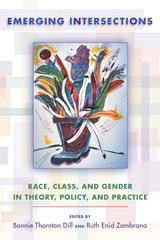
cover of Emerging Intersections: Race, Class, and Gender in Theory, Policy, and Practice

Emerging Intersections

Race, Class, and Gender in Theory, Policy, and Practice

Dill, Bonnie Thornton

Rutgers University Press, 2009

The United States is known as a "melting pot" yet this mix tends to be volatile and contributes to a long history of oppression, racism, and bigotry.

Emerging Intersections, an anthology of ten previously unpublished essays, looks at the problems of inequality and oppression from new angles and promotes intersectionality as an interpretive tool that can be utilized to better understand the ways in which race, class, gender, ethnicity, and other dimensions of difference shape our lives today. The book showcases innovative contributions that expand our understanding of how inequality affects people of color, demonstrates the ways public policies reinforce existing systems of inequality, and shows how research and teaching using an intersectional perspective compels scholars to become agents of change within institutions. By offering practical applications for using intersectional knowledge, Emerging Intersections will help bring us one step closer to achieving positive institutional change and social justice.
[more]
cover of Encoding Race, Encoding Class: Indian IT Workers in Berlin

Encoding Race, Encoding Class

Indian IT Workers in Berlin

Sareeta Amrute

Duke University Press, 2016
In Encoding Race, Encoding Class Sareeta Amrute explores the work and private lives of highly skilled Indian IT coders in Berlin to reveal the oft-obscured realities of the embodied, raced, and classed nature of cognitive labor. In addition to conducting fieldwork and interviews in IT offices as well as analyzing political cartoons, advertisements, and reports on white-collar work, Amrute spent time with a core of twenty programmers before, during, and after their shifts. She shows how they occupy a contradictory position, as they are racialized in Germany as temporary and migrant grunt workers, yet their middle-class aspirations reflect efforts to build a new, global, and economically dominant India. The ways they accept and resist the premises and conditions of their work offer new potentials for alternative visions of living and working in neoliberal economies. Demonstrating how these coders' cognitive labor realigns and reimagines race and class, Amrute conceptualizes personhood and migration within global capitalism in new ways.
[more]
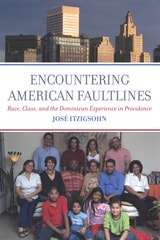
cover of Encountering American Faultlines: Race, Class, and the Dominican Experience in Providence

Encountering American Faultlines

Race, Class, and the Dominican Experience in Providence

Jose Itzigsohn

Russell Sage Foundation, 2009
The descendents of twentieth-century southern and central European immigrants successfully assimilated into mainstream American culture and generally achieved economic parity with other Americans within several generations. So far, that is not the case with recent immigrants from Latin America and the Caribbean. A compelling case study of first- and second-generation Dominicans in Providence, Rhode Island, Encountering American Faultlines suggests that even as immigrants and their children increasingly participate in American life and culture, racialization and social polarization remain key obstacles to further progress. Encountering American Faultlines uses occupational and socioeconomic data and in-depth interviews to address key questions about the challenges Dominicans encounter in American society. What is their position in the American socioeconomic structure? What occupations do first- and second-generation Dominicans hold as they enter the workforce? How do Dominican families fare economically? How do Dominicans identify themselves in the American racial and ethnic landscape? The first generation works largely in what is left of Providence's declining manufacturing industry. Second-generation Dominicans do better than their parents economically, but even as some are able to enter middle-class occupations, the majority remains in the service-sector working class. José Itzigsohn suggests that the third generation will likely continue this pattern of stratification, and he worries that the chances for further economic advancement in the next generation may be seriously in doubt. While transnational involvement is important to first-generation Dominicans, the second generation concentrates more on life in the United States and empowering their local communities. Itzigsohn ties this to the second generation's tendency to embrace panethnic identities. Panethnic identity provides Dominicans with choices that defy strict American racial categories and enables them to build political coalitions across multiple ethnicities. This intimate study of the Dominican immigrant experience proposes an innovative theoretical approach to look at the contemporary forms and meanings of becoming American. José Itzigsohn acknowledges the social exclusion and racialization encountered by the Dominican population, but he observes that, by developing their own group identities and engaging in collective action and institution building at the local level, Dominicans can distinguish themselves and make inroads into American society. But Encountering American Faultlines also finds that hard work and hope have less to do with their social mobility than the existing economic and racial structures of U.S. society.
[more]
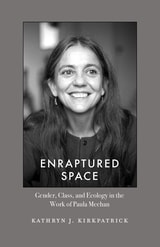
cover of Enraptured Space: Gender, Class, and Ecology in the Work of Paula Meehan

Enraptured Space

Gender, Class, and Ecology in the Work of Paula Meehan

Kathryn J. Kirkpatrick

West Virginia University Press, 2025

In the first book-length study of Paula Meehan, one of Ireland’s leading contemporary poets emerges as an original voice whose perspectives on gender, class, and ecology are transforming the Irish literary landscape and beyond. Drawing on her own lived experience as a practicing poet, Kathryn J. Kirkpatrick explores how scholarship is grounded in an imaginative exchange between the words on the page and the material conditions of the scholar who works to inhabit them. With chapters of literary analysis swimming in a conversation between two poets, this book breaches the boundaries between criticism and memoir, suggesting ways that every scholar is transformed by the subjects they study.

In Paula Meehan, Kirkpatrick has found a powerful poet to both study and love, and her reading of Meehan’s poetry and prose through the lenses of gender studies, the environmental humanities, and social class offers a passionate endorsement of Meehan’s radical interventions in the canon of Irish poetry. This work explores eight volumes of Meehan’s poetry, including Dharmakaya, Painting Rain, and Geomantic.

 
[more]
cover of Exit Zero: Family and Class in Postindustrial Chicago

Exit Zero

Family and Class in Postindustrial Chicago

Christine J. Walley

University of Chicago Press, 2012

Winner of CLR James Book Prize from the Working Class Studies Association and 2nd Place for the Victor Turner Prize in Ethnographic Writing. 

In 1980, Christine J. Walley’s world was turned upside down when the steel mill in Southeast Chicago where her father worked abruptly closed. In the ensuing years, ninety thousand other area residents would also lose their jobs in the mills—just one example of the vast scale of deindustrialization occurring across the United States. The disruption of this event propelled Walley into a career as a cultural anthropologist, and now, in Exit Zero, she brings her anthropological perspective home, examining the fate of her family and that of blue-collar America at large.
 
Interweaving personal narratives and family photos with a nuanced assessment of the social impacts of deindustrialization, Exit Zero is one part memoir and one part ethnography— providing a much-needed female and familial perspective on cultures of labor and their decline. Through vivid accounts of her family’s struggles and her own upward mobility, Walley reveals the social landscapes of America’s industrial fallout, navigating complex tensions among class, labor, economy, and environment. Unsatisfied with the notion that her family’s turmoil was inevitable in the ever-forward progress of the United States, she provides a fresh and important counternarrative that gives a new voice to the many Americans whose distress resulting from deindustrialization has too often been ignored.

This book is part of a project that also includes a documentary film.

[more]
cover of Exit Zero: Family and Class in Postindustrial Chicago

Exit Zero

Family and Class in Postindustrial Chicago

Christine J. Walley

University of Chicago Press, 2012

This is an auto-narrated audiobook version of this book.

Winner of CLR James Book Prize from the Working Class Studies Association and 2nd Place for the Victor Turner Prize in Ethnographic Writing. 

In 1980, Christine J. Walley’s world was turned upside down when the steel mill in Southeast Chicago where her father worked abruptly closed. In the ensuing years, ninety thousand other area residents would also lose their jobs in the mills—just one example of the vast scale of deindustrialization occurring across the United States. The disruption of this event propelled Walley into a career as a cultural anthropologist, and now, in Exit Zero, she brings her anthropological perspective home, examining the fate of her family and that of blue-collar America at large.
 
Interweaving personal narratives and family photos with a nuanced assessment of the social impacts of deindustrialization, Exit Zero is one part memoir and one part ethnography— providing a much-needed female and familial perspective on cultures of labor and their decline. Through vivid accounts of her family’s struggles and her own upward mobility, Walley reveals the social landscapes of America’s industrial fallout, navigating complex tensions among class, labor, economy, and environment. Unsatisfied with the notion that her family’s turmoil was inevitable in the ever-forward progress of the United States, she provides a fresh and important counternarrative that gives a new voice to the many Americans whose distress resulting from deindustrialization has too often been ignored.

This book is part of a project that also includes a documentary film.
[more]