Results by title
231 books match the query 'Colonies' and 21 start with e
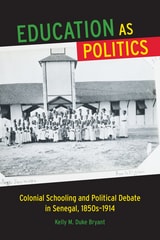
Education as Politics
Colonial Schooling and Political Debate in Senegal, 1850s–1914Kelly M. Duke Bryant
University of Wisconsin Press, 2015
Kelly M. Duke Bryant demonstrates the critical impact of colonial schooling on Senegalese politics by examining the response to it by Africans from a variety of backgrounds and statuses—including rural chiefs, Islamic teachers, and educated young urbanites. For those Africans who chose to engage with them, the French schools in Senegal provided a new source of patronage, a potentially beneficial connection to the bureaucratizing colonial state, a basis for claims to authority or power, or an arena in which to debate pressing issues like the future of Qur’anic schooling and the increasing racism of urban society under colonial rule.
Based on evidence from archives in Senegal and France, and on interviews Duke Bryant conducted in Senegal, she demonstrates that colonial schooling remade African politics during this period of transition to French rule, creating political spaces that were at once African and colonial, and ultimately allowing Diagne to claim election victory.
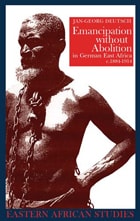
Emancipation without Abolition in German East Africa, c. 1884–1914
Jan-Georg Deutsch
Ohio University Press, 2006
This study examines the complex history of slavery in East Africa, focusing on the area that came under German colonial rule. In contrast to the policy pursued at the time by other colonial powers in Africa, the German authorities did not legally abolish slavery in their colonial territories. However, despite government efforts to keep the institution of slavery alive, it significantly declined in Tanganyika in the period concerned. The book highlights the crucial role played by the slaves in the process of emancipation.
Author Jan-Georg Deutsch explores the rise of slavery in Tanganyika in the second half of the nineteenth century, when the region became more fully integrated into the world economy.
An analysis of German colonial policy reveals that the authorities believed that abolition should be avoided at all costs since it would undermine the power and prosperity of the local slave-owning elites whose effective collaboration was thought to be indispensable to the functioning of colonial rule.
The author demonstrates how slaves by their own initiative brought the ”evil institution“ to an end, making the best of limited choices and opportunities available to them.
The study, of interest to historians of East Africa, makes a contribution to the more general debate about the demise of slavery on the continent.
Empire And Imperialism
Peter Cain
St. Augustine's Press, 1999
The 1870s is a key decade in the evolution of British thinking about the nature, purpose, and future of empire. Increasing economic competition began to disturb the complacent assumption about Britain's leadership in technology and in the world economy. The growth of other countries, most notably the United States and Germany, put in question Britain's survival as a great power. These changes set in motion a reappraisal of Britain's empire and its importance to the motherland, and a heated debated as to whether colonialism and imperialism were a burden rather than a benefit to Britain. The discussion of the 1870s set the agenda for the debates of the next half-century. This volume documents the writing central to the debate; it includes contributions by such leading British thinkers and statesmen as J. A. Froude, Robert Lowe, Edward Dicey, Frederic Seebohm, Lord Carnarvon, Gladstone, Julius Vogel, and Lord Blachford.
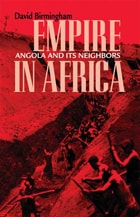
Empire in Africa
Angola and Its NeighborsDavid Birmingham
Ohio University Press, 2006
Empire in Question
Reading, Writing, and Teaching British ImperialismAntoinette Burton
Duke University Press, 2011
Empire of Neglect
The West Indies in the Wake of British LiberalismChristopher Taylor
Duke University Press, 2018
Empire of Religion
Imperialism and Comparative ReligionDavid Chidester
University of Chicago Press, 2014
In developing a material history of the study of religion, Chidester documents the importance of African religion, the persistence of the divide between savagery and civilization, and the salience of mediations—imperial, colonial, and indigenous—in which knowledge about religions was produced. He then identifies the recurrence of these mediations in a number of case studies, including Friedrich Max Müller’s dependence on colonial experts, H. Rider Haggard and John Buchan’s fictional accounts of African religion, and W. E. B. Du Bois’s studies of African religion. By reclaiming these theorists for this history, Chidester shows that race, rather than theology, was formative in the emerging study of religion in Europe and North America. Sure to be controversial, Empire of Religion is a major contribution to the field of comparative religious studies.
Empire's Children
Race, Filiation, and Citizenship in the French ColoniesEmmanuelle Saada
University of Chicago Press, 2012
Europe’s imperial projects were often predicated on a series of legal and scientific distinctions that were frequently challenged by the reality of social and sexual interactions between the colonized and the colonizers.When Emmanuelle Saada discovered a 1928 decree defining the status of persons of mixed parentage born in French Indochina—the métis—she found not only a remarkable artifact of colonial rule, but a legal bombshell that introduced race into French law for the first time. The decree was the culmination of a decades-long effort to resolve the “métis question”: the educational, social, and civil issues surrounding the mixed population. Operating at the intersection of history, anthropology, and law, Empire’s Children reveals the unacknowledged but central role of race in the definition of French nationality.
Through extensive archival work in both France and Vietnam, and a close reading of primary and secondary material from the Pacific islands and sub-Saharan and North Africa, Saada has created in Empire’s Children an original and compelling perspective on colonialism, law, race, and culture from the end of the nineteenth century until decolonization.
Empire's End
Transnational Connections in the Hispanic WorldAkiko Tsuchiya
Vanderbilt University Press, 2015
Empire's End showcases the work of scholars of literature, cultural studies, and history, centering on four interrelated issues crucial to understanding the end of the Spanish empire: the mappings of the Hispanic Atlantic, race, human rights, and the legacies of empire.
Empire's Endgame
Racism and the British StateGargi Bhattacharyya
Pluto Press, 2021
Energy without Conscience
Oil, Climate Change, and ComplicityDavid McDermott Hughes
Duke University Press, 2017
Entanglements of Empire
Missionaries, Maori, and the Question of the BodyTony Ballantyne
Duke University Press, 2015
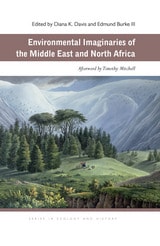
Environmental Imaginaries of the Middle East and North Africa
Diana K. Davis
Ohio University Press, 2011
The landscapes of the Middle East have captured our imaginations throughout history. Images of endless golden dunes, camel caravans, isolated desert oases, and rivers lined with palm trees have often framed written and visual representations of the region. Embedded in these portrayals is the common belief that the environment, in most places, has been deforested and desertified by centuries of misuse. It is precisely such orientalist environmental imaginaries, increasingly undermined by contemporary ecological data, that the eleven authors in this volume question. This is the first volume to critically examine culturally constructed views of the environmental history of the Middle East and suggest that they have often benefitted elites at the expense of the ecologies and the peoples of the region. The contributors expose many of the questionable policies and practices born of these environmental imaginaries and related histories that have been utilized in the region since the colonial period. They further reveal how power, in the form of development programs, notions of nationalism, and hydrological maps, for instance, relates to environmental knowledge production.
Contributors: Samer Alatout, Edmund Burke III, Shaul Cohen, Diana K. Davis, Jennifer L. Derr, Leila M. Harris, Alan Mikhail, Timothy Mitchell, Priya Satia, Jeannie Sowers, and George R. Trumbull IV
Errands into the Metropolis
New England Dissidents in Revolutionary LondonJonathan Beecher Field
Dartmouth College Press, 2012
Essays in French Colonial History
Proceedings of the 21st Annual Meeting of the French Colonial Historical SocietyA.J.B. Johnston
Michigan State University Press, 1997
On 31 May - 3 June 1995, more than 200 participants gathered in Sydney and at Fortress Louisbourg, Nova Scotia, for the 21st annual conference of the French Colonial Historical Society. Essays in French Colonial History contains seventeen of the best articles presented at this meeting. It is a wide-ranging collection that explores many new and innovative facets of the French experience outre mer. The contributors, a mix of established experts and younger scholars, examine French activity in North America, the West Indies, Africa, and South America and focus on issues military, social, cultural, native, and political history.
Among the subject areas explored are: the 16th century French colonies in Brazil and Florida; Victor Hugues and the Reign of Terror on Guadeloupe; commerce and the distinctiveness of Louisbourg; the importance of letter-writing and compagnonnage; unresolved territory of the Creek Nation; case studies in the area of transition patrimonial; French colonial interests and policies in Atlantic Canada, Africa, and South America; attitudes among African Americans in post-French St. Louis; and a research report on the Historical Atlas of Quebec.
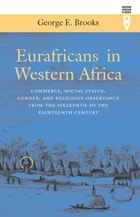
Eurafricans in Western Africa
Commerce, Social Status, Gender, and Religious Observance from the Sixteenth to the Eighteenth CenturyGeorge E. Brooks
Ohio University Press, 2003
Eurafricans in Western Africa traces the rich social and commercial history of western Africa. The most comprehensive study to date, it begins prior to the sixteenth century when huge profits made by middlemen on trade in North African slaves, salt, gold, pepper, and numerous other commodities prompted Portuguese reconnaissance voyages along the coast of western Africa. From Senegal to Sierra Leone, Portuguese, including “New Christians” who reverted to Judaism while living in western Africa, thrived where riverine and caravan networks linked many African groups.
Portuguese and their Luso-African descendants contended with French, Dutch, and English rivals for trade in gold, ivory, slaves, cotton textiles, iron bars, cowhides, and other African products. As the Atlantic slave trade increased, French and Franco-Africans and English and Anglo-Africans supplanted Portuguese and Luso-Africans in many African places of trade.
Eurafricans in Western Africa follows the changes that took root in the eighteenth century when French and British colonial officials introduced European legal codes, and concludes with the onset of the French Revolution and Napoleonic Wars, when suppression of the slave trade and expanding commerce in forest and agricultural commodities again transformed circumstances in western Africa.
Professor George E. Brooks’s outstanding history of these vital aspects of western Africa is enriched by his discussion of the roles of the women who married or cohabited with European traders. Through accounts of incidents and personal histories, which are integrated into the narrative, the lives of these women and their children are accorded a prominent place in Professor Brooks’s fascinating discussion of this dynamic region of Africa.
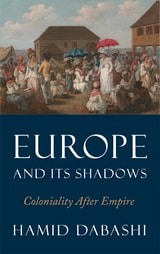
Europe and Its Shadows
Coloniality after EmpireHamid Dabashi
Pluto Press, 2019
Frantz Fanon’s assessment that 'Europe is literally the creation of the Third World' is still true today; but in more than one sense for the colonial has always been embedded in the capital, and the capital within the colonial. As the condition of coloniality shifts, so have the dividing lines between coloniser and colonised, and this shift calls for a reappraisal of our understanding of nationalism, xenophobia and sectarianism as the dangerous indices of the emerging worlds.
As the far-right populists captivate minds across Europe and Brexit upsets the balance of power in the European Union, this book, from a major scholar of postcolonial thought, is a timely and transformative intervention.
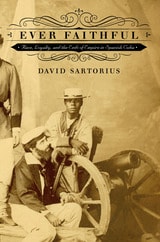
Ever Faithful
Race, Loyalty, and the Ends of Empire in Spanish CubaDavid Sartorius
Duke University Press, 2013
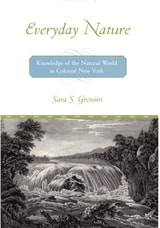
Everyday Nature
Knowledge of the Natural World in Colonial New YorkGronim, Sara S
Rutgers University Press, 2007
In the modern world, the public looks to scientists and scholars for their expertise on issues ranging from the effectiveness of vaccines to the causes of natural disasters. But for early Americans, whose relationship to nature was more intimate and perilous than our own, personal experience, political allegiances, and faith in God took precedence over the experiments of the learned.
In Everyday Nature, Sara Gronim shows how scientific advances were received in the early modern world, from the time Europeans settled in America until just before the American Revolution. Settlers approached a wide range of innovations, such as smallpox inoculation, maps and surveys, Copernican cosmology, and Ben Franklin’s experiments with electricity, with great skepticism. New Yorkers in particular were distrustful because of the chronic political and religious factionalism in the colony. Those discoveries that could be easily reconciled with existing beliefs about healing the sick, agricultural practices, and the revolution of the planets were more readily embraced.
A fascinating portrait of colonial life, this book traces a series of innovations that were disseminated throughout the Atlantic world during the Enlightenment, and shows how colonial New Yorkers integrated new knowledge into their lives.
Exemplary Violence
Rewriting History in Colonial ColombiaAlberto Villate-Isaza
Bucknell University Press, 2021
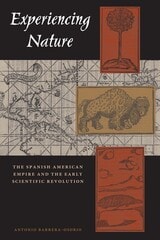
Experiencing Nature
The Spanish American Empire and the Early Scientific RevolutionBy Antonio Barrera-Osorio
University of Texas Press, 2006
As Spain colonized the Americas during the sixteenth century, Spanish soldiers, bureaucrats, merchants, adventurers, physicians, ship pilots, and friars explored the natural world, gathered data, drew maps, and sent home specimens of America's vast resources of animals, plants, and minerals. This amassing of empirical knowledge about Spain's American possessions had two far-reaching effects. It overturned the medieval understanding of nature derived from Classical texts and helped initiate the modern scientific revolution. And it allowed Spain to commodify and control the natural resources upon which it built its American empire.
In this book, Antonio Barrera-Osorio investigates how Spain's need for accurate information about its American colonies gave rise to empirical scientific practices and their institutionalization, which, he asserts, was Spain's chief contribution to the early scientific revolution. He also conclusively links empiricism to empire-building as he focuses on five areas of Spanish activity in America: the search for commodities in, and the ecological transformation of, the New World; the institutionalization of navigational and information-gathering practices at the Spanish Casa de la Contratación (House of Trade); the development of instruments and technologies for exploiting the natural resources of the Americas; the use of reports and questionnaires for gathering information; and the writing of natural histories about the Americas.