Results by title
46 books match the query 'Girls'
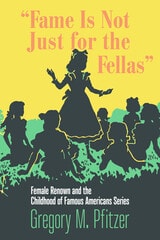
"Fame Is Not Just for the Fellas"
Female Renown and the Childhood of Famous Americans SeriesGregory M. Pfitzer
University of Massachusetts Press, 2022
Finalist of the 2023 SHARP History of the Book Prize
Between 1932 and 1958, thousands of children read volumes in the book series Childhood of Famous Americans. With colorful cover art and compelling—and often highly fictionalized—narrative storylines, these biographies celebrated the national virtues and achievements of famous women like Betsy Ross, Louisa May Alcott, and Amelia Earhart. Employing deep archival research, Gregory M. Pfitzer examines the editorial and production choices of the publisher and considers the influence of the series on readers and American culture more broadly.
In telling the story of how female subjects were chosen and what went into writing these histories for young female readers of the time, Pfitzer illustrates how these books shaped children’s thinking and historical imaginations around girlhood using tales from the past. Utilizing documented conversations and disagreements among authors, editors, readers, reviewers, and sales agents at Bobbs-Merrill, “Fame Is Not Just for the Fellas” places the series in the context of national debates around fame, gender, historical memory, and portrayals of children and childhood for a young reading public—charged debates that continue to this day.

A Frieze of Girls
Memoirs as FictionAllan Seager
University of Michigan Press, 2004
A Frieze of Girls speaks with a fresh voice from an American era long past. This is more than Allan Seager's story of what happened; it is also about how "the feel of truth is very like the feel of fiction, especially when either is at all strange."
Seager gives us his coming-of-age story, from a high-school summer as a sometime cowboy in the Big Horn mountains to a first job at seventeen managing an antiquated factory in Memphis to a hard-drinking scholarship year in Oxford, cut short by tuberculosis. At once funny with an undercurrent of pain, the stories in A Frieze of Girls remind us of the realities we create to face the world and the past, and in turn of the realities of the world we must inevitably also confront. "Time makes fiction out of our memories," writes Seager. "We all have to have a self we can live with and the operation of memory is artistic---selecting, suppressing, bending, touching up, turning our actions inside out so that we can have not necessarily a likable, merely a plausible identity." A Frieze of Girls is Allan Seager at the top of his form, and a reminder that great writing always transcends mere fashion.
Allan Seager was Professor of English at the University of Michigan and author of many highly praised short stories and novels, including Amos Berry. He died in Tecumseh, Michigan, in 1968. Novelist Charles Baxter is the author of Saul and Patsy.
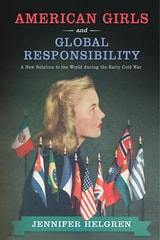
American Girls and Global Responsibility
A New Relation to the World during the Early Cold WarHelgren, Jennifer
Rutgers University Press, 2017
Jennifer Helgren argues that a new internationalist girl citizenship took root in the country in the years following World War II in youth organizations such as Camp Fire Girls, Girl Scouts, YWCA Y-Teens, schools, and even magazines like Seventeen. She shows the particular ways that girls’ identities and roles were configured, and reveals the links between internationalist youth culture, mainstream U.S. educational goals, and the U.S. government in creating and marketing that internationalist girl, thus shaping the girls’ sense of responsibilities as citizens.

Animals at the End of the World
By Gloria Susana Esquivel, translated by Robin Myers
University of Texas Press, 2020
Animals at the End of the World begins with an explosion, which six-year-old Inés mistakes for the end of the world that she has long feared. In the midst of the chaos, she meets the maid’s granddaughter, Mariá, who becomes her best friend and with whom she navigates the adult world in her grandparents’ confined house. Together, they escape the house and confront the “animals” that populate Bogotá in the 1980s. But Inés soon realizes she cannot count on either María or her preoccupied and conflicted parents. Alone, she must learn to decipher her outer and inner worlds, confronting both armies of beasts and episodes of domestic chaos. In the process, she also learns what it means to test boundaries, break rules, and cope with the consequences.
The first novel by Colombian author Gloria Susana Esquivel, Animals at the End of the World is a poetic and moving coming-of-age story that lingers long after its final page.

As Told By Herself
Women’s Childhood Autobiography, 1845-1969Lorna Martens
University of Wisconsin Press, 2022
Stopping just before second-wave feminism brought an explosion in women's childhood autobiographical writing, As Told by Herself explores the genre's roots and development from the mid-nineteenth century, and recovers many works that have been neglected or forgotten. The result illustrates how previous generations of women—in a variety of places and circumstances—understood themselves and their upbringing, and how they thought to present themselves to contemporary and future readers.
Before Before
A Story of Discovery and Loss in Sierra LeoneBetsy Small
University of Michigan Press, 2025
2025 Foreword INDIES Finalist for Political and Social Sciences
- 2026 Nautilus Silver Book Award in World Cultures' Transformational Growth & Development
Sierra Leone is often sensationalized as a place of extreme violence and suffering—of blood diamonds, child soldiers, war amputations, and Ebola and now the highly addictive drug Kush. Before Before captures daily life in a different country, one Betsy Small first encountered as a Peace Corps worker between 1984–1987, and then rediscovered when she returned decades later with her daughter. Living in Tokpombu, a remote community of forty rice-farming families, the author faced struggles that changed her forever and witnessed the growing tensions in this rainforest village—between the young and old, between the traditions of oral history and honoring the ancestors valued by the elders and the siren call of the illicit diamond mines faced by the youth.
Before Before offers a rare portrait of everyday people, with particular focus on the lives of women and girls, before the brutal war of 1991 tore the country apart. Through Small’s account of immersion in another world as she witnessed injustice and was welcomed as a friend, readers are invited to explore the shared ground of our humanity.
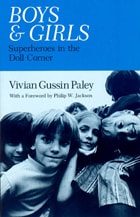
Boys and Girls
Superheroes in the Doll CornerVivian Gussin Paley
University of Chicago Press, 1984
"I will admit my biases up front: having a three-year old daughter of my own made it impossible for this book to be anything but fun to read. I dare anyone who enjoys children not to enjoy this story about stories, this narrative about narratives."—Jerry Powell, Winterthur Portfolio
Boys and Girls
Superheroes in the Doll CornerVivian Gussin Paley
University of Chicago Press, 2014
For more than forty years, Boys and Girls has a classic account of the little-known world that young children create together when they play. Vivian Gussin Paley takes readers inside a kindergarten classroom to show them in detail how boys and girls play—and how, by playing and fantasizing in different ways, they work through complicated notions of gender roles and identity. The children’s own conversations, stories, playacting, and scuffles are interwoven with Paley’s observations and accounts of her vain attempts to alter their stereotyped play. In the decades since the book's original publication, play in kindergarten and early years of school has lost ground to structured teaching and even testing, which makes Paley's book, updated for a new era, more important than ever. To teach kids successfully, we must make space for play.
China's Hidden Children
Abandonment, Adoption, and the Human Costs of the One-Child PolicyKay Ann Johnson
University of Chicago Press, 2016
Johnson spent years talking with the Chinese parents driven to relinquish their daughters during the brutal birth-planning campaigns of the 1990s and early 2000s, and, with China’s Hidden Children, she paints a startlingly different picture. The decision to give up a daughter, she shows, is not a facile one, but one almost always fraught with grief and dictated by fear. Were it not for the constant threat of punishment for breaching the country’s stringent birth-planning policies, most Chinese parents would have raised their daughters despite the cultural preference for sons. With clear understanding and compassion for the families, Johnson describes their desperate efforts to conceal the birth of second or third daughters from the authorities. As the Chinese government cracked down on those caught concealing an out-of-plan child, strategies for surrendering children changed—from arranging adoptions or sending them to live with rural family to secret placement at carefully chosen doorsteps and, finally, abandonment in public places. In the twenty-first century, China’s so-called abandoned children have increasingly become “stolen” children, as declining fertility rates have left the dwindling number of children available for adoption more vulnerable to child trafficking. In addition, government seizures of locally—but illegally—adopted children and children hidden within their birth families mean that even legal adopters have unknowingly adopted children taken from parents and sent to orphanages.
The image of the “unwanted daughter” remains commonplace in Western conceptions of China. With China’s Hidden Children, Johnson reveals the complex web of love, secrecy, and pain woven in the coerced decision to give one’s child up for adoption and the profound negative impact China’s birth-planning campaigns have on Chinese families.
Complicated Lives
Girls, Parents, Drugs, and Juvenile JusticeLopez, Vera
Rutgers University Press, 2017
Complicated Lives focuses on the lives of sixty-five drug-using girls in the juvenile justice system (living in group homes, a residential treatment center, and a youth correctional facility) who grew up in families characterized by parental drug use, violence, and child maltreatment. Vera Lopez situates girls’ relationships with parents who fail to live up to idealized parenting norms and examines how these relationships change over time, and ultimately contribute to the girls’ future drug use and involvement in the justice system.
While Lopez’s subjects express concerns and doubt in their chances for success, Lopez provides an optimistic prescription for reform and improvement of the lives of these young women and presents a number of suggestions ranging from enhanced cultural competency training for all juvenile justice professionals to developing stronger collaborations between youth and adult serving systems and agencies.

Concluding
Henry Green
University of Chicago Press, 1985
"[A] novel of projections, protractions, long shots, and shadows flying ahead, a slow fall. . . . The sinister world of Concluding is . . . beautiful, side-lit and colored like an undersea kingdom."—from the Foreword by Eudora Welty
Confessions of Joan the Tall
Joan Cusack Handler
CavanKerry Press, 2012

Cripping Girlhood
Anastasia Todd
University of Michigan Press, 2024
By closely examining the ways that disabled girls represent themselves, Anastasia Todd goes beyond a critique of the figure of the privileged, disabled girl subject in the national imagination to explore how disabled girls circulate their own capacious re-envisioning of what it means to be a disabled girl. In analyzing a range of cultural sites, including YouTube, TikTok, documentaries, and GoFundMe campaigns, Todd shows how disabled girls actively upend what we think we know about them and their experience, recasting the meanings ascribed to their bodyminds in their own terms. By analyzing disabled girls’ self-representational practices and cultural productions, Todd shows how disabled girls deftly theorize their experiences of ableism, sexism, racism, and ageism, and cultivate communities online, creating archives of disability knowledge and politicizing other disabled people in the process.
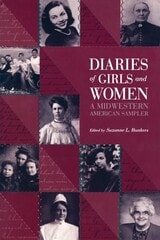
Diaries of Girls and Women
A Midwestern American SamplerSuzanne L. Bunkers
University of Wisconsin Press, 2001
Diaries of Girls and Women captures and preserves the diverse lives of forty-seven girls and women who lived in Minnesota, Iowa, and Wisconsin between 1837 and 1999—young schoolgirls, adolescents coming of age, newlywed wives, mothers grieving the loss of children, teachers, nurses, elderly women, Luxembourger immigrant nuns, and women traveling abroad. A compelling work of living history, it brings together both diaries from historical society archives and diaries still in possession of the diarists or their descendents.
Editor Suzanne L. Bunkers has selected these excerpts from more than 450 diaries she examined. Some diaries were kept only briefly, others through an entire lifetime; some diaries are the intensely private record of a life, others tell the story of an entire family and were meant to be saved and appreciated by future generations. By approaching diaries as historical documents, therapeutic tools, and a form of literature, Bunkers offers readers insight into the self-images of girls and women, the dynamics of families and communities, and the kinds of contributions that girls and women have made, past and present. As a representation of the girls and women of varied historical eras, locales, races, and economic circumstances who settled and populated the Midwest, Diaries of Girls and Women adds texture and pattern to the fabric of American history.

Everyday Psychokillers
A History for Girls, A NovelLucy Corin
University of Alabama Press, 2004
In Everyday Psychokillers spectacular violence is the idiom of everyday life, a lurid extravaganza in which all those around the narrator seem vicarious participants. And at its center are the interchangeable young girls, thrilling to know themselves the object of so much desire and terror.
The narrative interweaves history, myth, rumor, and news with the experiences of a young girl living in the flatness of South Florida. Like Grace Paley's narrators, she is pensive and eager, hungry for experience but restrained. Into the sphere of her regard come a Ted Bundy reject, the God Osiris, a Caribbean slave turned pirate, a circus performer living in a box, broken horses, a Seminole chief in a swamp, and a murderous babysitter. What these preposterously commonplace figures all know is that murder is identity: "Of course what matters really is the psychokiller, what he's done, what he threatens to do. Of course to be the lucky one you have to be abducted in the first place. Without him, you wouldn't exist."
Everyday Psychokillers reaches to the edge of the psychoanalytical and jolts the reader back to daily life. The reader becomes the killer, the watcher, the person on the verge, hiding behind an everyday face.
Gender Play
Girls and Boys in SchoolThorne, Barrie
Rutgers University Press, 1993
Thorne observes children in schools in working-class communities, emphasizing the experiences of fourth and fifth graders. Most of the children she observed were white, but a sizable minority were Latino, Chicano, or African American. Thorne argues that the organization and meaning of gender are influenced by age, ethnicity, race, sexuality, and social class, and that they shift with social context. She sees gender identity not through the lens of individual socialization or difference, but rather as a social process involving groups of children. Thorne takes us on a fascinating journey of discovery, provides new insights about children, and offers teachers practical suggestions for increasing cooperative mixed-gender interaction.
Gender Play
Girls and Boys in SchoolBarrie Thorne
Rutgers University Press, 2024
A detailed and perceptive ethnography told with compassion and humor, Gender Play immerses readers in the everyday lives of a group of working-class children to examine the social interactions that shape their gender identities. This new Rutgers Classic edition of Gender Play contains an introduction from leading sociologists of gender Michael A. Messner and Raewyn Connell that places Thorne’s innovative research in historical context. It also includes a new afterword by one of Thorne’s own students, acclaimed sociologist C.J. Pascoe, reflecting on both the lasting influence of Thorne’s work and the ways that American children’s understandings of gender have shifted in the past thirty years.
Gender and Violence in Haiti
Women’s Path from Victims to AgentsBenedetta Faedi Duramy
Rutgers University Press, 2014
Gender and Violence in Haiti is the product of more than a year of extensive firsthand observations and interviews with the women who have been caught up in the widespread violence plaguing Haiti. Drawing from the experiences of a diverse group of Haitian women, Faedi Duramy finds that both the victims and perpetrators of violence share a common sense of anger and desperation. Untangling the many factors that cause these women to commit violence, from self-defense to revenge, she identifies concrete measures that can lead them to feel vindicated and protected by their communities.
Faedi Duramy vividly conveys the horrifying conditions pervading Haiti, even before the 2010 earthquake. But Gender and Violence in Haiti also carries a message of hope—and shows what local authorities and international relief agencies can do to help the women of Haiti.
Girl Power?
A History of Girl-Focused Development from NairobiSarah Bellows-Blakely
University of Chicago Press, 2025
Girl-focused education programs have long been at the heart of international policymaking—when girls’ access to education is ensured, the reasoning goes, they are more likely to turn into productive adults who can drive economic growth. These ideas combine strands of feminism and capitalism that have a specific and understudied origin. In this book, historian Sarah Bellows-Blakely shows how a doctored study of girls’ education in East and Southern Africa led to the creation of international norms in the United Nations that would go on to guide policymaking on women’s rights and economic growth, promoting neoliberal feminist policy at the expense of other forms of gender-based justice.
Focusing on the growth of free-market feminism and girl-focused economic development planning through the relationship between UNICEF and the Nairobi-based NGO FEMNET, Bellows-Blakely reveals how their joint efforts set the blueprints for linked movements of economic development and women’s rights that are still ongoing. Through a narrative of the UNICEF-FEMNET lobbying campaign, Bellows-Blakely shows how multiple, contested girl-focused visions of economic programming and gender justice became selectively erased in favor of an approach to global policy centered on the free-market construction and strategic deployment of the African “girl child.”
Girlhood
A Global HistoryHelgren, Jennifer
Rutgers University Press, 2010
Spanning a broad time frame from 1750 to the present, essays illuminate the various continuities and differences in girls' lives across culture and region--girls on all continents except Antarctica are represented. Case studies and essays are arranged thematically to encourage comparisons between girls' experiences in diverse locales, and to assess how girls were affected by historical developments such as colonialism, political repression, war, modernization, shifts in labor markets, migrations, and the rise of consumer culture.
Girls in Trouble with the Law
Schaffner, Laurie
Rutgers University Press, 2006
Offering a critical assessment of what she describes as a gender-insensitive juvenile legal system, Schaffner makes a compelling argument that current policies do not go far enough to empower disadvantaged girls so that communities can assist them in overcoming the social limitations and gender, sexual, and racial/ethnic discrimination that continue to plague young women growing up in contemporary United States.

Girls of Liberty
The Struggle for Suffrage in Mandatory PalestineMargalit Shilo
Brandeis University Press, 2016

Girls! Girls! Girls! In Contemporary Art
Edited by Catherine Grant and Lori Waxman
Intellect Books, 2011
Growing Girls
The Natural Origins of Girls' Organizations in AmericaMiller, Susan A
Rutgers University Press, 2007
Surprisingly, the "girl problem"?a crisis caused by the transition from a sheltered, family-centered Victorian childhood to modern adolescence where self-control and a strong democratic spirit were required of reliable citizens?was also solved by way of traditionally masculine, adventurous, outdoor activities, as practiced by the Girl Scouts, the Camp Fire Girls, and many other similar organizations.
Susan A. Miller explores these girls' organizations that sprung up in the first half of the twentieth century from a socio-historical perspective, showing how the notions of uniform identity, civic duty, "primitive domesticity," and fitness shaped the formation of the modern girl.
Hierarchies of Care
Girls, Motherhood, and Inequality in PeruKrista E. Van Vleet
University of Illinois Press, 2019
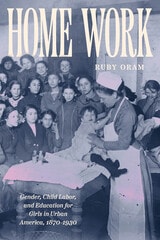
Home Work
Gender, Child Labor, and Education for Girls in Urban America, 1870–1930Ruby Oram
University of Chicago Press, 2025
In Home Work, historian Ruby Oram tells the story of how middle-class, white women reformers lobbied the state to implement various public education reforms to shape the lives of girls and women in industrial cities between 1870 and 1930. Women such as Jane Addams and Florence Kelley used education reform to target working-class communities and advocate for their middle-class ideals of girlhood and femininity, which could vary depending on the racial or socio-economic backgrounds of the girls. For example, reformers generally encouraged white girls to care for their future families, while pushing Black girls toward becoming domestic workers in others’ homes. Using Chicago as a case study, Oram also explores how many of the reforms sought by white women were in response to evolving anxieties about immigration, health, and sexual delinquency.
An illuminating addition to the history of urban education in America, Home Work enriches our understanding of educational inequality in twentieth-century schools.
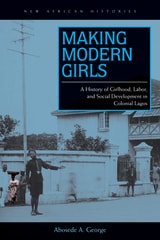
Making Modern Girls
A History of Girlhood, Labor, and Social Development in Colonial LagosAbosede A. George
Ohio University Press, 2014
Winner of the 2015 Aidoo-Snyder Book Prize for outstanding book on African women's experiences. (African Studies Association)
Honorable Mention, New York African Studies Association Book Prize
In Making Modern Girls, Abosede A. George examines the influence of African social reformers and the developmentalist colonial state on the practice and ideology of girlhood as well as its intersection with child labor in Lagos, Nigeria. It draws from gender studies, generational studies, labor history, and urban history to shed new light on the complex workings of African cities from the turn of the twentieth century through the nationalist era of the 1950s.
The two major schemes at the center of this study were the modernization project of elite Lagosian women and the salvationist project of British social workers. By approaching children and youth, specifically girl hawkers, as social actors and examining the ways in which local and colonial reformers worked upon young people, the book offers a critical new perspective on the uses of African children for the production and legitimization of national and international social development initiatives.
Making Modern Girls demonstrates how oral sources can be used to uncover the social history of informal or undocumented urban workers and to track transformations in practices of childhood over the course of decades. George revises conventional accounts of the history of development work in Africa by drawing close attention to the social welfare initiatives of late colonialism and by highlighting the roles that African women reformers played in promoting sociocultural changes within their own societies.
Nancy Drew and Company
Culture, Gender, and Girls’ SeriesEdited by Sherrie A. Inness
University of Wisconsin Press, 1997

One Dog Happy
Molly McNett
University of Iowa Press, 2008
In this award-winning debut collection, Molly McNett couples laugh-out-loud dialogue and wry observation reminiscent of Flannery O’Connor with disquieting strains of dashed hope, troubled sexuality, and disillusionment.
The adults in these stories can seem as hapless and helpless as the younger characters. Two neglected daughters use the language of clothes to cope with their parents’ divorce and their father’s mail-order bride. A young girl’s bizarre sexual fantasies help her gain control over the chaos of her family life. A gang of teenagers accuse a farmer of bestiality. A divorced father tries to create a pony-filled world that might appeal to his daughters. In the title story, Mr. Bob, the minister’s housesitter, loses a dog but finds someone to believe in. And in “Helping,” the darkest story in this amazing collection, Ruthie’s anger conquers her religious faith when she takes care of a severely disabled child.
We meet McNett’s endearing, often foolish characters at a point when their minds are open to manipulation by the people and events around them, and the conclusions they draw are heartbreaking: I am not allowed weakness; life treats people unequally; perhaps there is no God. Yet throughout they find quiet moments of possibility, courage, and a return to faith and comfort.

One Sunny Day
A Child's Memories of HiroshimaHideko Tamura Snider
Oregon State University Press, 2023
Hideko was ten years old when the atomic bomb devastated her home in Hiroshima. In this eloquent and moving narrative, Hideko recalls her life before the bomb, the explosion itself, and the influence of that trauma upon her subsequent life in Japan and the United States. Her years in America have given her unusual insights into the relationship between Japanese and American cultures and the impact of Hiroshima on our lives.
This new edition includes two expanded chapters and revisions throughout. A new epilogue brings the story up to date. This poignant story of courage and resilience remains deeply relevant today, offering a profoundly personal testament against the ongoing threat of nuclear warfare.
One for the Girls!
The Pleasures and Practices of Reading Women's PornClarissa Smith
Intellect Books, 2007
We usually think of women as the victims of pornography rather than its consumers. Whether appearing in films, peering provocatively from the pages of magazines, or posing on explicit Web-sites, women are considered the dehumanized objects of unseen lascivious male viewers. But in her controversial new book One for the Girls!, Clarissa Smith debunks this myth and challenges women to read, watch, and enjoy pornography on their own terms. Focusing on the British magazine For Women, Smith looks at its readers’ responses to male pinups and erotica and explores the intricacies of women’s unique reactions to pornography.
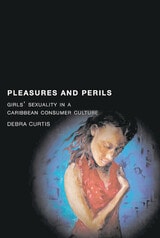
Pleasures and Perils
Girls' Sexuality in a Caribbean Consumer CultureCurtis, Debra
Rutgers University Press, 2009
Curtis shows that girls are often caught between conflicting discourses of Christian teachings about chastity, public health cautions about safe sex, and media enticements about consumer delights. Sexuality's contradictions are exposed: power and powerless¡ness, self-determination and cultural control, violence and pleasure. Pleasures and Perils illuminates the methodological and ethical issues anthropologists face when they conduct research on sex, especially among girls. The sexually explicit narratives conveyed in this book challenge not only the reader's own thoughts on sexuality but also the broader limits and possibilities of ethnography.
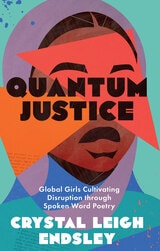
Quantum Justice
Global Girls Cultivating Disruption through Spoken Word PoetryCrystal Leigh Endsley
University of Texas Press, 2023
How girls of color from eight global communities strategize on questions of identity, social issues, and political policy through spoken word poetry.
Around the world, girls know how to perform. Grounded in her experience of “putting a mic in the margins” by facilitating workshops for girls in Ethiopia, South Africa, Tanzania, and the United States, scholar/advocate/artist Crystal Leigh Endsley highlights how girls use spoken word poetry to narrate their experiences, dreams, and strategies for surviving and thriving. By centering the process of creating and performing spoken word poetry, this book examines how girls forecast what is possible for their collective lives.
In this book, Endsley combines poetry, discourse analysis, photovoice, and more to forge the feminist theory of “quantum justice,” which forefronts girls’ relationships with their global counterparts. Using quantum justice theory, Endsley examines how these collaborative efforts produce powerful networks and ultimately map trajectories of social change at the micro level. By inviting transnational dialogue through spoken word poetry, Quantum Justice emphasizes how the imaginative energy in hip-hop culture can mobilize girls to connect and motivate each other through spoken word performance and thereby disrupt the status quo.
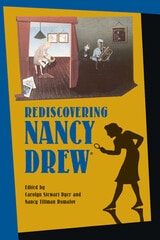
Rediscovering Nancy Drew
Carolyn Stewart Dyer
University of Iowa Press, 1995
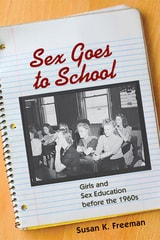
Sex Goes to School
Girls and Sex Education before the 1960sSusan K. Freeman
University of Illinois Press, 2007
Sex Talks to Girls
A MemoirMaureen Seaton
University of Wisconsin Press, 2008
Ship Captain's Daughter
Growing Up on the Great LakesAnn Michler Lewis
Wisconsin Historical Society Press, 2015
Ann Lewis's childhood was marked by an unusual rhythm. Each year the thawing and freezing of the Great Lakes signaled the beginning and end of the shipping season, months of waiting that were punctuated by brief trips to various ports to meet her father, the captain.
With lively storytelling and vivid details, Lewis captures the unusual life of shipping families whose days and weeks revolved around the shipping industry on the Great Lakes. She paints an intriguing and affectionate portrait of her father, a talented pianist whose summer job aboard an ore freighter led him to a life on the water. Working his way up from deckhand to ship captain, Willis Michler became the master of thirteen ships over a span of twenty-eight years. From the age of twelve, Ann accompanied the captain to the ports of Milwaukee, Chicago, Toledo, and Cleveland on the lower Great Lakes. She describes sailing through stormy weather and starry nights, visiting the engine room, dining at the captain's table, and wheeling the block-long ship with her father in the pilot house. Through her mother's stories and remarks, Lewis also reveals insights into the trials and rewards of being a ship captain's wife. The book is enhanced by the author's vintage snapshots, depicting this bygone lifestyle.

The Best School in Jerusalem
Annie Landau’s School for Girls, 1900–1960Laura S. Schor
Brandeis University Press, 2013

The Encyclopaedia of Good Reasons
Monica Cantieni
Seagull Books, 2014
Set in the time of the crucial 1970 Swiss referendum on immigration, Monica Cantieni introduces us to a host of colorful characters who struggle to make Switzerland their home: Eli, the Spanish bricklayer; Toni, the Italian factory worker with movie star looks; Madame Jelisaweta, the Yugoslav hairdresser; and Milena, the mysterious girl in the wardrobe. This is a book with a very warm heart, and rarely has a young girl’s narrative been at once so uproariously hilarious and so deeply moving.

The Farm on Badger Creek
Memories of a Midwest GirlhoodPeggy Prilaman Marxen
Wisconsin Historical Society Press, 2021
The Girls and Boys of Belchertown
A Social History of the Belchertown State School for the Feeble-MindedRobert Hornick
University of Massachusetts Press, 2012
During much of the twentieth century, people labeled “feeble-minded,” “mentally deficient,” and “mentally retarded” were often confined in large, publicly funded, residential institutions located on the edges of small towns and villages some distance from major population centers. At the peak of their development in the late 1960s, these institutions—frequently called “schools” or “homes”—housed 190,000 men, women, and children in the United States.
The Girls and Boys of Belchertown offers the first detailed history of an American public institution for intellectually disabled persons. Robert Hornick recounts the story of the Belchertown State School in Belchertown, Massachusetts, from its beginnings in the 1920s to its closure in the 1990s following a scandalous exposé and unprecedented court case that put the institution under direct supervision of a federal judge. He draws on personal interviews, private letters, and other unpublished sources as well as local newspapers, long out-of-print materials, and government reports to re-create what it was like to live and work at the school. More broadly, he gauges the impact of changing social attitudes toward intellectual disability and examines the relationship that developed over time between the school and the town where it was located.
What emerges is a candid and complex portrait of the Belchertown State School that neither vilifies those in charge nor excuses the injustices perpetrated on its residents, but makes clear that despite the court-ordered reforms of its final decades, the institution needed to be closed.
The Girls' History and Culture Reader
The Nineteenth CenturyEdited by Miriam Forman-Brunell and Leslie Paris
University of Illinois Press, 2011
The Girls' History and Culture Reader
The Twentieth CenturyEdited by Miriam Forman-Brunell and Leslie Paris
University of Illinois Press, 2011
The Modern Girl Around the World
Consumption, Modernity, and GlobalizationThe Modern Girl Around the World Research Group
Duke University Press, 2008
Scholars of history, women’s studies, literature, and cultural studies follow the Modern Girl around the world, analyzing her manifestations in Germany, Australia, China, Japan, France, India, the United States, Russia, South Africa, and Zimbabwe. Along the way, they demonstrate how the economic structures and cultural flows that shaped a particular form of modern femininity crossed national and imperial boundaries. In so doing, they highlight the gendered dynamics of interwar processes of racial formation, showing how images and ideas of the Modern Girl were used to shore up or critique nationalist and imperial agendas. A mix of collaborative and individually authored chapters, the volume concludes with commentaries by Kathy Peiss, Miriam Silverberg, and Timothy Burke.
Contributors: Davarian L. Baldwin, Tani E. Barlow, Timothy Burke, Liz Conor, Madeleine Yue Dong, Anne E. Gorsuch, Ruri Ito, Kathy Peiss, Uta G. Poiger, Priti Ramamurthy, Mary Louise Roberts, Barbara Sato, Miriam Silverberg, Lynn M. Thomas, Alys Eve Weinbaum
Ventures into Childland
Victorians, Fairy Tales, and FemininityU. C. Knoepflmacher
University of Chicago Press, 1998
"Ventures into Childland is acute, well written and stimulating. It also has a political purpose, to insist on the importance of protecting and nurturing children, imaginatively and physically."—Jan Marsh, Times Literary Supplement
"A provocative and interesting book about Victorian culture."—Library Journal
When the Rainbow Goddess Wept
Cecilia Manguerra Brainard
University of Michigan Press, 1999