Results by title
319 books match the query 'Communication Studies' and 11 start with e

Ecological Feelings
A Rhetorical CompendiumJoshua Trey Barnett
Michigan State University Press, 2025
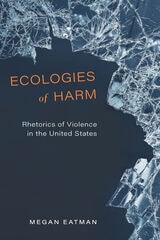
Ecologies of Harm
Rhetorics of Violence in the United StatesMegan Eatman
The Ohio State University Press, 2020
While Eatman looks to examples of violent spectacles to make her case (lynching, capital punishment, and torture in the War on Terror), it is in her analysis of more mundane responses to these forms of violence (congressional debates, court documents, visual art, and memorial performance) where the key to her argument lies—as she shows how circulating violence in these ways produces violent rhetorical ecologies that facilitate some modes of being while foreclosing others. Through this ecological approach, Ecologies of Harm offers a new understanding of the debates surrounding legacies of violence, examines how rhetoric and violence function together, and explores implications of their entanglement for antiviolence work.
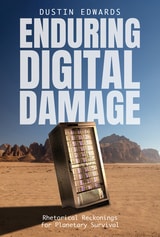
Enduring Digital Damage
Rhetorical Reckonings for Planetary SurvivalDustin Edwards
University of Alabama Press, 2025
Networks the intricate relationship between rapidly advancing digital technologies and environmental degradation and reveals the costs of our globally connected world.
Taking a step back from the screens of electronic devices and exploring the profound impacts of digital technologies on our environment, Enduring Digital Damage lifts the veil on the “hidden costs” in our modern technological world.
Dustin Edwards traces key moments in the lifecycle of technology—such as the extraction of raw materials to the disposal of electronic waste—to uncover the often overlooked consequence of our digital age. He illuminates how data centers, mining operations, and other digital infrastructures contribute to environmental harm and how the rapidly increasing demand for land use and water access is essential to sustain our growing digital needs. Weaving together narratives of technological advancement and ecological destruction, Edwards presents a comprehensive analysis of the true cost of our digital lives. By drawing on case studies, cultural critique, and a critical examination of labor and sustainability, Enduring Digital Damage reveals the deeper histories and ongoing struggles that make our digital lives possible, urging readers to imagine the possibility of a less harmful and extractive world.
Enduring Legacy
Rhetoric and Ritual of the Lost CauseW. Stuart. Towns
University of Alabama Press, 2013
Explores the crucial role of rhetoric and oratory in creating and propagating a “Lost Cause” public memory of the American South
Enduring Legacy explores the vital place of ceremonial oratory in the oral tradition in the South and analyses how rituals such as Confederate Memorial Day, Confederate veteran reunions, and dedication of Confederate monuments have contributed to creating and sustaining a Lost Cause paradigm for Southern identity. Towns studies in detail secessionist and Civil War speeches and how they laid the groundwork for future generations, including Southern responses to the civil rights movement, and beyond.
The Lost Cause orators that came after the Civil War, Towns argues, helped to shape a lasting mythology of the brave Confederate martyr, and the Southern positions for why the Confederacy lost and who was to blame. Innumerable words were spent—in commemorative speeches, newspaper editorials, and statehouse oratory—condemning the evils of Reconstruction, redemption, reconciliation, and the new and future South. Towns concludes with an analysis of how Lost Cause myths still influence Southern and national perceptions of the region today, as evidenced in debates over the continued deployment of the Confederate flag and the popularity of Civil War reenactments.
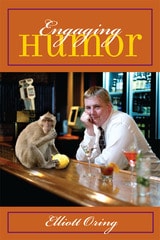
Engaging Humor
Elliott Oring
University of Illinois Press, 2002
Exploring the structure, motives, and meanings of humor in everyday life
In Engaging Humor, Elliott Oring asks essential questions concerning humorous expression in contemporary society, examining how humor works, why it is employed, and what its messages might be. This provocative book is filled with examples of jokes and riddles that reveal humor to be a meaningful--even significant--form of expression.Oring scrutinizes classic Jewish jokes, frontier humor, racist cartoons, blonde jokes, and Internet humor. He provides alternate ways of thinking about humorous expressions by examining their contexts--not just their contents. He also shows how the incongruity and absurdity essential to the production of laughter can serve serious communicative ends.
Engaging Humor examines the thoughts that underlie jokes, the question of racist motivation in ethnic humor, and the use of humor as a commentary on social interaction. The book also explores the relationship between humor and sentimentality and the role of humor in forging national identity. Engaging Humor demonstrates that when analyzed contextually and comparatively, humorous expressions emerge as communications that are startling, intriguing, and profound.

Engaging Social Media in China
Platforms, Publics, and ProductionGuobin Yang
Michigan State University Press, 2021
Entitled Opinions
Doxa after DigitalityCaddie Alford
University of Alabama Press, 2024
A rigorous redefinition of opinion—doxa—as an emergent, relational force shaped by digital infrastructures and rhetorical entanglements.
Many urgent contemporary issues—from demagoguery to white ethno-nationalism—compel us to consider opinions seriously. Yet while clichés like “he tells it like it is” and newer imperatives such as #BlackLivesMatter seem straightforward, haptics, emoji, and “like” buttons belie unexamined collective assumptions about how opinions in the digital realm function.
Caddie Alford illuminates this function by deploying the ancient Greek term for opinions: doxa. Doxa translates to “opinion,” but the term can also signal seemingness and expectations. Doxa’s capacious meanings reveal opinions to be more than static or monolithic: With doxa, opinions become emergent, dynamic, relational, and pluralistic.
Masterfully combining rhetorical frameworks as well as scholarship on opinions and digital media entanglements, Alford puts opinions into conversation with such case studies as algorithms, infrastructure, digital illiteracy, virality, and activism. She shows how “doxa” reveals gradations of opinions, from more reputable to less reputable. She demonstrates that these gradations are multifaceted and susceptible to interventions.
Entitled Opinions sheds much of the baggage associated with opinions while opening up more fertile pathways of inquiry. In a world that says, “don’t read the comments,” this book reads the comments, taking seriously content that could be easily dismissed otherwise and alchemizing judgments into implications.
Equal Time
Television and the Civil Rights MovementAniko Bodroghkozy
University of Illinois Press, 2013
Everyday Dirty Work
Invisibility, Communication, and Immigrant LaborWilfredo Alvarez
The Ohio State University Press, 2022
Winner, 2023 NCA Ethnography Division Best Book Award
Wilfredo Alvarez’s Everyday Dirty Work: Invisibility, Communication, and Immigrant Labor is an exploration into co-cultural communication practices within the workplace. Specifically, Alvarez investigates how Latin American immigrant janitors communicate from their marginalized standpoints in a predominantly White academic organization. He examines how custodial workers perceive, interpret, and thematize routine messages regarding race, ethnicity, social class, immigrant status, and occupation, and how those messages and overall communicative experiences affect both their work and personal lives.
A Latin American immigrant himself, Alvarez relates his own experiences to those of the research participants. His positionality informs and enhances his research as he demonstrates how everyday interpersonal encounters create discursive spaces that welcome or disqualify people based on symbolic and social capital. Alvarez offers valuable insights into the lived experiences of critical––but often undervalued and invisible––organizational members. Through theoretical insights and research data, he provides practical recommendations for organizational leaders to improve how they can relate to and support all stakeholders.
Experiencing War Memorials
Environment, Affect, and Public MemoryEdited by Jennifer K. Ladino
University of Alabama Press, 2026
Examines the emotional, formal, and environmental dimensions of war commemoration
Experiencing War Memorials is a compelling edited collection of essays that examines how war is commemorated through public memorials and the powerful emotions and ideologies these sites generate. Drawing on fields such as war studies, affect studies, public memory studies, and the environmental humanities, the volume demonstrates that commemoration is not only an intellectual act but an embodied, affective experience.
Through diverse case studies, contributors analyze how memorials shape public feelings about fast and slow violence, including battles, massacres, and incarceration. The essays reveal how materials, landscapes, narrative conventions, and innovative memorial forms guide emotional responses such as grief, pride, ambivalence, and outrage while making injustice perceptible. Against the backdrop of ongoing debates over heritage and violence, the collection insists on the importance of attending to the messy and disordered emotional dimensions of public memory. Some essays explore varied human and animal experiences, including military working dogs; scrutinize unsettling sites such as Confederate monuments and overlooked Holocaust locations; and consider digital, ecological, and pandemic-era memorials that expand the boundaries of commemoration.
Edited by Jennifer K. Ladino, Experiencing War Memorials offers nuanced insights into how memorial practices shape national identities, ethical understanding, and the possibilities for social change, illuminating the profound ways public remembrance influences how societies feel, remember, and reckon with violence in all its forms. This volume will appeal to scholars and students of memory studies, war and cultural studies, environmental humanities, and American studies, as well as museum professionals, artists, and readers interested in the politics and emotions of public commemoration.

Extensions of the Burkeian System
James W. Chesebro
University of Alabama Press, 1993
Extensions of the Burkeian System constitutes one of the first projects to meet the requirements Burke has established for his operation benchmark. This volume its origins in the scholarly contributions of Kenneth Burke. All of the authors of the chapters in this volume adopt stances that defer to Burke’s initial contributions, ultimately casting their work as extensions of ideas and claims posited by Burke. Yet, all of the authors also make significant departures from positions Burke has articulated. The range of these reactions varies tremendously. Several of the authors cast their positions as augmentations. They offer supplements to Burke's claims that constitute logical additions to Burke's initial observations, but even these authors provide adjustments to the Burkeian system that make a difference in how the system is perceived and understood. Other essays are cast in a more challenging mode, arguing explicitly for alternative viewpoints. Displeased with Burke's analysis at a given point for one reason or another, they posit positions different than those advanced by Burke.