Results by title
341 books match the query 'Cooking' and 12 start with e
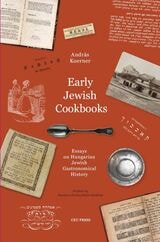
Early Jewish Cookbooks
Essays on Hungarian Jewish Gastronomical HistoryAndrás Koerner
Central European University Press, 2022
Winner of the Association of Jewish Libraries' 2022 Judaica Bibliography Award.
The seven essays in this volume focus such previously unexplored subjects as the world’s first cookbook printed in Hebrew letters, published in 1854, and a wonderful 19th-century Jewish cookbook, which in addition to its Hungarian edition was also published in Dutch in Rotterdam. The author entertainingly reconstructs the history of bólesz, a legendary yeast pastry that was the specialty of a famous, but long defunct Jewish coffeehouse in Pest, and includes the modernized recipe of this distant relative of cinnamon rolls. Koerner also tells the history of the first Jewish bookstore in Hungary (founded as early as in 1765!) and examines the influence of Jewish cuisine on non-Jewish food.
In this volume András Koerner explores key issues of Hungarian Jewish culinary culture in greater detail and more scholarly manner than what space restrictions permitted in his previous work Jewish Cuisine in Hungary: A Cultural History, also published by CEU Press, which received the prestigious National Jewish Book Award in 2020. The current essays confirm the extent to which Hungarian Jewry was part of the Jewish life and culture of the Central European region before their almost total language shift by the turn of the 20th century.
Eat Like the Hogs
A Collection of Favorite Recipes from Razorback GreatsKaren Van Horn
University of Arkansas Press, 2025
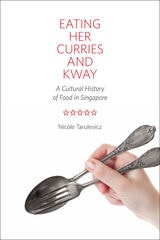
Eating Her Curries and Kway
A Cultural History of Food in SingaporeNicole Tarulevicz
University of Illinois Press, 2013
Discovering Singaporean identity through cooking and cuisine
While eating is a universal experience, for Singaporeans it carries strong national connotations. The popular Singaporean-English phrase "Die die must try" is not so much hyperbole as it is a reflection of the lengths that Singaporeans will go to find great dishes.
In Eating Her Curries and Kway: A Cultural History of Food in Singapore, Nicole Tarulevicz argues that in a society that has undergone substantial change in a relatively short amount of time, food serves Singaporeans as a poignant connection to the past. Eating has provided a unifying practice for a diverse society, a metaphor for multiracialism and recognizable national symbols for a fledgling state. Covering the period from British settlement in 1819 to the present and focusing on the post–1965 postcolonial era, Tarulevicz tells the story of Singapore through the production and consumption of food.
Analyzing a variety of sources that range from cookbooks to architectural and city plans, Tarulevicz offer a thematic history of this unusual country, which was colonized by the British and operated as a port within Malaya. Connecting food culture to the larger history of Singapore, she discusses various topics including domesticity and home economics, housing and architecture, advertising, and the regulation of food-related manners and public behavior such as hawking, littering, and chewing gum. Moving away from the predominantly political and economic focus of other histories of Singapore, Eating Her Curries and Kway provides an important alternative reading of Singaporean society.
Eating Together
Food, Friendship and InequalityAlice P. Julier
University of Illinois Press, 2013
Eating the Enlightenment
Food and the Sciences in Paris, 1670-1760E. C. Spary
University of Chicago Press, 2012
Eating to Learn, Learning to Eat
The Origins of School Lunch in the United StatesA. R. Ruis
Rutgers University Press, 2017
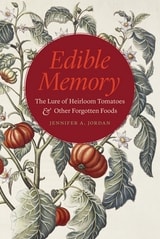
Edible Memory
The Lure of Heirloom Tomatoes and Other Forgotten FoodsJennifer A. Jordan
University of Chicago Press, 2015
Jordan begins with the heirloom tomato, inquiring into its botanical origins in South America and its culinary beginnings in Aztec cooking to show how the homely and homegrown tomato has since grown to be an object of wealth and taste, as well as a popular symbol of the farm-to-table and heritage foods movements. She shows how a shift in the 1940s away from open pollination resulted in a narrow range of hybrid tomato crops. But memory and the pursuit of flavor led to intense seed-saving efforts increasing in the 1970s, as local produce and seeds began to be recognized as living windows to the past. In the chapters that follow, Jordan combines lush description and thorough research as she investigates the long history of antique apples; changing tastes in turnips and related foods like kale and parsnips; the movement of vegetables and fruits around the globe in the wake of Columbus; and the poignant, perishable world of stone fruits and tropical fruit, in order to reveal the connections—the edible memories—these heirlooms offer for farmers, gardeners, chefs, diners, and home cooks. This deep culinary connection to the past influences not only the foods we grow and consume, but the ways we shape and imagine our farms, gardens, and local landscapes.
From the farmers’ market to the seed bank to the neighborhood bistro, these foods offer essential keys not only to our past but also to the future of agriculture, the environment, and taste. By cultivating these edible memories, Jordan reveals, we can stay connected to a delicious heritage of historic flavors, and to the pleasures and possibilities for generations of feasts to come.
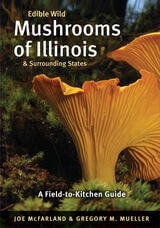
Edible Wild Mushrooms of Illinois and Surrounding States
A Field-to-Kitchen GuideJoe McFarland and Gregory M. Mueller
University of Illinois Press, 2008
Lavishly illustrated with nearly three hundred gorgeous full-color photos, this engaging guidebook carefully describes forty different edible species of wild mushrooms found around Illinois and surrounding states, including Iowa, Wisconsin, Missouri, Indiana, and Kentucky. With conversational and witty prose, the book provides extensive detail on each edible species, including photographs of potential look-alikes to help you safely identify and avoid poisonous species. Mushroom lovers from Chicago to Cairo will find their favorite local varieties, including morels, chanterelles, boletes, puffballs, and many others. Veteran mushroom hunters Joe McFarland and Gregory M. Mueller also impart their wisdom about the best times and places to find these hidden gems.
Edible Wild Mushrooms of Illinois and Surrounding States also offers practical advice on preparing, storing, drying, and cooking with wild mushrooms, presenting more than two dozen tantalizing mushroom recipes from some of the best restaurants and chefs in Illinois, including one of Food & Wine magazine's top 10 new chefs of 2007. Recipes include classics like Beer Battered Morels, Parasol Mushroom Frittatas, and even the highly improbable (yet delectable) Morel Tiramisu for dessert.
As the first new book about Illinois mushrooms in more than eighty years, this is the guide that mushroom hunters and cooks have been craving.
Visit the book's companion website at www.illinoismushrooms.com.
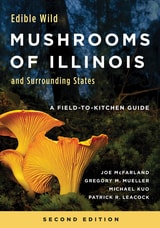
Edible Wild Mushrooms of Illinois and Surrounding States
A Field-to-Kitchen Guide, Second EditionJoe McFarland, Gregory M. Mueller, Michael Kuo, and Patrick R. Leacock
University of Illinois Press, 2027
* Fifty-two entries packed with information on edible species;
* Almost 400 color photographs;
* Tips on where and when to look for mushrooms, how to pick them, and identification and note-taking;
* Photographs of lookalikes for safely identifying and avoiding poisonous species;
* An extensive new section on truffles;
* Advice on preparing, storing, drying, and cooking with wild mushrooms, plus an expanded recipe section that invites cooks to serve up wild turkey and morels, toss an oyster mushroom salad, and add mushroom powder to everything.
Reader friendly and detailed, the second edition of Edible Wild Mushrooms of Illinois and Surrounding States is an invaluable morels-to-puffballs resource for Midwestern mushroom hunters.
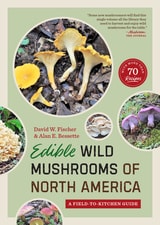
Edible Wild Mushrooms of North America
A Field-to-kitchen GuideBy David W. Fischer and Alan E. Bessette
University of Texas Press, 1992
Unusual shapes and colors make many mushrooms alluring to the eye, while the exotic flavors and textures of edible mushrooms are a gourmet delicacy for the palate. Yet many people never venture beyond the supermarket offerings, fearing that all other mushrooms are poisonous.
With amateur mushroom hunters especially in mind, David Fischer and Alan Bessette have prepared Edible Wild Mushrooms of North America. This field guide presents more than 100 species of the most delicious mushrooms, along with detailed information on how to find, gather, store, and prepare them for the table. More than 70 savory recipes, ranging from soups and salads to casseroles, canapes, quiches, and even a dessert, are included.
Throughout, the authors constantly emphasize the need for correct identification of species for safe eating. Each species is described in detailed, nontechnical language, accompanied by a list of key identifying characteristics that reliably rule out all but the target species. Superb color photographs also aid in identification. Poisonous "lookalikes" are described and illustrated, and the authors also assess the risks of allergic or idiosyncratic reactions to edible species and the possibilities of chemical or bacterial contamination.
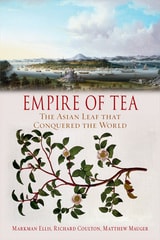
Empire of Tea
The Asian Leaf that Conquered the WorldMarkman Ellis, Richard Coulton, and Matthew Mauger
Reaktion Books, 2015
This impressively detailed book offers a rich cultural history of tea, from its ancient origins in China to its spread around the world. The authors recount tea’s arrival in London and follow its increasing salability and import via the East India Company throughout the eighteenth century, inaugurating the first regular exchange—both commercial and cultural—between China and Britain. They look at European scientists’ struggles to understand tea’s history and medicinal properties, and they recount the ways its delicate flavor and exotic preparation have enchanted poets and artists. Exploring everything from its everyday use in social settings to the political and economic controversies it has stirred—such as the Boston Tea Party and the First Opium War—they offer a multilayered look at what was ultimately an imperial industry, a collusion—and often clash—between the world’s greatest powers over control of a simple beverage that has become an enduring pastime.
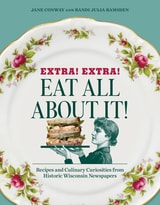
Extra! Extra! Eat All About It!
Recipes and Culinary Curiosities from Historic Wisconsin NewspapersRandi Julia Ramsden
Wisconsin Historical Society Press, 2024
A blend of cookbook and bite-size history, Extra! Extra! Eat All About It! offers a unique glimpse into the culinary landscape of the late nineteenth and early twentieth centuries. Fifty recipes selected from Wisconsin newspapers are served alongside brief essays that dig into the stories behind the food trends of the time.
In lively prose, Jane Conway and Randi Julia Ramsden reveal how coconuts and oysters made their way to 1800s Wisconsin, how bakers gauged the temperatures of their wood-burning stoves, and how our predecessors really did slip on banana peels, among other flavorful facts. In addition to capturing quirky food fashions, like breakfast parties and paper-bag cooking, the recipes provide insights into regional cooking traditions.
Each original recipe appears alongside the authors’ easy-to-follow updated version. Mouthwatering modern photographs showcase the revived dishes for the first time in their long history, and newspaper clippings, ads, and illustrations give the book a charming vintage feel. Featuring a variety of recipes, ranging from trendy (Barbecued Ham with Bananas) and tempting (Pickled Walnuts) to traditional (Pumpernickel) and tantalizing (Apple de Luxe), Extra! Extra! Eat All About It! will satisfy the appetites of history lovers and home chefs alike.
“Such a fun and fascinating book! Extra! Extra! Eat All About It! deftly delves into Wisconsin’s long-ago food fads, evolutions, and absurdities. Don’t be surprised if this book inspires new trends that are riffs on some of these century-old ideas. Pickled walnuts, anyone? Or mock pumpkin pie, with prunes?” — Mary Bergin, author of Wisconsin Supper Club Cookbook
“Both cookbook and chronicle, Extra! Extra! Eat All About It! is an ingenious, illuminating tasting menu of our culinary past. Sourced from nineteenth and early twentieth century Wisconsin newspapers, its fifty vignettes serve up historical insights, forgotten fads and bygone recipes. From paper bag cookery and ‘oyster saloons’ to fire-baked eggs and maple taffy, I ate this book right up.” — Terese Allen, coauthor of The Flavor of Wisconsin
“This beautiful, fun, and informative book is a masterclass in how historical cooking opens a window onto wider historical themes, including mechanization, the impacts of war, immigration, globalization, and changing nutritional advice.” — Eleanor Barrett, author of Leftovers: A History of Food Waste and Preservation
“Conway and Ramsden do a great job of using historical documents to demonstrate what people were eating and how they entertained. They describe recipes as interaction and community, as well as how food trends change over time. The writing is smart and clever. A wonderful read.” — Kimberly Wilmot Voss, author of The Food Section: Newspaper Women and the Culinary Community