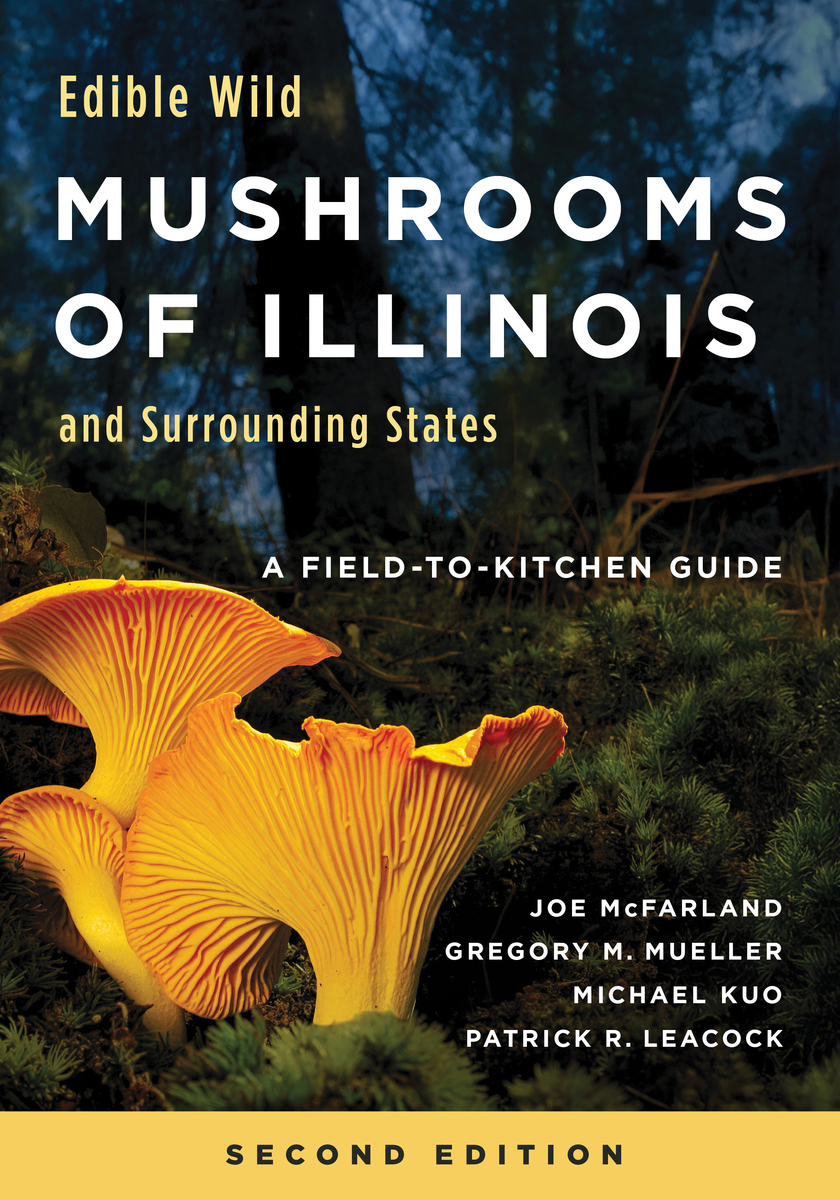
Edible Wild Mushrooms of Illinois and Surrounding States: A Field-to-Kitchen Guide, Second Edition
University of Illinois Press, 2027
Paper: 978-0-252-08967-1 | eISBN: 978-0-252-04918-7 (standard)
See other books on: East North Central (IL, IN, MI, OH, WI) | Fungi & Mushrooms | Kuo, Michael | Midwest | Surrounding States
See other titles from University of Illinois Press
Paper: 978-0-252-08967-1 | eISBN: 978-0-252-04918-7 (standard)
ABOUT THIS BOOK | AUTHOR BIOGRAPHY | REVIEWS | TOC
ABOUT THIS BOOK
Fully revised and up to date, the latest edition of the popular nature guide offers amateur mycologists and mushroom-curious chefs a comprehensive reference that encourages anyone to successfully forage for and cook with wild mushrooms. The editors steer newcomers and old hands alike to species in Illinois, Iowa, Wisconsin, Missouri, Indiana, and Kentucky. Features include:
* Fifty-two entries packed with information on edible species;
* Almost 400 color photographs;
* Tips on where and when to look for mushrooms, how to pick them, and identification and note-taking;
* Photographs of lookalikes for safely identifying and avoiding poisonous species;
* An extensive new section on truffles;
* Advice on preparing, storing, drying, and cooking with wild mushrooms, plus an expanded recipe section that invites cooks to serve up wild turkey and morels, toss an oyster mushroom salad, and add mushroom powder to everything.
Reader friendly and detailed, the second edition of Edible Wild Mushrooms of Illinois and Surrounding States is an invaluable morels-to-puffballs resource for Midwestern mushroom hunters.
* Fifty-two entries packed with information on edible species;
* Almost 400 color photographs;
* Tips on where and when to look for mushrooms, how to pick them, and identification and note-taking;
* Photographs of lookalikes for safely identifying and avoiding poisonous species;
* An extensive new section on truffles;
* Advice on preparing, storing, drying, and cooking with wild mushrooms, plus an expanded recipe section that invites cooks to serve up wild turkey and morels, toss an oyster mushroom salad, and add mushroom powder to everything.
Reader friendly and detailed, the second edition of Edible Wild Mushrooms of Illinois and Surrounding States is an invaluable morels-to-puffballs resource for Midwestern mushroom hunters.
See other books on: East North Central (IL, IN, MI, OH, WI) | Fungi & Mushrooms | Kuo, Michael | Midwest | Surrounding States
See other titles from University of Illinois Press