Results by title
744 books match the query 'Culture' and 28 start with e
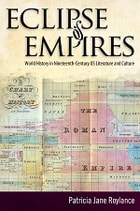
Eclipse of Empires
World History in Nineteenth-Century U.S. Literature and CulturePatricia Jane Roylance
University of Alabama Press, 2013
Patricia Jane Roylance’s central claim in Eclipse of Empires is that historical episodes of imperial eclipse, for example Incan Peru yielding to Spain or the Ojibway to the French, heightened the concerns of many American writers about specific intranational social problems plaguing the nation at the time—race, class, gender, religion, economics. Given the eventual dissolution of great civilizations previously plagued by these very same problems, many writers, unlike those who confidently emphasized U.S. exceptionalism, exhibited both an anxiety about the stability of American society and a consistent practice of self-scrutiny in identifying the national defects that they felt could precipitate America’s decline.
Roylance studies, among other texts, James Fenimore Cooper’s The Water-Witch (1830) and The Bravo (1831), which address the eclipse of Venice by New York City as a maritime power in the eighteenth century; William Hickling Prescott’s Conquest of Peru (1847), which responds to widespread anxiety about communist and abolitionist threats to the U.S. system of personal property by depicting Incan culture as a protocommunist society doomed to failure; and Henry Wadsworth Longfellow’s The Song of Hiawatha (1855), which resists the total eclipse of Ojibwa culture by incorporating Ojibway terms and stories into his poem and by depicting the land as permanently marked by their occupation.

Ecocritique
Contesting the Politics of Nature, Economy, and CultureTimothy W. Luke
University of Minnesota Press, 1997
Ecocriticism, whether coming from “back to nature” conservatives, Nature Conservancy liberals, or Earth First! radicals, is familiar enough. But when we listen do we really hear what these groups are saying? In a book that examines the terms of ecocriticism, Timothy W. Luke exposes how ecological critics, organizations, and movements manipulate our conception of the environment. Turning the tables on the ecocritics, Luke demonstrates how ecocriticism can move beyond its familiar confines to engage larger cultural, economic, and political questions.
Ecocritique rereads ecocriticism to reveal how power and economy, society and culture, community and technology compete over what are now widely regarded as the embattled ecosystems of nature. Luke considers in particular how the meanings and values attached to the environment by various groups—from the Worldwatch Institute, the Nature Conservancy, and Earth First! to proponents of green consumerism, social ecology, and sustainable development—articulate new visions of power and subjectivity for a post-Cold War era.
This accessibly written work opens with deep ecology and concludes with social ecology, along the way reconsidering thinkers with green philosophical leanings, including Herbert Marcuse, Paolo Soleri, and Murray Bookchin. In systematic critiques reexamining the cultural practices and ethical values of contemporary environmentalism, Luke highlights the political dilemmas of biocentrism and anthropocentrism in modern ecological thinking.
With its critical analysis of many contemporary environmental discourses and organizations, Ecocritique makes a major contribution to ongoing debates about the political relationships among nature, culture, and economics in the current global system.
Economics
The Culture of a Controversial ScienceMelvin W. Reder
University of Chicago Press, 1998
Since the 1930s economists have increasingly emphasized the scientific, quantitative side of their field, which has directed research to topics that can be elaborated through mathematical models. Economist Melvin Reder argues that this ongoing historical shift has been the result of pressure from two directions: from society's demand that expert advice be based on "scientific findings," and from economists themselves, who have wanted to view their own profession as a science. This book describes the profession of economics as it has developed in response to these challenges.
The diversity of the responses points to persistent internal disagreements within the economics community about its proper scope and methods. These disagreements, in turn, have led to incompatible proposals for the direction of research and divergent recommendations for public policy. Although Reder does not pretend to resolve these difficulties, he appraises different arguments and demonstrates how they have influenced both economists' behavior and public esteem for the profession. While recognizing that serious questions remain about economics's scientific status and practical utility, this book shows where economics has obtained practically usable results and where its fruits have been limited to elaboration of analytical constructions of uncertain applicability.
"[A] fascinating account of the sociology and philosophy of a profession. . . . This is an important book about an important field."—John L. Casti, New Scientist
Edited Clean Version
Technology and the Culture of ControlRaiford Guins
University of Minnesota Press, 2009
Where is censorship in the age of digital technology?
Not long ago it would have been an absurd idea to purchase a television, CD or MP3 or DVD player, computer software, or game console with the intention of limiting its capabilities. However, as Raiford Guins demonstrates in Edited Clean Version, today’s media technology is marketed and sold for what it does not contain and what it will not deliver.
TVs equipped with V-chips, Internet filters, editing DVD players, clean-version CDs and MP3s, and game consoles with parental control features can block out, monitor, disable, and filter information. As Guins argues in this provocative book, consumers now find themselves in new relationships with their everyday media in which they inscribe their viewing, listening, and playing experiences with self-prescribed and technologically enabled values and morals. Censorial practices are not so much enacted on media by regulatory bodies today as they are in our media technology.According to Guins, these new “control technologies” are designed to embody an ethos of neoliberal governance—through the very media that have been previously presumed to warrant management, legislation, and policing. Repositioned within a discourse of empowerment, security, and choice, the action of regulation, he reveals, has been relocated into the hands of users.
Educating Artists for the Future
Learning at the Intersections of Art, Science, Technology, and CultureEdited by Mel Alexenberg
Intellect Books, 2008
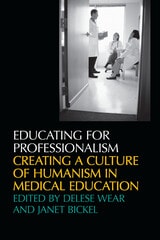
Educating For Professionalism
Creating A Culture Of Humanism In Medical EducationDelese Wear
University of Iowa Press, 2000
The thirteen essays in Educating for Professionalism examine the often conflicting ethical, social, emotional, and intellectual messages that medical institutions send to students about what it means to be a doctor. Because this disconnection between what medical educators profess and what students experience is partly to blame for the current crisis in medical professionalism, the authors offer timely, reflective analyses of the work and opportunities facing medical education if doctors are to win public trust.
In their drive to improve medical professionalism within the world of academic medicine, editors Delese Wear and Janet Bickel have assembled thought-provoking essays that elucidate the many facets of teaching, valuing, and maintaining medical professionalism in the middle of the myriad challenges facing medicine at the dawn of the twenty-first century.
The collection traces how the values of altruism and service can influence not only mission statements and admission policies but also the content of medical school ethics courses, student-led task forces, and mentoring programs, along with larger environmental issues in medical schools and the communities they serve.
Stanley Joel Reiser
Jack Coulehan
Peter C. Williams
Frederic W. Hafferty
Richard Martinez
Judith Andre
Jake Foglio
Howard Brody
Sheila Woods
Sue Fosson
Lois Margaret Nora
Mary Anne C. Johnston
Tana A. Grady-Weliky
Cynthia N. Kettyle
Edward M. Hundert
Norma E. Wagoner
Frederick A. Miller
William D. Mellon
Howard Waitzkin
Donald Wasylenki
Niall Byrne
Barbara McRobb
Edward J. Eckenfels
Lucy Wolf Tuton
Claudia H. Siegel
Timothy B. Campbell
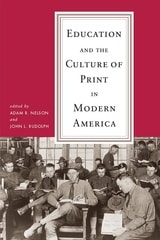
Education and the Culture of Print in Modern America
Adam R. Nelson
University of Wisconsin Press, 2010
Offering perspectives from print culture history, library and information studies, literary studies, labor history, gender history, the history of race and ethnicity, the history of science and technology, religious studies, and the history of childhood and adolescence, Education and the Culture of Print in Modern America pioneers an investigation into the intersection of education and print culture.

Education, Culture, and Identity in Twentieth-Century China
Glen Peterson, Ruth Hayhoe, and Yongling Lu, Editors
University of Michigan Press, 2001
Unlike most studies of modern Chinese education that focus exclusively on the post-1949 era, Education, Culture, and Identity in Twentieth-Century China represents a deliberate attempt to break through the 1949 barrier and embrace the entire century. Culture emerges in this study as a deeper level factor that underlay the development of education in each period and shaped certain recurrent patterns, while identity involves a search for individual and collective meaning that went on under different regimes.
The product of a genuinely multidisciplinary effort to promote cross-fertilization among an international team of scholars in a wide range of disciplines, Education, Culture, and Identity in Twentieth-Century China will interest students and scholars of modern China, comparative and international education, educational policy, and international relations. It will also appeal to policy makers and professionals associated with international organizations.
Glen Peterson is Associate Professor of History, University of British Columbia. Ruth Hayhoe is Director, Hong Kong Institute of Education. Yongling Lu is a graduate student in the History Department, Stanford University.

Eloquent Obsessions
Writing Cultural CriticismMarianna Torgovnick, ed.
Duke University Press, 1994
This collection explores a wide range of issues at the intersection of personal and social history—from growing up in the South to exploring a love for France or Japan, from coming of age as a feminist to mapping the history of National Geographic, from examining the cultural "we" to diagnosing class structures in Israel or showing how photography deals with AIDS. The authors here bring writerly genres—autobiography, memoir, or travel narrative—to intellectual tasks such as textual readings or investigating the histories of institutions. Continuing a tradition of cultural criticism established by writers such as Samuel Johnson, Zora Neale Hurston, Edmund Wilson, Hannah Arendt, or Raymond Williams, these essays seek to make a difference, to have an impact, and are based on the fundamental premise that writers have something to say about society. Simply put, this collection offers models for writing eloquently about culture—models that are intellectually and socially responsible, but attuned to the critic’s voice and the reader’s ear.
Aimed not just at academics but also at a more general audience alive to the concerns and interests of society today, Eloquent Obsessions, a revised and expanded version of a special issue of South Atlantic Quarterly (Winter 1992), will extend beyond the academy contemporary ways of writing about culture.
Contributors. Jane Collins, Cathy N. Davidson, Virginia R. Dominguez, Mark Edmundson, Gerald Graff, Richard Inglis, Aldona Jonaitis, Alice Yaeger Kaplan, Catherine Lutz, Nancy K. Miller, Linda Orr, Andrew Ross, Henry M. Sayre, Jane Tompkins, Marianna Torgovnick
Embodied Rhetorics
Disability in Language and CultureEdited by James C. Wilson and Cynthia Lewiecki-Wilson
Southern Illinois University Press, 2001
Presenting thirteen essays, editors James C. Wilson and Cynthia Lewiecki-Wilson unite the fields of disability studies and rhetoric to examine connections between disability, education, language, and cultural practices. Bringing together theoretical and analytical perspectives from rhetorical studies and disability studies, these essays extend both the field of rhetoric and the newer field of disability studies.
The contributors span a range of academic fields including English, education, history, and sociology. Several contributors are themselves disabled or have disabled family members. While some essays included in this volume analyze the ways that representations of disability construct identity and attitudes toward the disabled, other essays use disability as a critical modality to rethink economic theory, educational practices, and everyday interactions. Among the disabilities discussed within these contexts are various physical disabilities, mental illness, learning disabilities, deafness, blindness, and diseases such as multiple sclerosis and AIDS.

Encyclopedia of Romantic Nationalism in Europe, Vol. 1 and 2
Edited by Joep Leerssen
Amsterdam University Press, 2016
Engineering the Eternal City
Infrastructure, Topography, and the Culture of Knowledge in Late Sixteenth-Century RomePamela O. Long
University of Chicago Press, 2018
This portrait of an early modern Rome examines the many conflicts, failures, and successes that shaped the city, as decision-makers tried to control not only Rome’s structures and infrastructures but also the people who lived there. Taking up visual images of the city created during the same period—most importantly in maps and urban representations, this book shows how in a time before the development of modern professionalism and modern bureaucracies, there was far more wide-ranging conversation among people of various backgrounds on issues of engineering and infrastructure than there is in our own times. Physicians, civic leaders, jurists, cardinals, popes, and clerics engaged with painters, sculptors, architects, printers, and other practitioners as they discussed, argued, and completed the projects that remade Rome.
Enquiries into Religion and Culture (The Works of Christopher Dawson)
Christopher Dawson
Catholic University of America Press, 2009
Entanglements, or Transmedial Thinking about Capture
Rey Chow
Duke University Press, 2012
These questions are dispersively heterologous yet mutually implicated. This paradoxical character of their discursive relations is what Rey Chow intends with the word "entanglements," by which she means, first, an enmeshment of topics: the mediatized image in modernist reflexivity; captivation and identification; victimhood; the place of East Asia in globalized Western academic study. Beyond enmeshment, she asks, can entanglements be phenomena that are not defined by affinity or proximity? Might entanglements be about partition and disparity rather than about conjunction and similarity?
Across medial forms (including theater, film, narrative, digitization, and photographic art), and against more popular trends of declaring things and people to be in flux, Chow proposes conceptual frames that foreground instead aesthetic, ontological, and sentient experiences of force, dominance, submission, fidelity, antagonism, masochism, letting-go, and the attraction to self-annihilation. Boundary, trap, capture, captivation, sacrifice, and mimesis: these riveting terms serve as analytic pressure points in her readings, articulating perversity, madness, and terror to pursuits of freedom.
Entering the Fray
Gender, Politics, and Culture in the New SouthEdited by Jonathan Daniel Wells & Sheila R. Phipps
University of Missouri Press, 2009
Entrepreneurial Seoulite
Culture and Subjectivity in Hongdae, SeoulMihye Cho
University of Michigan Press, 2019
Recent research on Korean culture approaches the K-wave phenomenon from the perspectives of cultural consumption, media analysis, and cultural management and policy. Meanwhile, studies on Seoul have centered on its transformation as a global, creative city. Rather than examining the K-wave or the city itself, this book explores the experience of living through the city-in-transition, focusing on the relationship between “the ideology that justified engagement in capitalism” and the “subjectification process.” The book aims to understand the project to institutionalize a cultural district in Hongdae as a demonstration of the coevolution of ideologies and citizenship in a society undergoing rapid liberalization—politically, culturally, and economically.
A cultural turn took place in Korea during the 1990s, amid the economic prosperity driven by state-led industrialization and the collapse of the military dictatorship due to democratization movements. Cultural critiques, emerging as an alternative to social movements, proliferated to assert the freedom and autonomy of individuals against regulatory systems and institutions. The nation was hit by the Asian financial crisis in 1997, and witnessed massive economic restructuring including layoffs, stakeouts, and a prevalence of contingent employment. As a result, the entire nation had to find new engines of economic growth while experiencing a creative destruction. At the center of this national transformation, Seoul has sought to recreate itself from a mega city to a global city, equipped with cutting-edge knowledge industries and infrastructures.
By juxtaposing the cultural turn and cultural/creative city-making, Entrepreneurial Seoulite interrogates the formation of new citizen subjectivity, namely the enterprising self, in post-Fordist Seoul. What kinds of logic guide individuals in the engagement of new urban realities in rapidly liberalized Seoul—culturally and economically? In order to explore this query, Mihye Cho draws on Weber’s concept of “the spirit of capitalism” on the formation of a new economic agency focusing on the re-configuration of meanings, and seeks to capture a transformative moment detailing when and how capitalism requests a different spirit and lifestyle of its participants. Likewise, this book approaches the enterprising self as the new spirit of post-Fordist Seoul and explores the ways in which people in Seoul internalize and negotiate this new enterprising self.
Erotic Innocence
The Culture of Child MolestingJames R. Kincaid
Duke University Press, 1998
Drawing on a number of wide-ranging and well-publicized cases as well as scandals involving such celebrities as Michael Jackson and Woody Allen, Kincaid looks at issues surrounding children’s testimonies, accusations against priests and day-care centers, and the horrifying yet persistently intriguing rumors of satanic cults and “kiddie porn” rings. In analyzing the particular form of popularity shared by such child stars such Shirley Temple and Macaulay Culkin, he exposes the strategies we have devised to deny our own role in the sexualization of children. Finally, Kincaid reminds us how other forms of abuse inflicted on children—neglect, abandonment, inadequate nutrition, poor education—are often overlooked in favor of the sensationalized sexual abuse coverage in the news, on daytime TV talk shows, and in the elevators and cafeterias of America each day.
This bold and critically enlightened book will interest readers across a wide range of disciplines as well as a larger general audience interested in American culture.
Essential Essays, Volume 1
Foundations of Cultural StudiesStuart Hall
Duke University Press, 2018
Volume 1: Foundations of Cultural Studies focuses on the first half of Hall's career, when he wrestled with questions of culture, class, representation, and politics. This volume's stand-out essays include his field-defining “Cultural Studies and Its Theoretical Legacies"; the prescient “The Great Moving Right Show,” which first identified the emergent mode of authoritarian populism in British politics; and “Encoding and Decoding in the Television Discourse,” one of his most influential pieces of media criticism. As a whole, Volume 1 provides a panoramic view of Hall's fundamental contributions to cultural studies.
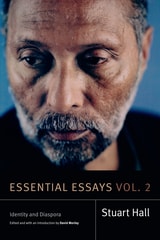
Essential Essays, Volume 2
Identity and DiasporaStuart Hall
Duke University Press, 2018
Volume 2: Identity and Diaspora draws from Hall's later essays, in which he investigated questions of colonialism, empire, and race. It opens with “Gramsci's Relevance for the Study of Race and Ethnicity,” which frames the volume and finds Hall rethinking received notions of racial essentialism. In addition to essays on multiculturalism and globalization, black popular culture, and Western modernity's racial underpinnings, Volume 2 contains three interviews with Hall, in which he reflects on his life to theorize his identity as a colonial and diasporic subject.

Ethnographic Chiasmus
Essays on Culture, Conflict and RhetoricIvo Strecker
Michigan State University Press, 2011

Ethnographic Sorcery
Harry G. West
University of Chicago Press, 2007
According to the people of the Mueda plateau in northern Mozambique, sorcerers remake the world by asserting the authority of their own imaginative visions of it. While conducting research among these Muedans, anthropologist Harry G. West made a revealing discovery—for many of them, West’s efforts to elaborate an ethnographic vision of their world was itself a form of sorcery. In Ethnographic Sorcery, West explores the fascinating issues provoked by this equation.
A key theme of West’s research into sorcery is that one sorcerer’s claims can be challenged or reversed by other sorcerers. After West’s attempt to construct a metaphorical interpretation of Muedan assertions that the lions prowling their villages are fabricated by sorcerers is disputed by his Muedan research collaborators, West realized that ethnography and sorcery indeed have much in common. Rather than abandoning ethnography, West draws inspiration from this connection, arguing that anthropologists, along with the people they study, can scarcely avoid interpreting the world they inhabit, and that we are all, inescapably, ethnographic sorcerers.
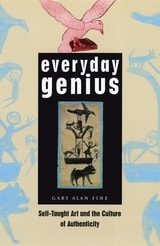
Everyday Genius
Self-Taught Art and the Culture of AuthenticityGary Alan Fine
University of Chicago Press, 2004
Fine considers the differences among folk art, outsider art, and self-taught art, explaining the economics of this distinctive art market and exploring the dimensions of its artistic production and distribution. Interviewing dealers, collectors, curators, and critics and venturing into the backwoods and inner-city homes of numerous self-taught artists, Fine describes how authenticity is central to the system in which artists—often poor, elderly, members of a minority group, or mentally ill—are seen as having an unfettered form of expression highly valued in the art world. Respected dealers, he shows, have a hand in burnishing biographies of the artists, and both dealers and collectors trade in identities as much as objects.
Revealing the inner workings of an elaborate and prestigious world in which money, personalities, and values affect one another, Fine speaks eloquently to both experts and general readers, and provides rare access to a world of creative invention-both by self-taught artists and by those who profit from their work.
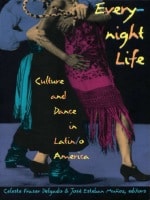
Everynight Life
Culture and Dance in Latin/o AmericaCeleste Fraser Delgado and José Esteban Muñoz, eds.
Duke University Press, 1997
This anthology looks at many modes of dance—including salsa, merengue, cumbia, rumba, mambo, tango, samba, and norteño—as models for the interplay of cultural memory and regional conflict. Barbara Browning’s essay on capoeira, for instance, demonstrates how dance has been used as a literal form of resistance, while José Piedra explores the meanings conveyed by women of color dancing the rumba. Pieces such as Gustavo Perez Fírmat’s "I Came, I Saw, I Conga’d" and Jorge Salessi’s "Medics, Crooks, and Tango Queens" illustrate the lively scope of this volume’s subject matter.
Contributors. Barbara Browning, Celeste Fraser Delgado, Jane C. Desmond, Mayra Santos Febres, Juan Carlos Quintero Herencia, Josh Kun, Ana M. López, José Esteban Muñoz, José Piedra, Gustavo Perez Fírmat, Augusto C. Puleo, David Román, Jorge Salessi, Alberto Sandoval
Evolution and Culture
Marshall D. Sahlins and Elman R. Service, Editors
University of Michigan Press, 1960
Exoticism and the Culture of Exploration, Volume 26
Robert P. Maccubbin and Christa Knellwolf, eds.
Duke University Press, 0
Contributors. Geraldine Barnes, Alexandra Cook, David Culpin, John Greene, Suzanne Kiernan, Christa Knellwolf, Adrian Mitchell, Lisa O’Connell, David Paxman, Ali Uzay Peker, Glynis Ridley, Nicholas Rogers, Walter Veit
Explanation and Power
The Control of Human BehaviorMorse Peckham
University of Minnesota Press, 1988
Explanation and Power was first published in 1988. Minnesota Archive Editions uses digital technology to make long-unavailable books once again accessible, and are published unaltered from the original University of Minnesota Press editions.
The meaning of any utterance or any sign is the response to that utterance or sign: this is the fundamental proposition behind Morse Peckham's Explanation and Power. Published in 1979 and now available in paperback for the first time, Explanation and Power grew out of Peckham's efforts, as a scholar of Victorian literature, to understand the nature of Romanticism. His search ultimately led back to—and built upon—the tradition of signs developed by the American Pragmatists. Since, in Peckham's view, meaning is not inherent in word or sign, only in response, human behavior itself must depend upon interaction, which in turn relies upon the stability of verbal and nonverbal signs. In the end, meaning can be stabilized only by explanation, and when explanation fails, by force. Peckham's semiotic account of human behavior, radical in its time, contends with the same issues that animate today's debates in critical theory — how culture is produced, how meaning is arrived at, the relation of knowledge to power and of society to its institutions. Readers across a wide range of disciplines, in the humanities and social sciences, will welcome its reappearance.
Exploring The Beloved Country
American Society And CultureWilbur Zelinsky
University of Iowa Press, 1994
For fifty years geographer Wilbur Zelinsky has charted the social, cultural, and historical map of the American experience. A self-confessed incurable landscape voyeur, he has produced order and pattern from massive amounts of data, zestfully finding societal meaning in the terra incognita of our postmodern existence. Now he has gathered his most original and exciting explorations into a volume that captures the nature and dynamics of this remarkable phenomenon we call the United States of America. Each the product of Zelinsky's joyous curiosity, these energetic essays trace the innermost contours of our bewildering American reality.

Ezra Pound and the Monument of Culture
Text, History, and the Malatesta CantosLawrence S. Rainey
University of Chicago Press, 1991
Written by Pound in the months following his first visit, the four poems grouped as "The Malatesta Cantos" celebrate the church and the man who sponsored its construction, Sigismondo Malatesta. Upon receiving news of the building's devastation by Allied bombings in 1944, Pound wrote two more cantos that invoked the event as a rallying point for the revival of fascist Italy. These "forbidden" cantos were excluded from collected editions of his works until 1987. Pound even announced an abortive plan in 1958 to build a temple inspired by the church, and in 1963, at the age of eighty, he returned to Rimini to visit the Tempio Malatestiano one last, haunting time.
Drawing from hundreds of unpublished materials, Rainey explores the intellectual heritage that surrounded the church, Pound's relation to it, and the interpretation of his work by modern critics. The Malatesta Cantos, which have been called "one of the decisive turning-points in modern poetics" and "the most dramatic moment in The Cantos," here engender an intricate allegory of Pound's entire career, the central impulses of literary modernism, the growth of intellectual fascism, and the failure of critical culture in the twentieth century. Included are two-color illustrations from the 1925 edition of Pound's cantos and numerous black-and-white photographs.