Results by title
304 books match the query 'Death' and 4 start with e

Enduring Cancer
Life, Death, and Diagnosis in DelhiDwaipayan Banerjee
Duke University Press, 2020

Eschatology
Death and the Eternal Life (Second Edition)Joseph Ratzinger
Catholic University of America Press, 2007
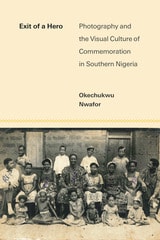
Exit of a Hero
Photography and the Visual Culture of Commemoration in Southern NigeriaOkechukwu Nwafor
University of Michigan Press, 2026
In Exit of a Hero, Okechukwu Nwafor explores the cultural, political, and socioeconomic implications of photography in commemorative practices in southern Nigeria from the nineteenth century to the present. Focusing on obituary and commemorative photographs of late nineteenth and early twentieth-century Lagos to contemporary funeral posters, booklets, and social media posts, Nwafor tracks the historical evolution of the iconic and heroic image. He argues that the quest to produce an ideal memorial body is not just a personal aesthetic choice but a deliberate photographic project that resonates with the Igbo aspirations for heroic achievement.
Exit of a Hero asserts that the visual canonization transforms the deceased from a fallible being to an unimpeachable character who transcends underachievement, imperfection, and failed social performance to emerge as a saintly icon of the Igbo public sphere. In seeking an alternative, hyper-visible public self, social media reclaims the lost hero image of the deceased, reconstituting the contested Igbo public space as a lived reality where heroes and icons are actively and eternally commemorated. Nwafor unveils the creative imaginations of colonial subjects and postcolonial citizens as memorialization has become entangled within the intersecting discursive spaces of print culture and the public sphere.

Exploring Second Corinthians
Death and Life, Hardship and RivalryB. J. Oropeza
SBL Press, 2016
A multi-faceted commentary that breathes fresh insight into Paul's letter
In Second Corinthians, Paul responds to reports of the Corinthian congregation questioning his competency as a divinely sent messenger. Through apologetic demegoria and the use of graphic imagery related to triumphal processions, siege warfare, and emissary travels and negotiation, Paul defends his constancy, persona, and speaking abilities as he extends the offer of clemency and reconciliation to his auditors. Oropeza combines rhetorical pictures (rhetography) with interpretative layers (literary features, intertextuality, socio-cultural, ideological, and sacred textures) to arrive at the rhetorical impact of Paul's message for ancient Mediterranean discourse.
Features:- A visual, sensory, and imaginative interpretation of the scripture
- A comprehensive commentary
- An avant-garde approach to biblical interpretation