158 books match the query 'End' and 10 start with e

cover of End Of Watch

End Of Watch

Robert Kirby

University of Utah Press, 2004
[more]
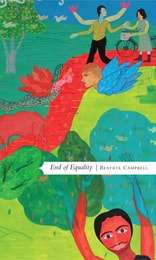
cover of End of Equality

End of Equality

Beatrix Campbell

Seagull Books, 2013

Among liberal thinkers, there is an optimistic belief that men and women are on a cultural journey toward equality—in the workplace, on the street, and in the home. But observation and evidence both tell us that in many ways this progress has stopped and in some cases, even reversed.

In TheEnd of Equality, renowned feminist Beatrix Campbell argues that even as the patriarchy has lost some of its legitimacy, new inequalities are emerging in our culture. We are living, Campbell writes, in an era of neo-patriarchy in which violence has proliferated; body anxiety and self-hatred have flourished; rape is committed with impunity; sex trafficking thrives, and the struggle for equal pay is at an end. After four decades observing society, Campbell still speaks of the long-sought goal of gender equality. But now she calls for a new revolution.
[more]
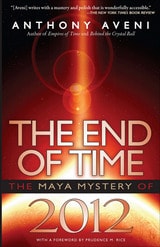
cover of End of Time: The Maya Mystery of 2012

End of Time

The Maya Mystery of 2012

Anthony Aveni

University Press of Colorado, 2009

December 21, 2012. The Internet, bookshelves, and movie theaters are full of prophecies, theories, and predictions that this date marks the end of the world, or at least the end of the world as we know it. Whether the end will result from the magnentic realignment of the north and south poles, bringing floods, earthquakes, death, and destruction; or from the return of alien caretakers to enlighten or enslave us; or from a global awakening, a sudden evolution of Homo sapiens into non-corporeal beings—theories of great, impending changes abound. In The End of Time, award-winning astronomer and Maya researcher Anthony Aveni explores these theories, explains their origins, and measures them objectively against evidence unearthed by Maya archaeologists, iconographers, and epigraphers. He probes the latest information astronomers and earth scientists have gathered on the likelihood of Armageddon and the oft-proposed link between the Maya Long Count cycle and the precession of the equinoxes. He then expands on these prophecies to include the broader context of how other cultures, ancient and modern, thought about the “end of things” and speculates on why cataclysmic events in human history have such a strong appeal within American pop culture.
[more]
cover of End of the Line: Autoworkers and the American Dream

End of the Line

Autoworkers and the American Dream

Edited by Richard Feldman and Michael Betzold

University of Illinois Press, 1988

"This marvelous book captures in a most poignant and accurate way what life is like for the millions who still make up the 'blue collar' backbone of American industry."--Barry Bluestone, author of The Deindustrialization of America
 
"A richly detailed, well-crafted portrait of a cross section of autoworkers in the midst of an identity crisis and a crisis gripping the U.S. auto industry."--Frank Hammer, President, United Auto Workers Local 909

 
[more]
cover of End of the Nation-State

End of the Nation-State

Jean-Marie Guehenno

University of Minnesota Press, 2000
[more]
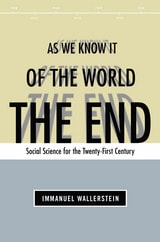
cover of End of the World as We Know It: Social Science for the Twenty-First Century

End of the World as We Know It

Social Science for the Twenty-First Century

Immanuel Wallerstein

University of Minnesota Press, 2001
A respected thinker points the way ahead. "Immanuel Wallerstein has long conceived of social science grandly. He was an innovator of world systems analysis, which portrays societies, sectors within societies, and the very disciplines of the social science as linked, bound, and analytically inseparable: To parse them is to misconceive them. As recent president of the International Sociological Association (1994 to 1998), Wallerstein continued to develop such grand thinking through numerous addresses on the state of the social sciences, capitalism, political justice, and the world. Here, he offers these collectively. He divides them into two topics-the world of capitalism and the world of knowledge. Toward both grand worlds, his thesis is similar: they are in crisis. . . . The scope of his career's thought is remarkable, his expertise impressively broad." Political Science Quarterly This book is nothing short of a state-of-the-world address, delivered by a scholar uniquely suited to the task. Immanuel Wallerstein, one of the most prominent social scientists of our time, documents the profound transformations our world is undergoing. With these transformations, he argues, come equally profound changes in how we understand the world. Wallerstein divides his work between an appraisal of significant recent events and a study of the shifts in thought influenced by those events. The book's first half reviews the major happenings of recent decades--the collapse of the Leninist states, the exhaustion of national liberation movements, the rise of East Asia, the challenges to national sovereignty, the dangers to the environment, the debates about national identity, and the marginalization of migrant populations. Wallerstein places these events and trends in the context of the changing modern world-system as a whole and identifies the historical choices they put before us. The second half of the book takes up current issues in the world of knowledge--the vanishing faith in rationality, the scattering of knowledge activities, the denunciation of Eurocentrism, the questioning of the division of knowledge into science and humanities, and the relation of the search for the true and the search for the good. Wallerstein explores how these questions have arisen from larger social transformations, and why the traditional ways of framing such debates have become obstacles to resolving them. The End of the World As We Know It concludes with a crucial analysis of the momentous intellectual challenges to social science as we know it and suggests possible responses to them. Immanuel Wallerstein is Distinguished Professor of Sociology and director of the Fernand Braudel Center at Binghamton University. Among his numerous books are The Modern World-System (1974, 1980, 1989), Unthinking Social Science (1991), and After Liberalism (1995).
[more]
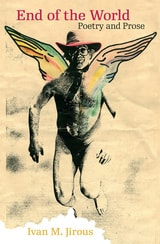
cover of End of the World: Poetry and Prose

End of the World

Poetry and Prose

Ivan M. Jirous

Karolinum Press, 2020

Sometimes called the Czech Bukowski, and more widely known by the epithet “Magor” (which translates roughly to “fool” or “madman”), Ivan Jirous was one of the most significant figures in the Czechoslovak cultural underground of the 1960s through the '80s.  Although trained as an art historian and famed for his poetry, Jirous was convinced that it was actually rock and roll music that held the greatest potential to enact change under the repressive regime of communist Czechoslovakia. He designated himself as the artistic director of the dissident rock band The Plastic People of the Universe, legendary for psychedelic music that was heavily influenced by nonconformist Western acts like Frank Zappa and The Velvet Underground. Alongside other figures from the musical underground, Jirous was arrested in 1976—the second of five prison sentences he would serve for his dissent—which helped bring about the landmark civil rights initiative known as Charter 77. In the wake of 1989’s Velvet Revolution, Váсlav Havel—the first president of the Czech Republic—was to say that Jirous and his unwavering commitment to liberation played “no small part” in casting off the yoke of Soviet oppression.

End of the World is the first major collection in English of the works of this legendary Czech “madman.” Although nicknamed for his aggressive and rebellious behavior, Jirous’s writing reveal a refined, sophisticated, and even tender sensibility. Translated in part by Paul Wilson, an original member of the Plastic People, the book gathers his poems and letters from prison, as well as his book-length prose work, The True Story of the Plastic People, alongside critical essays on Jirous’s life and work. End of the World is an ideal introduction to the raucous writer who playwright Tom Stoppard referred to as one of the most interesting personalities in modern Czech history.

 
[more]
cover of Entranced Earth: Art, Extractivism, and the End of Landscape

Entranced Earth

Art, Extractivism, and the End of Landscape

Jens Andermann

Northwestern University Press, 2023

A sweeping analysis of the lasting effects of neocolonial extractivism in Latin American aesthetic modernity from 1920 to the present

Looking to the extractive frontier as a focal point of Latin American art, literature, music, and film, Jens Andermann asks what emerges at the other end of landscape. Art in the Global South has long represented and interrogated “insurgent nature”—organic and inorganic matter, human and nonhuman life, thrown into turmoil.

In Entranced Earth: Art, Extractivism, and the End of Landscape, Andermann traces the impact of despaisamiento—world-destroying un-landscaping—throughout the Latin American modernist archive. At the same time, he explores innovative, resilient modes of allyship forged between diverse actors through their shared experiences of destruction. From the literary regionalism of the 1930s to contemporary bio art, from modernist garden architecture to representations of migration and displacement in sound art and film, Entranced Earth tracks the crisis of landscape and environmental exhaustion beyond despair toward speculative, experimental forms of survival.

[more]
cover of Envisioning Emancipation: Black Americans and the End of Slavery

Envisioning Emancipation

Black Americans and the End of Slavery

Deborah Willis

Temple University Press, 2017

The Emancipation Proclamation is one of the most important documents in American history. As we commemorate its 150th anniversary, what do we really know about those who experienced slavery?

In their pioneering book, Envisioning Emancipation, renowned photographic historian Deborah Willis and historian of slavery Barbara Krauthamer have amassed 150 photographs—some never before published—from the antebellum days of the 1850s through the New Deal era of the 1930s. The authors vividly display the seismic impact of emancipation on African Americans born before and after the Proclamation, providing a perspective on freedom and slavery and a way to understand the photos as documents of engagement, action, struggle, and aspiration.

Envisioning Emancipation illustrates what freedom looked like for black Americans in the Civil War era. From photos of the enslaved on plantations and African American soldiers and camp workers in the Union Army to Juneteenth celebrations, slave reunions, and portraits of black families and workers in the American South, the images in this book challenge perceptions of slavery. They show not only what the subjects emphasized about themselves but also the ways Americans of all colors and genders opposed slavery and marked its end.

Filled with powerful images of lives too often ignored or erased from historical records, Envisioning Emancipation provides a new perspective on American culture.
[more]
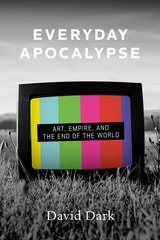
cover of Everyday Apocalypse: Art, Empire, and the End of the World

Everyday Apocalypse

Art, Empire, and the End of the World

David Dark

Vanderbilt University Press, 2025

Everyday Apocalypse recovers the root meaning of the term apocalypse (revelation) to use the concept as a lens through which art and other acts of creative nonviolence that often go unseen may be brought into focus. Interweaving an examination of popular culture with ancient insight and contemporary political awareness, Dark uses the concept of the apocalyptic to celebrate epiphanies about the world we live in and the meaning of human experience within it. Since its original publication in 2002, the book has become a deeply influential text among two generations of intellectual evangelical Christians who find themselves at odds with their families and communities over issues of politics and culture, particularly in the South.

This revised edition of the book includes a foreword by Hanif Abdurraqib, an extensive afterword, updates in light of the passage of time since its publication, and new insights from the author, whose outspokenness has placed him outside of circles in which he was once supported and celebrated.
[more]