Results by title
304 books match the query 'Entertainment & Performing Arts' and 7 start with e
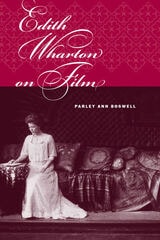
Edith Wharton on Film
Parley Ann Boswell
Southern Illinois University Press, 2007
Edith Wharton (1862–1937), who lived nearly half of her life during the cinema age when she published many of her well-known works, acknowledged that she disliked the movies, characterizing them as an enemy of the imagination. Yet her fiction often referenced film and popular Hollywood culture, and she even sold the rights to several of her novels to Hollywood studios.
Edith Wharton on Film explores these seeming contradictions and examines the relationships among Wharton’s writings, the popular culture in which she published them, and the subsequent film adaptations of her work (three from the 1930s and four from the 1990s). Author Parley Ann Boswell examines the texts in which Wharton referenced film and Hollywood culture and evaluates the extant films adapted from Wharton’s fiction.
The volume introduces Wharton’s use of cinema culture in her fiction through the 1917 novella Summer, written during the nation’s first wave of feminism, in which the heroine Charity Royall is moviegoer and new American woman, consumer and consumable. Boswell considers the source of this conformity and entrapment, especially for women. She discloses how Wharton struggled to write popular stories and then how she revealed her antipathy toward popular movie culture in two late novels.
Boswell describes Wharton’s financial dependence on the American movie industry, which fueled her antagonism toward Hollywood culture, her well-documented disdain for popular culture, and her struggles to publish in women’s magazines.
This first full-length study that examines the film adaptations of Wharton’s fiction covers seven films adapted from Wharton’s works between 1930 and 2000 and the fifty-year gap in Wharton film adaptations. The study also analyzes Sophy Viner in The Reef as pre-Hollywood ingénue, characters in Twilight Sleep and The Children and the real Hollywood figures who might have inspired them, and The Sheik and racial stereotypes.
Boswell traces the complicated relationship of fiction and narrative film, the adaptations and cinematic metaphors of Wharton’s work in the 1990s, and Wharton’s persona as an outsider. Wharton’s fiction on film corresponds in striking ways to American noir cinema, says Boswell, because contemporary filmmakers recognize and celebrate the subversive qualities of Wharton’s work.
Edith Wharton on Film, which includes eleven illustrations, enhances Wharton’s stature as a major American author and provides persuasive evidence that her fiction should be read as American noir literature.
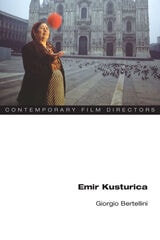
Emir Kusturica
Emir Kusturica
University of Illinois Press, 2015
Leading scholar-critic Giorgio Bertellini divides Kusturica's career into three stages--dissention, disconnection, and dissonance--to reflect both the historic and cultural changes going on around him and the changes his cinema has undergone. He uses Kusturica's Palme d'Or winning Underground (1995)--the famously inflammatory take on Yugoslav history after World War II--as the pivot between the tone of romantic, yet pungent critique of the director's early works and later journeys into Balkanist farce marked by slapstick and a self-conscious primitivism.
Eschewing the one-sided polemics Kusturica's work often provokes, Bertellini employs balanced discussion and critical analysis to offer a fascinating and up-to-date consideration of a major figure in world cinema.
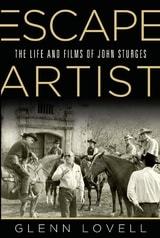
Escape Artist
The Life and Films of John SturgesGlenn Lovell
University of Wisconsin Press, 2008
Best Books for Special Interests, selected by the American Association of School Librarians, and Best Books for General Audiences, selected by the Public Library Association
"Pick up a copy of film critic and scholar Glenn Lovell's terrific new Sturges biography, Escape Artist. . . . I can't urge you enough to check out this interview-rich, aesthetically and culturally perceptive look at the filmmaker and his work."—Bob Strauss, Los Angeles Daily News
“Lovell’s list of interviewees reads like a who’s who of Hollywood and they obviously provided rich source material for this full-scale biography and career survey.”— Leonard Maltin
“This long overdue study of a major Hollywood director will find a welcome home in the libraries of film scholars, action movie buffs, and anyone interested in the popular culture of the twentieth century.”—Turner Classic Movies (TCM.com)
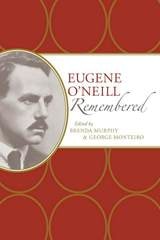
Eugene O'Neill Remembered
Edited by Brenda Murphy and George Monteiro
University of Alabama Press, 2017
A primary-source portrait of Eugene O’Neill through the voices that knew him.
Known principally as the author of some of the most significant plays in the American dramatic canon and as one of America’s Nobel Laureates in literature, O'Neill rarely gave interviews and offered few details about himself. As a consequence, his life has long been shrouded in myth. He also abetted some of the misconceptions about his youth by, for example, advocating the story that he was expelled from Princeton for throwing a rock through Woodrow Wilson's window or by exaggerating the amount of time he had spent at sea. The legend of the hard-drinking, tormented playwright with a grim view of life was further reinforced when Long Day's Journey into Night was produced in 1956, three years after his death instead of the twenty-five years he had insisted on.
The portrayal of O’Neill as a tragic figure has been solidified in a number of biographies. The purpose of this collection, however, is to present O'Neill as others saw him and described him in their first-person accounts. In the course of these reminiscences, many of the vast and various narrators conflict with and contradict each other. Unlike other accounts of O’Neill’s life, much of the focus is on impressions instead of facts. The result is a revealing composite portrait of a key figure in twentieth-century American literary history.
This extensive collection offers insights unavailable in any other book and will hold massive appeal for scholars and students interested in American literature, Eugene O’Neill, and theater history, as well as anyone keen to uncover intimate details of the life of one of America’s greatest writers.
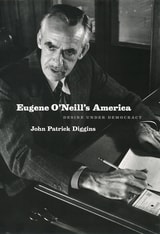
Eugene O'Neill's America
Desire Under DemocracyJohn Patrick Diggins
University of Chicago Press, 2007
In the face of seemingly relentless American optimism, Eugene O’Neill's plays reveal an America many would like to ignore, a place of seething resentments, aching desires, and family tragedy, where failure and disappointment are the norm and the American dream a chimera. Though derided by critics during his lifetime, his works resonated with audiences, won him the Nobel Prize and four Pulitzer, and continue to grip theatergoers today. Now noted historian John Patrick Diggins offers a masterly biography that both traces O’Neill’s tumultuous life and explains the forceful ideas that form the heart of his unflinching works.
Diggins paints a richly detailed portrait of the playwright’s life, from his Irish roots and his early years at sea to his relationships with his troubled mother and brother. Here we see O’Neill as a young Greenwich Village radical, a ravenous autodidact who attempted to understand the disjunction between the sunny public face of American life and the rage that he knew was simmering beneath. According to Diggins, O’Neill mined this disjunction like no other American writer. His characters burn with longing for an idealized future composed of equal parts material success and individual freedom, but repeatedly they fall back to earth, pulled by the tendrils of family and the insatiability of desire. Drawing on thinkers from Emerson to Nietzsche, O’Neill viewed this endlessly frustrated desire as the problematic core of American democracy, simultaneously driving and undermining American ideals of progress, success, and individual freedom.
Melding a penetrating assessment of O’Neill’s works and thought with a sensitive re-creation of his life, Eugene O’Neill’s America offers a striking new view of America’s greatest playwright—and a new picture of American democracy itself.
Every Day A Holiday
A storyteller's memoirElizabeth Ellis
Parkhurst Brothers, Inc., 2014
--Robin Bady, Storyteller, Arts Educator, Brooklyn, New York
Everybody In, Nobody Out
Inspiring Community at Michigan's University Musical SocietyKen Fischer with Robin Lea Pyle
University of Michigan Press, 2020
The approach not only deepened UMS’s engagement with the university and southeast Michigan communities, it led to exemplary partnerships with distinguished artists across the world. Under Fischer’s leadership, UMS hosted numerous breakthrough performances, including the Vienna Philharmonic’s final tour with Leonard Bernstein, appearances by then relatively unknown opera singer Cecilia Bartoli, a multiyear partnership with the Royal Shakespeare Company, and artists as diverse as Yo-Yo Ma, Jawole Willa Jo Zollar, Elizabeth Streb, and Nusrat Fateh Ali Khan.
Though peppered with colorful anecdotes of how these successes came to be, this book is neither a history of UMS nor a memoir of Fischer’s significant accomplishments with the organization. Rather it is a reflection on the power of the performing arts to engage and enrich communities—not by handing down cultural enrichment from on high, but by meeting communities where they live and helping them preserve cultural heritage, incubate talent, and find ways to make community voices heard.