Results by title
60 books match the query 'Environmental justice' and 8 start with e
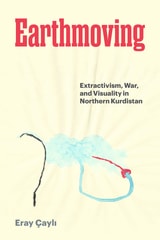
Earthmoving
Extractivism, War, and Visuality in Northern KurdistanEray Çayli
University of Texas Press, 2025
Focuses on contemporary art and media to examine the role of visuals in environmental violence and war in Northern Kurdistan.
Extractivism—exploiting the earth for resources—has long driven racial capitalism and colonialism. And yet, how does extractivism operate in a world where ecological and humanitarian sensibilities are unprecedentedly widespread? Eray Çaylı argues it does so by mobilizing these sensibilities in new ways. Extractivism is no longer only about moving the earth—displacing peoples, fossils, minerals, and waters—but also leaving those who witness this violent displacement sentimentally moved.
Earthmoving conceptualizes this duality. Derived from Çaylı’s years-long work in Northern Kurdistan, home to the world’s largest stateless nation—rendered stateless by colonial policies since the nineteenth century—Earthmoving focuses on the 2010s, a decade that began with peace talks between Turkey and the Kurdish liberation movement but ended with war. The decade saw extractivism intensify in the region and images of its harm proliferate across art and media. Together with contemporary artists, Çaylı shows that images challenge extractivism both by making its harm visible and by fostering self-reflexive and reciprocal collaboration that breaks with its valuation of the colonized and the racialized only in quantifiable and marketable terms.
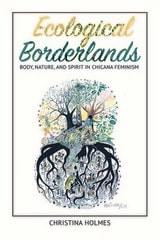
Ecological Borderlands
Body, Nature, and Spirit in Chicana FeminismChristina Holmes
University of Illinois Press, 2016
Holmes revisits key debates to analyze issues surrounding embodiment, women's connections to nature, and spirituality's role in ecofeminist philosophy and practice. By doing so, she challenges Chicanas to escape the narrow frameworks of the past in favor of an inclusive model of environmental feminism that alleviates Western biases. Holmes uses readings of theory, elaborations of ecological narratives in Chicana cultural productions, histories of human and environmental rights struggles in the Southwest, and a description of an activist exemplar to underscore the importance of living with decolonializing feminist commitment in body, nature, and spirit.
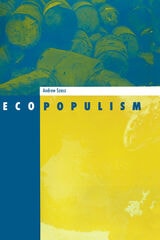
Ecopopulism
Toxic Waste and the Movement for Environmental JusticeAndrew Szasz
University of Minnesota Press, 1994
Moment by moment the evidence mounts that unchecked modern industry is bringing us ever closer to environmental disaster. How can we move away from the brink of extinction, toward a human society the earth can bear? In the thriving popular politics of hazardous waste, Andrew Szasz finds an answer, a scenario for taking the most pressing environmental issues out of the academy and the boardroom and turning them into everyone's business.
This book reconstructs the growth of a powerful movement around the question of toxic waste. Szasz follows the issue as it moves from the world of "official" policymaking in Washington, onto the nation's television screens and into popular consciousness, and then into America's neighborhoods, spurring the formation of thousands of local, community-based groups. He shows how, in less than a decade, a rich infrastructure of more permanent social organizations emerged from this movement, expanding its focus to include issues like municipal waste, military toxics, and pesticides. In the growth of this movement, we witness the birth of a radical environmental populism. Here Szasz identifies the force that pushed environmental policy away from the traditional approach, pollution removal, toward the superior logic of pollution prevention. He discusses the conflicting official responses to the movement's evolution, revealing that, despite initial resistance, lawmakers eventually sought to appease popular discontent by strengthening toxic waste laws. In its success, Szasz suggests, this movement may even prove to be the vehicle for reinvigorating progressive politics in the United States.
Edges of Exposure
Toxicology and the Problem of Capacity in Postcolonial SenegalNoémi Tousignant
Duke University Press, 2018
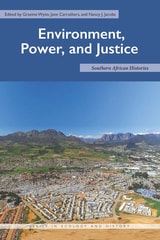
Environment, Power, and Justice
Southern African HistoriesGraeme Wynn
Ohio University Press, 2022
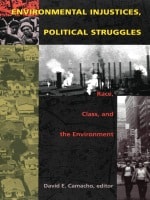
Environmental Injustices, Political Struggles
Race, Class and the EnvironmentDavid E. Camacho, ed.
Duke University Press, 1998
David E. Camacho’s collection of essays examines the value-laden choices behind the public policy that determines placement of commercial environmental hazards, points to the underrepresentation of people of color in the policymaking process, and discusses the lack of public advocates representing low-income neighborhoods and communities. This book combines empirical evidence and case studies—from the failure to provide basic services to the “colonias” in El Paso County, Texas, to the race for water in Nevada—and covers in great detail the environmental dangers posed to minority communities, including the largely unexamined communities of Native Americans. The contributors call for cooperation between national environmental interest groups and local grassroots activism, more effective incentives and disincentives for polluters, and the adoption by policymakers of an alternative, rather than privileged, perspective that is more sensitive to the causes and consequences of environmental inequities.
Environmental Injustices, Political Struggles is a unique collection for those interested in the environment, public policy, and civil rights as well as for students and scholars of political science, race and ethnicity, and urban and regional planning.
Contributors. C. Richard Bath, Kate A. Berry, John G. Bretting, David E. Camacho, Jeanne Nienaber Clarke, Andrea K. Gerlak, Peter I. Longo, Diane-Michele Prindeville, Linda Robyn, Stephen Sandweiss, Janet M. Tanski, Mary M. Timney, Roberto E. Villarreal, Harvey L. White
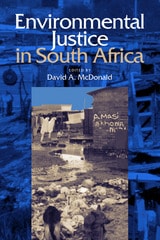
Environmental Justice in South Africa
David A. McDonald
Ohio University Press, 2002
Beginning with a history of the environmental justice movement in the country, the book explores a range of conceptual and practical questions: How does environmental justice relate to issues of marginalization and poverty in South Africa? What are the links between environmental justice and other schools of environmental thought? Is the legal system an appropriate tool for addressing environmental equity? How do race, class, and gender intersect in the South African environmental context?
The second half of the book is a more concrete exploration of environmental (in)justice in the country. These chapters are interspersed with real-life stories of struggles by workers and communities for environmental change. The book is an invaluable resource for South African and international audiences interested in the growing, and increasingly global, environmental justice movement.
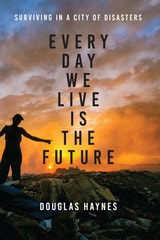
Every Day We Live Is the Future
Surviving in a City of DisastersBy Douglas Haynes
University of Texas Press, 2017
When she was only nine, Dayani Baldelomar left her Nicaraguan village with nothing more than a change of clothes. She was among tens of thousands of rural migrants to Managua in the 1980s and 1990s. After years of homelessness, Dayani landed in a shantytown called The Widows, squeezed between a drainage ditch and putrid Lake Managua. Her neighbor, Yadira Castellón, also migrated from the mountains. Driven by hope for a better future for their children, Dayani, Yadira, and their husbands invent jobs in Managua’s spreading markets and dumps, joining the planet’s burgeoning informal economy. But a swelling tide of family crises and environmental calamities threaten to break their toehold in the city.
Dayani’s and Yadira’s struggles reveal one of the world’s biggest challenges: by 2050, almost one-third of all people will likely live in slums without basic services, vulnerable to disasters caused by the convergence of climate change and breakneck urbanization. To tell their stories, Douglas Haynes followed Dayani’s and Yadira’s families for five years, learning firsthand how their lives in the city are a tightrope walk between new opportunities and chronic insecurity. Every Day We Live Is the Future is a gripping, unforgettable account of two women’s herculean efforts to persevere and educate their children. It sounds a powerful call for understanding the growing risks to new urbanites, how to help them prosper, and why their lives matter for us all.