Results by title
31 books match the query 'Revised'
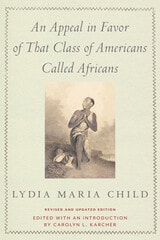
An Appeal in Favor of That Class of Americans Called Africans
Revised and Updated EditionLydia Maria Child, Edited with an introduction by Carolyn L. Karcher
University of Massachusetts Press, 2023
Published in Boston in 1833, Lydia Maria Child’s An Appeal in Favor of That Class of Americans Called Africans provided the abolitionist movement with its first full-scale analysis of race and enslavement. Controversial in its own time, the Appeal surveyed the institution of slavery from historical, political, economic, legal, racial, and moral perspectives and advocated for the immediate emancipation of the enslaved without compensation to their enslavers. By placing American slavery in historical context and demonstrating how slavery impacted—and implicated—Americans of all regions and races, the Appeal became a central text for the abolitionist movement that continues to resonate in the present day.
This revised and updated edition is enhanced by Carolyn L. Karcher’s illuminating introduction, a chronology of Child’s life, and a list of books for further reading.
Attic Greek Prose Syntax
Revised and Expanded in English, Volume 1K. W. Kruger
University of Michigan Press, 1998
The language of classical Greek literature has been extensively studied since the Renaissance, and the most generally admired approach to Greek grammar and syntax has long been K. W. Krüger's Griechische Sprachlehre. In this translation Guy L. Cooper III accepts Krüger's simple and transparent organization, but greatly expands the substance of the earlier work by increasing the total number of citations from the original texts. Research since 1875, especially the contributions of Basil Lanneau Gildersleeve, is incorporated so as to create a reference work, in English, which covers the full range of this complex subject.
Krüger's original paragraph numbering has been maintained so that references in previously published works can be followed directly in the new work. However, every paragraph and chapter has been revised and expanded, opening up new subheadings within Krüger's format. The English has moved away from Krüger's laconic style to a more flowing, readable presentation, without jargon and unexplained technical language. A complete index of passages cited and the impressive number of citations make the work a running syntactic commentary on the whole range of Attic prose literature. The net result is a new comprehensive reference work, an essential reference for libraries and personal collections alike.
Guy L. Cooper III is Professor Emeritus of Classics, University of North Carolina at Asheville.
Volume 2
cloth ISBN 0-472-10844-1
Set of Volumes 1 & 2
cloth ISBN 0-472-10844-1
Attic Greek Prose Syntax
Revised and Expanded in English, Volume 2K. W. Kruger
University of Michigan Press, 1998
The language of classical Greek literature has been extensively studied since the Renaissance, and the most generally admired approach to Greek grammar and syntax has long been K. W. Krüger's Griechische Sprachlehre. In this translation Guy L. Cooper III accepts Krüger's simple and transparent organization, but greatly expands the substance of the earlier work by increasing the total number of citations from the original texts. Research since 1875, especially the contributions of Basil Lanneau Gildersleeve, is incorporated so as to create a reference work, in English, which covers the full range of this complex subject.
Krüger's original paragraph numbering has been maintained so that references in previously published works can be followed directly in the new work. However, every paragraph and chapter has been revised and expanded, opening up new subheadings within Krüger's format. The English has moved away from Krüger's laconic style to a more flowing, readable presentation, without jargon and unexplained technical language. A complete index of passages cited and the impressive number of citations make the work a running syntactic commentary on the whole range of Attic prose literature. The net result is a new comprehensive reference work, an essential reference for libraries and personal collections alike.
Guy L. Cooper III is Professor Emeritus of Classics, University of North Carolina at Asheville.
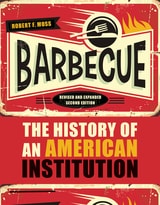
Barbecue
The History of an American Institution, Revised and Expanded Second EditionRobert F. Moss
University of Alabama Press, 2020
The definitive history of an iconic American food, with new chapters, sidebars, and updated historical accounts.
Expert Robert F. Moss researched hundreds of sources—newspapers, letters, journals, diaries, and travel narratives—to document the origins and evolution of barbecue from its origins among Native Americans to its present status as an icon of American culture. In this definitive guide, he maps out the development of the rich array of regional barbecue styles, chronicles the rise of barbecue restaurants, and profiles the famed pitmasters who made the tradition what it is today.
Barbecue is the story not just of a dish but also of a social institution that helped shape many regional cultures of the United States. The history begins with British colonists’ adoption of barbecuing techniques from Native Americans in the 17th and 18th centuries, moves to barbecue’s establishment as the preeminent form of public celebration in the 19th century, and is carried through to barbecue’s ubiquitous standing today.
From the very beginning, barbecues were powerful social magnets, drawing together people from a wide range of classes and geographic backgrounds. Barbecue played a key role in three centuries of American history, both reflecting and influencing the direction of an evolving society. By tracing the story of barbecue from its origins to today, Barbecue: The History of an American Institution traces the very thread of American social history.
Moss has made significant updates in this new edition, offering a wealth of new historical research, sources, illustrations, and anecdotes.
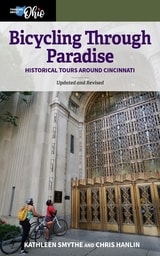
Bicycling Through Paradise
Historical Tours Around Cincinnati, Updated and RevisedKathleen Smythe and Chris Hanlin
Ohio University Press, 2025
A revised edition of the award-winning book of historically themed cycling tours in and around Cincinnati, Ohio
Bicycling Through Paradise: Historical Rides Around Cincinnati includes nineteen historically themed cyclist tours for all abilities centered around Cincinnati, Ohio. Written by two longtime cyclists—one a professor of history and one an architect—this book dives into the details of local landscape and history encountered along the route. Rides combine familiar destinations like Lunken Airport, Eden Park, and Loveland Castle with lesser-known sites like Underground Railroad stations, ruined stone canal locks, and a nineteenth-century socialist commune, all located in and around the greater Cincinnati area. Stops along the way include public parks, covered bridges, and one-room schoolhouses.
The book includes a QR code to link readers to a companion Community Page where cyclists will find downloadable turn-by-turn directions and wayfinding photos, plus a place for cyclists to share their feedback, making this book an interactive experience.
Bioethics Mediation
A Guide to Shaping Shared Solutions, Revised and Expanded EditionNancy Neveloff Dubler
Vanderbilt University Press, 2011
Conflicts come in different guises, and the key to successful resolution is early identification and intervention. Every bioethics mediator needs to be prepared with skills to listen, "level the playing field," identify individual interests, explore options, and help craft a "principled resolution" -- a consensus that identifies a plan aligned with accepted ethical principles, legal stipulations, and moral rules and that charts a clear course of future intervention.
The organization of the book makes it ideal for teaching or as a handbook for the practitioner. It includes actual cases, modified to protect the privacy of patients, providers, and institutions; detailed case analyses; tools for step-by-step mediation; techniques for the mediator; sample chart notes; and a set of actual role plays with expert mediator and bioethics commentaries. The role plays include:
- discharge planning for a dying patient
- an at-risk pregnancy
- HIV and postsurgical complications in the ICU
- treatment for a dying adolescent
- dialysis and multiple systems failure
Expanded by two-thirds from the 2004 edition, the new edition features two new role plays, a new chapter on how to write chart notes, and a discussion of new understandings of the role of the clinical ethics consultant.
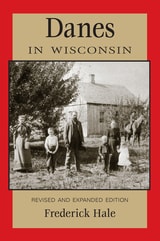
Danes in Wisconsin
Revised and Expanded EditionFrederick Hale
Wisconsin Historical Society Press, 2005
Wisconsin Territory's first Dane arrived in 1829, and by 1860 the state's Danish-born population had reached 1,150. Yet these newcomers remained only a small segment of Wisconsin's increasingly complex cultural mosaic, and the challenges of adapting to life in this new land shaped the Danish experience in the state. In this popular book, now revised and expanded with additional historical photos and documents, Frederick Hale offers a concise introduction to Wisconsin's Danish settlers, exploring their reasons for leaving their homeland, describing their difficult journeys, and examining their adjustments to life on Wisconsin soil.
New to this edition are the selected letters of Danish immigrant Andrew Frederickson. These compelling documents, written over a 40-year span, capture the personal observations of one Dane as he made a new life in Wisconsin.
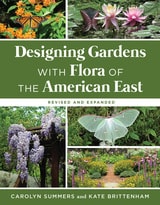
Designing Gardens with Flora of the American East, Revised and Expanded
Carolyn Summers
Rutgers University Press, 2024
In this fully revised second edition of the classic guide Designing Gardens with Flora of the American East, gardening expert Carolyn Summers draws on the most recent research on sustainable landscaping. She is joined in this edition by her daughter, landscape designer Kate Brittenham, offering an intergenerational dialogue about the importance of using indigenous plants that preserve insect and bird habitats. The practical information they provide is equally useful for home gardeners and professionals, including detailed descriptions of keystone trees, shrubs, perennials, vines, and grasses that are native to the eastern United States. Accompanied by entirely new illustrations and updated plant lists, they offer chic yet eco-friendly landscape designs fully customized for different settings, from suburban yards to corporate office parks.
The states covered in this book are CT, DE, IA, IL, IN, KY, MA, MD, ME, MI, MN, MO, NC, NH, NJ, NY, OH, PA, RI, TN, VA, VT, WI, and WV, as well as southern Quebec and Ontario.
Dynamics Of Folklore
Revised and Expanded EditionBarre Toelken
Utah State University Press, 1996
One of the most comprehensive and widely praised introductions to folklore ever written. Toelken's discussion of the history and meaning of folklore is delivered in straightforward language, easily understood definitions, and a wealth of insightful and entertaining examples.
Toelken emphasizes dynamism and variety in the vast array of folk expressions he examines, from "the biology of folklore," to occupational and ethnic lore, food ways, holidays, personal experience narratives, ballads, myths, proverbs, jokes, crafts, and others. Chapters are followed by bibliographical essays, and over 100 photographs illustrate the text. This new edition is accessible to all levels of folklore study and an essential text for classroom instruction.
Introduction to Aristotle
Second Edition, Revised and EnlargedAristotle
University of Chicago Press, 1974
Aristotle's contribution to Western civilization is enormous. Our language, our distinctions, our ways of thinking, all are profoundly affected by his work. Since an understanding of Aristotle is indispensable for the understanding of our own culture, the ready availability of his work is crucial.
This collection, for students and general readers alike, provides in one volume Posterior Analytics (Logic), De Anima (On the Soul), Nicomachean Ethics, and Poetics, complete and unabridged, together with generous selections from Physics, On the Parts of Animals, Metaphysics, Politics, and Rhetoric. These works, together with Professor McKeon's revised introductions, provide a convenient and thorough exposure to the works of Aristotle and to the structural interrelations in the Aristotelian system of thought.
Kids Have All the Write Stuff
Revised and Updated for a Digital AgeRobert W. Maloy
University of Massachusetts Press, 2019
You'll discover:
· how to implement writing as a part of daily life with family and friends;
· processes and invitations fit for young writers;
· strategies for connecting writing to math and coding;
· writing materials and technologies; and
· creative and practical writing ideas, from fiction, nonfiction, and videos to blogs and emails.
In order to connect writing to today's digital revolution, veteran educators Sharon A. Edwards, Robert W. Maloy, and Torrey Trust reveal how digital tools can inspire children to write, and a helpful companion website brings together a range of resources and technologies. This essential book offers enjoyment and inspiration to young writers!
Lectures on Buildings
Updated and RevisedMark Ronan
University of Chicago Press, 2009
In mathematics, “buildings” are geometric structures that represent groups of Lie type over an arbitrary field. This concept is critical to physicists and mathematicians working in discrete mathematics, simple groups, and algebraic group theory, to name just a few areas.
Almost twenty years after its original publication, Mark Ronan’s Lectures on Buildings remains one of the best introductory texts on the subject. A thorough, concise introduction to mathematical buildings, it contains problem sets and an excellent bibliography that will prove invaluable to students new to the field. Lectures on Buildings will find a grateful audience among those doing research or teaching courses on Lie-type groups, on finite groups, or on discrete groups.
“Ronan’s account of the classification of affine buildings [is] both interesting and stimulating, and his book is highly recommended to those who already have some knowledge and enthusiasm for the theory of buildings.”—Bulletin of the London Mathematical Society

Michigan Trees, Revised and Updated
A Guide to the Trees of the Great Lakes RegionBurton V. Barnes and Warren H. Wagner, Jr.
University of Michigan Press, 2004
Now in its tenth decade of publication, Michigan Trees has been, since it was first introduced in 1913, the must-have reference book for anyone who wants to know about the trees of this unique North American region.
In this new and updated edition, several new species have been added to the lineup, as well as sections on tree ecology and fall color. Written and illustrated in a style that appeals at once to academic botanists and armchair arborphiles alike, Michigan Trees gives readers everything they need to know for identifying trees in the Great Lakes state. Included with each description are fascinating notes and asides (for example, this tidbit on the jack pine: "Parklike or savanna stands in north-central Michigan are prime habitat for the rare Kirtland's warbler that breeds nowhere else in the world."). Also includes a tree key and identification section illustrated with elegantly simple line drawings that reveal the tiny, signature details that make each tree unique.
Burton V. Barnes is Professor of Forestry at the University of Michigan. Formerly a research forester, he is best known for his research and publications in forest ecology and forest genetics.
Warren H. Wagner, Jr. was a world authority on ferns. He had been Professor Emeritus of Botany and Natural Resources at the University of Michigan before his death at the age of 80 in 2000.

Nigerian Video Films
Revised and Expanded EditionJonathan Haynes
Ohio University Press, 2000
Notes on Blood Meridian
Revised and Expanded EditionBy John Sepich
University of Texas Press, 2008
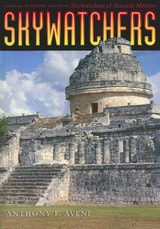
Skywatchers
A Revised and Updated Version of Skywatchers of Ancient MexicoBy Anthony F. Aveni
University of Texas Press, 2001
Skywatchers of Ancient Mexico helped establish the field of archaeoastronomy, and it remains the standard introduction to this subject. Combining basic astronomy with archaeological and ethnological data, it presented a readable and entertaining synthesis of all that was known of ancient astronomy in the western hemisphere as of 1980.
In this revised edition, Anthony Aveni draws on his own and others' discoveries of the past twenty years to bring the Skywatchers story up to the present. He offers new data and interpretations in many areas, including:
- The study of Mesoamerican time and calendrical systems and their unprecedented continuity in contemporary Mesoamerican culture
- The connections between Precolumbian religion, astrology, and scientific, quantitative astronomy
- The relationship between Highland Mexico and the world of the Maya and the state of Pan-American scientific practices
- The use of personal computer software for computing astronomical data
With this updated information, Skywatchers will serve a new generation of general and scholarly readers and will be useful in courses on archaeoastronomy, astronomy, history of astronomy, history of science, anthropology, archaeology, and world religions.
Tarski's World
Revised and ExpandedDavid Barker-Plummer, Jon Barwise, and John Etchemendy
CSLI, 2004
A brand new feature in this revised and expanded edition is student access to Grade Grinder, an innovative Internet-based grading service that provides accurate and timely feedback to students whenever they need it. Students can submit solutions for the program’s more than 100 exercises to the Grade Grinder for assessment, and the results are returned quickly to the students and optionally to the teacher as well. A web-based interface also allows instructors to manage assignments and grades for their classes.
Intended as a supplement to a standard logic text, Tarski’s World is an essential tool for helping students learn the language of logic.

The 16th Michigan Infantry in the Civil War, Revised and Updated
Kim Crawford
Michigan State University Press, 2019
The Academic's Handbook, Fourth Edition
Revised and ExpandedLori A. Flores and Jocelyn H. Olcott, editors
Duke University Press, 2020
Contributors. Luis Alvarez, Steven Alvarez, Eladio Bobadilla, Genevieve Carpio, Marcia Chatelain, Ernesto Chávez, Miroslava Chávez-García, Nathan D. B. Connolly, Jeremy V. Cruz, Cathy N. Davidson, Sarah Deutsch, Brenda Elsey, Sylvanna M. Falcón, Michelle Falkoff, Kelly Fayard, Matthew W. Finkin, Lori A. Flores, Kathryn J. Fox, Frederico Freitas, Neil Garg, Nanibaa’ A. Garrison, Joy Gaston Gayles, Tiffany Jasmin González, Cynthia R. Greenlee, Romeo Guzmán, Lauren Hall-Lew, David Hansen, Heidi Harley, Laura M. Harrison, Sonia Hernández, Sharon P. Holland, Elizabeth Q. Hutchison, Deborah Jakubs, Bridget Turner Kelly, Karen Kelsky, Stephen Kuusisto, Magdalena Maczynska, Sheila McManus, Cary Nelson, Jocelyn H. Olcott, Rosanna Olsen, Natalia Mehlman Petrzela, Charles Piot, Bryan Pitts, Sarah Portnoy, Laura Portwood-Stacer, Yuridia Ramirez, Meghan K. Roberts, John Elder Robison, David Schultz, Lynn Stephen, James E. Sutton, Antar A. Tichavakunda, Keri Watson, Ken Wissoker, Karin Wulf
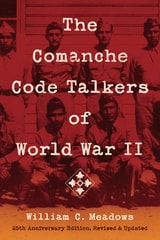
The Comanche Code Talkers of World War II
25th Anniversary Edition, Revised and UpdatedWilliam C. Meadows
University of Texas Press, 2027
An updated edition of a popular study of the Comanche Code Talkers of WWII.
Among the Allied troops who came ashore in Normandy on D-Day were thirteen Comanches in the 4th Infantry Division’s 4th Signal Company. Under German fire they laid communications lines and sent messages in a form never before heard in Europe: coded Comanche. For the rest of World War II, the Comanche Code Talkers played a vital role transmitting orders in a code the Germans never broke. Drawing on interviews with surviving members of the unit, their training officer, and fellow soldiers, as well as archival records, William C. Meadows traces the Comanche Code Talkers from recruitment and training through wartime service and into their postwar lives. He also places their story within the broader history of Native American code talking in the world wars, comparing the Comanche program with the better-known Navajo Code Talkers and examining the military’s use of Native languages for secure communication.
This twenty-fifth anniversary edition adds a new chapter and photographs documenting long-overdue recognition for the Comanche Code Talkers, in the form of congressional medals, museum exhibits, films, and memorials, along with updates in several areas that clarify the development of code talking, add key details of the unit’s history, and highlight the enduring legacy of these soldiers and their linguistic contribution to Allied victory.
The Constitutional Jurisprudence of the Federal Republic of Germany
Third edition, Revised and ExpandedDonald P. Kommers and Russell A. Miller
Duke University Press, 2012
Compared to previous editions of The Constitutional Jurisprudence of the Federal Republic of Germany, this third edition more closely tracks Germany's Basic Law and, therefore, the systematic approach reflected in the most-respected German constitutional law commentaries. Entirely new chapters address the relationship between German law and European and international law; social and economic rights, including the property and occupational rights cases that have emerged from Reunification; jurisprudence related to issues of equality, particularly gender equality; and the tension between Germany's counterterrorism efforts and its constitutional guarantees of liberty. Kommers and Miller have also updated existing chapters to address recent decisions involving human rights, federalism, European integration, and religious liberty.
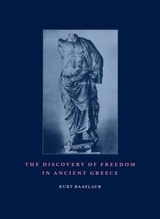
The Discovery of Freedom in Ancient Greece
Revised and Updated EditionKurt Raaflaub
University of Chicago Press, 2003
To find out, Raaflaub analyses ancient Greek texts from Homer to Thucydides in their social and political contexts. Archaic Greece, he concludes, had little use for the idea of political freedom; the concept arose instead during the great confrontation between Greeks and Persians in the early fifth century BCE. Raaflaub then examines the relationship of freedom with other concepts, such as equality, citizenship, and law, and pursues subsequent uses of the idea—often, paradoxically, as a tool of domination, propaganda, and ideology.
Raaflaub's book thus illuminates both the history of ancient Greek society and the evolution of one of humankind's most important values, and will be of great interest to anyone who wants to understand the conceptual fabric that still shapes our world views.
The Invisible Dragon
Essays on Beauty, Revised and ExpandedDave Hickey
University of Chicago Press, 2009
The Invisible Dragon made a lot of noise for a little book When it was originally published in 1993 it was championed by artists for its forceful call for a reconsideration of beauty—and savaged by more theoretically oriented critics who dismissed the very concept of beauty as naive, igniting a debate that has shown no sign of flagging.
With this revised and expanded edition, Hickey is back to fan the flames. More manifesto than polite discussion, more call to action than criticism, The Invisible Dragon aims squarely at the hyper-institutionalism that, in Hickey’s view, denies the real pleasures that draw us to art in the first place. Deploying the artworks of Warhol, Raphael, Caravaggio, and Mapplethorpe and the writings of Ruskin, Shakespeare, Deleuze, and Foucault, Hickey takes on museum culture, arid academicism, sclerotic politics, and more—all in the service of making readers rethink the nature of art. A new introduction provides a context for earlier essays—what Hickey calls his "intellectual temper tantrums." A new essay, "American Beauty," concludes the volume with a historical argument that is a rousing paean to the inherently democratic nature of attention to beauty.
Written with a verve that is all too rare in serious criticism, this expanded and refurbished edition of The Invisible Dragon will be sure to captivate a new generation of readers, provoking the passionate reactions that are the hallmark of great criticism.
The Possessive Investment in Whiteness
How White People Profit from Identity Politics, Revised and Expanded EditionGeorge Lipsitz
Temple University Press, 2006

The Schlemiel as Metaphor, Revised and Enlarged Edition
Studies in Yiddish and American Jewish FictionSanford Pinsker
Southern Illinois University Press, 1991
The certainty that deep down we are all schlemiels is perhaps what makes America love an inept ball team or a Woody Allen who unburdens his neurotic heart in public.
In this unique, revised history of the schlemiel, Sanford Pinsker uses psychological, linguistic, and anecdotal approaches, as well as his considerable skills as a spritely storyteller, to trace the schlemiel from his beginnings in the Old Testament through his appearance in the nineteenth-century literature of Mendele Mocher Seforim and Sholom Aleichem to his final development as the beautiful loser in the works of Isaac Bashevis Singer, Bernard Malamud, Saul Bellow, Philip Roth, and Woody Allen. Horatio Alger might have once been a good emblem of the American sensibility, but today Woody Allen’s anxious, bespectacled punin (face) seems closer, and truer, to our national experience. His urban, end-of-the-century anxieties mirror—albeit in exaggeration—our own.
This expanded study of the schlemiel is especially relevant now, when scholarship of Yiddish and American Jewish literature is on the increase. By sketching the family tree of that durable anti-hero the schlemiel, Pinsker proves that Jewish humor is built upon the very foundations of the Jewish experience. Pinsker shows the evolution of the schlemiel from the comic butt of Yiddish jokes to a literary figure that speaks to the heart of our modern problems, and he demonstrates the way that Yiddish humor provides a sorely needed correction, a way of pulling down the vanities we all live by.
The Sheep Book
A Handbook for the Modern Shepherd, Revised and UpdatedRon Parker
Ohio University Press, 2001
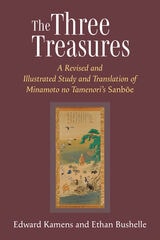
The Three Treasures
A Revised and Illustrated Study and Translation of Minamoto no Tamenori's SanboeEdward Kamens and Ethan Bushelle
University of Michigan Press, 2023
When the young Princess Sonshi became a Buddhist nun in the year 984, a scholar-official of the royal court was commissioned to create a guide to the Buddhist religion that would be accessible for her. He did so in the form of the illustrated works of fiction (monogatari) that appealed to women readers of her time and class. The text has survived in later manuscripts; the illustrations, if they ever existed, have not. This revised translation recreates Sonshi’s experience of receiving this multimedia presentation, with illustrations selected to help contemporary readers visualize its content and essays that provide context on the religious and cultural experience of the author. The Three Jewels is a unique document that opens a window onto the world of Buddhist religious experience—especially for women—in high classical Japan, the time of Sei Shōnagon’s Pillow Book and Murasaki Shikibu’s Tale of Genji.

Union Prayer Book
Sinai Edition, RevisedMichael P. Sternfield
Central Conference of American Rabbis, 2012
Victims of Justice Revisited
Completely Updated and RevisedThomas Frisbie and Randy Garrett
Northwestern University Press, 2005
The kidnapping of Jeanine Nicarico from her quiet suburban home and her brutal slaying sparked a public demand for justice. But the longer authorities strove to execute Cruz and the two other men, the more evidence emerged that the defendants were innocent-and that the death penalty process in America itself was deeply flawed.
Here is the start of a chain reaction that led to a moratorium on the death penalty in Illinois and the clearing out of Death Row, as Illinois Governor George Ryan-worried about unfairness in death penalty convictions-granted clemency to all those awaiting execution. This is a detailed study of a nationally known case that should be cited whenever serious scholars examine how capital cases are prosecuted in America. Here is the most thorough investigation yet published into the background of the man who-after Cruz already was on Death Row-claimed to be the real killer.

Words That Make New Jersey History
A Primary Source Reader, revised and expanded editionEdited by Howard L. Green
Rutgers University Press, 2006
New to this expanded edition is the text of James McGreevey's "I am a Gay American" speech, as well as entries about the Abbott v. Burke court ruling mandating that New Jersey equalize funding of urban and suburban schools districts, sprawl and its effects on water supply, and the state's economic boom in the 1990s.
A balanced survey of New Jersey's history presented in the context of a changing nation, this volume is well suited to general readers who want to explore the primary sources of the state's past, and to U.S. history students at the high school and college levels.
Workbook to Accompany the Second Edition of Donald M. Ayers's English Words from Latin and Greek Elements
Revised EditionHelena Dettmer and Marcia Lindgren
University of Arizona Press, 2005
The Workbook has now been revised to make it more relevant and useful. It features a new dictionary exercise and word analysis exercises, the replacement of true-false exercises that have caused the most difficulty for students, and the elimination of archaic words and other items that have become dated. The authors have also improved the clarity of the instructions for individual exercises, in some cases adding notes or providing sample answers. As part of the revised front matter, there is a new introduction written just for students to help them get the most out of the workbook. English Words and the Workbook have met with unqualified success in English and Classics courses at both the advanced secondary and college levels. This revision of the Workbook helps to ensure the continuing relevance of the roots approach to vocabulary building for tomorrow’s students.