Results by title
230 books match the query 'Ethnicity' and 20 start with e
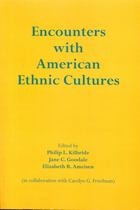
Encounters with American Ethnic Cultures
Edited by Philip L. Kilbride, Jane C. Goodale, and Elizabeth R. Ameisen
University of Alabama Press, 1990
Encounters with American Ethnic Cultures represents a cultural approach to understanding ethnic diversity in the Philadelphia metropolitan area.
Thirteen chapters, each using an ethnographic field methodology, explore such ethnic experience as the "invisible" (WASPS and African-Americans); "self-chosen" (Welsh-American, Irish-American, and Ukrainian-American); "gender-related" (the Lubovitcher); "religious" (Jewish, Native American, Greek-American, and Puerto Rican); and "dislocated" (Cambodians and the homeless). Ethnographic fieldwork focuses an insider's view on the meaning of ethnic experience in the lives of participants in the research. This volume examines the role and function of various ethnic endeavors in the preservation and maintenance of ethnic identity by contemporary Americans.
This five part volume includes:
Introduction: Ethnic Culture Analysis—A Course of Study, Jane C. Goodale and Philip L. Kilbride
Methodology, Elizabeth R. Ameisen and Carolyn G. Friedman
Part I. Black and WASP in American Cultural Experience: The Invisible Ones
Exclusivity in an Ethnic Elite: Racial Prejudice as Boundary Maintenance, Elizabeth R. Ameisen
Africans and African-Americans: An Ethnohistorical View and Symbolic Analysis of Food Habits, Carolyn G. Friedman
Part II. Self-Chosen Ethnicity
Unique Americans: The Welsh-American Ethnic Group in the Philadelphia Area, Lorraine Murray
Irish-Americans and Irish Dance: Self-Chosen Ethnicity, Erin McGauley Hebard
Art and Identity: Ukrainian-American Ethnicity, Jennifer Krier
Part III. Interpretations of Gender and Ethnicity: The Lubavitcher Experience
Equality Does Not Mean Sameness: The Role of Women within the Lubavitcher Marriage, Philip Baldinger
Strategies for Strength: Women and Personal Empowerment in Lubavitcher Hasidism, Gita Srinivasan
Part IV. Ethnicity and Religion: The Persistence of Collective Representations
Our Lives Revolve around the Holidays: Holidays in the Transmission of Jewish Ethnicity, Anna Dahlem
Fayetteville or Raleigh? An Analysis of an American Indian Baptist Church, Beth Batten
Issues in Greek Orthodoxy That Define and Maintain Greek-American Ethnicity, Karen L. Belsley
Es como si fuera la casa de uno: The Role of the Community Church in Maintaining Puerto Rican Ethnicity, Monica Schoch-Spana
Part V. Dislocation and Ethnicity
Cambodian Marriage: Marriage and How it is Changing among Cambodian Refugees in Philadelphia, Rebecca C. Popenoe
Ethnic Expression in a Jewish Street Person, Andrew Millstein
Conclusion, Philip L. Kilbride and Jane C. Goodale

Enigma of Ethnicity
Another American DilemmaWilbur Zelinsky
University of Iowa Press, 2000
Zelinsky begins by examining the ways in which “ethnic groups” and “ethnicity” have been defined; his own definitions then become the basis for the rest of his study. He next focuses on the concepts of heterolocalism—the possibility that an ethnic community can exist without being physically merged—and personal identity—the relatively recent idea that one can concoct one's own identity. In his final chapter, which is also his most provocative, he concentrates on the multifaceted phenomenon of multiculturalism and its relationship to ethnicity. Throughout he includes a close look at African Americans, Hispanics, and Jews as well as such less-studied groups as suburbanized Japanese, Cubans in Washington, Koreans, Lithuanian immigrants in Chicago, Estonians in New Jersey, Danish Americans in Seattle, and Finns.
Reasonable, nonpolemical, and straightforward, Zelinsky's text is invaluable for readers wanting an in-depth overview of the literature on ethnicity in the United States as well as a well-thought-out understanding of the meanings and dynamics of ethnic groups, ethnicity, and multiculturalism.
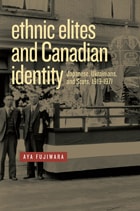
Ethnic Elites
Japanese, Ukrainians, and Scots, 1919-1971Aya Fujiwara
University of Manitoba Press, 2012
Ethnic Identity in Nahua Mesoamerica
The View from Archaeology, Art History, Ethnohistory, and Contemporary EthnographyFrances F Berdan
University of Utah Press, 2008
This book is the first to analyze ethnicity in a single place over a span that covers prehistory, colonial history, and contemporary life. The authors bring to their various case studies data, methodologies, and concepts of their respective fields to show how Nahuan concepts of ethnic identity are not based on the notion of shared descent but rather on conceptions of shared place of origin and common history.

Ethnicity and Conflict in the Horn of Africa
Katsuyoshi Fukui
Ohio University Press, 1994
Conflicts in the Horn have all too often dominated press coverage of Africa. This book exposes the subtle and ambiguous role ethnicity can plan in social conflict, a role that is nowhere as simple and direct as commonly assumed.
Social conflict is routinely attributed to ethnic differentiation because dividing lines between rival groups often follow ethnic contours and cultural symbolism has proved a potent ideological weapon. The purpose of this book is to examine the nature of the bond linking ethnicity to conflict in a variety of circumstances.
The diverse groups are involved in confrontations at different levels and varying intensity, ranging from elemental struggles for physical survival of groups at the margin of society, to contests for state power and control of resources at the center.
These ten studies from Sudan, Ethiopia, Uganda, and Kenya are based on primary research by anthropologists and historians who have long experience of the region. The insights gained from this comparative work help to refine common assumptions about conflict among ethnic groups.
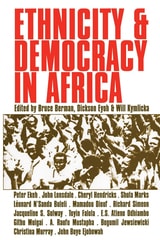
Ethnicity and Democracy in Africa
Bruce Berman
Ohio University Press, 2004
The politics of identity and ethnicity will remain a fundamental characteristic of African modernity. For this reason, historians and anthropologists have joined political scientists in a discussion about the ways in which democracy can develop in multicultural societies. In Ethnicity and Democracy in Africa, the contributors address why ethnicity represents a political problem, how the problem manifests itself, and which institutional models offer ways of ameliorating the challenges that ethnicity poses to democratic nation-building.
Ethnicity and Inequality in Hawai'i
Jonathan Y. Okamura
Temple University Press, 2008
Challenging the dominant view of Hawai’i as a “melting pot paradise”—a place of ethnic tolerance and equality—Jonathan Okamura examines how ethnic inequality is structured and maintained in island society. He finds that ethnicity, not race or class, signifies difference for Hawaii’s people and therefore structures their social relations. In Hawai’i, residents attribute greater social significance to the presumed cultural differences between ethnicities than to more obvious physical differences, such as skin color.
According to Okamura, ethnicity regulates disparities in access to resources, rewards, and privileges among ethnic groups, as he demonstrates in his analysis of socioeconomic and educational inequalities in the state. He shows that socially and economically dominant ethnic groups—Chinese Americans, Japanese Americans, and Whites—have stigmatized and subjugated the islands’ other ethnic groups—especially Native Hawaiians, Filipino Americans, and Samoans. He demonstrates how ethnic stereotypes have been deployed against ethnic minorities and how these groups have contested their subordinate political and economic status by articulating new identities for themselves.

Ethnicity and Nationalism
Anthropological PerspectivesThomas Hylland Eriksen
Pluto Press, 2010
Ethnicity and nationalism are pervasive features of the contemporary world, but how far is ethnicity a result of cultural differences, and how much is it in fact dependent on the practical use of, and belief in, such differences? In this book, Thomas Hylland Eriksen demonstrates that far from being an immutable property of groups, ethnicity is a dynamic and shifting aspect of social relationships. Drawing on a wide range of classic and recent studies in anthropology and sociology, Eriksen examines the relationship between ethnicity, class, gender and nationhood and more in a lucid and comprehensive manner.
A core text for all students of social anthropology and related subjects, Ethnicity and Nationalism has been a leading introduction to the field since its original publication in 1993. This new edition - expanded and thoroughly revised - is indispensable to anyone seriously interested in understanding ethnic phenomena. New topics covered include cultural property rights, the role of genetics in the public understanding of identification, commercialisation of identity, and the significance of the internet.

Ethnicity and the American Cemetery
Richard Meyer
University of Wisconsin Press, 1993
Contributors examine the material objects found within the cemeteries, as well as the customary practices bound to them. Contributors are from the fields of folklore, cultural history, historical archaeology, landscape architecture, and philosophy. Heavily illustrated, the volume also features an extensive annotated bibliography.
Ethnicity in Ancient Amazonia
Reconstructing Past Identities from Archaeology, Linguistics, and EthnohistoryAlf Hornborg
University Press of Colorado, 2011
Hornborg and Hill argue that the tendency to link language, culture, and biology--essentialist notions of ethnic identities--is a Eurocentric bias that has characterized largely inaccurate explanations of the distribution of ethnic groups and languages in Amazonia. The evidence, however, suggests a much more fluid relationship among geography, language use, ethnic identity, and genetics. In Ethnicity in Ancient Amazonia, leading linguists, ethnographers, ethnohistorians, and archaeologists interpret their research from a unique nonessentialist perspective to form a more accurate picture of the ethnolinguistic diversity in this area.
Revealing how ethnic identity construction is constantly in flux, contributors show how such processes can be traced through different ethnic markers such as pottery styles and languages. Scholars and students studying lowland South America will be especially interested, as will anthropologists intrigued by its cutting-edge, interdisciplinary approach.
Ethnicity in Michigan
Issues and PeopleJack Glazier
Michigan State University Press, 2001
As the introductory volume in the series Discovering the Peoples of Michigan, Ethnicity in Michigan outlines the processes of migration, as well as the rich relationship between ethnic groups and the trajectories of historical and social change in Michigan. On both state and local levels, issues of identity, race, politics, and shared history inform community development. Jack Glazier and Arthur Helweg provide a substantive general and theoretical overview of the various ethnic groups in Michigan, and of the ways in which immigrants both respond to and shape Michigan's particular regional character.
Ethnicity on Parade
Inventing the Norwegian American through CelebrationApril R. Schultz
University of Massachusetts Press, 2009
These are some of the questions April R. Schultz addresses in this interdisciplinary study of the way in which ethnic identity has been shaped and expressed in American culture. Drawing on the work of historians, anthropologists, literary critics, and cultural theorists, Schultz analyzes one national celebration—the 1925 Norwegian-American Immigration Centennial—as a strategic site for the invention of ethnicity. She shows how Norwegian Americans used this ceremony to create a distinctive vision of their past and present—a social and cultural construction that both accommodated and resisted dominant Anglo-American conceptions of assimilation.
By taking a close look at the experiences of a white, middle-class, Protestant ethnic community, this book challenges many assumptions about the "Americanization" of immigrant groups and offers new insight into the uses of historical memory.
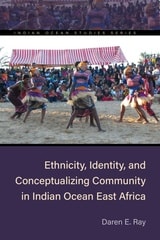
Ethnicity, Identity, and Conceptualizing Community in Indian Ocean East Africa
Daren E. Ray
Ohio University Press, 2023
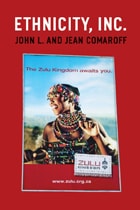
Ethnicity, Inc.
John L. Comaroff and Jean Comaroff
University of Chicago Press, 2009
In Ethnicity, Inc. anthropologists John L. and Jean Comaroff analyze a new moment in the history of human identity: its rampant commodification. Through a wide-ranging exploration of the changing relationship between culture and the market, they address a pressing question: Wherein lies the future of ethnicity?
Their account begins in South Africa, with the incorporation of an ethno-business in venture capital by a group of traditional African chiefs. But their horizons are global: Native American casinos; Scotland’s efforts to brand itself; a Zulu ethno-theme park named Shakaland; a world religion declared to be intellectual property; a chiefdom made into a global business by means of its platinum holdings; San “Bushmen” with patent rights potentially worth millions of dollars; nations acting as commercial enterprises; and the rapid growth of marketing firms that target specific ethnic populations are just some of the diverse examples that fall under the Comaroffs’ incisive scrutiny. These phenomena range from the disturbing through the intriguing to the absurd. Through them, the Comaroffs trace the contradictory effects of neoliberalism as it transforms identities and social being across the globe.
Ethnicity, Inc. is a penetrating account of the ways in which ethnic populations are remaking themselves in the image of the corporation—while corporations coopt ethnic practices to open up new markets and regimes of consumption. Intellectually rigorous but leavened with wit, this is a powerful, highly original portrayal of a new world being born in a tectonic collision of culture, capitalism, and identity.
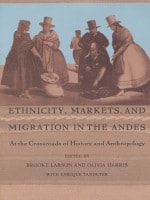
Ethnicity, Markets, and Migration in the Andes
At the Crossroads of History and AnthropologyBrooke Larson, Olivia Harris, and Enrique Tandeter, eds.
Duke University Press, 1995
Bringing together the work of outstanding scholars in Andean history, anthropology, and ethnohistory, these pioneering essays show how, from the very earliest period of Spanish rule, Andean peasants and their rulers embraced the new economic opportunities and challenged or subverted the new structures introduced by the colonial administration. They also convincingly explain why in the twentieth century the mistaken idea developed that Andean peasants were conservative and unable to participate effectively in different markets, and reveal how closely ethnic inequalities were tied to evolving market relations. Inviting a critical reconsideration of ethnic, class, and gender issues in the context of rural Andean markets, this book will revise the prevailing view of Andean history and provide a more fully informed picture of the complex mercantile activities of Andean peasants.
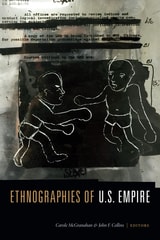
Ethnographies of U.S. Empire
Carole McGranahan and John F. Collins, editors
Duke University Press, 2018
Contributors: Kevin K. Birth, Joe Bryan, John F. Collins, Jean Dennison, Erin Fitz-Henry, Adriana María Garriga-López, Olívia Maria Gomes da Cunha, Matthew Gutmann, Ju Hui Judy Han, J. Kēhaulani Kauanui, Eleana Kim, Heonik Kwon, Soo Ah Kwon, Darryl Li, Catherine Lutz, Sunaina Maira, Carole McGranahan, Sean T. Mitchell, Jan M. Padios, Melissa Rosario, Audra Simpson, Ann Laura Stoler, Lisa Uperesa, David Vine

European Others
Queering Ethnicity in Postnational EuropeFatima El-Tayeb
University of Minnesota Press, 2011
European Others offers an interrogation into the position of racialized communities in the European Union, arguing that the tension between a growing nonwhite, non-Christian population and insistent essentialist definitions of Europeanness produces new forms of identity and activism. Moving beyond disciplinary and national limits, Fatima El-Tayeb explores structures of resistance, tracing a Europeanization from below in which migrant and minority communities challenge the ideology of racelessness that places them firmly outside the community of citizens.
Using a notable variety of sources, from drag performances to feminist Muslim activism and Euro hip-hop, El-Tayeb draws on the largely ignored archive of vernacular culture central to resistance by minority youths to the exclusionary nationalism that casts them as threatening outcasts. At the same time, she reveals the continued effect of Europe’s suppressed colonial history on the representation of Muslim minorities as the illiberal Other of progressive Europe.
Presenting a sharp analysis of the challenges facing a united Europe seen by many as a model for twenty-first-century postnational societies, El-Tayeb combines theoretical influences from both sides of the Atlantic to lay bare how Europeans of color are integral to the continent’s past, present, and, inevitably, its future.
Everyday Equalities
Making Multicultures in Settler Colonial CitiesRuth Fincher
University of Minnesota Press, 2019
A timely new look at coexisting without assimilating in multicultural cities
If city life is a “being together of strangers,” what forms of being together should we strive for in cities with ethnic and racial diversity? Everyday Equalities seeks evidence of progressive political alternatives to racialized inequality that are emerging from everyday encounters in Los Angeles, Melbourne, Sydney, and Toronto—settler colonial cities that, established through efforts to dispossess and eliminate indigenous societies, have been destinations for waves of immigrants from across the globe ever since.
Everyday Equalities finds such alternatives being developed as people encounter one another in the process of making a home, earning a living, moving around the city, and forming collective actions or communities. Here four leading scholars in critical urban geography come together to deliver a powerful and cohesive message about the meaning of equality in contemporary cities. Drawing on both theoretical reflection and urban ethnographic research, they offer the formulation “being together in difference as equals” as a normative frame to reimagine the meaning and pursuit of equality in today’s urban multicultures.
As the examples in Everyday Equalities indicate, much emotional labor, combined with a willingness to learn from each other, negotiate across differences, and agitate for change goes into constructing environments that foster being together in difference as equals. Importantly, the authors argue, a commitment to equality is not only a hope for a future city but also a way of being together in the present.
Exploring Ethnic Diversity in Burma
Edited by Mikael Gravers
National University of Singapore Press, 2007
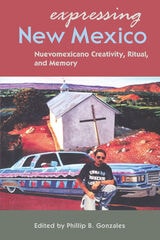
Expressing New Mexico
Nuevomexicano Creativity, Ritual, and MemoryEdited by Phillip B. Gonzales
University of Arizona Press, 2007
Intertwined with the concept of expressive culture is that of “place” in relation to New Mexico itself. Place is addressed directly by four of the authors in this anthology and is present in some way and in varying degrees among the rest. Place figures prominently in Nuevomexicano “character,” contributors argue. They assert that Nuevomexicanos and Nuevomexicanas construct and develop a sense of self that is shaped by the geography and culture of the state as well as by their heritage.
Many of the articles deal with recent events or with recent reverberations of important historical events, which imbues the collection with a sense of immediacy. Rituals, traditions, community commemorations, self-concepts, and historical revisionism all play key roles. Contributors include both prominent and emerging scholars united by their interest in, and fascination with, the distinctiveness of Nuevomexicano culture.