Results by title
3745 books match the query 'Europe' and 151 start with e
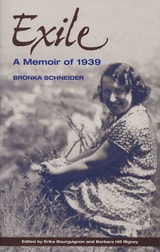
EXILE
A MEMOIR OF 1939Bronka Schneider Edited with forewords by Erika Bourguignon and Barbara Hill Rigney
The Ohio State University Press, 1998
Bronka Schneider and her husband, Joseph, were two of the thirty thousand Austrian Jews admitted as refugees to Great Britain between March 1938 and 2 September 1939. It was not until 1960, however, that Schneider wrote her memoir about the year she spent as a housekeeper, with Joseph as a butler, in a Scottish castle.
Schneider tells of daily encounters—with her employers, the English lady and her husband, a retired British civil servant who had spent many years in India; the village locals; other refugees; and a family of evacuees from the slums of Glasgow.
The editors have divided this memoir into chapters, adding headlines from the London Times as epigraphs. These headlines, reporting the escalating events of World War II, are in stark contrast to daily activities of the residents of this isolated region of Scotland. A commentary by Erika Bourguignon provides historical, political, and cultural background of this period.
Eadfrith
Scribe of LindisfarneMichelle Treeve
Arizona Center for Medieval and Renaissance Studies, 2014
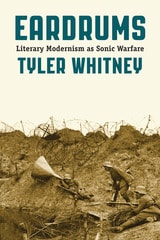
Eardrums
Literary Modernism as Sonic WarfareTyler Whitney
Northwestern University Press, 2019
Eardrums is the first book-length study to explore the relationship between acoustical modernity and German modernism, charting a literary and cultural history written in and around the eardrum. The result is not only a new way of understanding the sonic impulses behind key literary texts from the period. It also outlines an entirely new approach to the study of literature as as the interaction of text and sonic practice, voice and noise, which will be of interest to scholars across literary studies, media theory, sound studies, and the history of science.
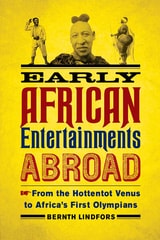
Early African Entertainments Abroad
From the Hottentot Venus to Africa's First OlympiansBernth Lindfors
University of Wisconsin Press, 2014
Using period illustrations and texts, Early African Entertainments Abroad illuminates the mindset of the era's largely white audiences as they viewed wax models of Africans with tails and watched athletic competitions showcasing hungry cannibals. White spectators were thus assured of their racial superiority. And blacks were made to appear less than fully human precisely at the time when abolitionists were fighting to end slavery and establish equality.
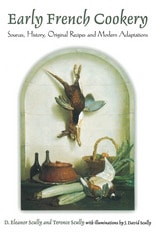
Early French Cookery
Sources, History, Original Recipes and Modern AdaptationsD. Eleanor Scully and Terence Scully
University of Michigan Press, 2002
Chapters include an overview of early French culinary traditions, foodstuffs that were used, and methods of preparation. Early French Cookery also discusses the equipment of the kitchens and dining rooms that were used, and characterizes those who prepared the food and those who consumed it.
The recipes are set out in a modern format, with quantities given in both metric and standard U.S. measurements. Recipes are grouped by category: appetizers, vegetables, fish dishes, desserts, and so forth.
Early French Cookery concludes with a fascinating look at a day in the life of a contemporary master chef at a duke's court. We watch Master Chiquart organize the purchase, storage, preparation, and serving of the food consumed by a duke and his dozens of family members, courtiers, staff and servants--and all done without benefit of grocery stores, refrigeration, labor-saving electric appliances, or running water.
Early French Cookery will be of interest to a wide variety of people, from those who like to hold unusual parties to those who are interested in the economics of the middle ages.
D. Eleanor Scully is an occasional lecturer at the Stratford Chef School and advisor to Wilfrid Laurier University on Medieval and Renaissance cooking and customs. Terence Scully is Professor of French Language and Literature, Wilfrid Laurier University, Waterloo, Ontario.
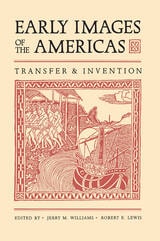
Early Images of the Americas
Transfer and InventionEdited by Jerry M. Williams and Robert E. Lewis
University of Arizona Press, 1993
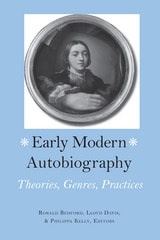
Early Modern Autobiography
Theories, Genres, PracticesRonald Bedford, Lloyd Davis and Philippa Kelly, Editors
University of Michigan Press, 2006
“The idea of the self, as seen from diverse and fascinating perspectives on sixteenth- and seventeenth-century life: this is what readers can expect from Early Modern Autobiography. A beautifully edited collection, genuinely far-reaching and insightful, Early Modern Autobiography makes known to us a great deal about how people saw themselves four hundred years ago."
—Derek Cohen, Professor of English, McLaughlin College, York University
"Acutely addressing a range of central issues from subjectivity to theatricality to religion, these essays will be of great interest to specialists in early modern studies and students of autobiographical writings from all eras."
—Heather Dubrow, Tighe-Evans Professor and John Bascom Professor, Department of English, University of Wisconsin
"The essays in this volume show where archival discoveries—memoirs, letters, account books, wills, and marginalia—can take us in understanding early modern mentalities. They document the interdependence of the abstract and the everyday, the social constructedness of self-awareness, local contexts for self-recordation, and impulses that range from legal purpose to imaginative escape. The sixteen chapters open many fascinating new perspectives on identity and personhood in Renaissance England."—Lena Cowen Orlin, Executive Director, The Shakespeare Association of America and Professor of English, University of Maryland Baltimore County
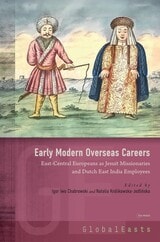
Early Modern Overseas Careers
East-Central Europeans as Jesuit Missionaries and Dutch East India EmployeesIgor Chabrowski
Central European University Press, 2026
The book examines the complexities of this early modern globalization: its scope, limits, importance, social, ethnic, and political ramifications. It researches how these networks reached out to the region of Central and Eastern Europe. The authors argue that the region was hardly considered peripheral from the perspective of Rome (and the Jesuits) or the Netherlands (and the colonial traders). They do, however, explore whether there were "glass ceilings," or limits of reach within the two networks for individuals from the Polish-Lithuanian Commonwealth or the former Kingdom of Hungary.
Early Modern Women on the Fall
An AnthologyMichelle M. Dowd
Arizona Center for Medieval and Renaissance Studies, 2012
Earth's Deep History
How It Was Discovered and Why It MattersMartin J. S. Rudwick
University of Chicago Press, 2014
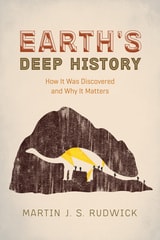
Rudwick begins in the seventeenth century with Archbishop James Ussher, who famously dated the creation of the cosmos to 4004 BC. His narrative later turns to the crucial period of the late eighteenth and early nineteenth centuries, when inquisitive intellectuals, who came to call themselves “geologists,” began to interpret rocks and fossils, mountains and volcanoes, as natural archives of Earth’s history. He then shows how this geological evidence was used—and is still being used—to reconstruct a history of the Earth that is as varied and unpredictable as human history itself. Along the way, Rudwick rejects the popular view of this story as a conflict between science and religion and shows how the modern scientific account of the Earth’s deep history retains strong roots in Judaeo-Christian ideas.
Extensively illustrated, Earth’s Deep History is an engaging and impressive capstone to Rudwick’s distinguished career. Though the story of the Earth is inconceivable in length, Rudwick moves with grace from the earliest imaginings of our planet’s deep past to today’s scientific discoveries, proving that this is a tale at once timeless and timely.
East Asian Aesthetics and the Space of Painting in Eighteenth-Century Europe
Isabelle Tillerot
J. Paul Getty Trust, The, 2024
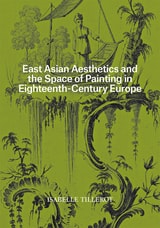
This volume offers the first critical account of how European imports of East Asian textiles, porcelain, and lacquers, along with newly published descriptions of the Chinese garden, inspired a revolution in the role of painting in early modern Europe. With particular focus on French interiors, Isabelle Tillerot reveals how a European enthusiasm for East Asian culture and a demand for novelty transformed the dynamic between painting and decor. Models of space, landscape, and horizon, as shown in Chinese and Japanese objects and their ornamentation, disrupted prevailing design concepts in Europe. With paintings no longer functioning as pictorial windows, they began to be viewed as discrete images displayed on a wall—and with that, their status changed from decorative device to autonomous work of art.
This study presents a detailed history of this transformation, revealing how an aesthetic free from the constraints of symmetry and geometrized order upended paradigms of display, enabling European painting to come into its own.
East Central and Eastern Europe in the Early Middle Ages
Florin Curta, Editor
University of Michigan Press, 2005

East India Company at Home, 1757-1857
Edited by Margot Finn and Kate Smith
University College London, 2018
Eating the Enlightenment
Food and the Sciences in Paris, 1670-1760E. C. Spary
University of Chicago Press, 2012
Echoes of Exile
A Family’s Odyssey through the Holocaust and Cold WarDaniela Spenser
University of Alabama Press, 2025
A sweeping exploration of survival, resilience, and the fate of one family amid Europe’s most turbulent century.
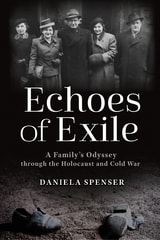
Echoes of Exile reveals the seismic disruptions of twentieth-century European history through the intimate lens of one family’s struggle to survive. Setting out to record the life of her mother, Ruth, Daniela Spenser unearthed personal facts and stories that additionally illuminate the shared traumas and experiences of millions of Czech, Polish, and German Jews who died in the Holocaust, as well as the stories of those who survived and lived under Communism and the Cold War. Her resulting work is a fascinating hybrid that combines family letters and interviews with deeply researched political history spanning from the collapse of the Austro-Hungarian Empire to the fall of the Berlin Wall.
Spenser’s fascinating work reveals the difficult choices her mother and family faced, the tests to their loves and loyalties, and the lingering scars of exile. More than a family history, it weaves personal and historical narratives with mundane and momentous threads to create a fresh, distinctive fabric. Spenser recovers fragments of the past that contribute to a map of the present and possibilities for the future. An engrossing account of survival, resilience, and the enduring human spirit amid the maelstrom of Europe’s savage twentieth century, Echoes of Exile will interest readers who value firsthand accounts of significant events and who seek to understand the complexities of survival, identity, and political change through intimate, lived experiences.
Echoes of Women's Voices
Music, Art, and Female Patronage in Early Modern FlorenceKelley Harness
University of Chicago Press, 2006
Through commissions, patrons sought to promote a vision of the world and their place in it. The unique social norms, laws, educational backgrounds, and life experiences of female patrons meant the expression of a worldview that differed significantly from that of their male counterparts. Joining exceptional archival research with telling analysis of significant examples of music, art, and drama, Kelley Harness challenges the prevailing view that Florence saw a political and artistic decline during this period. She argues convincingly that the female domination of these years brought forth artistic patronage that was both continuous and well-conceived.
Echoes of the Marseillaise
Two Centuries Look Back on the French RevolutionHobsbawm, Eric
Rutgers University Press, 1990
We can learn a great deal from studying the French Revolution itself, but we can also learn from studying the ways in which scholars have interpreted the French Revolution, and from the ways their views have changed. For over a century following the Revolution, commentators and scholars spoke of it in glowing terms. But in the past three decades, revisionist historians have become skeptical. Eric Hobsbawm reiterates the centrality of the Revolution for history on a global basis. He argues that those who wrote about the Revolution in the nineteenth century were convinced it had changed their lives dramatically, improving the economy and the lot of peasants. They saw the Revolution as a prototype of of the bourgeois revolution, enabling the middle class to gain power from the ruling class of aristocrats. Many believed proletarian revolutions would inevitably follow. In the years between 1917 and the 1960s, Marxists continued to use the French Revolution as a point of reference, paying increasing attention to the social and economic factors in the Revolution, not only to the political factors. In the 1970s and 1980s, many historians began to argue that the Revolution achieved modest results at disproportionate costs. Hobsbawm argues that this massive historiographical reaction against the centrality of the Revolution reflects the personal politics of those contemporary historians for whom Marxism and communism are now out of favor. They are, he maintains, wrong. The Revolution transformed the world permanently and introduced forces that continue to transform it.
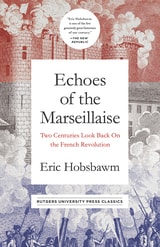
Echoes of the Marseillaise
Two Centuries Look Back on the French RevolutionHobsbawm, Eric
Rutgers University Press, 2019
E.J. Hobsbawm’s classic historiographic study—written at the very moment when a new set of revolutions swept through the Eastern Bloc and brought down the Iron Curtain—explores how the French Revolution was perceived over the following two centuries. He traces how the French Revolution became integral to nineteenth-century political discourse, when everyone from bourgeois liberals to radical socialists cited these historical events, even as they disagreed on what their meaning. And he considers why references to the French Revolution continued to inflame passions into the twentieth century, as a rhetorical touchstone for communist revolutionaries and as a boogeyman for social conservatives.
Echoes of the Marseillaise is a stimulating examination of how the same events have been reimagined by different generations and factions to serve various political agendas. It will give readers a new appreciation for how the French Revolution not only made history, but also shaped our fundamental notions about history itself.

Economic Knowledge in Socialism, 1945–1989
Till Düppe and Ivan Boldyrev, issue editors
Duke University Press, 0
Contributors. Oleg Ananyin, Johanna Bockman, Ivan Boldyrev, Till Düppe, Richard Ericson, Yakov Feygin, Olessia Kirtchik, Martha Lampland, Adam Leeds, Denis Melnik, Chris Miller, György Peteri, Eglė Rindzevičiūtė, Vítězslav Sommer, Joachim Zweynert
Economic Performance in the Nordic World
Torben M. Andersen
University of Wisconsin Press, 2021
Economist Torben M. Andersen shows how the Nordic model rests on two pillars: the social safety net, which offers income compensation to the majority of those unable to support themselves, and the provision of services like education, childcare, and healthcare to all. The Nordic model can be characterized as one of employment, since its financial viability rests on a high labor participation rate with few working poor.
Andersen lays out the structure of the model and highlights factors important for understanding its economic performance. He then looks into specific policy areas based on Denmark's experiences regarding labor market policies (flexicurity), pension systems, and preparation for an aging population; and addresses the challenges arising from new technologies and globalization.
Economics and Elections
The Major Western DemocraciesMichael S. Lewis-Beck
University of Michigan Press, 1990
Economics and Politics
The Calculus of SupportHelmut Norpoth, Michael S. Lewis-Beck, and Jean-Dominique Lafay, Editors
University of Michigan Press, 1991
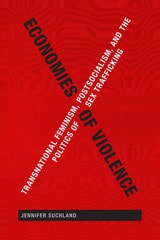
Economies of Violence
Transnational Feminism, Postsocialism, and the Politics of Sex TraffickingJennifer Suchland
Duke University Press, 2015

Economy and Society in Baroque Portugal, 1668-1703
Carl A. Hanson
University of Minnesota Press, 1981
Economy and Society in Baroque Portugal, 1668–1703 was first published in 1981. Minnesota Archive Editions uses digital technology to make long-unavailable books once again accessible, and are published unaltered from the original University of Minnesota Press editions.
The late seventeenth century in Portugal was a period of apparent calm, and few historians have given it much attention. Portugal's Golden Age of worldwide expansion had made sixteenth-century Lisbon a great commercial center, but other European nations with more advanced economies surpassed Portugal's achievement, and during the seventeenth century agricultural, economic, and political problems all contributed to Portugal's decline. In 1668, at the conclusion of a long war with Spain to restore Portuguese sovereignty, Pedro II began a reign of 38 years, first as regent for a feckless brother ad after 1683 as king. The history of Portugal during his reign is the subject of this book.
Carl A. Hanson looks at this relatively unexamined era and finds, behind the facade of baroque calm, subtle but dramatic shifts in the socio-economic foundations of the age. In an effort to cope with economic depression Pedro's government hearkened to enthusiastic reports of Colbert's mercantile policies in France, and tried to encourage the expansion of domestic manufacturing. Linked to these efforts were attempts to curb the inquisitorial persecution of New Christian merchants. Hanson explores the motives of anti-Semitism, greed and class warfare that underlay the persecution and describes the efforts of an eloquent Jesuit, Father Antonio Vieira, to protect the New Christians from the worst excesses of the Inquisition.
The triumph of the Inquisition, and thus of the established social order, and the failure of Portugal's experiment in mercantilism coincided with a new wave of commodity-borne prosperity. After 1690, increased exports of Brazilian gold, tobacco, hides, and sugar, and of Port wine changed Portugal's economic status. With the signing of the Anglo- Portuguese treaty of Methuen in 1703, Portugal entered a gilded—if not golden—age. Yet, as Hanson makes clear, the new prosperity was deceptive, for Portugal was to slip into increasingly dependent relationships with the more advanced economies — especially England's—which absorbed great quantities of Luso-Atlantic commodities in exchange for its own manufactures. And, at home, the victorious social order, no longer threatened by a mercantile class, was to find security under an increasingly absolutist government. The reign of Pedro II is significant, then, as a period of transition when, for the first time, the foundations of the old order were threatened. The baroque facade survived but the edifice itself had begun to crumble.
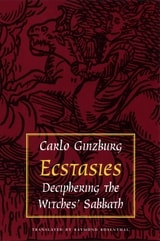
Ecstasies
Deciphering the Witches' SabbathCarlo Ginzburg
University of Chicago Press, 1991
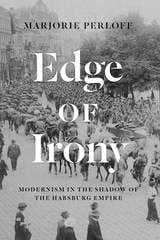
Edge of Irony
Modernism in the Shadow of the Habsburg EmpireMarjorie Perloff
University of Chicago Press, 2016
Perloff explores works ranging from Karl Kraus’s drama The Last Days of Mankind and Elias Canetti’s memoir The Tongue Set Free to Ludwig Wittgenstein’s notebooks and Paul Celan’s lyric poetry. Throughout, she shows that Austro-Modernist literature is characterized less by the formal and technical inventions of a modernism familiar to us in the work of Joyce and Pound, Dada and Futurism, than by a radical irony beneath a seemingly conventional surface, an acute sense of exile, and a sensibility more erotic and quixotic than that of its German contemporaries. Skeptical and disillusioned, Austro-Modernism prefers to ask questions rather than formulate answers.
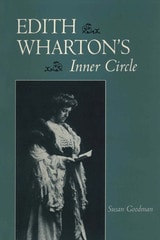
Edith Wharton's Inner Circle
By Susan Goodman
University of Texas Press, 1994
When Edith Wharton became friends with Henry James, she joined a group of men who became her "inner circle." This group included both well-known figures, such as James, Percy Lubbock, and Bernard Berenson, and several now forgotten, including John Hugh Smith, Walter Berry, Gaillard Lapsley, Robert Norton, and Howard Sturgis.
Drawing on unpublished archival material by and about members of the circle, Susan Goodman here presents an intimate view of this American expatriate community, as well as the larger transatlantic culture it mirrored. She explores how the group, which began forming around 1904 and lasted until Wharton's death in 1937, defined itself against the society its founders had left in the United States, while simultaneously criticizing and accommodating the one it found in Europe. Tracing Wharton's individual relationships with these men and their relationships with one another, she examines literary kinships and movements in the biographical and feminist context of gender, exile, and aesthetics. She also relates the group to other literary circles, such as the Bloomsbury group and Gertrude Stein's salon.
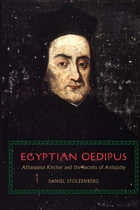
Egyptian Oedipus
Athanasius Kircher and the Secrets of AntiquityDaniel Stolzenberg
University of Chicago Press, 2013
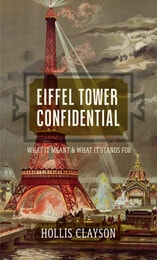
Eiffel Tower Confidential
What It Meant and What It Stands ForHollis Clayson
University of Chicago Press, 2027
A revelatory behind-the-scenes look at a universally recognized landmark: the Eiffel Tower.
The Eiffel Tower is widely photographed, visited, and written about, but it holds a wealth of stories that are rarely told. When it was built, the three-hundred-meter structure was the tallest on earth, but it bore little resemblance to the stripped-down, modernized monument that is known and loved today. With Eiffel Tower Confidential, art historian Hollis Clayson makes this familiar landmark strange again, offering expert insight into the life of the Tower.
Here she traces the creative financing of the Tower before its construction began, shares images made in its early years, and illuminates the role the Tower played in celebrating French Imperialism. She tells the fascinating story of iron ornamentation that helped the Tower win approval as the centerpiece of the 1889 Universal Exposition but was ripped off and discarded in 1937, and she investigates the sinister backstory behind how the dazzling illumination of the Tower—which combined 10,000 gas lights in glass globes, two kinds of electric spotlights placed at the summit, and Bengal flames on the platforms—was designed to function as an instrument of surveillance.
This extraordinary account takes us into the long shadow of the Eiffel Tower, inviting readers to get to know this acclaimed landmark on an unprecedented level.
Eight Women Philosophers
Theory, Politics, and FeminismJane Duran
University of Illinois Press, 2005
Duran devotes one chapter to each philosopher and provides a sustained critical analysis of her work, utilizing aspects of Continental theory, poststructuralist theory, and literary theory. She situates each philosopher within her respective era and in relation to her intellectual contemporaries, and specifically addresses the contributions each has made to major areas such as metaphysics/epistemology, theory of value, and feminist theory. She affirms the viability and importance of recovering these women's overlooked work and provides a powerful answer to the question of why the rubric "women philosophers" remains so valuable.
Eighteenth-Century Literary History
An MLQ ReaderMarshall Brown, ed.
Duke University Press, 1999
While examining different parts of the century, as well as different aspects and countries, contributors explore the intersection of literary studies with history, philosophy, psychology, and the visual arts. They discuss a creative range of topics, including feminism, nationalism, domestic ideology, the classical novel–drama–lyric poetry triad, and both aesthetic and philosophical writings. This span of subjects and approaches extends the focus of Eighteenth-Century Literary History beyond its period to project a spirit of inquiry onto literary history in general.
Contributors. Nancy Armstrong, Marshall Brown, Sanford Budick, Catherine Gallagher, Thomas M. Kavanagh, Jon Klancher, Jill Kowalik, Jonathan Brody Kramnick, Christie McDonald, Jerome McGann, Ruth Perry, Michael B. Prince, Leonard Tennenhouse
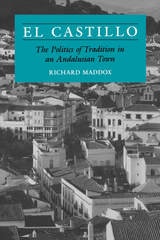
El Castillo
The Politics of Tradition in an Andalusian TownRichard Maddox
University of Illinois Press, 1993
Maddox argues that we can best understand culture in complex societies by taking into account the ways in which institutionally generated discourses and practices articulate with the informal, improvisational, and commonsense speech and customs that guide the conduct of everyday life. He bases his study on a wide range of published and unpublished materials, including biographies, notarial records, wills, tax and voting lists, historical surveys, records of property transactions and town council meetings, privately held documents, and interviews with men and women of Aracena.
Through a genealogical approach to traditional culture, Maddox demonstrates that traditions repeatedly have been transformed and reinvented in accordance with shifts in relationships of power and in response to changing political and socioeconomic conditions.
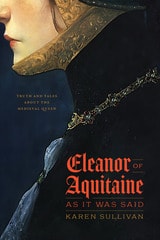
Eleanor of Aquitaine, as It Was Said
Truth and Tales about the Medieval QueenKaren Sullivan
University of Chicago Press, 2023
Much of what we know about Eleanor of Aquitaine, Queen of France and then Queen of England, we know from recorded rumor—gossip often qualified by the curious phrase “it was said,” or the love songs, ballads, and romances that gossip inspired. While we can mine these stories for evidence about the historical Eleanor, Karen Sullivan invites us to consider, instead, what even the most fantastical of these tales reveals about this queen and life as a twelfth-century noblewoman. She reads the Middle Ages, not to impose our current conceptual categories on its culture, but to expose the conceptual categories medieval women used to make sense of their lives. Along the way, Sullivan paints a fresh portrait of this singular medieval queen and the women who shared her world.
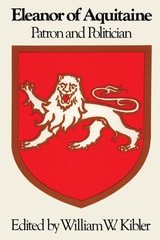
Eleanor of Aquitaine
Patron and PoliticianEdited by William W. Kibler
University of Texas Press, 1976
Eleanor of Aquitaine was the wife of two kings, Louis VII of France and Henry II Plantagenet of England, and the mother of two others, Richard the Lionhearted and John Lackland. In her eventful, often stormy life, she not only influenced the course of events in the twelfth century but also encouraged remarkable advances in the literary and fine arts. In this book, experts in five disciplines—history, art history, music, French and English literature—evaluate the influence of Eleanor and her court on history and the arts.
Elizabeth A. R. Brown views Eleanor as having played a significant role as parent and politician, but not as patron. Rebecca A. Baltzer takes a new look at the music of the period that was written by and for Eleanor, her court, and her family. Moshé Lazar reexamines her relationship to the courtly-love literature of the period. Eleanor S. Greenhill and Larry M. Ayres reassess her influence in the realm of art history. Rossell Hope Robbins traces the lines extending from the French courtly literature of Eleanor's period down into fourteenth-century Chaucerian England. The essays reflect divergent but generally complementary assessments of this remarkable woman's influence on her own era and on future times as well.
This volume is the result of a symposium held at the University of Texas in 1973.
Eleftherios Venizelos
GreeceAndrew Dalby
Haus Publishing, 2010
Elemental Powers
Ernst Jünger, Critical Theory, and the Idea of Natural HistoryAndrew McCann
Northwestern University Press, 2027
Examining the conflicted legacy of Ernst Jünger’s thought and its relationship to critical theory
In the 1920s, Ernst Jünger’s journalistic advocacy of a militaristic, antidemocratic nationalism played a central role in the rise of German fascism. At the same time, Jünger developed an increasingly acute account of how the mobilizing force of industrial technology embodied a will to power that, on the one hand, anticipated an authoritarian state but, on the other, assumed a planetary perspective that made national identifications redundant. What he called the Gestalt of the worker expresses the “elemental powers” that, he believed, mark the limits of Enlightenment conceptions of historical progress.
Today, Jünger appears in intellectual history primarily as a representative of protofascist decisionism, reactionary modernism, or the so-called conservative revolution. Andrew McCann puts these aspects of Jünger’s early work into dialogue with the posthistorical orientation that he developed after the Second World War, in order to offer a fresh reading that demonstrates how Jünger’s obsession with the transience of cultural and historical forms displays deep structural affinities with the idea of natural history developed by Walter Benjamin and Theodor Adorno. By tracing this thread in intellectual history, McCann charts the currents of influence and confluence between what are usually understood as sharply polarized political positions and the conceptual postures that accompany them: immanence and transcendence, reason and myth, class and nation, relations of production and the forces of nature.
Elements of French Deaf Heritage
Ulf Hedberg
Gallaudet University Press, 2019
Elizabeth I
Autograph Compositions and Foreign Language OriginalsElizabeth I
University of Chicago Press, 2002
The originals selected for inclusion here are compositions that survive in Elizabeth's own handwriting, in English and in foreign languages, as well as her foreign language compositions preserved by other hands or in printed editions. Presented in transcriptions that reproduce the spelling and punctuation of their sixteenth-century sources, these texts convey many of the expressive and significant features of Elizabeth's writing. Through the transcriptions of texts in her own hand, readers can track the queen's language and compositional style-her choices of vocabulary and phrasing; her habits of capitalization, spelling, and punctuation; her often heavy revisions and redraftings; and her insertions of postscripts and second thoughts. The texts in foreign languages, meanwhile, will allow readers to prepare their own English translations from these original sources.
A unique resource for scholars of English literature and the Renaissance, this companion to the Collected Works offers much fuller and more detailed access to Elizabeth and her writings than can be obtained from the modern English versions alone.
Elizabeth I
Collected WorksElizabeth I
University of Chicago Press, 2000
"This collection shines a light onto the character and experience of one of the most interesting of monarchs. . . . We are likely never to get a closer or clearer look at her. An intriguing and intense portrait of a woman who figures so importantly in the birth of our modern world."—Publishers Weekly
"An admirable scholarly edition of the queen's literary output. . . . This anthology will excite scholars of Elizabethan history, but there is something here for all of us who revel in the English language."—John Cooper, Washington Times
"Substantial, scholarly, but accessible. . . . An invaluable work of reference."—Patrick Collinson, London Review of Books
"In a single extraordinary volume . . . Marcus and her coeditors have collected the Virgin Queen's letters, speeches, poems and prayers. . . . An impressive, heavily footnoted volume."—Library Journal
"This excellent anthology of [Elizabeth's] speeches, poems, prayers and letters demonstrates her virtuosity and afford the reader a penetrating insight into her 'wiles and understandings.'"—Anne Somerset, New Statesman
"Here then is the only trustworthy collection of the various genres of Elizabeth's writings. . . . A fine edition which will be indispensable to all those interested in Elizabeth I and her reign."—Susan Doran, History
"In the torrent of words about her, the queen's own words have been hard to find. . . . [This] volume is a major scholarly achievement that makes Elizabeth's mind much more accessible than before. . . . A veritable feast of material in different genres."—David Norbrook, The New Republic
Elizabeth I
Translations, 1544-1589Elizabeth I
University of Chicago Press, 2008
Presenting original and modernized spellings in a facing-page format, these two volumes will answer the call to make all of Elizabeth’s writings available. They include her renderings of epistles of Cicero and Seneca, religious writings of John Calvin and Marguerite de Navarre, and Horace’s Ars poetica, as well as Elizabeth’s Latin Sententiae drawn from diverse sources, on the responsibilities of sovereign rule and her own perspectives on the monarchy. Editors Janel Mueller and Joshua Scodel offer introduction to each of the translated selections, describing the source text, its cultural significance, and the historical context in which Elizabeth translated it. Their annotations identify obscure meanings, biblical and classical references, and Elizabeth’s actual or apparent deviations from her sources.
The translations collected here trace Elizabeth’s steady progression from youthful evangelical piety to more mature reflections on morality, royal responsibility, public and private forms of grief, and the right way to rule. Elizabeth I: Translations is the queen’s personal legacy, an example of the very best that a humanist education can bring to the conduct of sovereign rule.
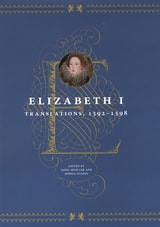
Elizabeth I
Translations, 1592-1598Elizabeth I
University of Chicago Press, 2009
Presenting original and modernized spellings in a facing-page format, these two volumes will answer the call to make all of Elizabeth’s writings available. They include her renderings of epistles of Cicero and Seneca, religious writings of John Calvin and Marguerite de Navarre, and Horace’s Ars poetica, as well as Elizabeth’s Latin Sententiae drawn from diverse sources, on the responsibilities of sovereign rule and her own perspectives on the monarchy. Editors Janel Mueller and Joshua Scodel offer introduction to each of the translated selections, describing the source text, its cultural significance, and the historical context in which Elizabeth translated it. Their annotations identify obscure meanings, biblical and classical references, and Elizabeth’s actual or apparent deviations from her sources.
The translations collected here trace Elizabeth’s steady progression from youthful evangelical piety to more mature reflections on morality, royal responsibility, public and private forms of grief, and the right way to rule. Elizabeth I: Translations is the queen’s personal legacy, an example of the very best that a humanist education can bring to the conduct of sovereign rule.
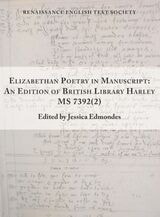
Elizabethan Poetry in Manuscript
An Edition of British Library Harley MS 7392(2)Edited by Jessica Edmondes
Iter Press, 2022
This edition preserves the appearance, spelling, and punctuation of the original manuscript while expanding antiquated contractions to provide an easily readable text. Textual notes appear on the page, and in-depth contextual notes and word glosses are provided in the commentary section. The analyses add to our knowledge of early modern manuscript culture and literary manuscript transmission, and a substantial introduction provides context for the compilation of the anthology.

Elizabethan Popular Culture
Leonard R. N. Ashley
University of Wisconsin Press, 1988
Emancipation of the Polish Peasantry
Stefan Kieniewicz
University of Chicago Press, 1969
Captured in this study are the complexity and fascination of one hundred and fifty years of Polish political, cultural, and socioeconmic history. The author traces the course of peasant emancipation in Poland from its beginnings during the Enlightenment to its aftermath in the cultural awakening of the peasantry during the half century prior to World War I and shows how the peasant question played a vital role in the struggle for independence in partitioned Poland.
The book synthesizes, for the first time in any language, the work of leading Polish historians during the present century. It presents a clear analysis of the disintegration of the economic system based on serfdom and compulsory labor prevalent in feudal Poland and traces the emergence of modern capitalist conditions, including wage labor and independent property rights.
Also analyzed is the role of foreign goverments in the emacipation process. The freeing of the serfs took place during a period when all or most of the country was under the rule of Russia, Prussia, or Austria. Although emancipation was due primarily to economic forces withing Poland, it was hastened by peasant resistance and the national struggle for political independence led by Polish patriots who demanded far-reaching social reforms.
This comprehensive study provides valuable information not only to those with a particular interest in Poland but also to scholars concerned with the parallel problems in Russia andother Eastern Eurpean countries, to specialists in agrarian history, and to students of Eastern European history who lack adequate reading materials in English.
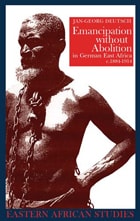
Emancipation without Abolition in German East Africa, c. 1884–1914
Jan-Georg Deutsch
Ohio University Press, 2006
This study examines the complex history of slavery in East Africa, focusing on the area that came under German colonial rule. In contrast to the policy pursued at the time by other colonial powers in Africa, the German authorities did not legally abolish slavery in their colonial territories. However, despite government efforts to keep the institution of slavery alive, it significantly declined in Tanganyika in the period concerned. The book highlights the crucial role played by the slaves in the process of emancipation.
Author Jan-Georg Deutsch explores the rise of slavery in Tanganyika in the second half of the nineteenth century, when the region became more fully integrated into the world economy.
An analysis of German colonial policy reveals that the authorities believed that abolition should be avoided at all costs since it would undermine the power and prosperity of the local slave-owning elites whose effective collaboration was thought to be indispensable to the functioning of colonial rule.
The author demonstrates how slaves by their own initiative brought the ”evil institution“ to an end, making the best of limited choices and opportunities available to them.
The study, of interest to historians of East Africa, makes a contribution to the more general debate about the demise of slavery on the continent.
Emblemata Hispanica
An Annotated Bibliography of Spanish Emblem Literature to the Year 1700Pedro F. Campa
Duke University Press, 1990
Covered in this bibliography are all emblem books published from the beginning to the end of the Spanish Golden Age, as well as a wide range of secondary sources on relevant subjects, among them mythography, paradoxography, numismatics, fetes, funerals, proverbs, apothegms, antiquarianism, collecting, and pertinent studies in art history and architecture. Providing call numbers for library locations, information on facsimile reprints, and microform editions, the work is extensively indexed—by date and place of publication, by printers and booksellers, by authors and artists, and by dedicatees, as well as by subject.
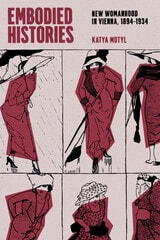
Embodied Histories
New Womanhood in Vienna, 1894–1934Katya Motyl
University of Chicago Press, 2024
In Embodied Histories, historian Katya Motyl explores the everyday acts of defiance that formed the basis for new, unconventional forms of womanhood in early twentieth-century Vienna. The figures Motyl brings back to life defied gender conformity, dressed in new ways, behaved brashly, and expressed themselves freely, overturning assumptions about what it meant to exist as a woman.
Motyl delves into how these women inhabited and reshaped the urban landscape of Vienna, an increasingly modern, cosmopolitan city. Specifically, she focuses on the ways that easily overlooked quotidian practices such as loitering outside cafés and wandering through city streets helped create novel conceptions of gender. Exploring the emergence of a new womanhood, Embodied Histories presents a new account of how gender, the body, and the city merge with and transform each other, showing how our modes of being are radically intertwined with the spaces we inhabit.

Embracing Arms
Cultural Representation of Slavic and Balkan Women in WarYana Hashamova
Central European University Press, 2012
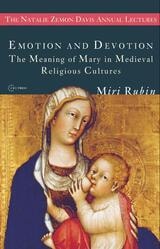
Emotion and Devotion
The Meaning of Mary in Medieval Religious CulturesMiri Rubin
Central European University Press, 2009
Emotional Bodies
The Historical Performativity of EmotionsEdited by Dolores Martín Moruno and Beatriz Pichel
University of Illinois Press, 2019
Contributors: Jon Arrizabalaga, Rob Boddice, Leticia Fernández-Fontecha, Emma Hutchison, Dolores Martín-Moruno, Piroska Nagy, Beatriz Pichel, María Rosón, Pilar León-Sanz, Bertrand Taithe, and Gian Marco Vidor.