Results by title
375 books match the query 'Excavations (Archaeology)' and 16 start with e
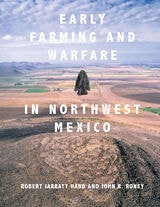
Early Farming and Warfare in Northwest Mexico
Robert J. Hard and John R. Roney
University of Utah Press, 2019
The authors place their work in a regional and theoretical context, providing detailed analyses of radiocarbon dates, structures, features, and artifacts. Authors Hard and Roney, and their contributors, present innovative analyses of plant and animal remains, ground stone, chipped stone, and landscape evolution. Through comparisons with a global cross-cultural probe of hilltop sites and a detailed examination of the features and artifacts of Cerro Juanaqueña, Hard and Roney argue that these cerros de trincheras sites are the earliest fortified defensive sites in the region. Readers with interests in ancient agriculture, warfare, village formation, and material culture will find this to be a foundational volume.
Early Neolithic Settlement and Society at Olszanica
Sarunas Milisauskas
University of Michigan Press, 1986
Early Pottery
Technology, Function, Style, and Interaction in the Lower SoutheastEdited by Rebecca Saunders and Christopher T. Hays
University of Alabama Press, 2004
A synthesis of research on earthenware technologies of the Late Archaic Period in the southeastern U.S.
Information on social groups and boundaries, and on interaction between groups, burgeons when pottery appears on the social landscape of the Southeast in the Late Archaic period (ca. 5000-3000 years ago). This volume provides a broad, comparative review of current data from "first potteries" of the Atlantic and Gulf coastal plains and in the lower Mississippi River Valley, and it presents research that expands our understanding of how pottery functioned in its earliest manifestations in this region.
Included are discussions of Orange pottery in peninsular Florida, Stallings pottery in Georgia, Elliot's Point fiber-tempered pottery in the Florida panhandle, and the various pottery types found in excavations over the years at the Poverty Point site in northeastern Louisiana. The data and discussions demonstrate that there was much more interaction, and at an earlier date, than is often credited to Late Archaic societies. Indeed, extensive trade in pottery throughout the region occurs as early as 1500 B.C.
These and other findings make this book indispensable to those involved in research into the origin and development of pottery in general and its unique history in the Southeast in particular.
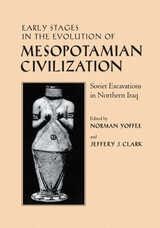
Early Stages in the Evolution of Mesopotamian Civilization
Soviet Excavations in Northern IraqEdited by Norman Yoffee and Jeffery J. Clark
University of Arizona Press, 1993

Early Village Life at Beidha, Jordan
Neolithic spatial organization and vernacular architectureBrian Byrd
Council for British Research in the Levant, 2005

Earthquakes and Gardens
Saint Hilarion’s CyprusVirginia Burrus
University of Chicago Press, 2023
In Jerome’s Life of Saint Hilarion, a fourth-century saint briefly encounters the ruins of an earthquake-toppled city and a haunted garden in Cyprus. From these two fragmentary passages, Virginia Burrus delivers a series of sweeping meditations on our experience of place and the more-than-human worlds—the earth and its gods—that surround us. Moving between the personal and geological, Earthquakes and Gardens ruminates on destruction and resilience, ruination and resurgence, grief and consolation in times of disaster and loss. Ultimately, Burrus’s close readings reimagine religion as a practice that unsettles certainty and develops mutual flourishing.
Elamite and Achaemenid Settlement on the Deh Luran Plain
Towns and Villages of the Early Empires in Southwestern IranEdited by Henry T. Wright and James A. Neely
University of Michigan Press, 2010
Enduring Monuments
Formative Period Transformations at Pukara, PeruElizabeth A. Klarich
University Press of Colorado, 2025
In the early twentieth century, Peruvian scholars Luis E. Valcárcel and Julio C. Tello visited Pukara and shared images of its multicolored pottery and unique stone sculptures with colleagues across the world. A number of both small-scale and multiyear field projects have followed, with goals of refining Lake Titicaca Basin cultural chronologies, tracking Pukara-style material culture in the south-central Andes, restoring the structural integrity of the Qalasaya, and documenting the reoccupations of Pukara by Colla, Inca, and early Spanish colonial populations. Enduring Monuments synthesizes the findings of these diverse projects and shares the results of fieldwork and artifact analysis by the Pukara Archaeological Project since 2000.
Using a “building biography” approach that tracks initial construction, major remodeling, and subsequent expansion efforts during the Middle and Late Formative periods (400 BC–AD 200), Klarich highlights transformations in material culture, settlement patterns, social hierarchy, and daily practices at Pukara and contemporaneous sites across the Titicaca Basin and situates Formative period Pukara within the vast anthropological and archaeological literature addressing monumentality, ritual practice, and incipient urbanism in complex societies in South America and beyond.
Engendering Households in the Prehistoric Southwest
Edited by Barbara J. Roth
University of Arizona Press, 2010
Now Southwestern archaeologists have begun to delve into the task of “engendering” their sites. Using a “close to the ground” approach, the contributors to this book seek to engender the prehistoric Southwest by examining evidence at the household level.
Focusing on gendered activities in household contexts throughout the southwestern United States, this book represents groundbreaking work in this area. The contributors view households as a crucial link to past activities and behavior, and by engendering these households, we can gain a better understanding of their role in prehistoric society. Gender-structured household activities, in turn, can offer insight into broader-scale social and economic factors. The chapters offer a variety of theoretical and methodological approaches to engendering households and examine topics such as the division of labor, gender relations, household ritual, ceramic and ground stone production and exchange, and migration.
Engendering Households in the Prehistoric Southwest ultimately addresses broader issues of interest to many archaeologists today, including households and their various forms, identity and social boundary formation, technological style, and human agency. Focusing on gendered activities in household contexts throughout the southwestern United States, this book represents groundbreaking work in this area. The contributors view households as a crucial link to past activities and behavior, and by engendering these households, we can gain a better understanding of their role in prehistoric society. Gender-structured household activities, in turn, can offer insight into broader-scale social and economic factors.
Euphrates River Valley Settlement
The Carchemish Sector in the Third Millennium BCE. Peltenburg
Council for British Research in the Levant, 2007
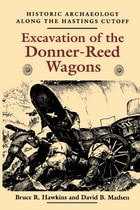
Excavation Of The Donner Reed
Bruce Hawkins
University of Utah Press, 1990
Excavation at San José Mogote 1
The Household ArchaeologyKent V. Flannery and Joyce Marcus with a multidimensional scaling of houses by Robert G. Reynolds
University of Michigan Press, 2005
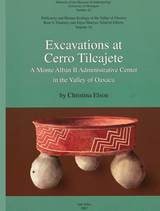
Excavations at Cerro Tilcajete
A Monte Albán II Administrative Center in the Valley of OaxacaChristina Elson
University of Michigan Press, 2007
Excavations at San José Mogote 2
The Cognitive ArchaeologyKent V. Flannery and Joyce Marcus with contributions by Chris L. Moser, Ronald Spores, Dudley M. Varner, Judith Francis Zeitlin, and Robert N. Zeitlin
University of Michigan Press, 2005
Excavations at Tel Nebi Mend, Syria Volume I
Peter J. Parr
Council for British Research in the Levant, 2015
Excavations at Wickliffe Mounds
Kit W. Wesler, with a foreword by Victoria G. Fortner
University of Alabama Press, 2001
Wesler provides an impressive and definitive compilation of more than 70 years of archaeological excavations at one of the most important
archaeological sites in Kentucky.
The Wickliffe Mounds site is located on a bluff overlooking the Mississippi River in Ballard County, Kentucky, about three miles south of the mouth of the Ohio River. Around A.D. 1100, Mississippian people--farmers and traders with a culture closely related to the historic cultures of the Southeast (Chickasaw, Choctaw, Creek, and others)—created a settlement there on which they lived for approximately 250 years before moving on.
In 1930 road construction cut a channel through the site, revealing archaeological deposits and bringing the area to the attention of Fain King, a local lumberman and entrepreneur. King bought the site in hopes of turning it into an attraction for the education and entertainment of the public, and not incidentally for his own profit. For more than 50 years the area was subjected to excavations ranging from looting to professional research efforts. In 1983, the site was finally turned over to Murray State University to be developed into an academic facility dedicated to research, student training, public education, and preservation of the site and its collections. Fortunately, the Wickliffe collections include all the early excavation records as well as more than 85,000 artifacts, 90% of which had been catalogued. Between 1984 and 1996 excavations were conducted specifically to affirm questionable data and/or fill in gaps in the Wickliffe archaeological record.
In this volume, Wesler and his colleagues have compiled data from almost seven decades of excavations at Wickliffe Mounds, providing the first comprehensive study of this important site. The paperback version of the book is accompanied by a CD-ROM that contains contributions from a wide range of archaeological specialists and includes archaeological data, site maps, database files, plats of excavations, artifact descriptions, and photographs, compiling in one place the entire archaeological record for this very important eastern North American site.