Results by title
151 books match the query 'Exhibitions' and 6 start with e

Elizabeth Catlett
A Black Revolutionary Artist and All That It ImpliesEdited by Dalila Scruggs
University of Chicago Press, 2024
Accomplished printmaker and sculptor, avowed feminist, and lifelong activist Elizabeth Catlett (1915–2012) built a remarkable career around intersecting passions for formal rigor and social justice. This book, accompanying a major traveling retrospective, offers a revelatory look at the artist and her nearly century-long life, highlighting overlooked works alongside iconic masterpieces.
Catlett’s activism and artistic expression were deeply connected, and she protested the injustices of her time throughout her life. Her work in printmaking and sculpture draws on organic abstraction, the modernism of the United States and Mexico, and African art to center the experiences of Black and Mexican women. Catlett attended Howard University, studied with the painter Grant Wood, joined the Harlem artistic community, and worked with a leftist graphics workshop in Mexico, where she lived in exile after the US accused her of communism and barred her re-entry into her home country.
The book’s essays address a range of topics, including Catlett’s early development as an artist-activist, the impact of political exile on her work, her pedagogical legacy, her achievement as a social realist printmaker, her work with the arts community of Chicago’s South Side, and the diverse influences that shaped her practice.
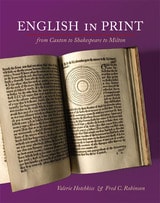
English in Print from Caxton to Shakespeare to Milton
Valerie Hotchkiss and Fred C. Robinson
University of Illinois Press, 2007
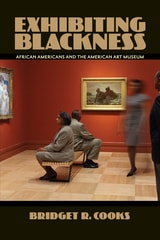
Exhibiting Blackness
African Americans and the American Art MuseumBridget R. Cooks
University of Massachusetts Press, 2011
In Exhibiting Blackness, art historian Bridget R. Cooks analyzes the curatorial strategies, challenges, and critical receptions of the most significant museum exhibitions of African American art. Tracing two dominant methodologies used to exhibit art by African Americans—an ethnographic approach that focuses more on artists than their art, and a recovery narrative aimed at correcting past omissions—Cooks exposes the issues involved in exhibiting cultural difference that continue to challenge art history, historiography, and American museum exhibition practices. By further examining the unequal and often contested relationship between African American artists, curators, and visitors, she provides insight into the complex role of art museums and their accountability to the cultures they represent.

Exhibiting Electricity
K.G. Beauchamp
The Institution of Engineering and Technology, 1997
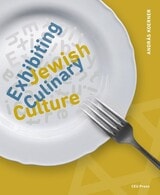
Exhibiting Jewish Culinary Culture
András Koerner
Central European University Press, 2024
András Koerner is the author of a number of critically acclaimed, award-winning CEU Press titles on the cultural history of Hungarian Jews and Jewish cuisine. This volume continues that tradition by discussing the phenomenon of exhibits on Jewish culinary culture in museums and galleries around the world.
The first part of the book provides an overview of the cultural history of "foodism" and the proliferation of Jewish museums. In addition, it examines the role of cuisine in Jewish identity. It offers an analysis of the history and recent examples of exhibitions on Jewish culinary culture, a subject that has not received scholarly attention until now.
The second part complements this by offering a detailed case study of the book’s subject. It showcases a 2022 exhibition in Budapest on the History of Hungarian Jewish Culinary Culture. András Koerner was the co-curator of the show, thus he is able to offer an insider’s account of its implementation – concept, scope, goals, audience, and design. He also openly discusses the compromises made and mistakes committed in the exhibition’s preparatory work.
This subjective account, quite different from the dry objectivity of catalogues, offers an unusual, behind-the-scenes look at how a complex exhibition like this is prepared. At the same time, the book’s appendix includes images of the display boards and some of the exhibited objects – thus it can also stand for a valuable ex-post catalogue.
Exhibits in Archives and Special Collections Libraries
Jessica Lacher-Feldman
Society of American Archivists, 2013