Results by title
383 books match the query 'Globalization' and 14 start with e
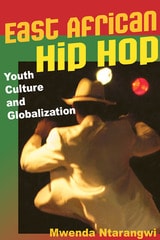
East African Hip Hop
Youth Culture and GlobalizationMwenda Ntarangwi
University of Illinois Press, 2008
In this book, Mwenda Ntarangwi analyzes how young hip hop artists in the East African nations of Kenya, Uganda, and Tanzania showcase the opportunities and challenges brought by the globalization of music. Combining local popular music traditions with American and Jamaican styles of rap, East African hip hop culture reflects the difficulty of creating commercially accessible music while honoring tradition and East African culture. Ntarangwi pays special attention to growing cross-border exchanges within East African hip hop, collaborations in recording music and performances, and themes and messages that transcend local geographic boundaries.
In using hip hop as a medium for discussing changes in East African political, economic, and social conditions, artists vocalize their concerns about economic policies, African identity, and political establishments, as well as important issues of health (such as HIV/AIDS), education, and poverty. Through three years of fieldwork, rich interviews with artists, and analysis of live performances and more than 140 songs, Ntarangwi finds that hip hop provides youth an important platform for social commentary and cultural critique and calls attention to the liberating youth music culture in East Africa.

Eco-Sufficiency and Global Justice
Women Write Political EcologyEdited by Ariel Salleh
Pluto Press, 2009
As the twenty-first century faces a crisis of democracy and sustainability, this book attempts to bring academics and alternative globalisation activists into conversation.
Through studies of global neoliberalism, ecological debt, climate change, and the ongoing devaluation of reproductive and subsistence labour, these uncompromising essays by internationally distinguished women thinkers expose the limits of current scholarship in political economy, ecological economics, and sustainability science.
The book introduces groundbreaking theoretical concepts for talking about humanity-nature links and will be a challenging read for activists and for students of political economy, environmental ethics, global studies, sociology, women's studies, and critical geography.
Economic Citizens
A Narrative of Asian American VisibilityChristine So
Temple University Press, 2009
In the past fifty years, according to Christine So, the narratives of many popular Asian American books have been dominated by economic questions-what money can buy, how money is lost, how money is circulated, and what labor or objects are worth. Focusing on books that have achieved mainstream popularity, Economic Citizens unveils the logic of economic exchange that determined Asian Americans’ transnational migrations and national belonging.
With penetrating insight, So examines literary works that have been successful in the U.S. marketplace but have been read previously by critics largely as narratives of alienation or assimilation, including Fifth Chinese Daughter, Flower Drum Song, Falling Leaves and Turning Japanese. In contrast to other studies that have focused on the marginalization of Asian Americans, Economic Citizens examines how Asian Americans have entered into the public sphere.
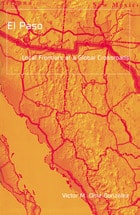
El Paso
Local Frontiers At A Global CrossroadsVictor M. Ortiz-Gonzalez
University of Minnesota Press, 2004
A grounded and instructive analysis of the ways globalization affects a border city
Every marker of social difference can be easily interpreted in the fashionable language of “borderlands”—and if so, as Victor M. Ortiz-Gonzalez reveals, the practical reality of the border region is often grossly misrepresented and its people woefully served. He argues that amid the tantalizing abstractions generated by the sweeping reconfigurations of globalization, people in cities like El Paso and Ciudad Juárez, on the U.S.–Mexican border, are actually living the gritty realities of a new world order.
With descriptions of grassroots initiatives to confront the challenges and opportunities that NAFTA represents for the city, El Paso challenges us to acknowledge and address the conceptual and sociopolitical tasks of a world in which abstract representations and non-local interests override concrete situations. Ortiz-Gonzalez also provides an in-depth analysis of groups such as La Mujer Obrera, Unite El Paso, and the Hispanic Chamber of Commerce and their attempts to give local residents and workers more autonomy and power.Balancing ethnographic detail with precise theoretical insights, El Paso offers a compelling case study and a stirring call to understand both the conceptual challenge and the social urgency of the effects of globalization in local settings.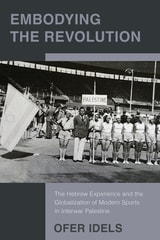
Embodying the Revolution
The Hebrew Experience and the Globalization of Modern Sports in Interwar PalestineOfer Idels
Rutgers University Press, 2026
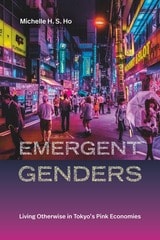
Emergent Genders
Living Otherwise in Tokyo's Pink EconomiesMichelle H. S. Ho
Duke University Press, 2025
Empire's Law
The American Imperial Project and the 'War to Remake the World'Edited by Amy Bartholomew
Pluto Press, 2006
Jean L. Cohen Professor of Political Science, Columbia University
"This remarkable collection of essays illuminates -- more fully than any other volume -- the world order costs of the Iraq War, especially the radical denial of the relevance of international law in the US's pursuit of global empire. To understand this overarching geopolitical challenge of the early 21st century, citizens the world over should treat Empire's Law as required reading."
Richard A. Falk, Albert G. Milbank Professor of International Law and Practice Emeritus, Princeton University and currently Visiting Professor of Global and International Studies, University of California, Santa Barbara
"Right now there can't be enough discussion of America's role in world politics ... This is a much-needed collection from leading scholars."
Neil Stammers, Senior Lecturer in the Department of International Relations and Politics, University of Sussex
What is the legacy of the war in Iraq? Can democracy and human rights really be imposed "by fire and sword"? This book brings together some of the world's most outstanding theorists in the debate over empire and international law. They provide a uniquely lucid account of the relationship between American imperialism, the use and abuse of "humanitarian intervention", and its legal implications. Empire's Law is ideal for students who want a comprehensive critical introduction to the impact that the doctrine of pre-emptive war has had on our capacity to protect human rights and promote global justice.
Leading contributors including Leo Panitch, Sam Gindin, Jurgen Habermas, Ulrich Preuss, Andrew Arato, Samir Amin, Reg Whitaker, Denis Halliday and Hans von Sponeck tackle a broad range of issues. Covering everything from the role of Europe and the UN, to people's tribunals, to broader theoretical accounts of the contradictions of war and human rights, the contributors offer new and innovative ways of examining the problems that we face. It is essential reading for all students who want a systematic framework for understanding the long-term consequences of imperialism.
Amy Bartholomew is an Associate Professor in the Department of Law at Carleton University.
Ends Of Globalization
Mohammed A. Bamyeh
University of Minnesota Press, 2000
A uniquely broad perspective that challenges current ideas about worldwide cultural and political change.
Political and Social Theory/Cultural Studies
A uniquely broad perspective that challenges current ideas about worldwide cultural and political change. An intervention into current debates about globalization, nationalism, imperialism, and culture, this book offers a cogent critique of much of what is being said about globalization, by both the Right and the Left. In doing so, it charts the complex processes of globalization, drawing out their historical and philosophical roots and outlining the connections between cultural, political, and economic life that globalization has made, historically and in our day.The author’s orientation toward political theory and comparative civilizations-a rarity in globalization studies-allows him to detect in specific terms what is most dangerous and opportune in what is happening in the world today. Mohammed A. Bamyeh makes a compelling argument that we are witnessing a process typified by massive disjunctions between political, cultural, and economic logics on a world scale. Bamyeh demonstrates how the disruptions caused by globalization, while they blur our vision and block our rational approaches, also possess the potential to liberate the autonomous and convivial human possibilities and capabilities long shackled by such modernist institutions of governance as the nation-state.Translation Inquiries: University of Minnesota Press
Engaging with Reality
Documentary and GlobalizationIb Bondebjerg
Intellect Books, 2014
Engaging with Reality is framed by theories of globalization and delves into the development of a new global media culture. It also deals with theories of documentary genres and their social and cultural functions. It discusses cosmopolitanism and the role and forms of documentary in a new digital and global media culture. It will be essential reading for those looking to better understand documentary and the new transnational approach to modern media culture.
Eradicating Extreme Poverty
Democracy, Globalisation and Human RightsEdited by Xavier Godinot
Pluto Press, 2012
The failure of attempts to tackle global poverty have bred cynicism and 'compassion fatigue'. Eradicating Extreme Poverty provides an urgently needed fresh approach which will re-energise action on this issue.
Rejecting traditional 'top-down' approaches, Xavier Godinot and his colleagues start from the experiences, capabilities and strategies of the poor themselves. They argue that the first step is a close connection with poor communities followed by a commitment to take action alongside them. Life-stories from Burkina Faso, France, Peru and the Philippines are used to show that the poor must be involved in their own liberation.
After decades of failed development policies, this book outlines a radical new approach which will enliven debate amongst policy-makers, researchers, students and academics.
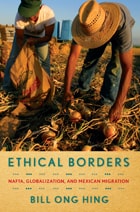
Ethical Borders
NAFTA, Globalization, and Mexican MigrationAuthored by Bill Ong Hing
Temple University Press, 2010
In his topical new book, Ethical Borders, Bill Ong Hing asks, why do undocumented immigrants from Mexico continue to enter the United States and, what would discourage this surreptitious traffic? An expert on immigration law and policy, Hing examines the relationship between NAFTA, globalization, and undocumented migration, and he considers the policy options for controlling immigration. He develops an ethical rationale for opening up the U.S./Mexican border, as well as improving conditions in Mexico so that its citizens would have little incentive to migrate.
In Ethical Borders Hing insists that reforming NAFTA is vital to ameliorating much of the poverty that drives undocumented immigration and he points to the European Union's immigration and economic development policies as a model for North America. Hing considers the world-wide economic crisis and the social problems that attend labor migration into homogenous countries, arguing for a spectrum of changes, including stricter border enforcement and more effective barriers; a path to citizenship for undocumented migrants; or a guest worker program.
Hing also situates NAFTA and its effects in the larger, and rapidly shifting, context of globalization—particularly the recent rise of China as the world's economic giant. Showing how NAFTA’s unforeseen consequences have been detrimental to Mexico, Hing passionately argues that the United States is ethically bound to address the problems in a way that puts prosperity within the grasp of all North Americans.
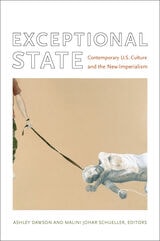
Exceptional State
Contemporary U.S. Culture and the New ImperialismAshley Dawson and Malini Johar Schueller, eds.
Duke University Press, 2007
The contributors address a range of topics, paying particular attention to the dynamics of gender and race. Their essays include a surprising reading of the ostensibly liberal movies Wag the Dog and Three Kings, an exploration of the rhetoric surrounding the plan to remake the military into a high-tech force less dependent on human bodies, a look at the significance of the popular Left Behind series of novels, and an interpretation of the Abu Ghraib prison photos. They scrutinize the national narrative created to justify the US invasions of Afghanistan and Iraq, the ways that women in those countries have responded to the invasions, the contradictions underlying calls for US humanitarian interventions, and the role of Africa in the US imperial imagination. The volume concludes on a hopeful note, with a look at an emerging anti-imperialist public sphere.
Contributors. Omar Dahbour, Ashley Dawson, Cynthia Enloe, Melani McAlister, Christian Parenti, Donald E. Pease, John Carlos Rowe, Malini Johar Schueller, Harilaos Stecopoulos
Experimental Beijing
Gender and Globalization in Chinese Contemporary ArtSasha Su-Ling Welland
Duke University Press, 2018
Extreme Pursuits
Travel/Writing in an Age of GlobalizationGraham Huggan
University of Michigan Press, 2009
Recent figures suggest that there will be 1.6 billion arrivals at world airports by the year 2020. Extreme Pursuits looks at the new conditions of global travel and the unease, even paranoia, that underlies them---at the opportunities they offer for alternative identities and their oscillation between remembered and anticipated states. Graham Huggan offers a provocative account of what is happening to travel at a time characterized by extremes of social and political instability in which adrenaline-filled travelers appear correspondingly determined to take risks. It includes discussions of the links between tourism and terrorism, of contemporary modes of disaster tourism, and of the writing that derives from these; but it also confirms the existence of more responsible forms of travel/writing that demonstrate awareness of a chronically endangered world.
Extreme Pursuits is the first study of its kind to link travel writing explicitly with structural changes in the global tourist industry. The book makes clear that travel writing can no longer take refuge in the classic distinctions (traveler versus tourist, foreigner versus native) on which it previously depended. Such distinctions---which were dubious in the first place---no longer make sense in an increasingly globalized world. Huggan argues accordingly that the category "travel writing" must include experimental ethnography and prose fiction; that it should concern itself with other kinds of travel practices, such as those related to Holocaust deportation and migrant labor; and that it should encompass representations of travelers and "traveling cultures" that appear in popular media, especially TV and film.
Graham Huggan is Professor of Commonwealth and Postcolonial Literatures at the University of Leeds. He is the coauthor, with Patrick Holland, of Tourists with Typewriters: Critical Reflections on Contemporary Travel Writing (University of Michigan Press) and coauthor, with Helen Tiffin, of Postcolonial Ecocriticism (Routledge).
Illustration: "Shadow Wall," 2006 © Shaun Tan.