Results by title
679 books match the query 'Historiography' and 23 start with e
Early Judaism and Its Modern Interpreters
Matthias Henze
SBL Press, 2020
An essential resource for scholars and students
Since the publication of the first edition of Early Judaism and Its Modern Interpreters in 1986, the field of early Judaism has exploded with new data, the publication of additional texts, and the adoption of new methods. This new edition of the classic resource honors the spirit of the earlier volume and focuses on the scholarly advances in the past four decades that have led to the study of early Judaism becoming an academic discipline in its own right. Essays written by leading scholars in the study of early Judaism fall into four sections: historical and social settings; methods, manuscripts, and materials; early Jewish literatures; and the afterlife of early Judaism.
Echoes of the Marseillaise
Two Centuries Look Back on the French RevolutionHobsbawm, Eric
Rutgers University Press, 1990
We can learn a great deal from studying the French Revolution itself, but we can also learn from studying the ways in which scholars have interpreted the French Revolution, and from the ways their views have changed. For over a century following the Revolution, commentators and scholars spoke of it in glowing terms. But in the past three decades, revisionist historians have become skeptical. Eric Hobsbawm reiterates the centrality of the Revolution for history on a global basis. He argues that those who wrote about the Revolution in the nineteenth century were convinced it had changed their lives dramatically, improving the economy and the lot of peasants. They saw the Revolution as a prototype of of the bourgeois revolution, enabling the middle class to gain power from the ruling class of aristocrats. Many believed proletarian revolutions would inevitably follow. In the years between 1917 and the 1960s, Marxists continued to use the French Revolution as a point of reference, paying increasing attention to the social and economic factors in the Revolution, not only to the political factors. In the 1970s and 1980s, many historians began to argue that the Revolution achieved modest results at disproportionate costs. Hobsbawm argues that this massive historiographical reaction against the centrality of the Revolution reflects the personal politics of those contemporary historians for whom Marxism and communism are now out of favor. They are, he maintains, wrong. The Revolution transformed the world permanently and introduced forces that continue to transform it.
Echoes of the Marseillaise
Two Centuries Look Back on the French RevolutionHobsbawm, Eric
Rutgers University Press, 2019
E.J. Hobsbawm’s classic historiographic study—written at the very moment when a new set of revolutions swept through the Eastern Bloc and brought down the Iron Curtain—explores how the French Revolution was perceived over the following two centuries. He traces how the French Revolution became integral to nineteenth-century political discourse, when everyone from bourgeois liberals to radical socialists cited these historical events, even as they disagreed on what their meaning. And he considers why references to the French Revolution continued to inflame passions into the twentieth century, as a rhetorical touchstone for communist revolutionaries and as a boogeyman for social conservatives.
Echoes of the Marseillaise is a stimulating examination of how the same events have been reimagined by different generations and factions to serve various political agendas. It will give readers a new appreciation for how the French Revolution not only made history, but also shaped our fundamental notions about history itself.
Economic Citizens
A Narrative of Asian American VisibilityChristine So
Temple University Press, 2009
In the past fifty years, according to Christine So, the narratives of many popular Asian American books have been dominated by economic questions-what money can buy, how money is lost, how money is circulated, and what labor or objects are worth. Focusing on books that have achieved mainstream popularity, Economic Citizens unveils the logic of economic exchange that determined Asian Americans’ transnational migrations and national belonging.
With penetrating insight, So examines literary works that have been successful in the U.S. marketplace but have been read previously by critics largely as narratives of alienation or assimilation, including Fifth Chinese Daughter, Flower Drum Song, Falling Leaves and Turning Japanese. In contrast to other studies that have focused on the marginalization of Asian Americans, Economic Citizens examines how Asian Americans have entered into the public sphere.
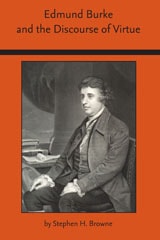
Edmund Burke and the Discourse of Virtue
Stephen Howard Browne
University of Alabama Press, 2007
"A major accomplishment in the study of Burke." —Choice
More than 200 years after his death, Edmund Burke remains among the most influential conservative writers in the Anglophone world. Burke’s relevance has only grown as the nature of what it means to be a conservative has become hotly contested.
And yet Burke is often discussed more than he is read. Worse, his rhetoric is often pressed into the service of other ideologies. In Edmund Burke and the Discourse of Virtue, Stephen Browne of Pennsylvania State University subjects Burke’s work to the close textual analysis it has never received.
The result of Browne's study is to present Burke and his work in a light that was clearly essential to Burke himself, one that illuminates the link between rhetoric and action that is key to understanding Burke, his career, his work, and his influence on contemporary conservatism.
Readers interested in the development of conversative philosophy, politics, and writing from its earliest roots will value this rare and illuminating work.
Emotions in History – Lost and Found
Ute Frevert
Central European University Press, 2011
Coming to terms with emotions and how they influence human behaviour, seems to be of the utmost importance to societies that are obsessed with everything "neuro." On the other hand, emotions have become an object of constant individual and social manipulation since "emotional intelligence" emerged as a buzzword of our times. Reflecting on this burgeoning interest in human emotions makes one think of how this interest developed and what fuelled it. From a historian's point of view, it can be traced back to classical antiquity. But it has undergone shifts and changes which can in turn shed light on social concepts of the self and its relation to other human beings (and nature). The volume focuses on the historicity of emotions and explores the processes that brought them to the fore of public interest and debate.
Empire in Question
Reading, Writing, and Teaching British ImperialismAntoinette Burton
Duke University Press, 2011
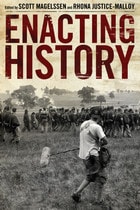
Enacting History
Edited by Scott Magelssen and Rhona Justice-Malloy
University of Alabama Press, 2011
Where performance meets the past: exploring how we stage, shape, and experience history.
Enacting History is a collection of new essays exploring the world of historical performances. The volume focuses on performances outside the traditional sphere of theatre, among them living history museums, battle reenactments, pageants, renaissance festivals, and adventure-tourism destinations. This volume argues that the recent surge in such performances have raised significant questions about the need for, interest in, and value of such nontraditional theater. Many of these performances claim a greater or lesser degree of historical "accuracy" or "authenticity," and the authors tease out the representational and historiographic issues related to these arguments. How, for instance, are issues of race, ethnicity, and gender dealt with at museums that purport to be accurate windows into the past? How are politics and labor issues handled in local- or state-funded institutions that rely on volunteer performers? How do tourists' expectations shape the choices made by would-be purveyors of the past? Where do matters of taste or censorship enter in when reconciling the archival evidence with a family-friendly mission?
Essays in the collection address, among other subjects, reenactments of period cookery and cuisine at a Maryland renaissance festival; the roles of women as represented at Minnesota's premiere living history museum, Historic Fort Snelling; and the Lewis and Clark bicentennial play as cultural commemoration. The editors argue that historical performances like these-regardless of their truth-telling claims-are an important means to communicate, document, and even shape history, and allow for a level of participation and accessibility that is unique to performance. Enacting History is an entertaining and informative account of the public's fascination with acting out and watching history and of the diverse methods of fulfilling this need.
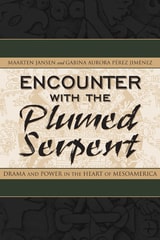
Encounter with the Plumed Serpent
Drama and Power in the Heart of MesoamericaMaarten Jansen
University Press of Colorado, 2007
By analyzing and cross-referencing the codices, which have been fragmented and dispersed in far-flung archives, the authors attempt to reconstruct Mixtec history. Their synthesis here builds on long examination of the ancient manuscripts. Adding useful interpretation and commentary, Jansen and Pérez Jiménez synthesize the large body of surviving documents into the first unified narrative of Mixtec sacred history.
Archaeologists and other scholars as well as readers with an interest in Mesoamerican cultures will find this lavishly illustrated volume a compelling and fascinating history and a major step forward in knowledge of the Mixtec.

Ends in Sight
Marx/Fukuyama/Hobsbawm/AndersonGregory Elliott
Pluto Press, 2008
Gregory Elliott argues that Marx is central to all three accounts and that, along with the Manifesto, they form a quartet of analyses of the results and prospects of capitalism and socialism, which are of enduring significance for the Left.
Senses of an Ending provides a readable survey of key historical and political thinkers that will appeal to anyone interested in modern political thought.

Engraving the Savage
The New World and Techniques of CivilizationMichael Gaudio
University of Minnesota Press, 2008
In 1585, the British painter and explorer John White created images of Carolina Algonquian Indians. These images were collected and engraved in 1590 by the Flemish publisher and printmaker Theodor de Bry and were reproduced widely, establishing the visual prototype of North American Indians for European and Euro-American readers.
In this innovative analysis, Michael Gaudio explains how popular engravings of Native American Indians defined the nature of Western civilization by producing an image of its “savage other.” Going beyond the notion of the “savage” as an intellectual and ideological construct, Gaudio examines how the tools, materials, and techniques of copperplate engraving shaped Western responses to indigenous peoples. Engraving the Savage demonstrates that the early visual critics of the engravings attempted-without complete success-to open a comfortable space between their own “civil” image-making practices and the “savage” practices of Native Americans-such as tattooing, bodily ornamentation, picture-writing, and idol worship. The real significance of these ethnographic engravings, he contends, lies in the traces they leave of a struggle to create meaning from the image of the American Indian.
The visual culture of engraving and what it shows, Gaudio reasons, is critical to grasping how America was first understood in the European imagination. His interpretations of de Bry’s engravings describe a deeply ambivalent pictorial space in between civil and savage-a space in which these two organizing concepts of Western culture are revealed in their making.
Michael Gaudio is assistant professor of art history at the University of Minnesota.
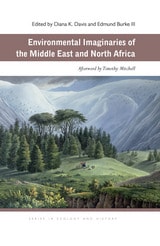
Environmental Imaginaries of the Middle East and North Africa
Diana K. Davis
Ohio University Press, 2011
The landscapes of the Middle East have captured our imaginations throughout history. Images of endless golden dunes, camel caravans, isolated desert oases, and rivers lined with palm trees have often framed written and visual representations of the region. Embedded in these portrayals is the common belief that the environment, in most places, has been deforested and desertified by centuries of misuse. It is precisely such orientalist environmental imaginaries, increasingly undermined by contemporary ecological data, that the eleven authors in this volume question. This is the first volume to critically examine culturally constructed views of the environmental history of the Middle East and suggest that they have often benefitted elites at the expense of the ecologies and the peoples of the region. The contributors expose many of the questionable policies and practices born of these environmental imaginaries and related histories that have been utilized in the region since the colonial period. They further reveal how power, in the form of development programs, notions of nationalism, and hydrological maps, for instance, relates to environmental knowledge production.
Contributors: Samer Alatout, Edmund Burke III, Shaul Cohen, Diana K. Davis, Jennifer L. Derr, Leila M. Harris, Alan Mikhail, Timothy Mitchell, Priya Satia, Jeannie Sowers, and George R. Trumbull IV
Essays in Ancient and Modern Historiography
Arnaldo Momigliano
University of Chicago Press, 2012
Essays on Ancient and Modern Judaism
Arnaldo Momigliano
University of Chicago Press, 1994
Momigliano acknowledged that his Judaism was the most fundamental inspiration for his scholarship, and the writings in this collection demonstrate how the ethical experience of the Hebraic tradition informed his other works. Part 1 is devoted entirely to writings on ancient and medieval Judaism. In these essays, Momigliano ranges over such subjects as the stages of rapport between Hellenism and Judaism, the figure of Flavius Josephus, and the salient moments of Maccabean history. Part 2 comprises Momigliano's writings on modern subjects. Here are profiles of Jewish scholars of the classical world (Bernays, Bickerman, and Finley) together with those of eminent representatives of contemporary Jewish thought (Strauss, Scholem, and Benjamin). These essays gain special significance alongside Momigliano's reflections on Italian Jewry and the Weberian interpretation of Judaism.
Silvia Berti's Introduction discusses Momigliano's religious and intellectual formation, the key events of his life, and the influence of Judaism on his mature scholarship. In his Preface, Momigliano offers a personal meditation on his own Judaism and that of his family.
By the time of his death, Momigliano had acquired an international following. This volume will at last give his admirers in the English-speaking world easy access to an important body of his work.
Essays on Twentieth-Century History
Edited by Michael Adas for the American Historical Association
Temple University Press, 2010
In the sub-field of world history, there has been a surprising paucity of thinking and writing about how to approach and conceptualize the long twentieth century from the 1870s through the early 2000s. The historiographic essays collected in Essays on Twentieth Century History will go a long way to filling that lacuna.
Each contribution covers a key theme and one or more critical sub-fields in twentieth century global history. Chapters address migration patterns, the impact of world wars, transformations in gender and urbanization, as well as environmental transitions. All are written by leading historians in each of the sub-fields represented, and each is intended to provide an introduction to the literature, key themes, and debates that have proliferated around the more recent historical experience of humanity.
Ethnic Historians and the Mainstream
Shaping America's Immigration StoryAlan M. Kraut and David A. Gerber
Rutgers University Press, 2013
Do historians “write their biographies” with the subjects they choose to address in their research? In this collection, editors Alan M. Kraut and David A. Gerber compiled eleven original essays by historians whose own ethnic backgrounds shaped the choices they have made about their own research and writing as scholars. These authors, historians of American immigration and ethnicity, revisited family and personal experiences and reflect on how their lives helped shape their later scholarly pursuits, at times inspiring specific questions they asked of the nation’s immigrant past. They address issues of diversity, multiculturalism, and assimilation in academia, in the discipline of history, and in society at large. Most have been pioneers not only in their respective fields, but also in representing their ethnic group within American academia. Some of the women in the group were in the vanguard of gender diversity in the discipline of history as well as on the faculties of the institutions where they have taught.
The authors in this collection represent a wide array of backgrounds, spanning Europe, Africa, Asia, the Middle East, and Latin America. What they have in common is their passionate engagement with the making of social and personal identities and with finding a voice to explain their personal stories in public terms.
Contributors: Theresa Alfaro-Velcamp, John Bodnar, María C. García, David A. Gerber, Violet M. Showers Johnson, Alan M. Kraut, Timothy J. Meagher, Deborah Dash Moore, Dominic A. Pacyga, Barbara M. Posadas, Eileen H. Tamura, Virginia Yans, Judy Yung
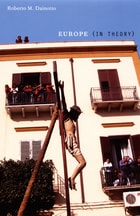
Europe (in Theory)
Roberto M. Dainotto
Duke University Press, 2007
Dainotto synthesizes a vast array of literary, philosophical, and historical works by authors from different parts of Europe. He scrutinizes theories that came to dominate thinking about the continent, including Montesquieu’s invention of Europe’s north-south divide, Hegel’s “two Europes,” and Madame de Staël’s idea of opposing European literatures: a modern one from the North, and a pre-modern one from the South. At the same time, Dainotto brings to light counter-narratives written from Europe’s margins, such as the Spanish Jesuit Juan Andrés’s suggestion that the origins of modern European culture were eastern rather than northern and the Italian Orientalist Michele Amari’s assertion that the South was the cradle of a social democracy brought to Europe via Islam.
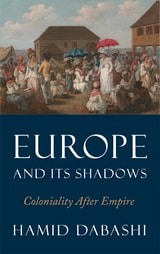
Europe and Its Shadows
Coloniality after EmpireHamid Dabashi
Pluto Press, 2019
Frantz Fanon’s assessment that 'Europe is literally the creation of the Third World' is still true today; but in more than one sense for the colonial has always been embedded in the capital, and the capital within the colonial. As the condition of coloniality shifts, so have the dividing lines between coloniser and colonised, and this shift calls for a reappraisal of our understanding of nationalism, xenophobia and sectarianism as the dangerous indices of the emerging worlds.
As the far-right populists captivate minds across Europe and Brexit upsets the balance of power in the European Union, this book, from a major scholar of postcolonial thought, is a timely and transformative intervention.
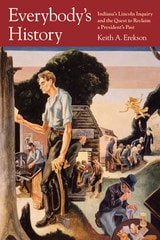
Everybody's History
Indiana's Lincoln Inquiry and the Quest to Reclaim a President's PastKeith A. Erekson
University of Massachusetts Press, 2012
Revered by the public, respected by scholars, and imitated by politicians, Abraham Lincoln remains influential more than two hundred years after his birth. His memory has inspired books, monuments, and museums and also sparked controversies, rivalries, and forgeries. That so many people have been interested in Lincoln for so long makes him an ideal subject for exploring why history matters to ordinary Americans as well as to academic specialists.
In Everybody's History, Keith A. Erekson focuses on the Southwestern Indiana Historical Society—an organization composed of lawyers, historians, collectors, genealogists, teachers, college presidents, and newspaper editors—who joined together during the 1920s and 1930s to recover a part of Lincoln's life his biographers had long ignored: the years from age seven to twenty-one when he lived on the Indiana frontier. Participants in the “Lincoln Inquiry,” as it was commonly known, researched old records, interviewed aging witnesses, hosted pageants, built a historical village, and presented their findings in public and in print. Along the way they defended their methods and findings against competitors in the fields of public history and civic commemoration, and rescued some of Indiana's own history by correcting a forgotten chapter of Lincoln's.
Everybody's History traces the development of popular interest in Lincoln to uncover the story of an extensive network of nonprofessional historians who contested old authorities and advanced new interpretations. In so doing, the book invites all who are interested in the past to see history as both vital to public life and meaningful to everybody.
Everyday Sciences
Practical Knowledge and Knowledgeable Practice in Medieval South AsiaEric Moses Gurevitch
University of Chicago Press, 2027
How people across society in medieval South Asia—including coppersmiths, merchants, bureaucrats, philosophers, and physicians—pioneered new vernacular sciences.
Starting in the eleventh century, South Asian scholars and artisans began to investigate and shape the world in a novel manner. Intellectuals translated Sanskrit texts into regional languages such as Kannada, situating knowledge in particular places. At the same time, architects and artisans began to assert their intellectual and literary presence, often claiming the title of “scholar” as they negotiated a space between classical textual erudition, professional expertise, and personal experience. Working within the perilous world of court politics, a new class of scholar-administrators began collecting recipes and composing texts about weather prediction, horticulture, mathematics, astrology, sexual life, and medicine.
Everyday Sciences traces this emergence of vernacular sciences by engaging with untapped archives and an array of sources in multiple languages. By exploring how historical actors resolved disputes about the physiology of vision, the use of meat and alcohol in medicine, and the management of information in elephant stables, Eric Moses Gurevitch unveils the complex textual and social orders that structured medieval society in India. He argues that a focus on everyday sciences in the non-modern non-West allows historians to reassess how places outside—and even inside—Europe are brought into narratives of a global history of science. Gurevitch articulates a “big-enough” history of science in South Asia, one open to little voices and unexpected connections that might not make their way through the fray in other histories.
Everyday Sciences demonstrates how practical, everyday activities were engines of profound intellectual innovation—and it shows the promise of revisiting the past without colonial hang-ups, and with fresh eyes.
Exemplary Violence
Rewriting History in Colonial ColombiaAlberto Villate-Isaza
Bucknell University Press, 2021
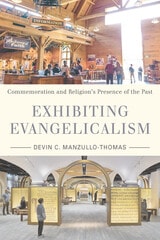
Exhibiting Evangelicalism
Commemoration and Religion’s Presence of the PastDevin C. Manzullo-Thomas
University of Massachusetts Press, 2022
Religion is a subject often overlooked or ignored by public historians. Whether they are worried about inadvertent proselytizing or fearful of contributing to America’s ongoing culture wars, many heritage professionals steer clear of discussing religion’s formative role in the past when they build collections, mount exhibits, and develop educational programming. Yet religious communities have long been active contributors to the nation’s commemorative landscape.
Exhibiting Evangelicalism provides the first account of the growth and development of historical museums created by white evangelical Christians in the United States over the twentieth and twenty-first centuries. Exploring the histories of the Museum of the Bible, the Billy Graham Center Museum, the Billy Sunday Home, and Park Street Church, Devin C. Manzullo-Thomas illustrates how these sites enabled religious leaders to develop a coherent identity for their fractious religious movement and to claim the centrality of evangelicalism to American history. In their zeal to craft a particular vision of the national past, evangelicals engaged with a variety of public history practices and techniques that made them major players in the field—including becoming early adopters of public history’s experiential turn.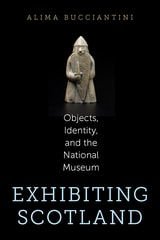
Exhibiting Scotland
Objects, Identity, and the National MuseumAlima Bucciantini
University of Massachusetts Press, 2018
In Exhibiting Scotland, Alima Bucciantini traces how these collections have helped tell the changing stories of this country for centuries and how the museum reflects the Scots' continuing negotiation of their place within modern Britain.