Results by title
78 books match the query 'Humanism' and 5 start with e
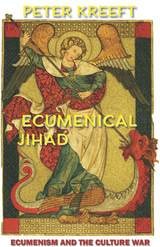
Ecumenical Jihad
Ecumenism and the Culture WarPeter Kreeft
St. Augustine's Press, 2015
Aware of the deep theological differences of these monotheistic faiths, Kreeft calls for a moratorium on our polemics against one another so that we can form an alliance to fight together to save Western civilization.
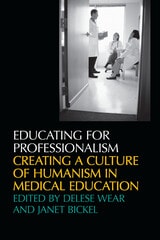
Educating For Professionalism
Creating A Culture Of Humanism In Medical EducationDelese Wear
University of Iowa Press, 2000
The thirteen essays in Educating for Professionalism examine the often conflicting ethical, social, emotional, and intellectual messages that medical institutions send to students about what it means to be a doctor. Because this disconnection between what medical educators profess and what students experience is partly to blame for the current crisis in medical professionalism, the authors offer timely, reflective analyses of the work and opportunities facing medical education if doctors are to win public trust.
In their drive to improve medical professionalism within the world of academic medicine, editors Delese Wear and Janet Bickel have assembled thought-provoking essays that elucidate the many facets of teaching, valuing, and maintaining medical professionalism in the middle of the myriad challenges facing medicine at the dawn of the twenty-first century.
The collection traces how the values of altruism and service can influence not only mission statements and admission policies but also the content of medical school ethics courses, student-led task forces, and mentoring programs, along with larger environmental issues in medical schools and the communities they serve.
Stanley Joel Reiser
Jack Coulehan
Peter C. Williams
Frederic W. Hafferty
Richard Martinez
Judith Andre
Jake Foglio
Howard Brody
Sheila Woods
Sue Fosson
Lois Margaret Nora
Mary Anne C. Johnston
Tana A. Grady-Weliky
Cynthia N. Kettyle
Edward M. Hundert
Norma E. Wagoner
Frederick A. Miller
William D. Mellon
Howard Waitzkin
Donald Wasylenki
Niall Byrne
Barbara McRobb
Edward J. Eckenfels
Lucy Wolf Tuton
Claudia H. Siegel
Timothy B. Campbell

Edward W. Said, Volume 25
Paul Bové
Duke University Press, 0
Featured is a new interview with Said, conducted by W. J. T. Mitchell, in which Said discusses the importance of the visual to his thinking, specifically the works of Goya and Caravaggio, which in turn made possible Said's valuable contributions to our understanding of photography and painting. Other contributions reflect on Said's influences on the American public sphere; the subtle personal politics that inform the relationship between music and emotion; Said's importance to a thinking about "race before racism" and the disappearance of the American; and jazz man Jim Merod reflects on Said's "sublime lyrical abstractions."
Covering with insight the many debates Said so deftly entered and formed, the distinguished contributors to this volume reflect upon his oeuvre to create an atmosphere of thoughtfulness, questioning, and interactivity.

Erich Fromm and Critical Criminology
Beyond the Punitive SocietyEdited by Kevin Anderson and Richard Quinney
University of Illinois Press, 2000
Linking the writings of the great humanist psychologist Erich Fromm to criminology, this collection shows how viewing crime patterns and the criminal justice system from Fromm's humanist perspective opens a path to more effective and more humane ways of understanding and dealing with crime and criminals.
Contributors to Erich Fromm and Critical Criminology draw on Fromm's writings on alienation, sadomasochism, and patriarchal/matriarchal values to assess the kinds of crimes being committed and the kinds of people committing them. They explore the spiritual and intellectual sources of Fromm's thought--including Jewish theology, Freudian psychoanalysis, Marxism, and Buddhism--and demonstrate how his socialist humanism points toward a society free of crime and violence. This volume also includes translations of two of Fromm's early articles on criminal justice, never before available in English, in which he develops a psychoanalytic Marxist critique of the role of criminal justice in a class society.
At a time when American society seems bent, to an unprecedented degree, on imprisonment, executions, and other violent responses to the problem of crime, Fromm's humanist critique offers a unique vantage point from which to renew and develop a critical criminology.

Existential Cognition
Computational Minds in the WorldRon McClamrock
University of Chicago Press, 1995
Arguing that the mind is essentially embedded in the external world, Ron McClamrock provides a schema that allows cognitive scientists to address such long-standing problems in artificial intelligence as the "frame" problem and the issue of "bounded" rationality. Extending this schema to cover progress in other studies of behavior, including language, vision, and action, McClamrock reinterprets the importance of the organism/environment distinction. McClamrock also considers the broader philosophical question of the place of mind in the world, particularly with regard to questions of intentionality, subjectivity, and phenomenology.
With implications for philosophy, cognitive and computer science, AI, and psychology, this book synthesizes state-of-the-art work in philosophy and cognitive science on how the mind interacts with the world to produce thoughts, ideas, and actions.