Results by title
130 books match the query 'Indonesia' and 7 start with e

Eight Prison Camps
A Dutch Family in Japanese JavaDieuwke Wendelaar Bonga
Ohio University Press, 1996
Eldest daughter of eight children, the author grew up in Surakarta, Java, in what is now Indonesia. In the months following the bombing of Pearl Harbor, however, Dutch nationals were rounded up by Japanese soldiers and put in internment camps. Her father and brother were sent to separate men’s camps, leaving the author, her mother, and the five younger children in the women’s camp. In this and later seven other prison camps in central Java, their lives gradually deteriorated from early days of fear and crowding to near starvation, forced labor, beatings, and seeing others disappear or die. On the family’s return to Holland after the war, they found a nation recovering from German occupation and largely ignorant of the horror of the Far East experience.
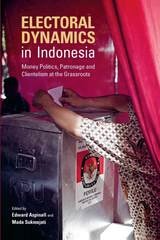
Electoral Dynamics in Indonesia
Money Politics, Patronage and Clientelism at the GrassrootsEdited by Edward Aspinall and Mada Sukmajati
National University of Singapore Press, 2016
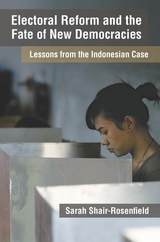
Electoral Reform and the Fate of New Democracies
Lessons from the Indonesian CaseSarah Shair-Rosenfield
University of Michigan Press, 2019
When and why do democratic political actors change the electoral rules, particularly regarding who is included in a country’s political representation? The incidences of these major electoral reforms have been on the rise since 1980.
Electoral Reform and the Fate of New Democracies argues that elite inexperience may constrain self-interest and lead elites to undertake incremental approaches to reform, aiding the process of democratic consolidation. Using a multimethods approach, the book examines three consecutive periods of reform in Indonesia, the world’s largest Muslim majority country and third largest democracy, between 1999 and 2014. Each case study provides an in-depth process tracing of the negotiations leading to new reforms, including key actors in the legislature, domestic civil society, international experts, and government bureaucrats. A series of counterfactual analyses assess the impact the reforms had on actual election outcomes, versus the possible alternative outcomes of different reform options discussed during negotiations. With a comparative analysis of nine cases of iterated reform processes in other new democracies, the book confirms the lessons from the Indonesian case and highlights key lessons for scholars and electoral engineers.
Electrifying Indonesia
Technology and Social Justice in National DevelopmentAnto Mohsin
University of Wisconsin Press, 2023

Erotic Triangles
Sundanese Dance and Masculinity in West JavaHenry Spiller
University of Chicago Press, 2010
In West Java, Indonesia, all it takes is a woman’s voice and a drum beat to make a man get up and dance. Every day, men there—be they students, pedicab drivers, civil servants, or businessmen—breach ordinary standards of decorum and succumb to the rhythm at village ceremonies, weddings, political rallies, and nightclubs. The music the men dance to varies from traditional gong ensembles to the contemporary pop known as dangdut, but they consistently dance with great enthusiasm. In Erotic Triangles, Henry Spiller draws on decades of ethnographic research to explore the reasons behind this phenomenon, arguing that Sundanese men use dance to explore and enact contradictions in their gender identities.
Framing the three crucial elements of Sundanese dance—the female entertainer, the drumming, and men’s sense of freedom—as a triangle, Spiller connects them to a range of other theoretical perspectives, drawing on thinkers from Eve Kosofsky Sedgwick, Lévi-Strauss, and Freud to Euclid. By granting men permission to literally perform their masculinity, Spiller ultimately concludes, dance provides a crucial space for both reinforcing and resisting orthodox gender ideologies.
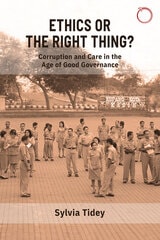
Ethics or the Right Thing?
Corruption and Care in the Age of Good GovernanceSylvia Tidey
HAU, 2021
Combining ethnographic fieldwork in the city of Kupang with an acute historical sensibility, Sylvia Tidey shows how good governance initiatives paradoxically perpetuate civil service corruption while also facilitating the emergence of new forms of it. Importing critical insights from the anthropology of ethics to the burgeoning anthropology of corruption, Tidey exposes enduring developmentalist fallacies that treat corruption as endemic to non-Western subjects. In practice, it is often indistinguishable from the ethics of care and exchange, as Indonesian civil servants make worthwhile lives for themselves and their families. This book will be a vital text for anthropologists and other social scientists, particularly scholars of global studies, development studies, and Southeast Asia.
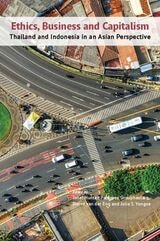
Ethics, Business and Capitalism
Thailand and Indonesia in an Asian PerspectiveEdited by Janet Hunter, Patnaree Srisuphaolarn, Pierre van der Eng, and Julia Yongue
National University of Singapore Press, 2024
Taking cues from the Japanese concept of ethical or stakeholder capitalism, this book demonstrates how the business activities of firms in Thailand and Indonesia are guided by their perceptions of morality in society and their concerns about the environment. The authors explore the likelihood that foreign influences contributed to the development of such management philosophies, for example through the expansion of Japanese subsidiary firms in the 1980s or the spread of foreign articulations of the concept of corporate social responsibility (CSR) since the 2000s. Companies in both countries may exercise a degree of pragmatism in how they develop these activities. As the authors reveal, the perceptions of morality in business that have shaped many entrepreneurs and companies in Thailand and Indonesia are their responses to the dynamic political, social, and economic factors that have formed the business environments of both countries.