Results by title
751 books match the query 'International Relations' and 19 start with e
Economic Interdependence and International Conflict
New Perspectives on an Enduring DebateEdward D. Mansfield and Brian M. Pollins, Editors
University of Michigan Press, 2003
Edward D. Mansfield is Hum Rosen Professor of Political Science and Co-Director of the Christopher H. Browne Center for International Politics at the University of Pennsylvania.
Brian M. Pollins is Associate Professor of Political Science at Ohio State University and a Research Fellow at the Mershon Center.
Economic Shocks and Authoritarian Stability
Duration, Financial Control, and InstitutionsVictor C. Shih, Editor
University of Michigan Press, 2020
Over two billion people still live under authoritarian rule. Moreover, authoritarian regimes around the world command enormous financial and economic resources, rivaling those controlled by advanced democracies. Yet authoritarian regimes as a whole are facing their greatest challenges in the recent two decades due to rebellions and economic stress. Extended periods of hardship have the potential of introducing instability to regimes because members of the existing ruling coalition suffer welfare losses that force them to consider alternatives, while previously quiescent masses may consider collective uprisings a worthwhile gamble in the face of declining standards of living.
Economic Shocks and Authoritarian Stability homes in on the economic challenges facing authoritarian regimes through a set of comparative case studies that include Iran, Iraq under Saddam Hussein, Malaysia, Indonesia, Jordan, Russia, the Eastern bloc countries, China, and Taiwan—authored by the top experts in these countries. Through these comparative case studies, this volume provides readers with the analytical tools for assessing whether the current round of economic shocks will lead to political instability or even regime change among the world’s autocracies. This volume identifies the duration of economic shocks, the regime’s control over the financial system, and the strength of the ruling party as key variables to explain whether authoritarian regimes would maintain the status quo, adjust their support coalitions, or fall from power after economic shocks.

Economics and National Security
A History of Their Interaction, Volume 23Craufurd D. W. Goodwin
Duke University Press, 1991
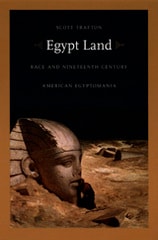
Egypt Land
Race and Nineteenth-Century American EgyptomaniaScott Trafton
Duke University Press, 2004
Drawing on literary and cultural studies, art and architectural history, political history, religious history, and the histories of archaeology and ethnology, Trafton illuminates anxieties related to race in different manifestations of nineteenth-century American Egyptomania, including the development of American Egyptology, the rise of racialized science, the narrative and literary tradition of the imperialist adventure tale, the cultural politics of the architectural Egyptian Revival, and the dynamics of African American Ethiopianism. He demonstrates how debates over what the United States was and what it could become returned again and again to ancient Egypt. From visions of Cleopatra to the tales of Edgar Allan Poe, from the works of Pauline Hopkins to the construction of the Washington Monument, from the measuring of slaves’ skulls to the singing of slave spirituals—claims about and representations of ancient Egypt served as linchpins for discussions about nineteenth-century American racial and national identity.
Electoral Reform and the Fate of New Democracies
Lessons from the Indonesian CaseSarah Shair-Rosenfield
University of Michigan Press, 2019
When and why do democratic political actors change the electoral rules, particularly regarding who is included in a country’s political representation? The incidences of these major electoral reforms have been on the rise since 1980.
Electoral Reform and the Fate of New Democracies argues that elite inexperience may constrain self-interest and lead elites to undertake incremental approaches to reform, aiding the process of democratic consolidation. Using a multimethods approach, the book examines three consecutive periods of reform in Indonesia, the world’s largest Muslim majority country and third largest democracy, between 1999 and 2014. Each case study provides an in-depth process tracing of the negotiations leading to new reforms, including key actors in the legislature, domestic civil society, international experts, and government bureaucrats. A series of counterfactual analyses assess the impact the reforms had on actual election outcomes, versus the possible alternative outcomes of different reform options discussed during negotiations. With a comparative analysis of nine cases of iterated reform processes in other new democracies, the book confirms the lessons from the Indonesian case and highlights key lessons for scholars and electoral engineers.
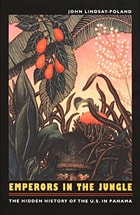
Emperors in the Jungle
The Hidden History of the U.S. in PanamaJohn Lindsay-Poland
Duke University Press, 2003
Analyzing new evidence gathered through interviews, archival research, and Freedom of Information Act requests, Lindsay-Poland discloses the hidden history of U.S.–Panama relations, including the human and environmental toll of the massive canal building project from 1904 to 1914. In stunning detail he describes secret chemical weapons tests—of toxins including nerve agent and Agent Orange—as well as plans developed in the 1960s to use nuclear blasts to create a second canal in Panama.
He chronicles sustained efforts by Panamanians and international environmental groups to hold the United States responsible for the disposal of the tens of thousands of explosives it left undetonated on the land it turned over to Panama in 1999. In the context of a relationship increasingly driven by the U.S. antidrug campaigns, Lindsay-Poland reports on the myriad issues that surrounded Panama’s takeover of the canal in accordance with the 1977 Panama Canal Treaty, and he assesses the future prospects for the Panamanian people, land, and canal area. Bringing to light historical legacies unknown to most U.S. citizens or even to many Panamanians, Emperors in the Jungle is a major contribution toward a new, more open relationship between Panama and the United States.
Empire and Dissent
The United States and Latin AmericaFred Rosen, ed.
Duke University Press, 2008
Several essays provide historical perspective on contemporary U.S.–hemispheric relations. These include an analysis of the nature and dynamics of imperial domination, an assessment of financial relations between the United States and Latin America since the end of World War II, an account of Native American resistance to colonialism, and a consideration of the British government’s decision to abolish slavery in its colonies. Other essays focus on present-day conflicts in the Americas, highlighting various modes of domination and dissent, resistance and accommodation. Examining southern Mexico’s Zapatista movement, one contributor discusses dissent in the era of globalization. Other contributors investigate the surprisingly conventional economic policies of Brazil’s president, Luiz Inácio Lula da Silva; Argentina’s recovery from its massive 2001 debt default; the role of coca markets in the election of Bolivia’s first indigenous president, Evo Morales; and the possibilities for extensive social change in Venezuela. A readers’ guide offers a timeline of key events from 1823 through 2007, along with a list of important individuals, institutions, and places.
Contributors: Daniel A. Cieza, Gregory Evans Dowd, Steve Ellner, Neil Harvey, Alan Knight, Carlos Marichal, John Richard Oldfield, Silvia Rivera, Fred Rosen, Jeffrey W. Rubin

Empire's Law
The American Imperial Project and the 'War to Remake the World'Edited by Amy Bartholomew
Pluto Press, 2006
Jean L. Cohen Professor of Political Science, Columbia University
"This remarkable collection of essays illuminates -- more fully than any other volume -- the world order costs of the Iraq War, especially the radical denial of the relevance of international law in the US's pursuit of global empire. To understand this overarching geopolitical challenge of the early 21st century, citizens the world over should treat Empire's Law as required reading."
Richard A. Falk, Albert G. Milbank Professor of International Law and Practice Emeritus, Princeton University and currently Visiting Professor of Global and International Studies, University of California, Santa Barbara
"Right now there can't be enough discussion of America's role in world politics ... This is a much-needed collection from leading scholars."
Neil Stammers, Senior Lecturer in the Department of International Relations and Politics, University of Sussex
What is the legacy of the war in Iraq? Can democracy and human rights really be imposed "by fire and sword"? This book brings together some of the world's most outstanding theorists in the debate over empire and international law. They provide a uniquely lucid account of the relationship between American imperialism, the use and abuse of "humanitarian intervention", and its legal implications. Empire's Law is ideal for students who want a comprehensive critical introduction to the impact that the doctrine of pre-emptive war has had on our capacity to protect human rights and promote global justice.
Leading contributors including Leo Panitch, Sam Gindin, Jurgen Habermas, Ulrich Preuss, Andrew Arato, Samir Amin, Reg Whitaker, Denis Halliday and Hans von Sponeck tackle a broad range of issues. Covering everything from the role of Europe and the UN, to people's tribunals, to broader theoretical accounts of the contradictions of war and human rights, the contributors offer new and innovative ways of examining the problems that we face. It is essential reading for all students who want a systematic framework for understanding the long-term consequences of imperialism.
Amy Bartholomew is an Associate Professor in the Department of Law at Carleton University.
End of the Nation-State
Jean-Marie Guehenno
University of Minnesota Press, 2000
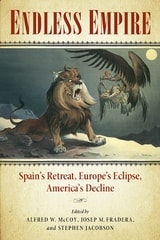
Endless Empire
Spain's Retreat, Europe's Eclipse, America's DeclineEdited by Alfred W. McCoy, Josep M. Fradera, and Stephen Jacobson
University of Wisconsin Press, 2012
- erosion of economic and fiscal strength needed for military power on a global scale
- misuse of military power through micro-military misadventures
- breakdown of alliances among major powers
- weakened controls over the subordinate elites critical for any empire’s exercise of global power
- insufficient technological innovation to sustain global force projection.
Ends Of Globalization
Mohammed A. Bamyeh
University of Minnesota Press, 2000
A uniquely broad perspective that challenges current ideas about worldwide cultural and political change.
Political and Social Theory/Cultural Studies
A uniquely broad perspective that challenges current ideas about worldwide cultural and political change. An intervention into current debates about globalization, nationalism, imperialism, and culture, this book offers a cogent critique of much of what is being said about globalization, by both the Right and the Left. In doing so, it charts the complex processes of globalization, drawing out their historical and philosophical roots and outlining the connections between cultural, political, and economic life that globalization has made, historically and in our day.The author’s orientation toward political theory and comparative civilizations-a rarity in globalization studies-allows him to detect in specific terms what is most dangerous and opportune in what is happening in the world today. Mohammed A. Bamyeh makes a compelling argument that we are witnessing a process typified by massive disjunctions between political, cultural, and economic logics on a world scale. Bamyeh demonstrates how the disruptions caused by globalization, while they blur our vision and block our rational approaches, also possess the potential to liberate the autonomous and convivial human possibilities and capabilities long shackled by such modernist institutions of governance as the nation-state.Translation Inquiries: University of Minnesota Press
Engineering European Unity
The Quest for the Right Solution Across CenturiesÉva Bóka
Central European University Press, 2023
Which European and non-European ideas and practices facilitated the shaping of European unity? Or rather, which pursuits led to deadlocks in the cooperation between states?
The book seeks answers to these questions by surveying the historical attempts at realizing supranational patterns of governance in Europe since the Middle Ages. The main focus is on the nineteenth and twentieth century organizational models of European unification.
The analysis draws on an abundance of historical and legal source material. While the author encourages critical thinking about European integration, the exploration is admittedly based on specific values. Éva Bóka claims that the struggle for the humanization of power with its democratic creative force has been the major driver in the development of the system of liberties and the idea of European unity. The analysis of the historical process up to the Lisbon Treaty (2007) with the recognition of common, shared, and supported competences meets the author’s set of values to a great extent. The last part of the book examines whether the European Union can serve as a political and economic organizational model for other parts of the world.
Erasing Iraq
The Human Costs of CarnageMichael Otterman, Richard Hil, Paul Wilson, and Dahr Jamail
Pluto Press, 2010
For nearly two decades, the US and its allies have prosecuted war and aggression in Iraq. Erasing Iraq shows in unparalleled detail the devastating human cost of the war in Iraq.
Western governments and the mainstream media continue to ignore or play down the human costs of the war on Iraqi citizens This has allowed them to present their role as the benign guardians of Iraqi interests. The authors deconstruct this narrative by presenting a portrait of the total carnage in Iraq today. From Iraqi refugees in Syria, Jordan and the West, to civilians left behind, and other witnesses, this the story of the war told by those who experienced it firsthand.
Ethnic Conflict
Religion, Identity, and PoliticsS. A. Giannakos
Ohio University Press, 2001
The outbreak of numerous and simultaneous violent conflicts around the globe in the past decade resulted in immense human suffering and countless lost lives. In part, both results were aided by inactivity or by belated and often misplaced responses by the international community to the embattled groups. The apparent inability of the international community to respond firmly and purposefully to violent conflicts can be attributed partially to a general confusion and misunderstanding of the root causes of such conflicts. In some cases, the international community argued that violent conflicts could be attributed to irreconcilable ethnic differences, which, like earthquakes, are impossible to prevent or control.
At other times, the argument was that such conflicts were the results of evil leaders capable of engineering mass violent acts. Ethnic Conflict presents an interdisciplinary and comparative effort to explain the root causes of ethnic conflicts in terms of political, economic, and social common denominators that characterize all such conflicts. It seeks to dispel misplaced assumptions about violent domestic conflicts and, by providing a clearer picture of the mechanics of such conflicts, it hopes to assist in the process of conflict resolution and prevention.
Eurasian Integration and the Russian World
Regionalism as an Identitiary EnterpriseAliaksei Kazharski
Central European University Press, 2019
This volume examines Russian discourses of regionalism as a source of identity construction practices for the country's political and intellectual establishment. The overall purpose of the monograph is to demonstrate that, contrary to some assumptions, the transition trajectory of post-Soviet Russia has not been towards a liberal democratic nation state that is set to emulate Western political and normative standards. Instead, its foreign policy discourses have been constructing Russia as a supranational community which transcends Russia's current legally established borders.
The study undertakes a systematic and comprehensive survey of Russian official (authorities) and semi-official (establishment affiliated think tanks) discourse for a period of seven years between 2007 and 2013. This exercise demonstrates how Russia is being constructed as a supranational entity through its discourses of cultural and economic regionalism. These discourses associate closely with the political project of Eurasian economic integration and the "Russian world" and "Russian civilization" doctrines. Both ideologies, the geoeconomic and culturalist, have gained prominence in the post-Crimean environment. The analysis tracks down how these identitary concepts crystallized in Russia's foreign policies discourses beginning from Vladimir Putin's second term in power.
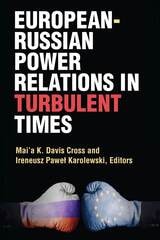
European-Russian Power Relations in Turbulent Times
Mai’a K. Davis Cross and Ireneusz Pawel Karolewski, Editors
University of Michigan Press, 2021
The volume editors’ primary goal is to illuminate the nature of the deteriorating security relationship between Europe and Russia, and the key implications for its future. While the book is timely, the editors and contributors also draw out long-term lessons from this era of diplomatic degeneration to show how increasing cooperation between two regions can devolve into rapidly escalating conflict. While it is possible that the relationship between Russia and Europe can ultimately be restored, it is also necessary to understand why it was undermined in the first place. The fact that these transformations occur under the backdrop of an uncertain transatlantic relationship makes this investigation all the more pressing.
Each chapter in this volume addresses three dimensions of the problem: first, how and why the power status quo that had existed since the end of the Cold War has changed in recent years, as evidenced by Russia’s newly aggressive posturing; second, the extent to which the EU’s power has been enabled or constrained in light of Russia’s actions; and third, the risks entailed in Europe’s reactive power—that is, the tendency to act after-the-fact instead of proactively toward Russia—in light of the transatlantic divide under Trump.
Evaluating Methodology in International Studies
Frank P. Harvey and Michael Brecher, Editors
University of Michigan Press, 2009
Evaluating Methodology in International Studies offers a unique collection of original essays by world-renowned political scientists. The essays address the state of the discipline in regard to the methodology of researching global politics, focusing in particular on formal modeling, quantitative methods, and qualitative approaches in International Studies.
The authors reflect on the strengths and weaknesses of current methodology and suggest ways to advance theory and research in International Studies. This volume is essential reading for methods courses and will be of interest to scholars and students alike.
See table of contents and excerpts.
Frank P. Harvey is Professor of Political Science and Director of the Centre for Foreign Policy Studies at Dalhousie University.
Michael Brecher is the R.B. Angus Professor of Political Science at McGill University and past president of the International Studies Association.
Millennial Reflections on International Studies
This volume is part of the Millennial Reflections on International Studies project in which forty-five prominent scholars engage in self-critical, state-of-the-art reflection on international studies to stimulate debates about successes and failures and to address the larger questions of progress in the discipline.
Other paperbacks from this project:
Realism and Institutionalism in International Studies
Conflict, Security, Foreign Policy, and International Political Economy: Past Paths and Future Directions in International Studies
Critical Perspectives in International Studies
The full collection of essays is available in the handbook Millennial Reflections on International Studies.

Exclusion and Engagement
Social Policy in Latin AmericaEdited by Christopher Abel and Colin M. Lewis
University of London Press, 2002
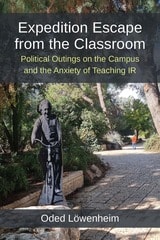
Expedition Escape from the Classroom
Political Outings on the Campus and the Anxiety of Teaching IROded Löwenheim
University of Michigan Press, 2024
Expedition Escape from the Classroom offers a unique narrative where teaching and its inherent challenges intersect with the intricacies of global politics, history, and identity. While recounting his academic experiment, Löwenheim grapples with the changing landscape of academia in a neoliberal age, while illustrating how personal vulnerabilities can transform into powerful tools for growth, exploration, and enlightenment. Whether you’re an educator, student, or just a curious reader, Expedition Escape from the Classroom promises a journey of reflection, critical thinking, and profound revelations.