Results by title
100 books match the query 'Kings and rulers' and 4 start with e
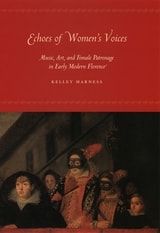
Echoes of Women's Voices
Music, Art, and Female Patronage in Early Modern FlorenceKelley Harness
University of Chicago Press, 2006
Through commissions, patrons sought to promote a vision of the world and their place in it. The unique social norms, laws, educational backgrounds, and life experiences of female patrons meant the expression of a worldview that differed significantly from that of their male counterparts. Joining exceptional archival research with telling analysis of significant examples of music, art, and drama, Kelley Harness challenges the prevailing view that Florence saw a political and artistic decline during this period. She argues convincingly that the female domination of these years brought forth artistic patronage that was both continuous and well-conceived.
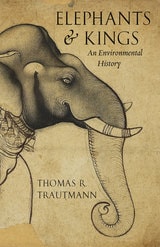
Elephants and Kings
An Environmental HistoryThomas R. Trautmann
University of Chicago Press, 2015
Trautmann traces the history of the war elephant in India and the spread of the institution to the west—where elephants took part in some of the greatest wars of antiquity—and Southeast Asia (but not China, significantly), a history that spans 3,000 years and a considerable part of the globe, from Spain to Java. He shows that because elephants eat such massive quantities of food, it was uneconomic to raise them from birth. Rather, in a unique form of domestication, Indian kings captured wild adults and trained them, one by one, through millennia. Kings were thus compelled to protect wild elephants from hunters and elephant forests from being cut down. By taking a wide-angle view of human-elephant relations, Trautmann throws into relief the structure of India’s environmental history and the reasons for the persistence of wild elephants in its forests.
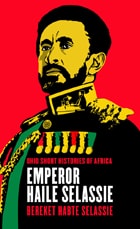
Emperor Haile Selassie
Bereket Habte Selassie
Ohio University Press, 2014
Emperor Haile Selassie was an iconic figure of the twentieth century, a progressive monarch who ruled Ethiopia from 1916 to 1974. This book, written by a former state official who served in a number of important positions in Selassie’s government, tells both the story of the emperor’s life and the story of modern Ethiopia.
After a struggle for the throne in 1916, the young Selassie emerged first as regent and then as supreme leader of Ethiopia. Over the course of his nearly six-decade rule, the emperor abolished slavery, introduced constitutional reform, and expanded educational opportunity. The Italian invasion of Ethiopia in the 1930s led to a five-year exile in England, from which he returned in time to lead his country through World War II. Selassie was also instrumental in the founding of the Organization of African Unity in 1963, but he fell short of the ultimate goal of a promised democracy in Ethiopia. The corruption that grew under his absolute rule, as well as his seeming indifference to the famine that gripped Ethiopia in the 1970s, led finally to his overthrow by the armed forces that he had created.
Haile Selassie was an enlightened monarch in many ways, but also a man with flaws like any other. This short biography is a sensitive portrayal of Selassie as both emperor and man, by one who knew him well.
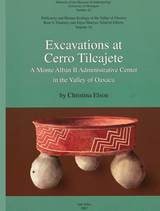
Excavations at Cerro Tilcajete
A Monte Albán II Administrative Center in the Valley of OaxacaChristina Elson
University of Michigan Press, 2007