Results by title
4030 books match the query 'Language Arts & Disciplines' and 134 start with e

E-Book Platforms for Libraries
Mirela American Library Association
American Library Association, 2013

E. W. Scripps and the Business of Newspapers
Gerald Baldasty
University of Illinois Press, 1999
Edward Willis Scripps revolutionized the newspaper industry by applying modern business practices. His press empire grew to more than forty newspapers supported by a telegraphic news service and an illustrated news features syndicate. Convinced that big business was corrupting the American press, Scripps resisted supporting his newspapers through advertising. He also aimed them at the working class, an audience virtually ignored by most newspaper publishers of his era.
Drawing on Scripps's business correspondence, Gerald Baldasty provides a portrait of a long-neglected entrepreneurial giant. Maintaining that the press should support the democratic endeavor by informing its largest constituency, Scripps succeeded in creating a string of small, one-penny newspapers that advocated for the common people by crusading for lower streetcar fares, free textbooks for public school children, municipal ownership of utilities, and pure food legislation, among many other causes.
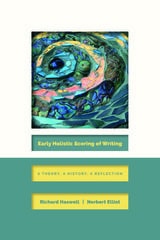
Early Holistic Scoring of Writing
A Theory, a History, a ReflectionRichard Haswell
Utah State University Press, 2019
Early Holistic Scoring of Writing addresses the history of holistic essay assessment in the United Kingdom and the United States from the mid-1930s to the mid-1980s—and newly conceptualizes holistic scoring by philosophically and reflectively reinterpreting the genre’s origin, development, and significance.
The book chronicles holistic scoring from its initial origin in the United Kingdom to the beginning of its heyday in the United States. Chapters cover little-known history, from the holistic scoring of school certificate examination essays written by Blitz evacuee children in Devon during WWII to teacher adaptations of holistic scoring in California schools during the 1970s. Chapters detail the complications, challenges, and successes of holistic scoring from British high-stakes admissions examinations to foundational pedagogical research by Bay Area Writing Project scholars. The book concludes with lessons learned, providing a guide for continued efforts to assess student writing through evidence models.
Exploring the possibility of actionable history, Early Holistic Scoring of Writing reconceptualizes writing assessment. Here is a new history that retells the origins of our present body of knowledge in writing studies.
Early Literacy Storytimes @ your library®
Partnering with Caregivers for SuccessSaroj Nadkarni Ghoting
American Library Association, 2006
Early Literacy Storytimes @ your library®
Partnering with Caregivers for SuccessSaroj Nadkarni Ghoting
American Library Association, 0
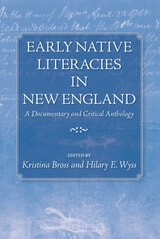
Early Native Literacies in New England
A Documentary and Critical AnthologyKristina Bross
University of Massachusetts Press, 2008
Designed as a corrective to colonial literary histories that have excluded Native voices, this anthology brings together a variety of primary texts produced by the Algonquian peoples of New England during the seventeenth, eighteenth, and very early nineteenth centuries. Included among these written materials and objects are letters, signatures, journals, baskets, pictographs, confessions, wills, and petitions, each of which represents a form of authorship. Together they demonstrate the continuing use of traditional forms of memory and communication and the lively engagement of Native peoples with alphabetic literacy during the colonial period. Each primary text is accompanied by an essay that places it in context and explores its significance.
Written by leading scholars in the field, these readings draw on recent trends in literary analysis, history, and anthropology to provide an excellent overview of the field of early Native studies. They are also intended to provoke discussion and open avenues for further exploration by students and other interested readers. Above all, the texts and commentaries gathered in this volume provide an opportunity to see Native American literature as a continuity of expression that reflects choices made long before contact and colonization, rather than as a nineteenth—or even twentieth-century invention.
Contributors include Heidi Bohaker, Heather Bouwman, Joanna Brooks, Kristina Bross, Stephanie Fitzgerald, Sandra Gustafson, Laura Arnold Leibman, Kevin McBride, David Murray, Laura Murray, Jean O'Brien, Ann Marie Plane, Philip Round, Jodi Schorb, David Silverman, and Hilary E. Wyss.

Early Royko
Up Against It in ChicagoMike Royko
University of Chicago Press, 2010
Combining the incisive pen of a newspaperman and the compassionate soul of a poet, Mike Royko became a Chicago institution—in Jimmy Breslin’s words, "the best journalist of his time." Early Royko: Up Against It in Chicago will restore to print the legendary columnist’s earliest writings, which chronicle 1960s Chicago with the moral vision, ironic sense, and razor-sharp voice that would remain Royko’s trademark.
This collection of early columns from the Chicago Daily News ranges from witty social commentary to politically astute satire. Some of the pieces are falling-down funny and others are tenderly nostalgic, but all display Royko’s unrivaled skill at using humor to tell truth to power. From machine politicians and gangsters to professional athletes, from well-heeled Chicagoans to down-and-out hoodlums, no one escapes Royko’s penetrating gaze—and resounding judgment. Early Royko features a memorable collection of characters, including such well-known figures as Hugh Hefner, Mayor Richard J. Daley, and Dr. Martin Luther King. But these boldfaced names are juxtaposed with Royko’s beloved lesser knowns from the streets of Chicago: Mrs. Peak, Sylvester "Two-Gun Pete" Washington, and Fats Boylermaker, who gained fame for leaning against a corner light pole from 2 a.m. Saturday until noon Sunday, when his neighborhood tavern reopened for business.
Accompanied by a foreword from Rick Kogan, this new edition will delight Royko’s most ardent fans and capture the hearts of a new generation of readers. As Kogan writes, Early Royko "will remind us how a remarkable relationship began—Chicago and Royko, Royko and Chicago—and how it endures."
Ears, Eyes, and Hands
Reflections on Language, Literacy, and LinguisticsDeborah L. Wolter
Gallaudet University Press, 2018
Wolter reveals and rectifies the impact of deficit mindsets in the educational system regarding race, ethnicity, economic status, gender, and disability. As a literacy specialist, she works with students who fall through the cracks in a system that strives to embrace the diverse backgrounds and abilities found in the classroom. Her passion for engaging students and cultivating literacy shines in the stories she tells, which serve as parables that allow readers to evaluate their own attitudes and assumptions. Educators, parents, and community members will benefit from Wolter’s examination of sociolinguistics and language privilege as she identifies how ethnocentrism and ableism are contributing to negative educational outcomes for some students. With humor and warmth, she offers a path toward approaching language and listening as a gateway to connection and understanding, both inside the classroom and beyond.

Eastern Figures
Orient and Empire in British WritingDouglas Kerr
Hong Kong University Press, 2008
Eastern Ojibwa
Grammatical Sketch, Texts and Word ListLeonard Bloomfield
University of Michigan Press, 1957
Eating Is an English Word
Annemarie Mol
Duke University Press, 2024

Ecological Feelings
A Rhetorical CompendiumJoshua Trey Barnett
Michigan State University Press, 2025

Ecologies of Harm
Rhetorics of Violence in the United StatesMegan Eatman
The Ohio State University Press, 2020
While Eatman looks to examples of violent spectacles to make her case (lynching, capital punishment, and torture in the War on Terror), it is in her analysis of more mundane responses to these forms of violence (congressional debates, court documents, visual art, and memorial performance) where the key to her argument lies—as she shows how circulating violence in these ways produces violent rhetorical ecologies that facilitate some modes of being while foreclosing others. Through this ecological approach, Ecologies of Harm offers a new understanding of the debates surrounding legacies of violence, examines how rhetoric and violence function together, and explores implications of their entanglement for antiviolence work.
Ecology, Economy, Equity
The Path to a Carbon-Neutral LibraryMandy Henk
American Library Association, 2014
Economical Writing, Third Edition
Thirty-Five Rules for Clear and Persuasive ProseDeirdre Nansen McCloskey
University of Chicago Press, 2019
Economics is not a field that is known for good writing. Charts, yes. Sparkling prose, no.
Except, that is, when it comes to Deirdre Nansen McCloskey. Her conversational and witty yet always clear style is a hallmark of her classic works of economic history, enlivening the dismal science and engaging readers well beyond the discipline. And now she’s here to share the secrets of how it’s done.
Economical Writing is itself economical: a collection of thirty-five pithy rules for making your writing clear, concise, and effective. Proceeding from big-picture ideas to concrete strategies for improvement at the level of the paragraph, sentence, or word, McCloskey shows us that good writing, after all, is not just a matter of taste—it’s a product of adept intuition and a rigorous revision process. Debunking stale rules, warning us that “footnotes are nests for pedants,” and offering an arsenal of readily applicable tools and methods, she shows writers of all levels of experience how to rethink the way they approach their work, and gives them the knowledge to turn mediocre prose into magic.
At once efficient and digestible, hilarious and provocative, Economical Writing lives up to its promise. With McCloskey as our guide, it’s impossible not to see how any piece of writing—on economics or any other subject—can be a pleasure to read.
Economies of Writing
Revaluations in Rhetoric and CompositionBruce Horner
Utah State University Press, 2016
Economies of Writing advances scholarship on political economies of writing and writing instruction, considering them in terms of course subject, pedagogy, technology, and social practice. Taking the "economic" as a necessary point of departure and contention for the field, the collection insists that writing concerns are inevitably participants in political markets in their consideration of forms of valuation, production, and circulation of knowledge with labor and with capital.
Approaching the economic as plural, contingent, and political, chapters explore complex forces shaping the production and valuation of literacies, languages, identities, and institutions and consider their implications for composition scholarship, teaching, administration, and public rhetorics. Chapters engage a range of issues, including knowledge transfer, cyberpublics, graduate writing courses, and internationalized web domains.
Economies of Writing challenges dominant ideologies of writing, writing skills, writing assessment, language, writing technology, and public rhetoric by revealing the complex and shifting valuations of writing practices as they circulate within and across different economies. The volume is a significant contribution to rhetoric and composition’s understanding of and ways to address its seemingly perennial unease about its own work.
Contributors: Anis Bawarshi, Deborah Brandt, Jenn Fishman, T. R. Johnson, Jay Jordan, Kacie Kiser, Steve Lamos, Donna LeCourt, Rebecca Lorimer Leonard, Samantha Looker, Katie Malcolm, Paul Kei Matsuda, Joan Mullin, Jason Peters, Christian J. Pulver, Kelly Ritter, Phyllis Mentzell Ryder, Tony Scott, Scott Wible, Yuching Jill Yang, James T. Zebroski
Ecospeak
Rhetoric and Environmental Politics in AmericaM. Jimmie Killingsworth and Jacqueline S. Palmer
Southern Illinois University Press, 1992
In this book, M. Jimmie Killingsworth and Jacqueline S. Palmer have a twofold purpose: to analyze the patterns of rhetoric used in written discourse about environmental politics and to make a practical contribution to the art of rhetorical criticism through the study of rhetoric in use.
The language, professional objectivity, and research programs of scientists insulate these best-informed citizens in enclaves of specialization, limiting access to crucial information and hindering effective reformative action. Science, the authors stress, is not merely a database to rely upon but a view of the world that must be broadened in order to affect social morality. Science-based activism must arise to ensure the care and future of the environment.
Killingsworth and Palmer argue that for grassroots activism to be tied to this globally conscious philosophy, a rhetoric of sustainability must be cultivated.
Editing and Advocacy
Patrick Barry
Michigan Publishing Services, 2022
This book— which is based on a popular course taught at the University of Chicago Law School, the University of Michigan Law School, and the UCLA School of Law— is designed to help you become one of those editors. You’ll learn how to edit with empathy. You’ll learn how to edit with statistics. You’ll learn, in short, a wide range of compositional skills you can use to elevate your advocacy and better champion the causes you care about the most.
Educating the New Southern Woman
Speech, Writing, and Race at the Public Women's Colleges, 1884-1945David Gold and Catherine L. Hobbs
Southern Illinois University Press, 2014
From the end of Reconstruction through World War II, a network of public colleges for white women flourished throughout the South. Founded primarily as vocational colleges to educate women of modest economic means for life in the emerging “new” South, these schools soon transformed themselves into comprehensive liberal arts–industrial institutions, proving so popular that they became among the largest women’s colleges in the nation. In this illuminating volume, David Gold and Catherine L. Hobbs examine rhetorical education at all eight of these colleges, providing a better understanding of not only how women learned to read, write, and speak in American colleges but also how they used their education in their lives beyond college.
With a collective enrollment and impact rivaling that of the Seven Sisters, the schools examined in this study—Mississippi State College for Women (1884), Georgia State College for Women (1889), North Carolina College for Women (1891), Winthrop College in South Carolina (1891), Alabama College for Women (1896), Texas State College for Women (1901), Florida State College for Women (1905), and Oklahoma College for Women (1908)—served as important centers of women’s education in their states, together educating over a hundred thousand students before World War II and contributing to an emerging professional class of women in the South. After tracing the establishment and evolution of these institutions, Gold and Hobbs explore education in speech arts and public speaking at the colleges and discuss writing instruction, setting faculty and departmental goals and methods against larger institutional, professional, and cultural contexts. In addition to covering the various ways the public women’s colleges prepared women to succeed in available occupations, the authors also consider how women’s education in rhetoric and writing affected their career choices, the role of race at these schools, and the legacy of public women’s colleges in relation to the history of women’s education and contemporary challenges in the teaching of rhetoric and writing.
The experiences of students and educators at these institutions speak to important conversations among scholars in rhetoric, education, women’s studies, and history. By examining these previously unexplored but important institutional sites, Educating the New Southern Woman provides a richer and more complex history of women’s rhetorical education and experiences.
Educational Interpreting
How It Can SucceedElizabeth A. Winston
Gallaudet University Press, 2004
This incisive book explores the current state of educational interpreting and how it is failing deaf students. The contributors, all renowned experts in their field, include former educational interpreters, teachers of deaf students, interpreter trainers, and deaf recipients of interpreted educations.
Educational Interpreting presents the salient issues in three distinct sections. Part 1 focuses on deaf students—their perspectives on having interpreters in the classroom, the language myths that surround them, the accessibility of language to them, and their cognition. Part 2 raises questions about the support and training that interpreters receive from the school systems, the qualifications that many interpreters bring to an interpreted education, and the accessibility of everyday classrooms for deaf students placed in such environments. Part 3 presents a few of the possible suggestions for addressing the concerns of interpreted educations, and focuses primarily on the interpreter.
The contributors discuss the need to (1) define the core knowledge and skills interpreters must have and (2) develop standards of practice and assessment. They also stress that interpreters cannot effect the necessary changes alone; unless and until administrators, parents, teachers, and students recognize the inherent issues of access to education through mediation, little will change for deaf students.
Effective Difficult Conversations
Catherine B. Soehner
American Library Association, 2017

Effective Journalism
How the Information Ecosystem Works and What Journalists Should Do About ItJessica Roberts
Intellect Books, 2024
The central argument of this book is that journalists and audiences can no longer afford to pretend that all information is competing on an even playing field and that it is enough for journalists to simply publish “the facts.” Effective Journalism attempts to explain the reality, rather than the ideal, of how people seek and process information, and what journalists and their audiences can do to try to create an informed public in the face of that reality.
Effective Teaching of Technical Communication
Theory, Practice, and ApplicationMichael J. Klein
University Press of Colorado, 2021
Drawn from quantitative and qualitative work of practitioners in the field, this edited collection provides an update to the Staples and Ornatowski's influential Foundations of Teaching Technical Communication (1997). The collection is organized around the broad themes of expanding pedagogy, shaping curriculum, incorporating technology, and engaging community. In each section, authors illustrate their experiences with teaching in the university technical communication classroom, addressing topics such as rethinking the role of internships, redesigning student learning outcomes for assessment practices, incorporating ethics into the technical communication classroom, using visual communication in community context, and engaging plain language. These sixteen chapters, taken as a whole or individually, provide readers with insights and examples into teaching technical communication in the 21st century.
Efficient Processing with Constraint-Logic Grammars Using Grammar
Guido Minnen
CSLI, 2001
This book investigates programs for automatic analysis and production of written human language. These specialized programs use knowledge about the structure and meaning of human language in the form of grammars. Various techniques are proposed which focus on solutions for practical problems in processing of constraint-logic grammars. The solutions are all based on the automatic adaptation or compilation of a grammar rather than a modification of the processing algorithm used. As such they allow the grammar writer to abstract over details of grammar processing and in many cases enable more efficient processing.
Electronic Resource Management Systems
A Workflow ApproachElsa K. Anderson
American Library Association, 2014
Elements of Acoustic Phonetics
Peter Ladefoged
University of Chicago Press, 1995
Like its predecessor, this edition of Elements of Acoustic Phonetics will serve as an invaluable textbook and reference for students and practitioners of linguistics and speech science, and for anyone who wants to understand the physics of speech.
Elements of Rhetoric
Comprising an Analysis of the Laws of Moral Evidence and of Persuasion, with Rules for Argumentative Composition and ElocutionRichard Whately. Edited with a Critical Introduction by Douglas Ehninger. Foreword by David Potter.
Southern Illinois University Press, 1963
Direct, comprehensive, well organized, simple in statement, Elements of Rhetoric is in all respects well fitted to fulfill its assigned role as a textbook. The remarks on practical problems and the examples and analogies confirm contemporary reports that Whately was himself a talented and stimulating teacher.
The modern field of speech was born near the beginning of the twentieth century, some seventy years after Whately wrote. But influential leaders in the new field endorsed Whately’s judgments, and courses and textbooks in public address have remained strongly influenced by his ideas. Whately’s views on a number of major questions in rhetoric have proved sound and fruitful during many decades of practice, and his book remains one of the most influential works on the subject.

Elements, Government and Licensing
Developments in PhonologyEdited by Florian Breit, Yuko Yoshida, and Connor Youngberg
University College London, 2023
Elements, Government and Licensing covers three principal domains of phonological representation: melody and segmental structure; tone, prosody, and prosodic structure; and phonological relations, empty categories, and vowel-zero alternations. Theoretical topics covered include the formalization of Element Theory, the hotly debated topic of structural recursion in phonology, and the empirical status of government.
In addition, a wealth of new analyses and empirical evidence sheds new light on empty categories in phonology, the analysis of certain consonantal sequences, phonological and non-phonological alternation, the elemental composition of segments, and many more. Taking up long-standing empirical and theoretical issues informed by the Government Phonology and Element Theory, this book provides theoretical advances while also bringing to light new empirical evidence and analysis challenging previous generalizations.
The insights offered here will be equally exciting for phonologists working on related issues inside and outside the Principles and Parameters program, such as researchers working in Optimality Theory or classical rule-based phonology.

Elusive Archives
Material Culture in FormationMartin Brückner
University of Delaware Press, 2021
The essays that comprise Elusive Archives raise a common question: how do we study material culture when the objects of study are transient, evanescent, dispersed or subjective? Such things resist the taxonomic protocols that institutions, such as museums and archives, rely on to channel their acquisitions into meaningful collections. What holds these disparate things together here are the questions authors ask of them. Each essay creates by means of its method a provisional collection of things, an elusive archive. Scattered matter then becomes fixed within each author’s analytical framework rather than within the walls of an archive’s reading room or in cases along a museum corridor.
This book follows the ways in which objects may be identified, gathered, arranged, conceptualized and even displayed rather than by “discovering” artifacts in an archive and then asking how they came to be there. The authors approach material culture outside the traditional bounds of learning about the past. Their essays are varied not only in subject matter but also in narrative format and conceptual reach, making the volume accessible and easy to navigate for a quick reference or, if read straight through, build toward a new way to think about material culture.

Embargoed Science
Vincent Kiernan
University of Illinois Press, 2006
The popular notion of a lone scientist privately toiling long hours in a laboratory, striking upon a great discovery, and announcing it to the world is a romanticized fiction. Vincent Kiernan's Embargoed Science reveals the true process behind science news: an elite few scholarly journals control press coverage through a mechanism known as an embargo. The journals distribute advance copies of their articles to hundreds and sometimes thousands of journalists around the world, on the condition that journalists agree not to report their stories until a common time, several days later. When the embargo lifts, airwaves and newspaper pages are flooded with stories based on the journal's latest issue.
In addition to divulging the realities behind this collusive practice, Kiernan offers an unprecedented exploration of the embargo's impact on public and academic knowledge of science and medical issues. He surveys twenty five daily U.S. newspapers and relates his in-depth interviews with reporters to examine the inner workings of the embargo and how it structures our understanding of news about science. Kiernan ultimately argues that this system fosters "pack journalism" and creates an unhealthy shield against journalistic competition. The result is the uncritical reporting of science and medical news according to the dictates of a few key sources.
Embedded Business Librarianship for the Public Librarian
Barbara A. Alvarez
American Library Association, 2016

Embedded Librarians
Moving Beyond One-Shot InstructionCassandra Kvenild
Assoc of College & Research Libraries, 2011
Embedded Librarianship
Tools and PracticesBuffy J. American Library Association
American Library Association, 0
Embedding Librarianship In Learning Management Systems
Beth E. Tumbleson
American Library Association, 2013
Embodied Literacies
Imageword and a Poetics of TeachingKristie S. Fleckenstein
Southern Illinois University Press, 2003
Embodied Literacies: Imageword and a Poetics of Teaching is a response to calls to enlarge the purview of literacy to include imagery in its many modalities and various facets. Kristie S. Fleckenstein asserts that all meaning, linguistic or otherwise, is a result of the transaction between image and word. She implements the concept of imageword—a mutually constitutive fusion of image and word—to reassess language arts education and promote a double vision of reading and writing. Utilizing an accessible fourfold structure, she then applies the concept to the classroom, reconfiguring what teachers do when they teach, how they teach, what they teach with, and how they teach ethically.
Fleckenstein does not discount the importance of text in the quest for literacy. Instead, she places the language arts classroom and teacher at the juncture of image and word to examine the ways imagery enables and disables the teaching of and the act of reading and writing. Learning results from the double play of language and image, she argues. Helping teachers and students dissolve the boundaries between text and image, the volume outlines how to see reading and writing as something more than words and language and to disestablish our definitions of literacy as wholly linguistic.
Embodied Literacies: Imageword and a Poetics of Teaching comes at a critical time in our cultural history. Echoing the opinion that postmodernity is a product of imagery rather than textuality, Fleckenstein argues that we must evolve new literacies when we live in a culture saturated by images on computer screens, televisions, even billboards. Decisively and clearly, she demonstrates the importance of incorporating imagery—which is inextricably linked to our psychological, social, and textual lives—into our epistemologies and literacy teaching.
Embodied Playbook
Writing Practices of Student-AthletesJ. Michael Rifenburg
Utah State University Press, 2018
The Embodied Playbook discovers a new approach to understanding student literacy in a surprising place: the university athletics department. Through analysis of a yearlong case study of the men’s basketball team at the University of North Georgia, J. Michael Rifenburg shows that a deeper and more refined understanding of how humans learn through physical action can help writing instructors reach a greater range of students.
Drawing from research on embodiment theory, the nature and function of background knowledge, jazz improvisation, and other unexpected domains, The Embodied Playbook examines a valuable but unexplored form of literacy: the form used by student-athletes when learning and using scripted plays. All students’ extracurricular prior knowledge is vital for the work they undertake in the classroom, and student-athletes understand the strengths and constraints of written text much as they understand the text of game plays: through embodying text and performing it in a competitive space. The book focuses on three questions: What are plays and what do they do? How do student-athletes learn plays? How can teachers of composition and rhetoric better connect with student-athletes?
The Embodied Playbook reveals the literacy of the body as a rich and untapped resource for writing instruction. Given the numbers of students who are involved in athletics, whether intramural, community-related, or extracurricular, Rifenburg’s conclusions hold important implications not only for how we define literacy but also for how writing programs can serve all of their students most effectively.
Embodied Rhetorics
Disability in Language and CultureEdited by James C. Wilson and Cynthia Lewiecki-Wilson
Southern Illinois University Press, 2001
Presenting thirteen essays, editors James C. Wilson and Cynthia Lewiecki-Wilson unite the fields of disability studies and rhetoric to examine connections between disability, education, language, and cultural practices. Bringing together theoretical and analytical perspectives from rhetorical studies and disability studies, these essays extend both the field of rhetoric and the newer field of disability studies.
The contributors span a range of academic fields including English, education, history, and sociology. Several contributors are themselves disabled or have disabled family members. While some essays included in this volume analyze the ways that representations of disability construct identity and attitudes toward the disabled, other essays use disability as a critical modality to rethink economic theory, educational practices, and everyday interactions. Among the disabilities discussed within these contexts are various physical disabilities, mental illness, learning disabilities, deafness, blindness, and diseases such as multiple sclerosis and AIDS.
Embracing Change
Alternatives to Traditional Research Writing AssignmentsSilke Higgins
American Library Association, 2022
Embracing Change: Alternatives to Traditional Research Writing Assignments collects existing alternative assignments from librarians and classroom instructors and examines their benefits and drawbacks, impact on various student populations, and the support needed to make them successful. In two parts—Analog-Driven Assignments and Technology-Driven Assignments—authors offer a wealth of insight into the theory and practice of utilizing alternative assignments. Case studies detail the development of assignments, their implementation, lessons learned, and assessment, and provide examples and reference materials for incorporating or refining your own alternative assignments. Projects covered include:
- how students engage with writing gray literature
- producing a local voting guide
- creating museum-level exhibit labels
- composing and printing original poems using a letterpress
- developing finding aids
- writing a children’s book
- creating infographics and lightning talk videos
- learning digital literacy using podcasts
- a variety of digital humanities projects
Emerging Writing Research from the Middle East-North Africa Region
Lisa Arnold
University Press of Colorado, 2017
While events in the Middle East-North Africa region dominate world news, it is an area little understood by the rest of the world—not only historically, politically, and culturally but also within the discipline of Rhetoric and Composition and Second Language Writing. The editors and contributors to this collection share scholarship that addresses how writing programs and writing-across-the-curriculum initiatives—in the region and outside of it—are responding to the increasing globalization of higher education and contributing to international discussions about World Englishes and other language varieties as well as translingual approaches to writing and writing pedagogy.
Contributors: Samer Annous, James P. Austin, William DeGenaro, Rula Diab, Michele Eodice, Juheina Fakhreddine, Aneta Hayes, Tom Highley, Amy Hodges, Rima Iskandarani, Najla Jarkas, Holly Johnson, Brenda Kent, Malakeh Raif Khoury-Khayat, Nasser Mansour, Ryan T. Miller, Maureen O’Day Nicolas, Saman Hussein Omar, Silvia Pessoa, Mysti Rudd, Zane Siraj Sinno, Michael Telafici, Connie Kendall Theado, Martha Townsend, Hacer Hande Uysal, Margaret Willard-Traub

Emerging Writing Research from the Russian Federation
edited by L. Ashley Squires
University Press of Colorado, 2022
This book is also available as an open access ebook through the WAC Clearinghouse.
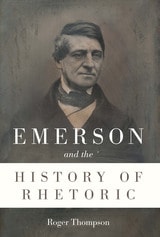
Emerson and the History of Rhetoric
Roger Thompson
Southern Illinois University Press, 2017
Moving beyond dominant literary critical thinking, Thompson argues that for Emerson, rhetoric was both imaginative and nonsystematic. This book covers the influences of rhetoricians from a range of periods on Emerson’s model of rhetoric. Drawing on Emerson’s manuscript notes, journal entries, and some of his rarely discussed essays and lectures as well as his more famous works, the author bridges the divide between literary and rhetorical studies, expanding our understanding of this iconic nineteenth-century man of letters.
Empathy and the Other
Difference, Connection, and the Teaching of WritingLisa Blankenship
Utah State University Press, 2026
Empathy and the Other: Difference, Connection, and the Teaching of Writing focuses on the theoretical basis for empathy as a pedagogical concern, adding to important conversations happening in writing studies about how to foster empathetic understanding and practices for teachers and students. It offers ways for higher education classrooms to become sites for the cultivation of a critical form of empathy that can help address the most important challenges of our time.
Drawing on the study of empathy in rhetorical theory and related fields, teacher-scholars from a variety of institutions and backgrounds offer pedagogical rationales and approaches for fostering empathetic, inclusive, and antiracist pedagogies centered around five key themes related to empathetic teaching: difference, citizenship, storytelling, assessment, and process. A reflective and critical approach to empathetic teaching—as presented by the authors in this collection—can begin to address forces of social division, particularly in the ways we read and write about others. Teaching grounded in empathetic principles can offer students ways of relating to one another across cultural, religious, class, ethnic, political, and ideological differences.
Empathy and the Other is a companion volume to Enacting Empathy: Stories and Strategies from the Writing Classroom, which features vignettes and praxis pieces focused on classroom experiences and reflections on teaching empathy. The two collections may stand alone or be read together and are of great interest to writing teachers and graduate students invested in social justice in the classroom.
Empathy by Design
Empathy-Driven Marketing for LibrariesSabine Jean Dantus
Assoc of College & Research Libraries, 2024
Empathy by Design: Empathy-Driven Marketing for Libraries offers step-by-step strategies for understanding why people visit the library and tailoring your marketing with personalization that resonates with users on a deeper level. It provides real-world solutions for understanding your target audience through empathy and demonstrates how to gather and use data to develop messages and programming that fosters meaningful connections and engagement. You’ll find ideas for understanding the customer journey, creating an empathic library brand, and creating empathy-driven marketing strategies, campaigns, content, and tactics.
Today’s library marketers should both understand the effectiveness of using empathy in marketing and use it as a radical tool for advancing our profession’s values of diversity, equity, inclusion, and access. The strategies outlined in Empathy by Design can give you the tools you need to make your marketing—and your library—more targeted and empathic.
Empirical Models of Phonological Networks and Their Growth in English
Eva Maria Luef
Karolinum Press, 2025
Network science has become increasingly popular in the cognitive sciences, including linguistics. Phonological Networks and Their Growth in Second Languages is the first to explore lexical networks in learners of English as a second language with a focus on the relationships between phonological word forms in the mental lexicon. It highlights the contributions that network science can make to the study of lexical organization of second languages.
Within the theoretical framework of evolving networks, lexical learning is seen as a process of network growth. The book models the lexicon as a growing phonological network that increases in size as language users advance through second language proficiency stages. As such, the analysis of specific growth algorithms (such as preferential attachment) accounts for observed mechanisms of lexical acquisition. Empirical models of evolving lexical networks can help shed light on the structural changes occurring as the second language lexicon expands.
Empirical and Experimental Methods in Cognitive/Functional Research
Edited by Sally Rice and John Newman
CSLI, 2010
Empirical and Experimental Methods in Cognitive/Functional Research consists of selected papers from the seventh meeting of the Conceptual Structure, Discourse, and Language Conference, held at the University of Alberta in October 2004. The papers fall into five main categories, reflecting the cognitive and functional orientation of the conference: reciprocity between lexis and syntax, semantic factors affecting form patterning, grammaticalization of basic verbs, form/meaning pairings in discourse, and experimental investigations of language/mind and language/use interactions. In addition, a plenary paper by Nick Evans on complex events, propositional overlay, and the special status of reciprocal clauses is included.
Empowering the Community College First-Year Composition Teacher
Pedagogies and PoliciesMeryl Siegal and Betsy Gilliland
University of Michigan Press, 2021
This volume is an inquiry into community college first-year pedagogy and policy at a time when change has not only been called for but also mandated by state lawmakers who financially control public education. It also acknowledges new policies that are eliminating developmental and remedial writing courses while keeping mind that, for most community college students, first-year composition serves as the last course they will take in the English department toward their associate’s degree.
Chapters focusing on pedagogy and policy are integrated within cohesively themed parts: (1) refining pedagogy; (2) teaching toward acceleration; (3) considering programmatic change; and (4) exploring curriculum through research and policy. The volume concludes with the editors’ reflections regarding future work; a glossary and reflection questions are included.
This volume also serves as a call to action to change the way community colleges attend to faculty concerns. Only by listening to teachers can the concerns discussed in the volume be addressed; it is the teachers who see how societal changes intersect with campus policies and students’ lives on a daily basis.
Empowerment and Black Deaf Persons
Lindsay Moeletsi Dunn
Gallaudet University Press, 2024
This is the inaugural volume in the Early Papers in Deaf Studies series, which will consist of reissued works originally published by the Gallaudet University College for Continuing Education but long out of print. The aim of this series is to restore these foundational papers to the scholarly community. Empowerment and Black Deaf Persons is available in both print and open digital formats, ensuring broad access to this important contribution to the literature.

Empty Names, Fiction and the Puzzles of Non-Existence
Edited by Anthony Everett and Thomas Hofweber
CSLI, 2000
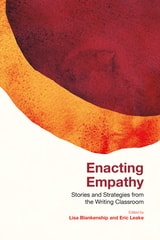
Enacting Empathy
Stories and Strategies from the Writing ClassroomLisa Blankenship
Utah State University Press, 2026
Featuring vignettes and praxis pieces focused on classroom experiences and reflections on teaching empathy, Enacting Empathy: Stories and Strategies from the Composition Classroom provides inspiration and consideration of how and why teachers might adopt an emphasis on empathy. Contributors locate empathy in the particulars of writing assignments, classroom discussions, responses to students, interpretations of texts, and connections with communities.
The challenges and means of understanding one another—as we encounter one another in words, images, and texts—are a central focus of the writing classroom. Teaching for and about empathy has become only more important as we have experienced increased social division, greater recognition and attention to identity, and an emphasis on attending to personal experiences and stories as part of larger efforts to support social justice. With its possibilities for critical reflection and revision, writing is a key tool for developing empathy. Empathy likewise can make us more present, accountable, and socially engaged in our writing. This collection explores how empathy might best be put into practice in the composition classroom, featuring teaching resources, assignment designs, and reflections on empathy and teaching writing for diverse institutional contexts.
The first edited collection in at least thirty years to present strategies for teaching empathy in composition classrooms, Enacting Empathy is a companion volume to Empathy and the Other: Difference, Connection, and the Teaching of Writing, which focuses on the theoretical basis for empathy as a pedagogical concern. The two volumes may stand alone or be read together and are of great interest to writing teachers and graduate students invested in social justice in the classroom.

Enduring Digital Damage
Rhetorical Reckonings for Planetary SurvivalDustin Edwards
University of Alabama Press, 2025
Networks the intricate relationship between rapidly advancing digital technologies and environmental degradation and reveals the costs of our globally connected world.
Taking a step back from the screens of electronic devices and exploring the profound impacts of digital technologies on our environment, Enduring Digital Damage lifts the veil on the “hidden costs” in our modern technological world.
Dustin Edwards traces key moments in the lifecycle of technology—such as the extraction of raw materials to the disposal of electronic waste—to uncover the often overlooked consequence of our digital age. He illuminates how data centers, mining operations, and other digital infrastructures contribute to environmental harm and how the rapidly increasing demand for land use and water access is essential to sustain our growing digital needs. Weaving together narratives of technological advancement and ecological destruction, Edwards presents a comprehensive analysis of the true cost of our digital lives. By drawing on case studies, cultural critique, and a critical examination of labor and sustainability, Enduring Digital Damage reveals the deeper histories and ongoing struggles that make our digital lives possible, urging readers to imagine the possibility of a less harmful and extractive world.