Results by title
78 books match the query 'Legends' and 2 start with e
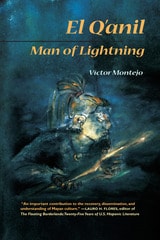
El Q'anil
Man of LightningVictor Montejo
University of Arizona Press, 2001
The legend of El Q'anil, the "Man of Lightning," stands alongside such classic Maya literary artifacts as Popol Vuh and Chilam Balam but has been preserved only through the oral tradition of the Jakaltek Maya. In this tale, the young man Xhuwan Q'anil brings lightning to his people in order to save them from destruction. He undertakes a journey of adventure, participates in a great war, and is subsequently immortalized. It is a story that all Jakaltek children learn, one that reinforces their identity by showing that their people have a hero who lives in each Jakaltek Maya today. Víctor Montejo, who was raised in Maya culture and knows its lore intimately, compiled several versions of the legend in Guatemala during the height of paramilitary operations in that country in the 1980s. His contemporary reconstruction lovingly preserves this legend and reflects concern for the survival of Maya culture in the face of oppression. Just as the Maya people of western Guatemala continue to pray for peace at the sanctuary of Q'anil, the legend of the Man of Lightning affirms a culture's enduring traditions. In this edition, the text is presented in English, Spanish, and Jakaltek Maya to secure its deserved place in world literature.
[more]
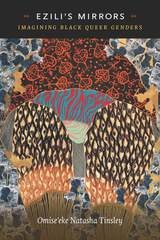
Ezili's Mirrors
Imagining Black Queer GendersOmise'eke Natasha Tinsley
Duke University Press, 2018
From the dagger mistress Ezili Je Wouj and the gender-bending mermaid Lasiren to the beautiful femme queen Ezili Freda, the Ezili pantheon of Vodoun spirits represents the divine forces of love, sexuality, prosperity, pleasure, maternity, creativity, and fertility. And just as Ezili appears in different guises and characters, so too does Omise’eke Natasha Tinsley in her voice- and genre-shifting, exploratory book Ezili's Mirrors. Drawing on her background as a literary critic as well as her quest to learn the lessons of her spiritual ancestors, Tinsley theorizes black Atlantic sexuality by tracing how contemporary queer Caribbean and African American writers and performers evoke Ezili. Tinsley shows how Ezili is manifest in the work and personal lives of singers Whitney Houston and Azealia Banks, novelists Nalo Hopkinson and Ana Lara, performers MilDred Gerestant and Sharon Bridgforth, and filmmakers Anne Lescot and Laurence Magloire—none of whom identify as Vodou practitioners. In so doing, Tinsley offers a model of queer black feminist theory that creates new possibilities for decolonizing queer studies.
[more]