Results by title
1228 books match the query 'Library & Information Science' and 38 start with e

E-Book Platforms for Libraries
Mirela American Library Association
American Library Association, 2013
Early Literacy Storytimes @ your library®
Partnering with Caregivers for SuccessSaroj Nadkarni Ghoting
American Library Association, 2006
Early Literacy Storytimes @ your library®
Partnering with Caregivers for SuccessSaroj Nadkarni Ghoting
American Library Association, 0
Ecology, Economy, Equity
The Path to a Carbon-Neutral LibraryMandy Henk
American Library Association, 2014
Effective Difficult Conversations
Catherine B. Soehner
American Library Association, 2017
Electronic Resource Management Systems
A Workflow ApproachElsa K. Anderson
American Library Association, 2014

Elusive Archives
Material Culture in FormationMartin Brückner
University of Delaware Press, 2021
The essays that comprise Elusive Archives raise a common question: how do we study material culture when the objects of study are transient, evanescent, dispersed or subjective? Such things resist the taxonomic protocols that institutions, such as museums and archives, rely on to channel their acquisitions into meaningful collections. What holds these disparate things together here are the questions authors ask of them. Each essay creates by means of its method a provisional collection of things, an elusive archive. Scattered matter then becomes fixed within each author’s analytical framework rather than within the walls of an archive’s reading room or in cases along a museum corridor.
This book follows the ways in which objects may be identified, gathered, arranged, conceptualized and even displayed rather than by “discovering” artifacts in an archive and then asking how they came to be there. The authors approach material culture outside the traditional bounds of learning about the past. Their essays are varied not only in subject matter but also in narrative format and conceptual reach, making the volume accessible and easy to navigate for a quick reference or, if read straight through, build toward a new way to think about material culture.
Embedded Business Librarianship for the Public Librarian
Barbara A. Alvarez
American Library Association, 2016

Embedded Librarians
Moving Beyond One-Shot InstructionCassandra Kvenild
Assoc of College & Research Libraries, 2011
Embedded Librarianship
Tools and PracticesBuffy J. American Library Association
American Library Association, 0
Embedding Librarianship In Learning Management Systems
Beth E. Tumbleson
American Library Association, 2013
Embracing Change
Alternatives to Traditional Research Writing AssignmentsSilke Higgins
American Library Association, 2022
Embracing Change: Alternatives to Traditional Research Writing Assignments collects existing alternative assignments from librarians and classroom instructors and examines their benefits and drawbacks, impact on various student populations, and the support needed to make them successful. In two parts—Analog-Driven Assignments and Technology-Driven Assignments—authors offer a wealth of insight into the theory and practice of utilizing alternative assignments. Case studies detail the development of assignments, their implementation, lessons learned, and assessment, and provide examples and reference materials for incorporating or refining your own alternative assignments. Projects covered include:
- how students engage with writing gray literature
- producing a local voting guide
- creating museum-level exhibit labels
- composing and printing original poems using a letterpress
- developing finding aids
- writing a children’s book
- creating infographics and lightning talk videos
- learning digital literacy using podcasts
- a variety of digital humanities projects
Empathy by Design
Empathy-Driven Marketing for LibrariesSabine Jean Dantus
Assoc of College & Research Libraries, 2024
Empathy by Design: Empathy-Driven Marketing for Libraries offers step-by-step strategies for understanding why people visit the library and tailoring your marketing with personalization that resonates with users on a deeper level. It provides real-world solutions for understanding your target audience through empathy and demonstrates how to gather and use data to develop messages and programming that fosters meaningful connections and engagement. You’ll find ideas for understanding the customer journey, creating an empathic library brand, and creating empathy-driven marketing strategies, campaigns, content, and tactics.
Today’s library marketers should both understand the effectiveness of using empathy in marketing and use it as a radical tool for advancing our profession’s values of diversity, equity, inclusion, and access. The strategies outlined in Empathy by Design can give you the tools you need to make your marketing—and your library—more targeted and empathic.
Engaged Library
High-Impact Educational Practices in Academic LibrariesJoan Ruelle
Assoc of College & Research Libraries, 2020
Engaging Babies in the Library
Putting Theory into PracticeDebra J. Knoll
American Library Association, 2016
Enhancing Teaching and Learning
A Leadership Guide for School LibrariansJean Donham
American Library Association, 2013
Enhancing Teaching and Learning
A Leadership Guide for School LibrariansJean Donham
American Library Association, 2020
Rapid change calls for informed leadership. The goal of Donham’s text has always been to help school library professionals make a difference in the educational experience and academic attainment of students in their schools. With the addition of new co-author Sims, a junior high school librarian, this newly revised fourth edition rises to the challenge with updates and enhancements that confirm its value as an important resource for both LIS students and current school librarians. Covering all aspects of the school system, including students, curriculum and instruction, principals, district administration, and the community, it demonstrates how to interact and collaborate in order to integrate the school library program throughout these environments. Inside, readers will find
- myriad real-world examples of issues in school librarianship and evidence-based practice;
- discussion of such urgent topics as the educational needs of the iGen (those born between 1995 and 2012), changing reading habits, the influence of the media, and news literacy and other issues related to the proliferation of fake news;
- updates which touch upon the new AASL Standards, inquiry-based learning, assessment, and library program evaluation;
- specific tactics for establishing the library program as an active player in teaching and learning;
- an overview of education-related technology such as course management systems, the virtual library, makerspaces, information presentation and data representation tools like ScreenCast and Google Maps, online home-school communication, and online student safety and privacy; and
- end-of-chapter discussion scenarios that explore opportunities for the practical application of concepts.
Reflecting changes—professional, theoretical, legal, and political—in both the library field and education, this new edition of a groundbreaking school library text will equip readers to be leaders at their schools and in their communities.
Environments For Student Growth And Development
LibraryLisa Hinchliffe
Assoc of College & Research Libraries, 2012
Envisioning the Framework
Jannette Finch
Assoc of College & Research Libraries, 2021
Envisioning the Framework offers a visual opportunity for thought, discovery, and sense-making of the Framework and its concepts. Seventeen chapters packed with full-color illustrations and tables explore topics including:
- LibGuides creation through conceptual integration with the Framework
- fostering interdisciplinary transference
- the convergence of metaliteracy with the Framework
- teaching multimodalities and data visualization
- mapping a culturally responsive information literacy journal for international students
Twenty-first-century information literacy involves the metaliterate learner, reflects seismic changes in the duties and roles of teaching librarians, requires new partnerships with faculty and instructional designers, and emphasizes continuous assessment practices. Envisioning the Framework can help you use symbols and visuals for deeper understanding of the Framework, to map the Framework with teaching and learning objectives, and to tell a coherent story to students featuring the frames and the Framework.
Escape Rooms and Other Immersive Experiences in the Library
Ellyssa Kroski
American Library Association, 2018
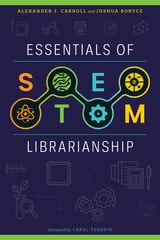
Essentials of STEM Librarianship
Alexander J. Carroll and Joshua Borycz; Foreword by Carol Tenopir
American Library Association, 2025
Amid overall falling enrollment figures for higher education, the growing success of STEM programs bucks the trend. Ensuring that these programs flourish has become a priority for administrators at the provost level and above. But this emphasis on STEM poses challenges for academic libraries, many of which have instead historically focused on the humanities and social sciences. This primer helps to fill that knowledge gap, demystifying the scientific teaching and research processes for LIS students and current academic librarians alike. Regardless of their background or level of experience, readers of this guide will
- gain an overview of the contemporary STEM teaching and research enterprise by learning about the roles and needs of STEM community members such as program administrators, tenure track principal investigators (PIs), non-tenure track teaching faculty, research staff, graduate students, and undergraduate students;
- become familiarized with the “research group,” the organizational structure through which these different personas come together to advance the university research enterprise;
- get pointers on building teaching and learning programs that enhance student success and designing research support services that integrate into STEM researchers' actual workflows;
- receive proven outreach strategies for engaging STEM communities;
- learn approaches for incorporating AI (artificial intelligence) and LLMs (large language models) into information literacy programs for scientists and engineers; and
- discover how library leaders can support both nascent and established STEM librarians to advance STEM education and research at their local institutions.
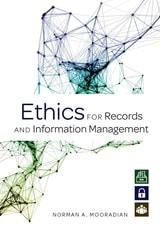
Ethics for Records and Information Management
Norman A. Mooradian
American Library Association, 2018
The scope and reach of information, driven by the explosive growth of information technologies and content types, has expanded dramatically over the past 30 years. The consequences of these changes to records and information management (RIM) professionals are profound, necessitating not only specialized knowledge but added responsibilities. RIM professionals require a professional ethics to guide them in their daily practice and to form a basis for developing and implementing organizational policies, and Mooradian’s new book provides a rigorous outline of such an ethics. Taking an authoritative principles/rules based approach to the subject, this book comprehensively addresses
- the structure of ethics, outlining principles, moral rules, judgements, and exceptions;
- ethical reasoning, from meaning and logic to dilemmas and decision methods;
- the ethical core of RIM, discussing key topics such as organizational context, the positive value of accountability, conflicts of interest, and confidentiality;
- important ethical concerns like copyright and intellectual property, whistleblowing, information leaks, disclosure, and privacy; and
- the relationship between RIM ethics and information governance.

Ethnic Studies in Academic and Research Libraries
Raymond Pun
Assoc of College & Research Libraries, 2021
Ethnic Studies in Academic and Research Libraries serves as a snapshot of critical work that library workers are doing to support ethnic studies, including areas focusing on ethnic and racial experiences across the disciplines. Other curriculums or programs may emphasize race, migration, and diasporic studies, and these intersecting areas are highlighted to ensure work supporting ethnic studies is not solely defined by a discipline, but by commitment to programs that uplift underserved and underrepresented ethnic communities and communities of color. Twenty chapters are broken into three thorough sections:
- Instruction, Liaison Engagement, and Outreach
- Collections Projects and Programs
- Collaborations, Special Projects, and Community Partnerships
Evaluating Teen Services and Programs
Sarah Flowers
American Library Association, 2012
Even More Great Ideas for Libraries and Friends
Sally Gardner Reed
American Library Association, 2008
Every Child Ready for School
Helping Adults Inspire Young Children to LearnDorothy Stoltz
American Library Association, 2013
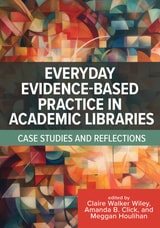
Everyday Evidence-Based Practice in Academic Libraries
Case Studies and ReflectionsClare Walker Wiley
Assoc of College & Research Libraries, 2023
Everyday Evidence-Based Practice in Academic Libraries: Case Studies and Reflections collects excellent, thorough examples of EBP across functional areas of academic libraries and includes many evidence types in a variety of contexts. Five sections explore:
- Understanding Users
- Leadership and Management
- Instruction and Outreach
- Collections
- Open Initiatives
Everyday Evidence-Based Practice in Academic Libraries offers high-quality evidence from a variety of perspectives and inspires a commitment to evidence-based practice in your day-to-day work and library culture.
Everyday HR
A Human Resources Handbook for Academic Library StaffGail Munde
American Library Association, 2013
Excellent Books for Early and Eager Readers
Kathleen T. Isaacs
American Library Association, 2016
Exhibits in Archives and Special Collections Libraries
Jessica L. Lacher-Feldman
American Library Association, 2013
Experiencing America's Story through Fiction
Historical Novels for Grades 7-12Hilary Susan Crew
American Library Association, 2014

Exploring Digital Cultural Heritage
Access, Use, Value and SustainabilityEdited by Eirini Goudarouli, Anna-Maria Sichani, and Jane Winters
University of London Press, 2026
An accessible starting point for those interested in the past, present, and future of digital cultural heritage.
The digitization of cultural heritage has reshaped humanities research and professional practice, though its full impact is still emerging. As more cultural heritage becomes born-digital, new archives and collections introduce complexity, challenges, and shared methods across sectors. Exploring Digital Cultural Heritage examines interpretations, contexts, and uses across four themes—access, use and reuse, value(s), and sustainability—spanning digitized and born-digital materials. Drawing on case studies and practical examples, it provides an overview of the concepts, processes, and technologies shaping digital cultural heritage, as well as its future challenges and directions.
Exploring Discovery
The Front Door to Your Library's Licensed and Digitized ContentKenneth J. Varnum
American Library Association, 2016
Exploring Environmental Science with Children and Teens
Eileen G. Harrington
American Library Association, 2014
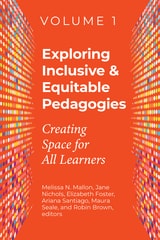
Exploring Inclusive & Equitable Pedagogies
Creating Space for All LearnersMelissa Mallon
Assoc of College & Research Libraries, 2023
In Exploring Inclusive & Equitable Pedagogies: Creating Space for All Learners, seven thorough sections across two volumes examine:
- Anti-Racist Approaches
- Intentional Information Literacy
- Engendering Care and Empathy
- Community Building
- Universal Design for Learning: An Important Benchmark
- Instructor Identity and Positionality
- Professional Development
Chapters cover topics including dismantling, reexamining, and reconstructing notions of authority in information literacy instruction; teaching technology inclusively; using primary sources to research queer and feminist histories; cocreating knowledge practices with students; prioritizing accessibility in synchronous and asynchronous learning environments; cultural humility, funds of knowledge, and information literacy instruction with first-generation students; designing and managing inclusive group projects; and much more.
To become the instructors our students need, we must adopt the mindsets and develop the underlying skills to enact inclusive and equitable teaching and learning. Exploring Inclusive & Equitable Pedagogies offers reflections, practices, and models that deepen our collective understanding of equitable and inclusive theories and practices and present new grounding for both our individual teaching and our instruction programs.
Exploring Inclusive & Equitable Pedagogies
Creating Space for All LearnersMelissa Mallon
Assoc of College & Research Libraries, 2023
In Exploring Inclusive & Equitable Pedagogies: Creating Space for All Learners, seven thorough sections across two volumes examine:
- Anti-Racist Approaches
- Intentional Information Literacy
- Engendering Care and Empathy
- Community Building
- Universal Design for Learning: An Important Benchmark
- Instructor Identity and Positionality
- Professional Development
Chapters cover topics including dismantling, reexamining, and reconstructing notions of authority in information literacy instruction; teaching technology inclusively; using primary sources to research queer and feminist histories; cocreating knowledge practices with students; prioritizing accessibility in synchronous and asynchronous learning environments; cultural humility, funds of knowledge, and information literacy instruction with first-generation students; designing and managing inclusive group projects; and much more.
To become the instructors our students need, we must adopt the mindsets and develop the underlying skills to enact inclusive and equitable teaching and learning. Exploring Inclusive & Equitable Pedagogies offers reflections, practices, and models that deepen our collective understanding of equitable and inclusive theories and practices and present new grounding for both our individual teaching and our instruction programs.
Exploring Inclusive & Equitable Pedagogies
Creating Space for All Learners, 2 volume setMelissa Mallon
Assoc of College & Research Libraries, 2023
In Exploring Inclusive & Equitable Pedagogies: Creating Space for All Learners, seven thorough sections across two volumes examine:
- Anti-Racist Approaches
- Intentional Information Literacy
- Engendering Care and Empathy
- Community Building
- Universal Design for Learning: An Important Benchmark
- Instructor Identity and Positionality
- Professional Development
Chapters cover topics including dismantling, reexamining, and reconstructing notions of authority in information literacy instruction; teaching technology inclusively; using primary sources to research queer and feminist histories; cocreating knowledge practices with students; prioritizing accessibility in synchronous and asynchronous learning environments; cultural humility, funds of knowledge, and information literacy instruction with first-generation students; designing and managing inclusive group projects; and much more.
To become the instructors our students need, we must adopt the mindsets and develop the underlying skills to enact inclusive and equitable teaching and learning. Exploring Inclusive & Equitable Pedagogies offers reflections, practices, and models that deepen our collective understanding of equitable and inclusive theories and practices and present new grounding for both our individual teaching and our instruction programs.
Extensible Processing for Archives and Special Collections
Reducing Processing BacklogsDaniel A. Santamaria
American Library Association, 2015