Results by title
1106 books match the query 'Memoirs' and 20 start with e
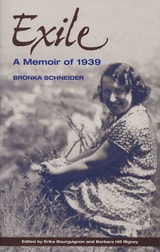
EXILE
A MEMOIR OF 1939Bronka Schneider Edited with forewords by Erika Bourguignon and Barbara Hill Rigney
The Ohio State University Press, 1998
Bronka Schneider and her husband, Joseph, were two of the thirty thousand Austrian Jews admitted as refugees to Great Britain between March 1938 and 2 September 1939. It was not until 1960, however, that Schneider wrote her memoir about the year she spent as a housekeeper, with Joseph as a butler, in a Scottish castle.
Schneider tells of daily encounters—with her employers, the English lady and her husband, a retired British civil servant who had spent many years in India; the village locals; other refugees; and a family of evacuees from the slums of Glasgow.
The editors have divided this memoir into chapters, adding headlines from the London Times as epigraphs. These headlines, reporting the escalating events of World War II, are in stark contrast to daily activities of the residents of this isolated region of Scotland. A commentary by Erika Bourguignon provides historical, political, and cultural background of this period.
Each One Teach One
Up and Out of Poverty, Memoirs of a Street ActivistRon Casanova and Stephen Blackburn
Northwestern University Press, 2010
Underlying Each One Teach One, with its vivid cast of characters and intimate descriptions of Harlem and other urban areas, is the profound sense that no matter what your circumstance, you can use your past experience to help others. Ultimately, Casanova's story is a message of hope for the future and for the possibility of self-sufficiency and self-empowerment for each individual.
Each One Teach One
Up and Out of Poverty; Memoirs of a Street ActivistRon Casanova as told to Stephen Blackburn
Northwestern University Press, 1996
Each One Teach One recounts Ron Casanova’s struggle out of poverty, homelessness, and drug addiction to find dignity and purpose in life. Through his own awakening, this Black Puerto Rican activist ultimately finds his salvation in helping other people. Placed in an orphanage on Staten Island at the age of three, Casanova faced overwhelming odds. His story illuminates significant twentieth-century protests, including the 1988 riot at Tompkins Square Park in Manhattan, the “Housing Now” march of the homeless on Washington, DC, in 1989, and community takeovers of housing in Kansas City, New York, and Philadelphia.
Underlying Each One Teach One, with its vivid cast of characters and intimate descriptions of Harlem, the Lower East Side, and Tent City, is the profound sense that, no matter what your circumstance, you can use your experience to help others. Ultimately, Casanova’s story demonstrates the possibility of self-sufficiency and self-empowerment. Amid today’s economic crisis and rising homelessness, Casanova’s story brings a message of hope.
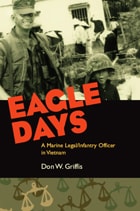
Eagle Days
A Marine Legal/Infantry Officer in VietnamDonald W. Griffis
University of Alabama Press, 2007
A rare Vietnam memoir from the crossroads of combat and military justice.
Much has been written about America’s war in Vietnam, and an enduring and troubling subtext is the composition of the body of soldiers that made up the U.S. troop deployment: from the initially well-trained and disciplined group of largely elite units that served in the mid-sixties to what has been termed an “armed mob” by the end of that decade and into the early 1970s. Drug use, insubordination, racial antagonism that often became violent, theft and black market dealing, and even “fragging” (murder of officers and senior noncoms by disgruntled troops) marred the record of the U.S. military presence. Don Griffis served in the twin roles of legal officer charged at various times with the task of both defending and prosecuting servicemen, while at the same time leading combat patrols in “search and destroy” missions against the Viet Cong and North Vietnamese enemy. Eagle Days is a remarkable account of Griffis’ personal record of experiencing what the military should do best—meet, engage, and defeat the enemy—and what it becomes when esprit de corps, discipline, and a sense of purpose decay.
Eating Lightbulbs and Other Essays
Steve Fellner
The Ohio State University Press, 2021
Echoes of Cabrini-Green
Letters to My MotherRudolph Elliot Willis
Southern Illinois University Press, 2026
A powerful memoir of love, survival, and resilience, told through intimate letters
In Echoes of Cabrini-Green, Rudolph Elliot Willis tells the story of his journey from Chicago’s most notorious public housing project to the halls of academia and medicine. Framed as heartfelt letters written after his mother’s death, this deeply personal narrative reflects on a childhood shaped by systemic poverty, racism, and uncertainty, showing how faith, education, and resilience can remake lives.
Willis recalls the daily struggles of growing up Black in a family of ten children in Cabrini-Green—hunger, fear, and the constant threat of violence—alongside glimpses of neighborly solidarity, faith, and perseverance. He watched his father, a decorated veteran, retreat into silence and alcoholism while his mother’s frustration flared into anger. Throughout it all, she remained a moral compass. Her faith in God, unwavering work ethic, and quiet dignity gave her children a vision of something better.
A summer at a Christian camp introduced Willis to serenity and the grounding power of faith. A passion for reading and a gift for learning propelled him to an elite high school, where he wrestled with the dissonance between two worlds. But because of his mother’s enduring belief in education as a shield against the harsh realities of the world, he was ultimately able to thrive.
Willis went on to graduate from Northwestern University and earn a medical degree, eventually becoming an oncologist and scientific researcher. In these letters, he shares with his mother his successes and setbacks, the triumphs and struggles of his siblings, his grief following their deaths, and the haunting demolition of Cabrini-Green—the place that shaped him and so many others. Past, present, and future collapse: the crisp white coats and hallowed halls of medical school give way to the stained cinderblocks and echoing gunshots of Cabrini-Green. Willis looks into the eyes of patients and finds his siblings staring back at him. He realizes Cabrini-Green is not simply a memory—it is part of his identity, the crucible that formed him into who he is.
With lyrical prose and unflinching honesty, Echoes of Cabrini-Green is an invitation to imagine change in communities too often defined only by hardship; a testament to the power of faith, education, and personal resolve to transform lives; and a call to recognize the dignity and potential that endure even in the most neglected places.

Eight Prison Camps
A Dutch Family in Japanese JavaDieuwke Wendelaar Bonga
Ohio University Press, 1996
Eldest daughter of eight children, the author grew up in Surakarta, Java, in what is now Indonesia. In the months following the bombing of Pearl Harbor, however, Dutch nationals were rounded up by Japanese soldiers and put in internment camps. Her father and brother were sent to separate men’s camps, leaving the author, her mother, and the five younger children in the women’s camp. In this and later seven other prison camps in central Java, their lives gradually deteriorated from early days of fear and crowding to near starvation, forced labor, beatings, and seeing others disappear or die. On the family’s return to Holland after the war, they found a nation recovering from German occupation and largely ignorant of the horror of the Far East experience.
El chico más duro que conocimos
El viejo nuevo Oeste: Una historia personalFrank Bergon
University of Nevada Press, 2027
Del autor aclamado por la crítica Frank Bergon llega una nueva narración personal sobre el Valle de San Joaquín en California. Este libro que acompaña a Two-Buck Chuck & The Marlboro Man nos devuelve a un viejo Oeste que se funde con las realidades del nuevo Oeste, donde el cambio rápido es un rasgo común y los recuerdos son de belleza rural. A pesar de las transformaciones físicas provocadas por la tecnología y la modernidad en el siglo XXI, siguen existiendo elementos de una forma de pensar más antigua, y Bergon rastrea su presencia utilizando experiencias de su propia familia y amigos.
La camaradería comunitaria, el amor por la tierra y sus alimentos, y la alegría por el trabajo duro bien hecho describen las vidas occidentales ignoradas o mal representadas en la mayoría de las historias sobre California y el Oeste. Sin embargo, la nostalgia no impulsa el regreso intelectual de Frank Bergon a ese mundo. También prevalecía una cultura de la lucha, la ignorancia sobre la adicción al alcohol, el trabajo brutal, y una mentalidad feudal que creaba un dolor que era mejor perder y dar por perdido.
A través de todo ello, lo que emerge de sus retratos y ensayos es una revelación de la vida en los pueblos y ranchos rurales del Oeste. Un lugar en el que se acelera la forma americana de extirpar el pasado y alterar violentamente la tierra. Lo que Bergon ha escrito es el retrato de un pasado y unas gentes que dieron forma al país que él llamó hogar.
Ella Elgar Bird Dumont
An Autobiography of a West Texas PioneerEdited by Tommy J. Boley
University of Texas Press, 1988
A crack shot, expert skinner and tanner, seamstress, sculptor, and later writer—a list that only hints at her intelligence and abilities—Ella Elgar Bird Dumont was one of those remarkable women who helped tame the Texas frontier. First married at sixteen to a Texas Ranger, she followed her husband to Comanche Indian country in King County, where they lived in a tepee while participating in the final slaughter of the buffalo. Living off the land until the frontier was opened for ranching, Ella and Tom Bird typified the Old West ideals of self-sufficiency and generosity, with a hesitancy to complain about the hard life in the late 1800s.
Yet, in one important way, Ella Dumont was unsuited for life on the frontier. Endowed with an instinctive desire and ability to carve and sculpt, she was largely prevented from pursuing her talents by the responsibilities of marriage and frontier life and later, widowhood with two small children. Even though her second marriage, to Auguste Dumont, made life more comfortable, the realities of her existence still prevented the fulfillment of her artistic longings.
Ella Bird Dumont’s memoir is rich with details of the frontier era in Texas, when Indian depredations were still a danger for isolated settlers, where animals ranged close enough to provide dinner and a new pair of gloves, and where sheer existence depended on skill, luck, and the kindness of strangers. The vividness and poignancy of her life, coupled with the wealth of historical material in the editor’s exhaustive notes, make this Texas pioneer’s autobiography a very special book.
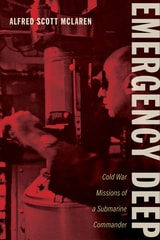
Emergency Deep
Cold War Missions of a Submarine CommanderAlfred Scott McLaren
University of Alabama Press, 2021
A compelling naval memoir of Arctic submarine duty—operations, engineering realities, and split‑second leadership choices in Emergency Deep.
Captain Alfred Scott McLaren served as commander of the USS Queenfish (SSN 651) from September 1969 to May 1973, the very height of the Cold War. As commander, McLaren led at least six major clandestine operations, including the first-ever exploration of the entire Siberian Continental Shelf: a perilous voyage detailed in his previous book Unknown Waters.
Emergency Deep: Cold War Missions of a Submarine Commander conveys the entire spectrum of Captain McLaren’s experiences commanding the USS Queenfish, mainly in the waters of the Russian Far East and also off Vietnam. McLaren offers a riveting and deeply human story that illuminates the intensity and pressures of commanding a nuclear attack submarine in some of the most difficult circumstances imaginable.
Relying on his own notes and records, as well as discussions with former officers and shipmates, McLaren focuses on operational matters both great and small. He recounts his unique perspectives on attack-submarine tactics and exploratory techniques in high-risk or uncharted areas, matters of leadership and team-building and the morale of his crews, and the innumerable and often unforeseen ways his philosophy of command played out on a day-to-day basis, with consequences that ran the gamut from the mundane to the dire and life-threatening.
Readers are also treated to significant new information and insight on submarine strategy, maneuvers, and culture. Such details illuminate and bring to life, with both great humor and gravitas, the intensity and pressures on those engaged in covert missions on nuclear attack submarines.
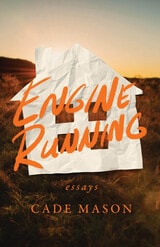
Engine Running
EssaysCade Mason
The Ohio State University Press, 2022
Engine Running explores debut author Cade Mason’s gradual distancing from home and old selves alongside an increasingly fractured family doing the same. Starting at the beginning of his parents’ love and working past its end, he combs through memory to piece together a portrait of a family then and now: of a father, reeling after a blindsiding divorce; of a mother, anxious to move on; of a sister, caught in the crossfire; and of a son, learning to embrace his sexuality even as he fears that his own loves may have deepened the rift between his parents.
Lush and innovative, these essays contemplate childhood memories and family secrets, religion and queerness in the rural South, and the ways rituals and contours of manhood are passed through generations. Most of all, we feel with Mason what it is to grapple with and love a place even as you yearn to leave.
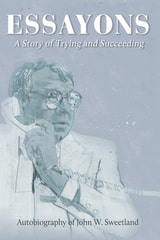
Essayons
Autobiography of John W. SweetlandJohn W. Sweetland
Michigan Publishing Services, 2019
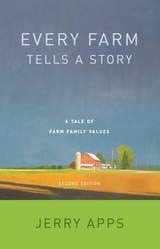
Every Farm Tells a Story
A Tale of Family ValuesJerry Apps
Wisconsin Historical Society Press, 2018
“Do your chores without complaining. Show up on time. Do every job well. Always try to do better. Never stop learning. Next year will be better. Care for others, especially those who have less than you. Accept those who are different from you. Love the land.”
In this paperback edition of a beloved Jerry Apps classic, the rural historian captures the heart and soul of life in rural America. Inspired by his mother’s farm account books—in which she meticulously recorded every farm purchase—Jerry chronicles life on a small farm during and after World War II. Featuring a new introduction exclusive to this 2nd edition, Every Farm Tells a Story reminds us that, while our family farms are shrinking in number, the values learned there remain deeply woven in our cultural heritage.
Evidence of My Existence
Jim Lo Scalzo
Ohio University Press, 2007
From a leper colony in India to an American research station on the Antarctic Peninsula, from the back rooms of the White House to the battlefields of Iraq and Afghanistan, Evidence of My Existence tells a unique and riveting story of seventeen years spent racing from one photo assignment to the next. It is also a story of photojournalism and theconsequences of obsessive wanderlust.
When the book opens, Jim Lo Scalzo is a blur to his wife, her remarkable tolerance wearing thin. She is heading to the hospital with her second miscarriage, and Jim is heading to Baghdad to cover the American invasion of Iraq. He hates himself for this—for not giving her a child, for deserting her when she soobviously needs him, for being consumed by his job—but how to stop moving? Sure, there have been some tough trips. He’s been spit on by Mennonites in Missouri, by heroin addicts in Pakistan, and by the KKK in South Carolina. He’s contracted hepatitis on the Navajo Nation, endured two bouts of amoebic dysentery in India and Burma and four cases of giardia in Nepal, Peru, Afghanistan, and Cuba. He’s been shot with rubber bullets in Seattle, knocked to the ground by a water cannon in Quebec, and sprayed with more teargas than he cares to recall. But photojournalism is his career, and travel is his compulsivecraving.
We follow Lo Scalzo through the maze of airports and crowds and countries as he chases the career he has always wanted, struggles with his family problems, and reveals the pleasures of a life singularly focused. For him, as for so many photojournalists, it is always about the going.
Evolution of Desire
A Life of René GirardCynthia L Haven
Michigan State University Press, 2018
Excavation
A MemoirWendy C. Ortiz
Northwestern University Press, 2025
A darkly vibrant and daring memoir, Wendy C. Ortiz’s Excavation challenged the standard telling of abuse narratives when first published in 2014; over a decade later, it remains deeply prescient. Set in Los Angeles’s San Fernando Valley in the late 1980s, the narrative follows the spiraling entanglement between Wendy and her eighth-grade English teacher as she becomes both victim to and participant in a simultaneously predatorial and impassioned relationship. Baited by initial praise and a false sense of control, Wendy tumbles into a dangerous dynamic that spans the duration of her teens. Artfully constructed from her own journals and decades of personal excavation, the story of this secret relationship has imprinted on Wendy and readers alike. A stunningly honest look at memory, agency, and power, Excavation will claim your whole heart.

Exile, Nature, and Transformation in the Life of Mary Hallock Foote
Megan Riley McGilchrist
University of Nevada Press, 2021
Expecting Teryk
An Exceptional Path to ParenthoodDawn Prince-Hughes
Ohio University Press, 2005
“Expecting Teryk is a rich and sumptuous work that speaks to the deeper realities and represents a unique viewpoint of experiences shared by all individuals who choose the path to parenthood.”—Disability, Pregnancy, and Parenthood
The period just prior to the birth of a child is a time of profound personal transformation for expectant parents. Expecting Teryk: An Exceptional Path to Parenthood is an intimate exploration, written in the form of a letter from a parent to her future son, that reclaims a rite of passage that modern society would strip of its magic.
Dawn Prince-Hughes, renowned author of Songs of the Gorilla Nation: My Journey through Autism, considers the ways being autistic might inform her parenting. She also candidly narrates her experience of becoming a parent as part of a lesbian couple—from meeting her partner to the questions they ask about their readiness to become parents and the practical considerations of choosing a sperm donor.
Expecting Teryk is viewed through the lens of autism as Prince-Hughes shares the unique way she sees and experiences the world—as well as her aching will to be fully present for her son. Contemplating the evolutionary traditions of parenting from both animal and human perspectives and the reassurances that nature offers, Expecting Teryk is a work of sensuous wonder that speaks to the deeper realities and archetypal experiences shared by all who embark on the journey of parenthood.
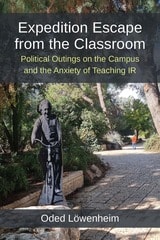
Expedition Escape from the Classroom
Political Outings on the Campus and the Anxiety of Teaching IROded Löwenheim
University of Michigan Press, 2024
Expedition Escape from the Classroom offers a unique narrative where teaching and its inherent challenges intersect with the intricacies of global politics, history, and identity. While recounting his academic experiment, Löwenheim grapples with the changing landscape of academia in a neoliberal age, while illustrating how personal vulnerabilities can transform into powerful tools for growth, exploration, and enlightenment. Whether you’re an educator, student, or just a curious reader, Expedition Escape from the Classroom promises a journey of reflection, critical thinking, and profound revelations.
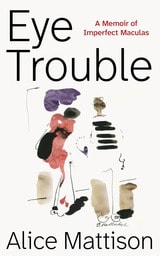
Eye Trouble
A Memoir of Imperfect MaculasAlice Mattison
Northwestern University Press, 2027
A candid and enlightening account of life with flawed vision
Alice Mattison observes the world differently: Her sight has been altered by a progressive eye disease. Mattison had hints early in life of something amiss when reading became difficult, and she was diagnosed in her forties with a rare form of macular degeneration—a disease that gradually destroyed her central vision in one eye. Years later, another form of the same disease threatened her other eye, further altering her sight. Her eye ailments affect relationships with friends, students, doctors, her partner—and especially with herself. Mattison asks questions that apply to all of us, whether or not we live with imperfect vision: What can we learn from a medical problem? How do we determine how bad it is? Who gets to decide that—our family and friends, our doctors, or we ourselves? And, perhaps most challenging of all, what good can come of disease?