Results by title
67 books match the query 'Mexican American women' and 5 start with e
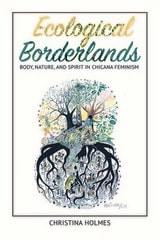
Ecological Borderlands
Body, Nature, and Spirit in Chicana FeminismChristina Holmes
University of Illinois Press, 2016
Holmes revisits key debates to analyze issues surrounding embodiment, women's connections to nature, and spirituality's role in ecofeminist philosophy and practice. By doing so, she challenges Chicanas to escape the narrow frameworks of the past in favor of an inclusive model of environmental feminism that alleviates Western biases. Holmes uses readings of theory, elaborations of ecological narratives in Chicana cultural productions, histories of human and environmental rights struggles in the Southwest, and a description of an activist exemplar to underscore the importance of living with decolonializing feminist commitment in body, nature, and spirit.
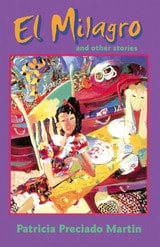
El Milagro and Other Stories
Patricia Preciado Martin
University of Arizona Press, 1996
Reminiscent of Like Water for Chocolate, the book is a rich mix of the simplest ingredients—food, family, tradition. We see Silviana striding to her chicken coop, triggering the "feathered pandemonium" of chickens who smell death in the air. We meet Elena, standing before the mirror in her wedding dress, and Teodoro Sánchez, who sleeps under the sky and smells of “chaparral and mesquite pollen and the stream bottom and the bone dust of generations. There’s the monsignor sitting on the edge of a sofa, sipping Nescafé from a china cup, and here is Sister Francisca "with her warm, minty breath" warning us away from impure thoughts. Be on your best behavior, too, in Tía Petra’s Edwardian parlor—la Doña Petrita, descended from conquistadores, might just deliver a tap on your head with her silver-handled walking stick. Then, with Mamacita, spend a summer afternoon bent over your embroidery with trembling hand and sweaty upper lip, and all the while wondering what in the world it feels like to be kissed.
Intermingled with the author’s stories are collective memories of the barrio, tales halfway between heaven and earth that seem to connect barrio residents to each other and to their past. These cuentos are mystical and dreamy, peopled with ghosts and miracles and Aztec princesses dressed in feathers and gold. Come, sit down and have some salsa and a tortilla—fresh and homemade, it goes without saying; people who buy tortillas at the market "might as well move to Los Angeles, for they have already lost their souls." Then open the pages of this book. Help yourself to another feast of food and flowers, music and dancing, sunshine and moonlight—everything glorious and mundane, serious and humorous, earthly and spiritual, poignant and joyful, in la vida mexicoamericana.
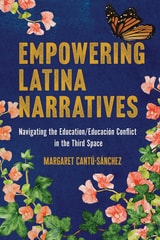
Empowering Latina Narratives
Navigating the Education/Educación Conflict in the Third SpaceMargaret Cantú-Sánchez
University of Arizona Press, 2025
In this groundbreaking book, author Margaret Cantú-Sánchez takes on the U.S. educational system. Cantú-Sánchez introduces the concept of the education/educación conflict, where Latinas navigate the clash between home and school epistemologies under Anglocentric, assimilationist pedagogies.
By analyzing literature, such as Barbara Renaud González’s Golondrina, Why Did You Leave Me?, and education testimonios from seminal works like This Bridge Called My Back and Telling to Live, Cantú-Sánchez reveals how Latina/Chicana protagonists and students negotiate this conflict through a mestizaje of epistemologies—blending elements of both home and school cultures within the third space of education.
Cantú-Sánchez utilizes an interdisciplinary approach, deploying critical race theory, Chicana third-space feminism, and other pedagogical theories like sentipensante (a sensing/thinking) pedagogy employed by education scholar Laura Rendon, among others. By providing pivotal insights and strategies, she demonstrates how educators can implement culturally relevant pedagogies in their classrooms from K–12 through higher education, fostering environments where Latina/Chicana students can thrive without forsaking their cultural identities.
Empowering Latina Narratives not only identifies the challenges Latina/Chicana students face but also offers a roadmap for overcoming them, making this book an essential resource for scholars, educators, and students committed to culturally inclusive education.
Entre Guadalupe y Malinche
Tejanas in Literature and ArtEdited by Inés Hernández-Ávila and Norma Elia Cantú
University of Texas Press, 2016
Mexican and Mexican American women have written about Texas and their lives in the state since colonial times. Edited by fellow Tejanas Inés Hernández-Ávila and Norma Elia Cantú, Entre Guadalupe y Malinche gathers, for the first time, a representative body of work about the lives and experiences of women who identify as Tejanas in both the literary and visual arts.
The writings of more than fifty authors and the artwork of eight artists manifest the nuanced complexity of what it means to be Tejana and how this identity offers alternative perspectives to contemporary notions of Chicana identity, community, and culture. Considering Texas-Mexican women and their identity formations, subjectivities, and location on the longest border between Mexico and any of the southwestern states acknowledges the profound influence that land and history have on a people and a community, and how Tejana creative traditions have been shaped by historical, geographical, cultural, linguistic, social, and political forces. This representation of Tejana arts and letters brings together the work of rising stars along with well-known figures such as writers Gloria Anzaldúa, Emma Pérez, Alicia Gaspar de Alba, Carmen Tafolla, and Pat Mora, and artists such as Carmen Lomas Garza, Kathy Vargas, Santa Barraza, and more. The collection attests to the rooted presence of the original indigenous peoples of the land now known as Tejas, as well as a strong Chicana/Mexicana feminism that has its precursors in Tejana history itself.
Extinct Lands, Temporal Geographies
Chicana Literature and the Urgency of SpaceMary Pat Brady
Duke University Press, 2002
The history of the American Southwest in large part entails the transformation of lived, embodied space into zones of police surveillance, warehouse districts, highway interchanges, and shopping malls—a movement that Chicana writers have contested from its inception. Brady examines this long-standing engagement with space, first in the work of early newspaper essayists and fiction writers who opposed Anglo characterizations of Northern Sonora that were highly detrimental to Mexican Americans, and then in the work of authors who explore border crossing. Through the writing of Sandra Cisneros, Cherríe Moraga, Terri de la Peña, Norma Cantú, Monserrat Fontes, Gloria Anzaldúa, and others, Brady shows how categories such as race, gender, and sexuality are spatially enacted and created—and made to appear natural and unyielding. In a spatial critique of the war on drugs, she reveals how scale—the process by which space is divided, organized, and categorized—has become a crucial tool in the management and policing of the narcotics economy.