Results by title
491 books match the query 'Moral and ethical aspects' and 29 start with e
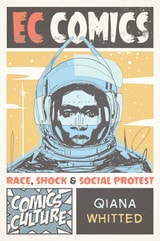
EC Comics
Race, Shock, and Social ProtestQiana Whitted
Rutgers University Press, 2019
Entertaining Comics Group (EC Comics) is perhaps best-known today for lurid horror comics like Tales from the Crypt and for a publication that long outlived the company’s other titles, Mad magazine. But during its heyday in the early 1950s, EC was also an early innovator in another genre of comics: the so-called “preachies,” socially conscious stories that boldly challenged the conservatism and conformity of Eisenhower-era America.
EC Comics examines a selection of these works—sensationally-titled comics such as “Hate!,” “The Guilty!,” and “Judgment Day!”—and explores how they grappled with the civil rights struggle, antisemitism, and other forms of prejudice in America. Putting these socially aware stories into conversation with EC’s better-known horror stories, Qiana Whitted discovers surprising similarities between their narrative, aesthetic, and marketing strategies. She also recounts the controversy that these stories inspired and the central role they played in congressional hearings about offensive content in comics.
The first serious critical study of EC’s social issues comics, this book will give readers a greater appreciation of their legacy. They not only served to inspire future comics creators, but also introduced a generation of young readers to provocative ideas and progressive ideals that pointed the way to a better America.

Echoes From The Holocaust
Philosophical Reflections on a Dark Timeedited by Alan Rosenberg and Gerald E. Myers
Temple University Press, 1990
The murder of six million Jewish men, women, and children during World War II was an act of such barbarity as to constitute one of the central events of our time; yet a list of the major concerns of professional philosophers since 1945 would exclude the Holocaust. This collection of twenty-three essays, most of which were written expressly for this volume, is the first book to focus comprehensively on the profound issues and philosophical significance of the Holocaust.
The essays, written for general as well as professional readers, convey an extraordinary range of factual information and philosophical reflection in seeking to identify the haunting meanings of the Holocaust. Among the questions addressed are: How should philosophy approach the Holocaust? What part did the philosophical climate play in allowing Hitlerism its temporary triumph? What is the philosophical climate today and what are its probable cultural effects? Can philosophy help our culture to become a bulwark against future agents of evil? The multiple dimensions of the Holocaust—historical, sociological, psychological, religious, moral, and literary—are collected here for concentrated philosophical interpretations.
Ecological Governance
Toward a New Social Contract with the EarthBruce Jennings
West Virginia University Press, 2016
As our economic and natural systems continue on their collision course, Bruce Jennings asks whether we have the political capacity to avoid large-scale environmental disaster. Can liberal democracy, he wonders, respond in time to ecological challenges that require dramatic changes in the way we approach the natural world? Must a more effective governance be less democratic and more autocratic? Or can a new form of grassroots ecological democracy save us from ourselves and the false promises of material consumption run amok?
Ecological Governance is an ethicist’s reckoning with how our political culture, broadly construed, must change in response to climate change. Jennings argues that during the Anthropocene era a social contract of consumption has been forged. Under it people have given political and economic control to elites in exchange for the promise of economic growth. In a new political economy of the future, the terms of the consumptive contract cannot be met without severe ecological damage. We will need a new guiding vision and collective aim, a new social contract of ecological trusteeship and responsibility.
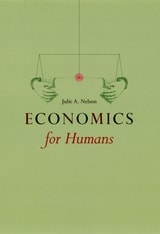
Economics for Humans
Julie A. Nelson
University of Chicago Press, 2006
At its core, an economy is about providing goods and services for human well-being. But many economists and critics preach that an economy is something far different: a cold and heartless system that operates outside of human control. In this impassioned and perceptive work, Julie A. Nelson asks a compelling question: If our economic world is something that we as humans create, aren’t ethics and human relationships—dimensions of a full and rich life—intrinsically part of the picture? Is it possible to take this thing we call economics and give it a body and a soul?
Economics for Humans argues against the well-ingrained notion that economics is immune to moral values and distant from human relationships. Here, Nelson locates the impediment to envisioning a more considerate economic world in an assumption that is shared by both neoliberals and the political left. Despite their seemingly insurmountable differences, Nelson notes that they both make use of the metaphor, first proposed by Adam Smith, that the economy is a machine. This pervasive idea, Nelson argues, has blinded us to the qualities that make us work and care for one another—qualities that also make businesses thrive and markets grow. We can wed our interest in money with our justifiable concerns about ethics and social well-being. And we can do so if we recognize that an economy is not a machine, but a living, beating heart that circulates blood to all parts of the body while also serving as an emblem of compassion and care.
Nothing less than a manifesto, Economics for Humans will both invigorate and inspire readers to reshape the way they view the economy, its possibilities, and their place within it.
Economics for Humans, Second Edition
Julie A. Nelson
University of Chicago Press, 2018
Economics for Humans argues against the well-ingrained notion that economics is immune to moral values and distant from human relationships. Here, Nelson locates the impediment to a more considerate economic world in an assumption that is shared by both neoliberals and the political left. Despite their seemingly insurmountable differences, both make use of the metaphor, first proposed by Adam Smith, that the economy is a machine. This pervasive idea, Nelson argues, has blinded us to the qualities that make us work and care for one another—qualities that also make businesses thrive and markets grow. We can wed our interest in money with our justifiable concerns about ethics and social well-being. And we can do so if we recognize that an economy is not a machine, but a living thing in need of attention and careful tending.
This second edition has been updated and refined throughout, with expanded discussions of many topics and a new chapter that investigates the apparent conflict between economic well-being and ecological sustainability. Further developing the main points of the first edition, Economics for Humans will continue to both invigorate and inspire readers to reshape the way they view the economy, its possibilities, and their place within it.
Elemental Ecocriticism
Thinking with Earth, Air, Water, and FireJeffrey Jerome Cohen
University of Minnesota Press, 2015
For centuries it was believed that all matter was composed of four elements: earth, air, water, and fire in promiscuous combination, bound by love and pulled apart by strife. Elemental theory offered a mode of understanding materiality that did not center the cosmos around the human. Outgrown as a science, the elements are now what we build our houses against. Their renunciation has fostered only estrangement from the material world.
The essays collected in Elemental Ecocriticism show how elemental materiality precipitates new engagements with the ecological. Here the classical elements reveal the vitality of supposedly inert substances (mud, water, earth, air), chemical processes (fire), and natural phenomena, as well as the promise in the abandoned and the unreal (ether, phlogiston, spontaneous generation).
Decentering the human, this volume provides important correctives to the idea of the material world as mere resource. Three response essays meditate on the connections of this collaborative project to the framing of modern-day ecological concerns. A renewed intimacy with the elemental holds the potential of a more dynamic environmental ethics and the possibility of a reinvigorated materialism.
Embodied Encuentros
Oral History Archives of Latina/o/e ExperiencesElena Foulis
The Ohio State University Press, 2026
In Embodied Encuentros, Elena Foulis offers a practical guide for completing ethical fieldwork in Latina/o/e communities, emphasizing equitable and culturally sustaining practices for gathering oral histories. In her critical decolonial model, Foulis centers the agency of the people within these communities while considering the diversity and complexity of their experiences. In doing so, she advocates for the importance of building oral history archives that challenge our understandings of Latina/o/e peoples.
Foulis provides a conceptual framework for building on community knowledge that considers language, cultural practices, gender, and race. She suggests ways to involve students in ethical research; collect evolving oral histories; employ a language justice approach that acknowledges linguistic oppression, translanguaging, and bilingualism as essential aspects of this community; and consider the importance of digital archives for the creation of multimedia projects that foster community pláticas. Grounded in both theoretical approaches and a feminist ethics praxis, Embodied Encuentros ultimately outlines an important model for doing collaborative, ethical research—not only within Latina/o/e communities but within other minoritized communities as well.
Embodied Literacies
Imageword and a Poetics of TeachingKristie S. Fleckenstein
Southern Illinois University Press, 2003
Embodied Literacies: Imageword and a Poetics of Teaching is a response to calls to enlarge the purview of literacy to include imagery in its many modalities and various facets. Kristie S. Fleckenstein asserts that all meaning, linguistic or otherwise, is a result of the transaction between image and word. She implements the concept of imageword—a mutually constitutive fusion of image and word—to reassess language arts education and promote a double vision of reading and writing. Utilizing an accessible fourfold structure, she then applies the concept to the classroom, reconfiguring what teachers do when they teach, how they teach, what they teach with, and how they teach ethically.
Fleckenstein does not discount the importance of text in the quest for literacy. Instead, she places the language arts classroom and teacher at the juncture of image and word to examine the ways imagery enables and disables the teaching of and the act of reading and writing. Learning results from the double play of language and image, she argues. Helping teachers and students dissolve the boundaries between text and image, the volume outlines how to see reading and writing as something more than words and language and to disestablish our definitions of literacy as wholly linguistic.
Embodied Literacies: Imageword and a Poetics of Teaching comes at a critical time in our cultural history. Echoing the opinion that postmodernity is a product of imagery rather than textuality, Fleckenstein argues that we must evolve new literacies when we live in a culture saturated by images on computer screens, televisions, even billboards. Decisively and clearly, she demonstrates the importance of incorporating imagery—which is inextricably linked to our psychological, social, and textual lives—into our epistemologies and literacy teaching.
Empire of Liberty
Power, Desire, and FreedomAnthony Bogues
Dartmouth College Press, 2010

Encountering Life in the Universe
Ethical Foundations and Social Implications of AstrobiologyEdited by Chris Impey, Anna H. Spitz, and William Stoeger
University of Arizona Press, 2013
Encountering Life in the Universe examines the intersection of scientific research and society to further explore the ethics of how to behave in a universe where much is unknown. Taking contributions from notable experts in several fields, the editors skillfully introduce and develop a broad look at the moral questions facing humans on Earth and beyond.
Major advances in biology, biotechnology, and medicine create an urgency to ethical considerations in those fields. Astrobiology goes on to debate how we might behave as we explore new worlds, or create new life in the laboratory, or interact with extraterrestrial life forms. Stimulated by new technologies for scientific exploration on and off the Earth, astrobiology is establishing itself as a distinct scientific endeavor.
In what way can established philosophies provide guidance for the new frontiers opened by astrobiology research? Can the foundations of ethics and moral philosophy help answer questions about modifying other planets? Or about how to conduct experiments to create life in the lab or about? How to interact with organisms we might discover on another world?
While we wait for the first echo that might indicate life beyond Earth, astobiologists, along with philosophers, theologians, artists, and the general public, are exploring how we might behave—even before we know for sure they are there. Encountering Life in the Universe is a remarkable resource for such philosophical challenges.

Energy without Conscience
Oil, Climate Change, and ComplicityDavid McDermott Hughes
Duke University Press, 2017

Environmental Ethics and Forestry
Peter List
Temple University Press, 2000
This rising tide of public scrutiny has led many foresters to suspect that their "contract" with society to manage forests using their best professional judgment has been undermined. Some of these professionals, as well as some of their critics, have begun to reexamine their old beliefs and to look for new ways of practicing forestry. Part of this reflective process has entailed new directions in environmental ethics and environmental philosophy.
This reader brings together some of the new thinking in this area. Here students of the applied environmental and natural resource sciences, as well as the interested general reader, will discover a rich sampling of writings in environmental ethics and philosophy as they apply to forestry. Readings focus on basic ethical systems in forestry and forest management, philosophical issues in forestry ethics, codes of ethics in forestry and related natural resource sciences such as fisheries science and wildlife biology, Aldo Leopold's land ethic in forestry, ethical advocacy and whistleblowing in government resource agencies, the ethics of new forestry, ecoforestry, and public debate in forestry, as well as ethical issues in global forestry such as the responsibilities of forest corporations, environmentalists, and individual wood consumers.
The volume contains materials from the founders of forestry ethics, such as Bernhard Fernow, Giford Pinchot, John Muir, and Aldo Leopold; from such organizations as the Society of American Foresters, the Wildlife Society, the American Fisheries Society, Forest Service Employees for Environmental Ethics, and the Ecoforesters group, in addition to the writings by a variety of well-known environmental philosophers and foresters, including Holmes Rolston, Robin Attfield, Lawrence Johnson, Michael McDonald, Paul Wood, James E. Coufal, Raymond Craig, Kristin Shrader-Frechette, Jeff DeBonis, Jim L. Bowyer, Alasdair Gunn, Doug Daigle, Alan G. McQuillan, Stephanie Kaza, Alan Drengson, Duncan Taylor, and Kathleen Dean Moore.

Environmental Ethics in the Midwest
Interdisciplinary ApproachesIan Smith
Michigan State University Press, 2022

Eternal Sovereigns
Indigenous Artists, Activists, and Travelers Reframing RomeGloria Jane Bell
Duke University Press, 2024
Ethical Considerations in Educating Children Who Are Deaf or Hard of Hearing
Kathee Mangan Christensen
Gallaudet University Press, 2011
The education of deaf or hard of hearing children has become as complex as the varying needs of each individual child. Teachers face classrooms filled with students who are culturally Deaf, hard of hearing, or post-lingually deaf; they might use American Sign Language, cochlear implants, hearing aids/FM systems, speech, Signed English, sign-supported speech, contact signing, nonverbal communication, or some combination of methods. Educators who decide what tools are best for these children are making far-reaching ethical decisions in each case. This collection features ten chapters that work as constructive conversations to make the diverse needs of these deaf students the primary focus.
The initial essays establish fundamental points of ethical decision-making and emphasize that every situation should be examined not with regard for what is “right or wrong,” but for what is “useful.” Absolute objectivity is unattainable due to social influences, while “common knowledge” is ruled out in favor of “common awareness.” Other chapters deal with the reality of interpreting through the professional’s eyes, of how they are assessed, participate, and are valued in the total educational process, including mainstream environments. The various settings of education for deaf children are profiled, from residential schools to life in three cultures for deaf Latino students, to self-contained high school programs. Ethical Considerations in Educating Deaf Children Who Are Deaf or Hard of Hearing offers an invaluable set of guidelines for administrators and educators of children with hearing loss in virtually every environment in a postmodern world.

Ethical Principles for Social Policy
John Howie
Southern Illinois University Press, 1983
Abortion, euthanasia, racism, sexism, paternalism, the rights of children, the population explosion, and the dynamics of economic growth are examined in the light of ethical principles by leading philosophers in order to suggest reasonable judgments.
Originally prepared for the distinguished Wayne Leys Memorial Lecture Series at Southern Illinois University, Carbondale, the essayists have addressed themselves to the most pressing ethical questions being asked today. William K. Frankena, Professor Emeritus, University of Michigan, in “The Ethics of Respect for Life” argues for a qualified view of moral respect for human personality. From his viewpoint it is always prima facie wrong to shorten or prevent human life, but not always actually wrong as other moral conditions may counter the presumed wrong. The late William T. Blackstone in “Zero Population Growth and Zero Economic Growth” contends that justice will require the production of the maximal level of goods to fulfill basic human needs compatible with the avoidance of ecological catastrophe.
Richard Wasserstrom, Professor of Philosophy at the University of California, Santa Cruz, proposes an assimilationist ideal in “Racism, Sexism, and Preferential Treatment.” Gerald Dworkin, Professor of Philosophy at the University of Illinois, Chicago Circle, dares to ask “Is More Choice Better than Less?” Joel Feinberg, Professor of Philosophy at the University of Arizona, in “The Child’s Right to an Open Future,” offers a defense of “rights-in-trust” of children. Tom L. Beauchamp, Professor of Philosophy and Senior Research Scholar at the Kennedy Institute-Center for Bioethics of Georgetown University, considers the paternalism used to justify social policies in the practice of medicine and insists that it invariably involves a conflict between the ethical principles of beneficence and autonomy.
Ethical Programs
Hospitality and the Rhetorics of SoftwareJames J. Brown, Jr.
University of Michigan Press, 2015
Ethics and Practice in Science Communication
Edited by Susanna Priest, Jean Goodwin, and Michael F. Dahlstrom
University of Chicago Press, 2018
In three sections—how ethics matters, professional practice, and case studies—contributors to this volume explore the many complex questions surrounding the communication of scientific results to nonscientists. Has the science been shared clearly and accurately? Have questions of risk, uncertainty, and appropriate representation been adequately addressed? And, most fundamentally, what is the purpose of communicating science to the public: Is it to inform and empower? Or to persuade—to influence behavior and policy? By inspiring scientists and science communicators alike to think more deeply about their work, this book reaffirms that the integrity of the communication of science is vital to a healthy relationship between science and society today.
Ethics and the Orator
The Ciceronian Tradition of Political MoralityGary A. Remer
University of Chicago Press, 2017
Remer’s study is distinct from other works on political morality in that it turns to Cicero, not Aristotle, as the progenitor of an ethical rhetorical perspective. Contrary to many, if not most, studies of Cicero since the mid-nineteenth century, which have either attacked him as morally indifferent or have only taken his persuasive ends seriously (setting his moral concerns to the side), Ethics and the Orator demonstrates how Cicero presents his ideal orator as exemplary not only in his ability to persuade, but in his capacity as an ethical person. Remer makes a compelling case that Ciceronian values—balancing the moral and the useful, prudential reasoning, and decorum—are not particular only to the philosopher himself, but are distinctive of a broader Ciceronian rhetorical tradition that runs through the history of Western political thought post-Cicero, including the writings of Quintilian, John of Salisbury, Justus Lipsius, Edmund Burke, the authors of The Federalist, and John Stuart Mill.
Ethics by Committee
A History of Reasoning Together about Medicine, Science, Society, and the StateNoortje Jacobs
University of Chicago Press, 2022
Ethics boards have become obligatory passage points in today’s medical science, and we forget how novel they really are. The use of humans in experiments is an age-old practice that records show goes back to at least the third century BC, and it has been popular as a practice since the early modern period. Yet in most countries around the world, hardly any formal checks and balances existed to govern the communal oversight of experiments involving human subjects until at least the 1960s. Ethics by Committee traces the rise of ethics boards for human experimentation in the second half of the twentieth century.
Using the Netherlands as a case study, historian Noortje Jacobs shows how the authority of physicians to make decisions about clinical research in this period gave way in most developed nations to formal mechanisms of communal decision-making that served to regiment the behavior of individual researchers. This historically unprecedented change in scientific governance came out of the growing international wariness of medical research in the decades after World War II and was meant to solidify a new way of reasoning together in liberal democracies about medicine and science. But what reasoning together meant, and who was invited to participate, changed drastically over time. In detailing this history, Jacobs shows that research ethics committees were originally intended not only to make human experimentation more ethical but also to raise its epistemic quality and intensify the use of new clinical research methods. By examining complex negotiations over the appropriate governance of human subjects research, Ethics by Committee is an important contribution to our understanding of the randomized controlled trial and the history of research ethics and bioethics more generally.
Ethics for Records and Information Management
Norman A. Mooradian
American Library Association, 2018
The scope and reach of information, driven by the explosive growth of information technologies and content types, has expanded dramatically over the past 30 years. The consequences of these changes to records and information management (RIM) professionals are profound, necessitating not only specialized knowledge but added responsibilities. RIM professionals require a professional ethics to guide them in their daily practice and to form a basis for developing and implementing organizational policies, and Mooradian’s new book provides a rigorous outline of such an ethics. Taking an authoritative principles/rules based approach to the subject, this book comprehensively addresses
- the structure of ethics, outlining principles, moral rules, judgements, and exceptions;
- ethical reasoning, from meaning and logic to dilemmas and decision methods;
- the ethical core of RIM, discussing key topics such as organizational context, the positive value of accountability, conflicts of interest, and confidentiality;
- important ethical concerns like copyright and intellectual property, whistleblowing, information leaks, disclosure, and privacy; and
- the relationship between RIM ethics and information governance.
Ethics in Action
Case Studies in Archaeological DilemmasChip Colwell-Chanthaphonh
University Press of Colorado, 2008
Ethics in Mental Health and Deafness
Virginia Gutman
Gallaudet University Press, 2002
This volume explores ethical issues specific to working with deaf clients, particularly matters of confidentiality, managing multiple relationships, and the clinician’s competency to provide services, particularly in communicating with and understanding deaf people. Led by editor Virginia Gutman, a unique assembly of respected mental health professionals share their experiences and knowledge in working with deaf clients.
Irene Leigh commences Ethics in Mental Health and Deafness with her varied experiences as a deaf mental health practitioner, and Gutman follows with insights on ethics in the “small world” of the Deaf community. William McCrone discusses the law and ethics, and Patrick Brice considers ethical issues regarding deaf children, adolescents, and their families. In contrast, Janet Pray addresses concerns about deaf and hard of hearing older clients.
Minority deaf populations pose additional ethical aspects, which are detailed by Carolyn Corbett. Kathleen Peoples explores the challenges of training professionals in mental health services specifically for deaf clients. Closely related to these topics is the influence of interpreters with deaf clients in mental health settings, which Lynnette Taylor thoroughly treats. Ethics and Mental Health in Deafness also features a chapter on genetic counseling and testing for deafness by Kathleen Arnos. The final section, written by Robert Pollard, examines ethical conduct in research with deaf people, a fitting conclusion to a volume that will become required reading for all professionals and students in this discipline.
Ethics of Environment and Development
Global Challenge, International ResponseJ. Ronald Engel
University of Arizona Press, 1990

Ethics of Life
Contemporary Iberian DebatesKatarzyna Beilin
Vanderbilt University Press, 2016
• What are the different rhetorical strategies employed by writers, artists, filmmakers, and activists to react to the degradation of life and climate change?
• How are urban movements using environmental issues to resist corporate privatization of the commons?
• What is the shape of Spanish debates on reproductive rights and biotechnology?
• What is the symbolic significance of the bullfighting debate and other human/animal issues in today's political turmoil in Spain?
Hispanic Issues Series
Nicholas Spadaccini, Editor-in-Chief
Hispanic Issues Online
hispanicissues.umn.edu/online_main.html
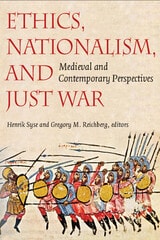
Ethics, Nationalism, and Just War
Medieval and Contemporary PerspectivesHenrik Syse
Catholic University of America Press, 2007
Ethnic Entrepreneurs, Crony Capitalism, and the Making of the Franco-Mexican Elite
José Galindo
University of Alabama Press, 2021
A groundbreaking historical narrative of corruption and economic success in Mexico.
Ethnic Entrepreneurs, Crony Capitalism, and the Making of the Franco-Mexican Elite provides a new way to understand the scope and impact of crony capitalism on institutional development in Mexico. Beginning with the Porfiriato, the period between 1876 and 1911 named for the rule of President Porfirio Díaz, José Galindo identifies how certain behavioral patterns of the Mexican political and economic elite have repeated over the years, and analyzes aspects of the political economy that have persisted, shaping and at times curtailing Mexico’s economic development.
Strong links between entrepreneurs and politicians have allowed elite businessmen to receive privileged support, such as cheap credit, tax breaks, and tariff protection, from different governments and to run their companies as monopolies. In turn, successive governments have obtained support from businesses to implement public policies, and, on occasion, public officials have received monetary restitution. Galindo notes that Mexico’s early twentieth-century institutional framework was weak and unequal to the task of reining in these systematic abuses. The cost to society was high and resulted in a lack of fair market competition, unequal income distribution, and stunted social mobility.
The most important investors in the banking, commerce, and manufacturing sectors at the beginning of the twentieth century in Mexico were of French origin, and Galindo explains the formation of the Franco-Mexican elite. This Franco-Mexican narrative unfolds largely through the story of one of the richest families in Mexico, the Jeans, and their cotton textile empire. This family has maintained power and wealth through the current day as Emilio Azcárraga Jean, a great-grandson of one of the members of the first generation of the Jean family to arrive in Mexico, owns Televisa, a major mass media company with one of the largest audiences for Spanish-language content in the world.

Every Last Tie
The Story of the Unabomber and His FamilyDavid Kaczynski
Duke University Press, 2016

Exit Theater
Mike Lala
University Press of Colorado, 2016
Winner of the 2016 Colorado Prize for Poetry
Selected by Tyrone Williams for the 2016 Colorado Prize for Poetry, Exit Theater casts classical elegy, with dazzling formal innovation, into a staggering work of contemporary, political polyphony. Through monologues, performance scripts, and poems of exquisite prosody, Mike Lala examines the human figure—as subject and object, enemy and ally—in the context of a progressively defigured and hostile world. Catullus, Shakespeare, Cy Twombly, and Lydia Delectorskaya echo across engagements with Israeli generals, accused terrorists, State Department employees, nuclear scientists, Saturday Night Live actors, war criminals, malware, and a host of mythic, literary, and half-extant spectral characters. Amid the cacophony, Lala implicates every actor, including himself, in a web of shared culpability vis-à-vis consumerism, representation, speaking, writing, and making art against the backdrop of the endless, open wars of a post–Cold War, post-2001 era. Exit Theater is a debut of and against its time—a book about war, art, and what it means to make art in a time of war.