Results by title
344 books match the query 'Nationalism' and 14 start with e

Earth Politics
Religion, Decolonization, and Bolivia's Indigenous IntellectualsWaskar Ari
Duke University Press, 2014

Encyclopedia of Romantic Nationalism in Europe, Vol. 1 and 2
Edited by Joep Leerssen
Amsterdam University Press, 2016

Enemyship
Democracy and Counter-Revolution in the Early RepublicJeremy Engels
Michigan State University Press, 2010
The Declaration of Independence is usually celebrated as a radical document that inspired revolution in the English colonies, in France, and elsewhere. In Enemyship, however, Jeremy Engels views the Declaration as a rhetorical strategy that outlined wildly effective arguments justifying revolution against a colonial authority—and then threatened political stability once independence was finally achieved.
Enemyship examines what happened during the latter years of the Revolutionary War and in the immediate post-Revolutionary period, when the rhetorics and energies of revolution began to seem problematic to many wealthy and powerful Americans.
To mitigate this threat, says Engles, the founders of the United States deployed the rhetorics of what he calls "enemyship," calling upon Americans to unite in opposition to their shared national enemies.

England's Discontents
Political Cultures and National IdentitiesMike Wayne
Pluto Press, 2018
Examining five political ideologies at play in England—conservatism, liberalism, economic liberalism, social democracy, and socialism—Mike Wayne unearths the historical rationale for their relationship to cultural identities, including rural England, gentlemanly capitalism, industrialism, and Empire. By revealing how national identity, class, and political economy intersect, Wayne is able to elucidate England’s enduring attachment to the neoliberal economic system.
Grounding his cultural and material perspective in Gramscian and Marxist theory, Wayne illuminates the cultural dimensions of English political life in the last century.
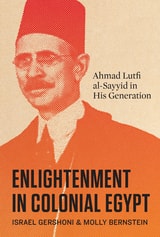
Enlightenment in Colonial Egypt
Ahmad Lutfi al-Sayyid in His GenerationIsrael Gershoni and Molly Bernstein
University of Texas Press, 2026
A study of Ahmad Lutfi al-Sayyid, widely recognized as the creator of Egyptian nationalism, and his impact on Egyptian culture and history.
Ahmad Lutfi al-Sayyid (1872–1963) stands among the most creative, impactful intellectuals of modern Egypt and the Middle East. While best known as the architect of Egyptian nationalism, his nationalist endeavor was in fact part of his broader project to bring enlightenment to Egypt under the yoke of British colonialism. Through his articles, editorials, and mentoring, his newspaper al-Jarida became a key forum for the lively debates of the time, ranging from the role of Islam in society to women's inclusion, all toward shaping a unique colonial modernity for his country.
The most comprehensive study of Lutfi, his writing, and his impact, Enlightenment in Colonial Egypt deconstructs the view that he was a covert apologist for empire out of admiration for the liberal aspects of European enlightenment. Lutfi faced this duality head on: He believed it essential to embrace parts of the West’s enlightenment values and to decolonize and Egyptianize them in order to establish an authentic, indigenous, Egyptian civilization, appropriate for modernity. Israel Gershoni and Molly Bernstein argue that Lutfi successfully engaged with these most difficult challenges, shaping a detailed plan to implement enlightenment in the Egyptian national context.

Entangled Paths Toward Modernity
Contextualizing Socialism and Nationalism in the BalkansAugusta Dimou
Central European University Press, 2009
Envisioning Eastern Europe
Postcommunist Cultural StudiesMichael D. Kennedy, Editor
University of Michigan Press, 1994
Ephemeral Territories
Representing Nation, Home, and Identity in CanadaErin Manning
University of Minnesota Press, 2003
Explores questions of identity and belonging through the lens of Canadian cultural production
What does it mean to be at home? In a critical engagement with notions of territory, identity, racial difference, separatism, multiculturalism, and homelessness, this book delves into the question of what it means to belong—in particular, what it means to be at home in Canada. Ephemeral Territories weaves together many narratives and representations of Canadian identity—from political philosophy and cultural theory to art and films such as Srinivas Krishna’s Lulu, Clement Virgo’s Rude, and Charles Biname’s Eldorado—to develop and complicate familiar views of identity and selfhood.
Canadian identity has historically been linked to a dual notion of culture traceable to the French and English strains of Canada’s colonial past. Erin Manning subverts this binary through readings that shift our attention from nationalist constructions of identity and territory to a more radical and pluralizing understanding of the political. As she brings together issues specific to Canada (such as Quebec separatism and Canadian landscape painting) and concerns that are more transnational (such as globalization and immigration), Manning emphasizes the truly cross-cultural nature of the problems of racism, gender discrimination, and homelessness. Thus this impassioned reading of Canadian texts also makes an important contribution to philosophical, cultural, and political discourses across the globe.
Ethics, Nationalism, and Just War
Medieval and Contemporary PerspectivesHenrik Syse
Catholic University of America Press, 2007

Ethnic Nationalism
The Tragic Death of YugoslaviaBogdan Denitch
University of Minnesota Press, 1996
If your neighbor cannot sleep, you will not be allowed to either: The old adage assumes an overtone of dread as the stirring, wary world witnesses the destruction of Yugoslavia. If the leaders of Serbia and Croatia can get away with tearing apart Bosnia-Herzegovina, a sovereign member of the United Nations, what is to stop military elites in other former Soviet and East European states from proposing similar solutions to their own national grievances and aspirations? And who is to say such attention would be confined to that area of the globe?
The world may well be uneasy, as Bogdan Denitch makes clear in this brilliant book about the causes and possible ramifications of the death of Yugoslavia. Ethnic Nationalism provides a cogent, comprehensive historical analysis of Yugoslavia's demise, one that clearly identifies events and trends that urgently demand the world's attention.
The role of timing in the sequence of events; the consequences of an unworkable constitutional situation; the responsibility of the West; and, above all, the self-transformation of Communist regimes that presaged undemocratic outcomes- Denitch duly considers each of these factors as he gives a detailed description of Yugoslavia's descent into interethnic wars. His discussion of the possible fate of postcommunist states is especially pertinent, and leads to a skillful account of the sources and dangers of nationalistic and ethnic extremism on what threatens to become a global scale. In this analysis, nationalism and populism can be seen as revolts against a new world system where abstract multinational financial and political institutions thwart citizens' attempts at democratic participation.
Active in Yugoslav political and intellectual life for almost thirty years, Denitch is able to imbue the developments he describes with a particular, human immediacy. His personal experiences with the emergence of nationalism and fractious ethnic politics and warfare, movingly recounted here, stand as compelling testimony to the historical drama so thoroughly and incisively detailed in this remarkable book.
Ethnicity and Nationalism
Anthropological PerspectivesThomas Hylland Eriksen
Pluto Press, 2010
Ethnicity and nationalism are pervasive features of the contemporary world, but how far is ethnicity a result of cultural differences, and how much is it in fact dependent on the practical use of, and belief in, such differences? In this book, Thomas Hylland Eriksen demonstrates that far from being an immutable property of groups, ethnicity is a dynamic and shifting aspect of social relationships. Drawing on a wide range of classic and recent studies in anthropology and sociology, Eriksen examines the relationship between ethnicity, class, gender and nationhood and more in a lucid and comprehensive manner.
A core text for all students of social anthropology and related subjects, Ethnicity and Nationalism has been a leading introduction to the field since its original publication in 1993. This new edition - expanded and thoroughly revised - is indispensable to anyone seriously interested in understanding ethnic phenomena. New topics covered include cultural property rights, the role of genetics in the public understanding of identification, commercialisation of identity, and the significance of the internet.

Europe in Black and White
Immigration, Race, and Identity in the ‘Old Continent'Edited by Manuela Ribeiro Sanches, Fernando Clara, João Ferreira Duarte, and Leonor Pires Martins
Intellect Books, 2011
The essays in Europe in Black and White offer new critical perspectives on race, immigration, and identity on the Old Continent. In reconsidering the various forms of encounters with difference, such as multiculturalism and hybridity, the contributors address a number of issues, including the cartography of postcolonial Europe, its relation to the production of "difference" and "race," and national and identity politics and their dependence on linguistic practices inherited from imperial times. Featuring scholars from a wide variety of nationalities and disciplinary areas, this collection will speak to an equally wide readership.

Exclusive Revolutionaries
Liberal Politics, Social Experience, and National Identity in the Austrian Empire, 1848-1914Pieter M. Judson
University of Michigan Press, 1996
In the mid-1800s, Judson argues, German liberal activists built an effective political movement whose ideology was rooted in its members' social experience in voluntary associations. The liberals were committed to the creation of a market economy based on personal property rights, to a society based on the values of individual self-improvement and personal respectability, and to a fundamental distinction between active and passive citizenship. They were determined to achieve a harmonious community of free peoples, in which personal enlightenment would bring an end to the divisive influence of localism, ethnicity, religion, and feudal social hierarchy.
Yet after 1880, as newer, more radical mass political movements threatened their political fortunes, the liberals forged a German nationalist politics based increasingly on ethnic identity. Their emphasis on national identity became a way for former liberals to hold together an increasingly diverse coalition of German speakers who had little in common outside of their shared language. Only "Germanness" bridged the dangerous gulf between social classes. This nationalism helped the liberals to compete for power in the multinational, multicultural Austrian Empire down to 1914, but it left a legacy of nationalist extremism and tolerance of anti-Semitism that continues to influence political cultures in the former lands of the Habsburg Monarchy today.
Exile and Cultural Hegemony
Spanish Intellectuals in Mexico, 1939-1975Sebastiaan Faber
Vanderbilt University Press, 2002
The first study of its kind to place the exiles' ideological evolution in a broad historical context, Exile and Cultural Hegemony takes into account developments in both Spanish and Mexican politics from the early 1930s through the 1970s. Faber pays particular attention to the intellectuals' persistent nationalism and misplaced illusions of pan-Hispanist grandeur, which included awkward and ironic overlaps with the rhetoric employed by their enemies on the Francoist right. This embrace of nationalism, together with the intellectuals' dependence on the increasingly authoritarian Mexican regime and the international climate of the Cold War, eventually caused them to abandon the Gramscian ideal of the intellectual as political activist in favor of a more liberal, apolitical stance preferred by, among others, the Spanish philosopher Jose Ortega y Gasset.
With its comprehensive approach to topics integral to Spanish culture, both students of and those with a general interest in twentieth-century Spanish literature, history, or culture will find Exile and Cultural Hegemony a fascinating and groundbreaking work.