163 books match the query 'Nationalism & Patriotism' and 4 start with e
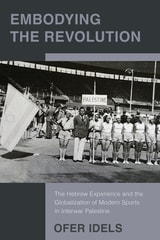
cover of Embodying the Revolution: The Hebrew Experience and the Globalization of Modern Sports in Interwar Palestine

Embodying the Revolution

The Hebrew Experience and the Globalization of Modern Sports in Interwar Palestine

Ofer Idels

Rutgers University Press, 2026

This original and thought-provoking study offers a fresh perspective on Zionism by exploring Hebrew culture’s ambivalent attitude toward modern sports. Drawing on extensive archival sources and contemporary literary theories, it focuses on Zionism’s surprising anxiety toward sports during the interwar heyday of “muscular Judaism,” revealing an unusual society in which athletes failed to attain national pride and distinction. Addressing themes such as the body, language, space, immigration, internationalism, amateurism, gender, and militarization, Embodying the Revolution presents an innovative reading of Jewish life in Mandate Palestine, linking the marginalization of sports to the meaning and experience of the Zionist Revolution. Idels' compelling interpretation of the appeal of sports, selfhood, and the compromises inherent in radical aspirations—narrated from the periphery of the interwar global rise of sports—challenges contemporary assumptions that dismiss ideology as an elitist myth.
[more]
cover of Encyclopedia of Romantic Nationalism in Europe, Vol. 1 and 2

Encyclopedia of Romantic Nationalism in Europe, Vol. 1 and 2

Edited by Joep Leerssen

Amsterdam University Press, 2016
This monumental encyclopedia documents the presence and effects of cultural consciousness-raising in the early decades of European nationalism. The volume tracks how intellectuals, historians, novelists, poets, painters, folklorists, and composers, in an intensely collaborative transnational network, articulated the national identities and aspirations that would go on to determine European history and politics with effects that are still felt today.
[more]
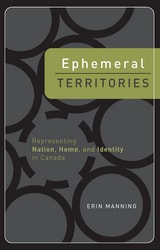
cover of Ephemeral Territories: Representing Nation, Home, and Identity in Canada

Ephemeral Territories

Representing Nation, Home, and Identity in Canada

Erin Manning

University of Minnesota Press, 2003

Explores questions of identity and belonging through the lens of Canadian cultural production

What does it mean to be at home? In a critical engagement with notions of territory, identity, racial difference, separatism, multiculturalism, and homelessness, this book delves into the question of what it means to belong—in particular, what it means to be at home in Canada. Ephemeral Territories weaves together many narratives and representations of Canadian identity—from political philosophy and cultural theory to art and films such as Srinivas Krishna’s Lulu, Clement Virgo’s Rude, and Charles Biname’s Eldorado—to develop and complicate familiar views of identity and selfhood.

Canadian identity has historically been linked to a dual notion of culture traceable to the French and English strains of Canada’s colonial past. Erin Manning subverts this binary through readings that shift our attention from nationalist constructions of identity and territory to a more radical and pluralizing understanding of the political. As she brings together issues specific to Canada (such as Quebec separatism and Canadian landscape painting) and concerns that are more transnational (such as globalization and immigration), Manning emphasizes the truly cross-cultural nature of the problems of racism, gender discrimination, and homelessness. Thus this impassioned reading of Canadian texts also makes an important contribution to philosophical, cultural, and political discourses across the globe.
[more]
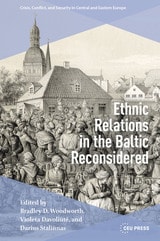
cover of Ethnic Relations in the Baltic Reconsidered

Ethnic Relations in the Baltic Reconsidered

Bradley D. Woodworth

Central European University Press, 2026

This collected volume offers an original perspective on the Baltic region by examining the intricate relationships between its diverse ethnic groups from the mid-nineteenth century to the present. Rather than focusing solely on national narratives or comparisons of historical development, the book analyzes ethnic relations through the lenses of identity, governance, empire, and violence. The nearly constant redrawing of geographic borders and boundaries among communities during this period destabilized fixed identities, generating novel, hybrid ways of self-identification along with a hardening of oppositions. Innovative forms of coexistence came with violent, sometimes genocidal conflicts. The contributors explore topics such as evolving senses of belonging, the impact of imperial and Soviet rule, instances of cooperation and conflict, and the legacies of historical trauma. By incorporating new sources and interdisciplinary approaches, they update traditional understandings of nations and nationalism in the Baltic region and provide insights relevant to similar regions.
[more]