Results by title
2817 books match the query 'Nature' and 164 start with e

ESSAYS ON MOUNTAINEERING
ARMAND E. SINGER
West Virginia University Press, 1982

Earth Rising
David Oates
Oregon State University Press, 1989
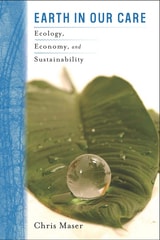
Earth in Our Care
Ecology, Economy, and SustainabilityMaser, Chris
Rutgers University Press, 2009
So writes Chris Maser in this compelling study of three interactive spheres of the ecosystem: atmosphere (air), litho-hydrosphere (rock that comprises the restless continents and the water that surrounds them), and biosphere (all life sandwiched in between).
Rich in detail and insightful analogies, Earth in Our Care addresses key issues including land-use policies, ecological restoration, forest management, local living, and sustainability thinking. Exploring our interconnectedness with the Earth, Maser examines today's problems and, more importantly, provides solutions for the future.
Earth, Air, Fire, Water
Humanistic Studies of the EnvironmentJill Ker Conway
University of Massachusetts Press, 1999
Written in a clear, accessible style with a general audience in mind, the essays in this volume offer fresh approaches to thinking about environmental issues. When we consider the forms of environmental decline most urgently in need of attention—eroding soils, shrinking forests, expanding deserts, acid rain, ozone depletion, air pollution, poisoned water supplies, the loss of biological diversity—it may seem logical that scientists should be the people mobilized to tackle these problems. Yet to devise effective solutions for today's environmental threats, we must situate them within their larger historical, societal, and cultural settings. Amelioration does not require exclusively scientific knowledge, but also changes based upon law and public policy, on institutional structures and practices, on habits of consumption, and on countless other facets of daily life. Earth, Air, Fire, Water seeks to redirect our thinking about environmental issues by locating them in the behavior of human beings—in the institutions, beliefs, and practices that mediate between people and that obscure but beautiful nonhuman world we refer to as “nature.” The book opens with a section on the elements and the ways humans have understood them in the past. There follows a section devoted to social institutions and the ways in which we can learn from current and past efforts to study the interaction between people and nature. The concluding section analyzes the culture of modernity and the ways in which the human imagination has changed in response to the arrival of modern technology. In addition to the editors, contributors include Gregory Nagy, Donald Worster, Stephen J. Pyne, John F. Richards, Richard White, Terence Turner, Barbara Epstein, Oleg N. Yanitsky, Bina Agarwal, Anton Struchkov, Yaakov Garb, and Louis Menand.
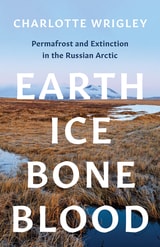
Earth, Ice, Bone, Blood
Permafrost and Extinction in the Russian ArcticCharlotte Wrigley
University of Minnesota Press, 2023
Exploring one of the greatest potential contributors to climate change—thawing permafrost—and the anxiety of extinction on an increasingly hostile planet
Climate scientists point to permafrost as a “ticking time bomb” for the planet, and from the Arctic, apocalyptic narratives proliferate on the devastating effects permafrost thaw poses to human survival. In Earth, Ice, Bone, Blood, Charlotte Wrigley considers how permafrost—and its disappearance—redefines extinction to be a lack of continuity, both material and social, and something that affects not only life on earth but nonlife, too.
Earth, Ice, Bone, Blood approaches the topic of thawing permafrost and the wild new economies and mitigation strategies forming in the far north through a study of the Sakha Republic, Russia’s largest region, and its capital city Yakutsk, which is the coldest city in the world and built on permafrost. Wrigley examines people who are creating commerce out of thawing permafrost, including scientists wishing to recreate the prehistoric “Mammoth steppe” ecosystem by eventually rewilding resurrected woolly mammoths, Indigenous people who forage the tundra for exposed mammoth bodies to sell their tusks, and government officials hoping to keep their city standing as the ground collapses under it. Warming begets thawing begets economic activity— and as a result, permafrost becomes discontinuous, both as land and as a social category, in ways that have implications for the entire planet. Discontinuity, Wrigley shows, eventually evolves into extinction.
Offering a new way of defining extinction through the concept of “discontinuity,” Earth, Ice, Bone, Blood presents a meditative and story-focused engagement with permafrost as more than just frozen ground.
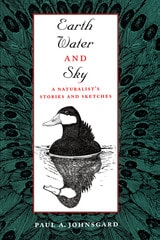
Earth, Water, and Sky
A Naturalist's Stories and SketchesBy Paul A. Johnsgard
University of Texas Press, 1999
"As I write this, I am sitting in a cabin at Cedar Point Biological Station in southwestern Nebraska.... The glorious elemental mixture of earth, water, and sky around me is the home of nearly three hundred species of birds, and comprises one of my favorite places in the world. Here no radio stations blare out the most recent results of meaningless sports events ... no traffic noises confound the senses. Instead the wind is the unquestioned dominating summer influence. The prairie grasses bend willingly and gracefully before it, and the leaves of the cottonwood trees convert its breezes into soft music."
Paul Johnsgard is one of America's most prominent ornithologists and a world authority on waterfowl behavior. In these popularly written, often lyrical essays, he describes some of his most fascinating encounters with birds, from watching the annual mating displays of prairie-chickens on a hilltop in Pawnee County, Nebraska, to attempting to solve some of the mysteries surrounding Australia's nearly flightless musk duck.
Reflecting his worldwide interests and travels, the birds Johnsgard describes inhabit many parts of the globe. Grouping the birds by the element they frequent most—earth, water, or sky—he weaves a wealth of accurate natural history into personal stories drawn from a lifetime of avian observation. And, as a bonus, Johnsgard's lovely pen-and-ink drawings illustrate each species he describes.

Earthquake Fears, Predictions, and Preparations in Mid-America
John E. Farley
Southern Illinois University Press, 1998
The New Madrid Seismic Zone (NMSZ) generated the strongest earthquakes ever observed in the lower forty-eight states in 1811 and 1812. And the region is overdue for another damaging quake. When self-proclaimed climatologist lben Browning predicted that a major earthquake would shatter the Heartland on 2 or 3 December 1990, many living within reach of the New Madrid fault zone reacted with varying combinations of preparation and panic.
John Farley’s study reports the results of four surveys conducted in the NMSZ both before and after the quake prediction. Thus, Farley notes the level of awareness and preparation at the height of the Browning-induced scare and shows to what extent earthquake awareness and preparedness were sustained in this region after the most widely publicized prediction in recent history proved baseless. All four surveys offer important insights into what people believe about earthquake risk in the NMSZ, what they know about earthquakes, what specific actions they have—and have not—taken in preparation for earthquakes, and what they think a severe quake would do to their neighborhoods.
Farley is the first researcher to study the response to an earthquake prediction while the prediction remained in effect and to continue the inquiry after the date covered by the prediction had passed. He is also the first researcher to look at earthquake awareness and preparedness in the NMSZ over an extended period of time.

East African Mammals
An Atlas of Evolution in Africa, Volume 2, Part A: Insectivores and BatsJonathan Kingdon
University of Chicago Press, 1984
Volume IIA of East African Mammals begins a two-part study of East Africa's smallest and least conspicuous mammals. It deals with bats and insectivores, including tenrecs, moles, hedgehogs, and shrews.
In each volume Kingdon combines his text with hundreds of finished drawings and quick sketches, the latter a form of field note that provides an incomparable description of the animal's movements and personality. Kingdom explains his drawings "as a wordless questioning of form. . . . The probing pencil is like the dissecting scalpel, seeking to expose relevant structures that may not be immediately obvious and are certainly hidden from the shadowy world of the camera lens." As an artist, Kingdon's achievement has been compared with Audubon's; as a scientist, his work has made these volumes indispensable to any serious student of East African mammals.
East African Mammals
An Atlas of Evolution in Africa, Volume 2, Part B: Hares and RodentsJonathan Kingdon
University of Chicago Press, 1984
Volume IIB of East African Mammals is a study of some of East Africa's smallest and least conspicuous mammals, hares and rodents.
In each volume Kingdon combines his text with hundreds of finished drawings and quick sketches, the latter a form of field note that provides an incomparable description of the animal's movements and personality. Kingdom explains his drawings "as a wordless questioning of form. . . . The probing pencil is like the dissecting scalpel, seeking to expose relevant structures that may not be immediately obvious and are certainly hidden from the shadowy world of the camera lens." As an artist, Kingdon's achievement has been compared with Audubon's; as a scientist, his work has made these volumes indispensable to any serious student of East African mammals.
East African Mammals
An Atlas of Evolution in Africa, Volume 3, Part A: CarnivoresJonathan Kingdon
University of Chicago Press, 1989
Volume IIIA documents the carnivores of East Africa—lions, cheetahs, jackals, otters, civets, genets, mongooses, hyenas, and such lesser-known species as the zorilla and the aardwolf.
The beauty of the animals, so vivid in these incomparable drawings, is made more poignant by the acknowledgment of their increasingly endangered status. Kingdon discusses the inevitable problems posed by large mammal communities in a developing continent and includes numerous maps indicating their declining ranges and populations.
East African Mammals
An Atlas of Evolution in Africa, Volume 3, Part B: Large MammalsJonathan Kingdon
University of Chicago Press, 1989
Volume IIIB celebrates the large mammals for which the African plains are so famous—elephants, rhinos, zebras, bushpigs, and warthogs, hippopotamuses, camels, chevrotains, giraffes. Kingdon brings his artist's eye to such puzzles as the zebra's stripes and the giraffe's spots, making original observations throughout the seven volumes about the evolutionary and functional significance of coat color, facial expressions, and curious forms and markings.
The beauty of the animals, so vivid in these incomparable drawings, is made more poignant by the acknowledgment of their increasingly endangered status. Kingdon discusses the inevitable problems posed by large mammal communities in a developing continent and includes numerous maps indicating their declining ranges and populations.
East African Mammals
An Atlas of Evolution in Africa, Volume 3, Part C: BovidsJonathan Kingdon
University of Chicago Press, 1989
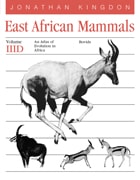
East African Mammals
An Atlas of Evolution in Africa, Volume 3, Part D: BovidsJonathan Kingdon
University of Chicago Press, 1989
East Coast Wineries
A Complete Guide from Maine to VirginiaDe Vito, Carlo
Rutgers University Press, 2003
Look out Napa Valley. From Maine to Virginia, a surprising number of vintners are producing impressive wines worthy of a celebratory toast. Or two.
Once thought to be a region dominated by quaint farm wines, the eastern U.S. now boasts a number of highly coveted wines. Pinot Noirs and Merlots, Rieslings and Gewürztraminers are being bottled all along the Atlantic, so even the most discriminating wine drinker can find something to please the palate.
Here is the only comprehensive, up-to-date directory to nearly 300 wineries across New England and the mid-Atlantic. Wineries in thirteen states are covered: Connecticut, Delaware, Maine, Maryland, Massachusetts, New Hampshire, New Jersey, New York, Pennsylvania, Rhode Island, Vermont, Virginia, and West Virginia.
Invaluable as both a buying and touring guide, East Coast Wineries offers insights into the winemaking world and puts the reviews of the experts at your fingertips. Features include:
A short history of the winery
A listing of wines offered by that winery, plus recommended buys
Reviews by wine experts from major newspapers, magazines, and journals
Directions and hours of operation
A listing of annual wine festivals and other special events
Whether you’re a wine connoisseur or a beginner, East Coast Wineries is the book to read. Cheers!
Eastern Alpine Guide
Natural History and Conservation of Mountain Tundra East of the RockiesEdited by Mike Jones and Liz Willey
University Press of New England, 2018
Eating Our Way through the Anthropocene
Jessica Fanzo
University of Utah Press, 2022
Originally delivered as the Stegner Lecture at the 2020 annual symposium of the Wallace Stegner Center for Land, Resources and the Environment, this book explores how, in the context of the broad global trends of population growth, climate crisis, and inequitable food availability, food systems need to be re-oriented to ensure they can produce enough food to nourish the world. Fanzo discusses moving toward on-farm sustainable food production practices, decreasing food loss and waste, addressing poverty by creating jobs and decent livelihoods, and providing safe, affordable, and healthy diets for everyone. At the same time, food systems must decrease the pressure on biodiversity loss, conserve land and water resources, minimize air and water pollution, and lower greenhouse gas emissions.
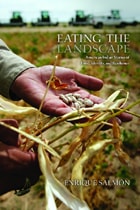
Eating the Landscape
American Indian Stories of Food, Identity, and ResilienceEnrique Salmón
University of Arizona Press, 2012
"Eating is not only a political act, it is also a cultural act that reaffirms one’s identity and worldview," Enrique Salmón writes in Eating the Landscape. Traversing a range of cultures, including the Tohono O’odham of the Sonoran Desert and the Rarámuri of the Sierra Tarahumara, the book is an illuminating journey through the southwest United States and northern Mexico. Salmón weaves his historical and cultural knowledge as a renowned indigenous ethnobotanist with stories American Indian farmers have shared with him to illustrate how traditional indigenous foodways—from the cultivation of crops to the preparation of meals—are rooted in a time-honored understanding of environmental stewardship.
In this fascinating personal narrative, Salmón focuses on an array of indigenous farmers who uphold traditional agricultural practices in the face of modern changes to food systems such as extensive industrialization and the genetic modification of food crops. Despite the vast cultural and geographic diversity of the region he explores, Salmón reveals common themes: the importance of participation in a reciprocal relationship with the land, the connection between each group’s cultural identity and their ecosystems, and the indispensable correlation of land consciousness and food consciousness. Salmón shows that these collective philosophies provide the foundation for indigenous resilience as the farmers contend with global climate change and other disruptions to long-established foodways. This resilience, along with the rich stores of traditional ecological knowledge maintained by indigenous agriculturalists, Salmón explains, may be the key to sustaining food sources for humans in years to come.
As many of us begin to question the origins and collateral costs of the food we consume, Salmón’s call for a return to more traditional food practices in this wide-ranging and insightful book is especially timely. Eating the Landscape is an essential resource for ethnobotanists, food sovereignty proponents, and advocates of the local food and slow food movements.
Eating the Ocean
Elspeth Probyn
Duke University Press, 2016
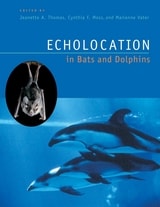
Echolocation in Bats and Dolphins
Edited by Jeanette A. Thomas, Cynthia F. Moss, and Marianne Vater
University of Chicago Press, 2003
Echolocation in Bats and Dolphins consists of six sections: mechanisms of echolocation signal production; the anatomy and physiology of signal reception and interpretation; performance and cognition; ecological and evolutionary aspects of echolocation mammals; theoretical and methodological topics; and possible echolocation capabilities in other mammals, including shrews, seals, and baleen whales. Animal behaviorists, ecologists, physiologists, and both scientists and engineers who work in the field of bioacoustics will benefit from this book.
Eco-pragmatism
Making Sensible Environmental Decisions in an Uncertain WorldDaniel A. Farber
University of Chicago Press, 1999
"A comprehensive well-argued effort to address many of the most difficult issues facing legislators concerned with environmental issues."—Stephen P. Adamian, Boston Book Review
"A timely and well-argued contribution."—Calestous Juma, Nature
Ecoambiguity
Environmental Crises and East Asian LiteraturesKaren Laura Thornber
University of Michigan Press, 2012
Ecoambiguity is the first book in any language to analyze Chinese, Japanese, Korean, and Taiwanese literary treatments of damaged ecosystems. Thornber closely examines East Asian creative portrayals of inconsistent human attitudes, behaviors, and information concerning the environment and takes up texts by East Asians who have been translated and celebrated around the world, including Gao Xingjian, Ishimure Michiko, Jiang Rong, and Ko Un, as well as fiction and poetry by authors little known even in their homelands. Ecoambiguity addresses such environmental crises as deforesting, damming, pollution, overpopulation, species eradication, climate change, and nuclear apocalypse. This book opens new portals of inquiry in both East Asian literatures and ecocriticism (literature and environment studies), as well as in comparative and world literature.

Ecocide
A Short History of the Mass Extinction of SpeciesFranz Broswimmer
Pluto Press, 2002

Ecocritique
Contesting the Politics of Nature, Economy, and CultureTimothy W. Luke
University of Minnesota Press, 1997
Ecocriticism, whether coming from “back to nature” conservatives, Nature Conservancy liberals, or Earth First! radicals, is familiar enough. But when we listen do we really hear what these groups are saying? In a book that examines the terms of ecocriticism, Timothy W. Luke exposes how ecological critics, organizations, and movements manipulate our conception of the environment. Turning the tables on the ecocritics, Luke demonstrates how ecocriticism can move beyond its familiar confines to engage larger cultural, economic, and political questions.
Ecocritique rereads ecocriticism to reveal how power and economy, society and culture, community and technology compete over what are now widely regarded as the embattled ecosystems of nature. Luke considers in particular how the meanings and values attached to the environment by various groups—from the Worldwatch Institute, the Nature Conservancy, and Earth First! to proponents of green consumerism, social ecology, and sustainable development—articulate new visions of power and subjectivity for a post-Cold War era.
This accessibly written work opens with deep ecology and concludes with social ecology, along the way reconsidering thinkers with green philosophical leanings, including Herbert Marcuse, Paolo Soleri, and Murray Bookchin. In systematic critiques reexamining the cultural practices and ethical values of contemporary environmentalism, Luke highlights the political dilemmas of biocentrism and anthropocentrism in modern ecological thinking.
With its critical analysis of many contemporary environmental discourses and organizations, Ecocritique makes a major contribution to ongoing debates about the political relationships among nature, culture, and economics in the current global system.

Ecofeminism
edited by Greta Gaard
Temple University Press, 1993
Drawing on the insights of ecology, feminism, and socialism, ecofeminism's basic premise is that the ideology that authorizes oppression based on race, class, gender, sexuality, physical abilities, and species is the same ideology that sanctions the oppression of nature. In this collection of essays, feminist scholars and activists discuss the relationships among human begins, the natural environment, and nonhuman animals. They reject the nature/culture dualism of patriarchal thought and locate animals and humans within nature. The goal of these twelve articles is to contribute to the evolving dialogue among feminists, ecofeminists, animal liberationists, deep ecologists, and social ecologists in an effort to create a sustainable lifestyle for all inhabitants of the earth.
Among the issues addressed are the conflicts between Green politics and ecofeminism, various applications of ecofeminist theory, the relationship of animal liberation to ecofeminism, harmful implications of the romanticized woman-nature association in Western culture, and cultural limitations of ecofeminism.
In the series Ethics and Action, edited by Tom Regan.

Ecofeminist Literary Criticism
Theory, Interpretation, PedagogyEdited by Greta Gaard and Patrick D. Murphy
University of Illinois Press, 1998
Ecofeminism is a practical movement for social change that discerns interconnections among all forms of oppression: the exploitation of nature, the oppression of women, class exploitation, racism, colonialism. Against binary divisions such as self/other, culture/nature, man/woman, humans/animals, and white/non-white, ecofeminist theory asserts that human identity is shaped by more fluid relationships and by an acknowledgment of both connection and difference.
Once considered the province of philosophy and women's studies, ecofeminism in recent years has been incorporated into a broader spectrum of academic discourse. Ecofeminist Literary Criticism assembles some of the most insightful advocates of this perspective to illuminate ecofeminism as a valuable component of literary criticism.
Ecohumanism and the Ecological Culture
The Educational Legacy of Lewis Mumford and Ian McHargWilliam J. Cohen
Temple University Press, 2019
Lewis Mumford, one of the most respected public intellectuals of the twentieth century, speaking at a conference on the future environments of North America, said, “In order to secure human survival we must transition from a technological culture to an ecological culture.” In Ecohumanism and the Ecological Culture, William Cohen shows how Mumford’s conception of an educational philosophy was enacted by Mumford’s mentee, Ian McHarg, the renowned landscape architect and regional planner at the University of Pennsylvania. McHarg advanced a new way to achieve an ecological culture―through an educational curriculum based on fusing ecohumanism to the planning and design disciplines.
Cohen explores Mumford’s important vision of ecohumanism—a synthesis of natural systems ecology with the myriad dimensions of human systems, or human ecology―and how McHarg actually formulated and made that vision happen. He considers the emergence of alternative energy systems and new approaches to planning and community development to achieve these goals.
The ecohumanism graduate curriculum should become the basis to train the next generation of planners and designers to lead us into the ecological culture, thereby securing the educational legacy of both Lewis Mumford and Ian McHarg.
Ecological Aesthetics
artful tactics for humans, nature, and politicsNathaniel Stern
Dartmouth College Press, 2018
Ecological Borderlands
Body, Nature, and Spirit in Chicana FeminismChristina Holmes
University of Illinois Press, 2016
Holmes revisits key debates to analyze issues surrounding embodiment, women's connections to nature, and spirituality's role in ecofeminist philosophy and practice. By doing so, she challenges Chicanas to escape the narrow frameworks of the past in favor of an inclusive model of environmental feminism that alleviates Western biases. Holmes uses readings of theory, elaborations of ecological narratives in Chicana cultural productions, histories of human and environmental rights struggles in the Southwest, and a description of an activist exemplar to underscore the importance of living with decolonializing feminist commitment in body, nature, and spirit.
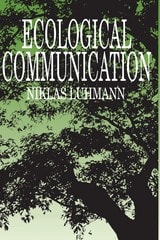
Ecological Communication
Niklas Luhmann
University of Chicago Press, 1989
Luhmann extends the concept of "ecology" to refer to any analysis that looks at connections between social systems and the surrounding environment. He traces the development of the notion of "environment" from the medieval idea—which encompasses both human and natural systems—to our modern definition, which separates social systems from the external environment.
In Luhmann's thought, human beings form part of the environment, while social systems consist only of communications. Utilizing this distinctive theoretical perspective, Luhmann presents a comprehensive catalog of society's reactions to environmental problems. He investigates the spheres of the economy, law, science, politics, religion, and education to show how these areas relate to environmental issues.
Ecological Communication is an important work that critically examines claims central to our society—claims to modernity and rationality. It will be of great importance to scholars and students in sociology, political science, philosophy, anthropology, and law.
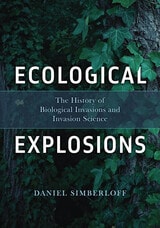
Ecological Explosions
The History of Biological Invasions and Invasion ScienceDaniel Simberloff
University of Chicago Press, 2025
From the arrival of the naval shipworm in the Black Sea in the first millennium BC to the escape of the Burmese python in Florida in 1992, humans have moved species to new locations, deliberately or inadvertently, for thousands of years. Agricultural and environmental impacts of some invasions were evident early, although whether observers recognized that the cause was an introduced species is uncertain. The history of invasion biology truly begins in the sixteenth through eighteenth centuries, when explorers noticed European species on various distant islands and in North America. In the nineteenth century, biogeographers, studying species distributions across the globe, introduced the first native and non-native species categorizations, and prominent researchers like Charles Darwin began to describe the impacts of introduced species. In the nineteenth and twentieth centuries, as humans moved increasing numbers of species across the globe, the advent of modern ecology deepened our understanding of the scope of the problem.
In Ecological Explosions, invasive species expert Daniel Simberloff provides a thorough overview of the development of invasion science, from early research—including from the perspectives of leading scientists like Aldo Leopold—to the field’s future. Simberloff explores the work of pioneering ecologists like Charles Elton, antecedents of what became today’s invasion biology, before discussing the field’s true emergence in the 1980s, its explosive methodological and theoretical expansion, its integration with other disciplines, and its increasing visibility, not only within the biological literature but also in government policies across the world in the 1990s. Finally, he investigates current controversies, such as the debate over whether the entire science is xenophobic, and asks how ecosystems might adapt to a rapidly globalizing world and ever-increasing numbers of introduced species—including the joro spider, lionfish, spotted lanternfly, common reed, and Asian carp.
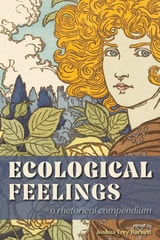
Ecological Feelings
A Rhetorical CompendiumJoshua Trey Barnett
Michigan State University Press, 2025

Ecological Niches
Linking Classical and Contemporary ApproachesJonathan M. Chase and Mathew A. Leibold
University of Chicago Press, 2003
Chase and Leibold define the niche as including both what an organism needs from its environment and how that organism's activities shape its environment. Drawing on the theory of consumer-resource interactions, as well as its graphical analysis, they develop a framework for understanding niches that is flexible enough to include a variety of small- and large-scale processes, from resource competition, predation, and stress to community structure, biodiversity, and ecosystem function. Chase and Leibold's synthetic approach will interest ecologists from a wide range of subdisciplines.
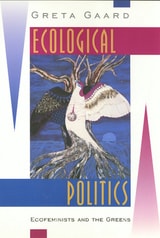
Ecological Politics
Greta Gaard
Temple University Press, 1998
A member of both movements, Greta Gaard bases her analysis on her personal experience as well as extensive secondary sources and interviews with key theorists, activists, and speakers across the United States. By allowing each movement's members to speak for themselves, she traces the separate origins and development of each movement, explains their connections, and reveals the light that each can cast upon the other and on the difficulties facing social action in general.
Beginning with the ecofeminists, Gaard describes the paths -- environmental causes, the feminist peace movement, the feminist spirituality movement, the animal liberation movement, and the anti-toxics movements, as well as experiences of interconnectedness -- that have led women (and a few men) to articulate an ecofeminist perspective. Tracing the movement from the 1980s to the present, she defines its present strands as liberal ecofeminism, radical ecofeminism, socialist ecofeminism, and social ecofeminism.
Gaard illustrates the development of the U.S. Greens from a national movement into a political party. She defines the various factions -- the Left Greens, the Youth Greens, and the Green Politics Network -- that influenced the movement's direction and underlay the debates during Ralph Nadar's 1996 presidential campaign. She shows how the history of these three groups can be seen as stages in the transition from a leftist and sometimes anarchist action that places the Green movement squarely within the pattern of other social movements around the world.
Despite the significant influence that ecofeminists have had in shaping the Greens as a national movement, many have chosen to withdraw from the Greens. Gaard looks at the reasons for member disaffection and draws disturbing conclusions about the compatibility between liberal feminism and cultural ecofeminism and patriarchal politics. She also presents the divisions within the Greens as ongoing battles within the new left, the radical ecology movement, and various social justice movements. She focuses on three general areas -- conflicts over philosophy, conflicts over representation, and conflicts over strategy -- to make suggestions for how to bring about the kind of social transformation envisioned by both the Greens and the ecofeminists. Arguing that the Concord Principles represent a populist form of liberal democracy that fundamentally betrays both ecofeminism and Green philosophy, she uses the 1996 Nadar campaign as a departure point to developing an ecofeminist theory of radical democracy and to speculate on future directions for Green politics and for ecofeminism. Her analysis illuminates the nature and direction of each of these important movements and the pressures and conflicts experienced by all social movements at the end of the twentieth century.

Ecological Restoration in the Midwest
Past, Present, and FutureChristian Lenhard and Peter C. Smiley, Jr.
University of Iowa Press, 2018
Most people do not realize it, but the Midwest has been at the forefront of ecological restoration longer than perhaps any other region in the United States, dating back to the 1930s. Because of its industrial history, agricultural productivity, and natural features such as the Great Lakes, the Midwest has always faced a unique set of ecological challenges.
Focusing on six cutting-edge case studies that highlight thirty restoration efforts and research sites throughout the region— Iowa, Indiana, Illinois, Wisconsin, Michigan, Minnesota, and Ohio— editors Christian Lenhart and Peter “Rocky” Smiley Jr. bring together a group of scholars and practitioners to show how midwestern restoration efforts have developed, as well as where they are headed. Whether cleaning up contamination from auto plants in Ohio, or restoring native prairie grasses along the Iowa highway, the contributors uncover a vast network of interested citizens and volunteer groups committed to preserving the region’s environment.
This study, intended for researchers, students, and practitioners, also provides an updated synthesis of restoration theory and practice, and pinpoints emerging issues of importance in the Midwest, such as climate change and the increase in invasive species it will bring to the region. Though focusing exclusively on the Midwest, the contributors demonstrate how these case studies apply to restoration efforts across the globe.
Contributors: Luther Aadland, David P. Benson, Andrew F. Casper, Hua Chen, Joe DiMisa, Steve Glass, Heath M. Hagy, John A. Harrington, Neil Haugerud, Constance Hausman, Michael J. Lemke, Christian Lenhart, Jen Lyndall, Dan Shaw, John A. Shuey, Peter C. Smiley Jr., Daryl Smith
Ecologies of a Storied Planet in the Anthropocene
Serpil Oppermann
West Virginia University Press, 2023
Ecologies of a Storied Planet in the Anthropocene is a tour de force. With transdisciplinarity and theoretical lucidity, it rethinks the Anthropocene from a material ecocritical perspective, envisioning innovative modes of knowledge for deeper understandings of Anthropocene ecologies. Focusing on nonhuman agencies, Serpil Oppermann shows in fascinating detail how to better imagine an ecological future on our storied planet that has suffered enormously from an anthropocentric mindset.
Ecology As Politics
Andre Gorz
Pluto Press, 2014
Ecology and Evolution in the Tropics
A Herpetological PerspectiveEdited by Maureen A. Donnelly, Brian I. Crother, Craig Guyer, Marvalee H. Wake,
University of Chicago Press, 2005
Ecology and Evolution of Poeciliid Fishes
Edited by Jonathan P. Evans, Andrea Pilastro, and Ingo Schlupp
University of Chicago Press, 2011
The history of biology is populated by numerous model species or organisms. But few vertebrate groups have aided evolutionary and ecological research more than the live-bearing fishes of the family Poeciliidae. Found throughout tropical and subtropical waters, poeciliids exhibit a fascinating variety of reproductive specializations, including viviparity, matrotrophy, unisexual reproduction, and alternative mating strategies, making them ideal models for research on patterns and processes in ecology, behavior, and evolution.
Ecology and Evolution of Poeciliid Fishes is a much-needed overview of the scientific potential and understanding of these live-bearing fishes. Chapters by leading researchers take up a wide range of topics, including the evolution of unisexual reproduction, life in extreme environments, life-history evolution, and genetics. Designed to provide a single and highly approachable reference, Ecology and Evolution of Poeciliid Fishes will appeal to students and specialists interested in all aspects of evolutionary ecology.
Ecology and Management of Cowbirds and Their Hosts
Studies in the Conservation of North American Passerine BirdsBy James N. M. Smith, Terry L. Cook, Stephen I. Rothstein, Scott K. Robinson, and Spencer G. Sealy
University of Texas Press, 2000
In the past two centuries, cowbirds have increased in numbers and extended their range across North America, while many of the native songbird species whose nests they parasitize to raise their young have declined. This timely book collects forty essays by most of the principal authorities on the biology and management of cowbirds. The book's goals are to explore the biology of cowbirds, the threats they pose to host species and populations, and the management programs that are being undertaken to minimize these threats.
The book is organized into five sections, each with an extended editors' introduction that places the contributions in a broad, up-to-date setting. The sections cover:
- The changing abundance of cowbirds and the ways in which their numbers can be estimated.
- Host choice by cowbirds, the negative effects of cowbirds on particular host species, and the daily patterns of cowbird behavior.
- Behavioral interactions between cowbirds and specific host species.
- Patterns of cowbird abundance and host use across varying landscapes.
- Management programs designed to control cowbirds and protect threatened songbirds.
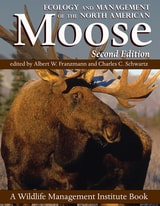
Ecology and Management of the North American Moose, Second Edition
Charles C. Schwartz
University Press of Colorado, 2007
Contributors include Warren B. Ballard, Arnold H. Boer, Anthony B. Bubenik, M. E. Buss, Kenneth N. Child, Vincent F.J. Crichton, Albert W. Franzmann, Kris J. Hundertmark, Patrick D. Karns, Murray W. Lankester, Richard E. McCabe, James M. Peek, Henry M. Reeves, Wayne L. Regelin, Lyle A. Renecker, William M. Samuel, Charles C. Schwartz, Robert W. Stewart, Ian D. Thompson, H. R. Timmermann, and Victor Van Ballenberghe. A Wildlife Management Institute book
Ecology and the Environment
The Mechanisms, Marrings, and Maintenance of NatureR. J. Berry
Templeton Press, 2011
Ecology and the Environment: The Mechanisms, Marring, and Maintenance of Nature is the ninth title published in the Templeton Science and Religion Series, in which scientists from a wide range of fields distill their experience and knowledge into brief tours of their respective specialties. In this volume, R. J. Berry, a well-known leader in the field of ecology, describes the basic concepts of ecology and seeks to put them into a general context for a reader who lacks any scientific background.

Ecology of the Bay of Quinte
Health, Management and Global ImplicationsC.K. Minns
Michigan State University Press, 2022

Ecomusicology
Rock, Folk, and the EnvironmentMark Pedelty
Temple University Press, 2012
Can musicians really make the world more sustainable? Anthropologist Mark Pedelty, joined an eco-oriented band, the Hypoxic Punks, to find out. In his timely and exciting book, Ecomusicology, Pedelty explores the political ecology of rock, from local bands to global superstars. He examines the climate change controversies of U2's 360 Degrees stadium tour—deemed excessive by some—and the struggles of local folk singers who perform songs about the environment. In the process, he raises serious questions about the environmental effects and meanings on music.
Ecomusicology examines the global, national, regional, and historical contexts in which environmental pop is performed. Pedelty reveals the ecological potentials and pitfalls of contemporary popular music, in part through ethnographic fieldwork among performers, audiences, and activists. Ultimately, he explains how popular music dramatically reflects both the contradictions and dreams of communities searching for sustainability.
Ecopoetics
Essays in the FieldAngela Hume and Gillian Osborne
University of Iowa Press, 2018
Ecopoetics: Essays in the Field makes a formidable intervention into the emerging field of ecopoetics. The volume’s essays model new and provocative methods for reading twentieth and twenty-first century ecological poetry and poetics, drawing on the insights of ecocriticism, contemporary philosophy, gender and sexuality studies, black studies, Native studies, critical race theory, and disability studies, among others.
Contributors offer readings of a diverse range of poets, few of whom have previously been read as nature writers—from midcentury Beat poet Michael McClure, Objectivist poet George Oppen, and African American poets Melvin Tolson and Robert Hayden; to contemporary writers such as Diné poet Sherwin Bitsui, hybrid/ collage poets Claudia Rankine and Evelyn Reilly, emerging QPOC poet Xandria Phillips, and members of the Olimpias disability culture artists’ collective. While addressing preconceptions about the categories of nature writing and ecopoetics, contributors explore, challenge, and reimagine concepts that have been central to environmental discourse, from apocalypse and embodiment to toxicity and sustainability.
This collection of essays makes the compelling argument that ecopoetics should be read as “coextensive with post-1945 poetry and poetics,” rather than as a subgenre or movement within it. It is essential reading for any student or scholar working on contemporary literature or in the environmental humanities today.
Contributors: Joshua Bennett, Rob Halpern, Matt Hooley, Angela Hume, Lynn Keller, Petra Kuppers, Michelle Niemann, Gillian Osborne, Samia Rahimtoola, Joan Retallack, Joshua Schuster, Jonathan Skinner.
Ecopoetics
The Language of Nature, the Nature of LanguageScott Knickerbocker
University of Massachusetts Press, 2012
Ecopoetics probes the complex relationship between artifice and the natural world in the work of modern American poets—in particular Wallace Stevens, Elizabeth Bishop, Richard Wilbur, and Sylvia Plath. These poets relate to nature as a deep wellspring of meaning, although they all avoid using language the way most nature writers do, merely to reflect or refer directly to the world. Each of these poets, in his or her own distinct way, employs instead what Knickerbocker terms sensuous poesis, the process of rematerializing language through sound effects and other formal devices as a sophisticated response to nonhuman nature.
Rather than attempt to erase the artifice of their own poems, to make them seem more natural and thus supposedly closer to nature, the poets in this book unapologetically embrace artifice—not for its own sake but in order to perform and enact the natural world. Indeed, for them, artifice is natural. In examining their work, Knickerbocker charts a new direction for ecocriticism.
Ecopolitics
Building a Green SocietyColeman, Daniel
Rutgers University Press, 1994
Those solutions are just "Band-Aids on a bleeding Earth," argues environmental activist Daniel A. Coleman. Where conventional wisdom sees both the cause of the environmental crisis and its cure in individual actions, Coleman says: Look again. By blaming ourselves as individuals, we let governments and corporations off the hook. Making "50 simple" changes in our personal lifestyles is worthwhile, but must not divert our attention from the underlying causes of environmental disaster. The real causes are rooted deep in the politics of human affairs-and so are their solutions.We should be asking: Why do we allow such harm to our environment? How did we create a society with no stake in the future? How can we build a green society?
The good news is that we can reverse the process of environmental abuse. Political strategies driven by the key values of ecological responsibility, participatory democracy, environmental justice, and community action are effective. Dan Coleman's stories of citizen groups whose grassroots organizing has already put ecologically sound policies in place demonstrate that the sustainable society is indeed possible.
Lucid, lively, probing, serious, yet optimistic-Coleman's analysis is required reading for all who count the earth as their home.
Ecosublime
Environmental Awe and Terror from New World to OddworldLee Rozelle
University of Alabama Press, 2006
Explores 19th-century, modern, postmodern, and millennial texts as they portray the changing ecological face of America
Lee Rozelle probes the metaphor of environmental catastrophe in American literature of the last 150 years. In each instance, Rozelle finds evidence that the ecosublime--nature experienced as an instance of wonder and fear--profoundly reflects spiritual and political responses to the natural world, America’s increasingly anti-ecological trajectory, and the ascendance of a post-natural landscape.
In the 19th century, Rozelle argues, Isabella Bird and Edgar Allan Poe represented the western wilderness as culturally constructed and idealized landscapes. Gardens, forests, and frontiers are conceptual frameworks that either misrepresent or uphold ecological space. Modernists like Nathanael West and William Carlos Williams, on the other hand, portray urban space as either wastelands or mythical urban gardens. A chapter on Charles W. Chesnutt and Rebecca Harding Davis analyzes a new breed of literary eco-advocate, educating and shocking mainstream readers through depictions of ecological disaster. A later chapter probes the writings of Edward Abbey and the Unabomber Manifesto to delve into the sublime dimensions of environmental activism, monkey-wrenching, and eco-terrorism.
Ecosystem-Based Management of Laurentian Great Lakes Areas of Concern
Three Decades of U.S. - Canadian Cleanup and RecoveryJohn H. Hartig
Michigan State University Press, 2021
Ecoviews Too
Ecology for All SeasonsWhit Gibbons and Anne R. Gibbons
University of Alabama Press, 2017
Discover the wonders of ecology through the changing seasons of the natural world.
Whit Gibbons and Anne R. Gibbons’s Ecoviews Too: Ecology for All Seasons is based on the popular weekly column “Ecoviews,” published by numerous newspapers for more than thirty years. A follow-up to Ecoviews: Snakes, Snails and Environmental Tales, this lively and entertaining book provides a fascinating and thought-provoking look at the ecology of animals, plants, and their habitats, and promotes awareness of pressing environmental issues.
Because nature, in all its myriad and amazing manifestations, can be enjoyed all year round, this collection is conveniently divided into four sections paralleling the seasons and tracking the adaptations and responses of wildlife to the relentless changes that occur at any location over time. The ecological vignettes focus on seasonal happenings in the cycle of life. The authors not only draw parallels between the natural world and human activities but also highlight unique behaviors of various plant and animal species. They often use humor to get across their message regarding the need to protect our native species and the habitats they depend on for survival.
An intriguing and captivating publication, Ecoviews Too is comprised of fifty informative essays that address ecological topics such as camouflage and mimicry, hibernation and estivation, the human need to encounter scary animals, the mysteries of plant dormancy in winter, the comeback of the wild turkey coinciding with the decline of bobwhites, the chemistry behind the color change in fall leaves, and the top ten environmental problems facing the world today. Educating, entertaining, and delighting a general audience, especially those with an interest in nature, Ecoviews Too provides a useful resource for students and scientists alike.

Ecoviews
Snakes, Snails, and Environmental TalesWhit Gibbons and Anne R. Gibbons
University of Alabama Press, 1998
Discover the wonder of nature through stories that connect science, wildlife, and everyday life.
This lively and entertaining book provides a fascinating and thought-provoking look at the ecology of animals, plants, and their habitats and promotes awareness of pressing environmental issues. The eight informative chapters deliver effective environmental messages and supply compelling insight into the natural world and the ecologists who investigate its many mysteries.
From a concerned ecological stance, the authors show that human relationship with other organisms and the environment is always complex and can be exhilarating, inspiring, humorous, and irritating, depending on perspectives and circumstances. Writing truly to inform and delight, they give a captivating variety of examples from the natural world in hopes of making readers of all ages more compassionate, more tolerant, and more sensitive to other living organisms and their interrelationships. The book celebrates the intrinsic worth of all plants and animals in order to motivate people in a unified effort to preserve the Earth's rich array of life forms. The preservation of the integrity of our planet's biodiversity is, the authors illustrate, critical to our own survival.