479 books match the query 'New York (State)' and 10 start with e
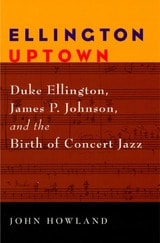
cover of Ellington Uptown: Duke Ellington, James P. Johnson, and the Birth of Concert Jazz

Ellington Uptown

Duke Ellington, James P. Johnson, and the Birth of Concert Jazz

John Howland

University of Michigan Press, 2009

During the early decades of the twentieth century symphonic jazz involved an expansive family of music that emulated, paralleled, and intersected the jazz tradition. Though now largely forgotten, symphonic jazz was both a popular music -- arranging tradition and a repertory of hybrid concert works, both of which reveled in the mildly irreverent interbreeding of white and black and high and low music. While the roots of symphonic jazz can be traced to certain black ragtime orchestras of the teens, the idiom came to maturation in the music of 1920s white dance bands. Through a close examination of the music of Duke Ellington and James P. Johnson, Ellington Uptown uncovers compositions that have usually fallen in the cracks between concert music, jazz, and popular music. It also places the concert works of these two iconic figures in context through an investigation both of related compositions by black and white peers and of symphonic jazz---style arrangements from a diverse number of early sound films, Broadway musicals, Harlem nightclub floor shows, and select interwar radio programs. Both Ellington and Johnson were part of a close-knit community of several generations of Harlem musicians. Older figures like Will Marion Cook, Will Vodery, W. C. Handy, and James Reese Europe were the generation of black musicians that initially broke New York entertainment's racial barriers in the first two decades of the century. By the 1920s, Cook, Vodery, and Handy had become mentors to Harlem's younger musicians. This generational connection is a key for understanding Johnson’s and Ellington's ambitions to use the success of Harlem's white-oriented entertainment trade as a springboard for establishing a black concert music tradition based on Harlem jazz and popular music.
[more]
cover of Empire City: The Making And Meaning Of

Empire City

The Making And Meaning Of

David Scobey

Temple University Press, 2003

New York's metamorphosis from compact port to modern metropolis occurred during the mid-nineteenth century. Empire City tells the story of the dreams that inspired the changes in the landscape and the problems that eluded solution.

Author David Scobey paints a remarkable panorama of New York's uneven development, a city-building process careening between obsessive calculation and speculative excess. Envisioning a new kind of national civilization, "bourgeois urbanists" attempted to make New York the nation's preeminent city. Ultimately, they created a mosaic of grand improvements, dynamic change, and environmental disorder. Empire City sets the stories of the city's most celebrated landmarks -- Central Park, the Brooklyn Bridge, the downtown commercial center -- within the context of this new ideal of landscape design and a politics of planned city building. Perhaps such an ambitious project  for guiding growth, overcoming spatial problems, and uplifting public was bound to fail; still, it grips the imagination.

[more]
cover of English Embroidery from the Metropolitan Museum of Art, 1580-1700: ‘Twixt Art and Nature

English Embroidery from the Metropolitan Museum of Art, 1580-1700

‘Twixt Art and Nature

Melinda Watt

Bard Graduate Center, 2009
[more]
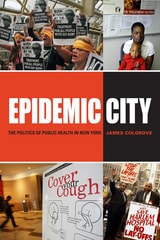
cover of Epidemic City: The Politics of Public Health in New York

Epidemic City

The Politics of Public Health in New York

James Colgrove

Russell Sage Foundation, 2011
An insightful chronicle of the changing public health demands in New York City. The first permanent Board of Health in the United States was created in response to a cholera outbreak in New York City in 1866. By the mid-twentieth century, thanks to landmark achievements in vaccinations, medical data collection, and community health, the NYC Department of Health had become the nation's gold standard for public health. However, as the city's population grew in number and diversity, the department struggled to balance its efforts between the treatment of diseases—such as AIDS, tuberculosis, and West Nile Virus—and the prevention of illness-causing factors like lead paint, heroin addiction, homelessness, smoking, and unhealthy foods. In Epidemic City, historian of public health James Colgrove chronicles the challenges faced by the health department since New York City's mid-twentieth-century "peak" in public health provision. This insightful volume draws on archival research and oral histories to examine how the provision of public health has adapted to the competing demands of diverse public needs, public perceptions, and political pressure. Epidemic City analyzes the perspectives and efforts of the people responsible for the city's public health from the 1960s to the present—a time that brought new challenges, such as budget and staffing shortages, and new threats like bioterrorism. Faced with controversies such as needle exchange programs and AIDS reporting, the health department struggled to maintain a delicate balance between its primary focus on illness prevention and the need to ensure public and political support for its activities. In the past decade, after the 9/11 attacks and bioterrorism scares partially diverted public health efforts from illness prevention to threat response, Mayor Michael Bloomberg and Health Commissioner Thomas Frieden were still able to pass New York's Clean Indoor Air Act restricting smoking and significant regulations on trans-fats used by restaurants. This legislation—preventative in nature much like the department's original sanitary code—reflects a return to the nineteenth century roots of public health, when public health measures were often overtly paternalistic. The assertive laws conceived by Frieden and executed by Bloomberg demonstrate how far the mandate of public health can extend when backed by committed government officials. Epidemic City provides a compelling historical analysis of the individuals and groups tasked with negotiating the fine line between public health and political considerations. By examining the department's successes and failures during the ambitious social programs of the 1960s, the fiscal crisis of the 1970s, the struggles with poverty and homelessness in the 1980s and 1990s, and in the post-9/11 era, Epidemic City shows how the NYC Department of Health has defined the role and scope of public health services for the entire nation.
[more]
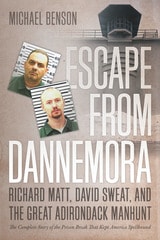
cover of Escape from Dannemora: Richard Matt, David Sweat, and the Great Adirondack Manhunt

Escape from Dannemora

Richard Matt, David Sweat, and the Great Adirondack Manhunt

Michael Benson

University Press of New England, 2017
It was one of the biggest crime stories of the decade—two deadly killers, desperate and on the run. After months of planning, Ricky Matt and David Sweat cut, chopped, coerced, and connived their way out of a maximum-security prison in the wilderness of upstate New York and managed to elude police for three weeks, sending the region into lockdown and keeping the entire country on edge. The media called it “a bold escape for the ages,” and veteran true-crime writer Michael Benson leads us along the story’s every wild path to dig out a tale of adventure, psychology, sex, and brutality. Escape from Dannemora examines the strange case of Joyce Mitchell, the long-time prison employee who had a sexual relationship with at least one of the killers, and who smuggled them tools and aided in the escape, while they cooked up a plan to kill her husband. In the end, Benson looks closely at conditions at the Clinton Correctional Facility in Dannemora, NY, a crumbling Gothic pile now under investigation for charges of drug trafficking and brutality.
[more]
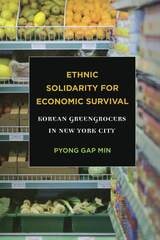
cover of Ethnic Solidarity for Economic Survival: Korean Greengrocers in New York City

Ethnic Solidarity for Economic Survival

Korean Greengrocers in New York City

Pyong Gap Min

Russell Sage Foundation, 2008
Generations of immigrants have relied on small family businesses in their pursuit of the American dream. This entrepreneurial tradition remains highly visible among Korean immigrants in New York City, who have carved out a thriving business niche for themselves operating many of the city's small grocery stores and produce markets. But this success has come at a price, leading to dramatic, highly publicized conflicts between Koreans and other ethnic groups. In Ethnic Solidarity for Economic Survival, Pyong Gap Min takes Korean produce retailers as a case study to explore how involvement in ethnic businesses—especially where it collides with the economic interests of other ethnic groups—powerfully shapes the social, cultural, and economic unity of immigrant groups. Korean produce merchants, caught between white distributors, black customers, Hispanic employees, and assertive labor unions, provide a unique opportunity to study the formation of group solidarity in the face of inter-group conflicts. Ethnic Solidarity for Economic Survival draws on census and survey data, interviews with community leaders and merchants, and a review of ethnic newspaper articles to trace the growth and evolution of Korean collective action in response to challenges produce merchants received from both white suppliers and black customers. When Korean produce merchants first attempted to gain a foothold in the city's economy, they encountered pervasive discrimination from white wholesale suppliers at Hunts Point Market in the Bronx. In response, Korean merchants formed the Korean Produce Association (KPA), a business organization that gradually evolved into a powerful engine for promoting Korean interests. The KPA used boycotts, pickets, and group purchasing to effect enduring improvements in supplier-merchant relations. Pyong Gap Min returns to the racially charged events surrounding black boycotts of Korean stores in the 1990s, which were fueled by frustration among African Americans at a perceived economic invasion of their neighborhoods. The Korean community responded with rallies, political negotiations, and publicity campaigns of their own. The disappearance of such disputes in recent years has been accompanied by a corresponding reduction in Korean collective action, suggesting that ethnic unity is not inevitable but rather emerges, often as a form of self-defense, under certain contentious conditions. Solidarity, Min argues, is situational. This important new book charts a novel course in immigrant research by demonstrating how business conflicts can give rise to demonstrations of group solidarity. Ethnic Solidarity for Economic Survival is at once a sophisticated empirical analysis and a riveting collection of stories—about immigration, race, work, and the American dream.
[more]
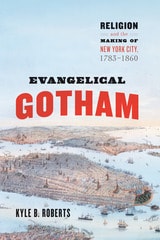
cover of Evangelical Gotham: Religion and the Making of New York City, 1783–1860

Evangelical Gotham

Religion and the Making of New York City, 1783–1860

Kyle B. Roberts

University of Chicago Press, 2016

A portrait of born-again Protestantism in New York City from the American Revolution to the Civil War. 
 
At first glance, evangelical and Gotham seem like an odd pair. What does a movement of pious converts and reformers have to do with a city notoriously full of temptation and sin? More than you might think, says Kyle B. Roberts, who argues that religion must be considered alongside immigration, commerce, and real estate scarcity as one of the forces that shaped the New York City we know today.
 
In Evangelical Gotham, Roberts explores the role of the urban evangelical community in the development of New York between the American Revolution and the Civil War. As developers prepared to open new neighborhoods uptown, evangelicals stood ready to build meetinghouses. As the city’s financial center emerged and solidified, evangelicals capitalized on the resultant wealth, technology, and resources to expand their missionary and benevolent causes. When they began to feel that the city’s morals had degenerated, evangelicals turned to temperance, Sunday school, prayer meetings, antislavery causes, and urban missions to reform their neighbors. The result of these efforts was Evangelical Gotham—a complicated and contradictory world whose influence spread far beyond the shores of Manhattan.
 
 
[more]
cover of Everyday Nature: Knowledge of the Natural World in Colonial New York

Everyday Nature

Knowledge of the Natural World in Colonial New York

Gronim, Sara S

Rutgers University Press, 2007

In the modern world, the public looks to scientists and scholars for their expertise on issues ranging from the effectiveness of vaccines to the causes of natural disasters. But for early Americans, whose relationship to nature was more intimate and perilous than our own, personal experience, political allegiances, and faith in God took precedence over the experiments of the learned.

In Everyday Nature, Sara Gronim shows how scientific advances were received in the early modern world, from the time Europeans settled in America until just before the American Revolution. Settlers approached a wide range of innovations, such as smallpox inoculation, maps and surveys, Copernican cosmology, and Ben Franklin’s experiments with electricity, with great skepticism.  New Yorkers in particular were distrustful because of the chronic political and religious factionalism in the colony. Those discoveries that could be easily reconciled with existing beliefs about healing the sick, agricultural practices, and the revolution of the planets were more readily embraced.

A fascinating portrait of colonial life, this book traces a series of innovations that were disseminated throughout the Atlantic world during the Enlightenment, and shows how colonial New Yorkers integrated new knowledge into their lives.
         

[more]
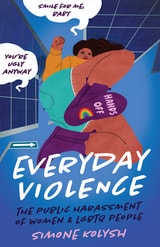
cover of Everyday Violence: The Public Harassment of Women and LGBTQ People

Everyday Violence

The Public Harassment of Women and LGBTQ People

Simone Kolysh

Rutgers University Press, 2021
Everyday Violence is based on ten years of scholarly rage against catcalling and aggression directed at women and Lesbian, Gay, Bisexual, Transgender and Queer (LGBTQ) people of New York City. Simone Kolysh recasts public harassment as everyday violence and demands an immediate end to this pervasive social problem. Analyzing interviews with initiators and recipients of everyday violence through an intersectional lens, Kolysh argues that gender and sexuality, shaped by race, class, and space, are violent processes that are reproduced through these interactions in the public sphere. They examine short and long-term impacts and make inroads in urban sociology, queer and trans geographies, and feminist thought. Kolysh also draws a connection between public harassment, gentrification, and police brutality resisting criminalizing narratives in favor of restorative justice. Through this work, they hope for a future where women and LGBTQ people can live on their own terms, free from violence.
 
[more]
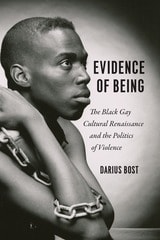
cover of Evidence of Being: The Black Gay Cultural Renaissance and the Politics of Violence

Evidence of Being

The Black Gay Cultural Renaissance and the Politics of Violence

Darius Bost

University of Chicago Press, 2018

Evidence of Being opens on a grim scene: Washington DC’s gay black community in the 1980s, ravaged by AIDS, the crack epidemic, and a series of unsolved murders, seemingly abandoned by the government and mainstream culture. Yet in this darkest of moments, a new vision of community and hope managed to emerge. Darius Bost’s account of the media, poetry, and performance of this time and place reveals a stunning confluence of activism and the arts. In Washington and New York during the 1980s and ’90s, gay black men banded together, using creative expression as a tool to challenge the widespread views that marked them as unworthy of grief. They created art that enriched and reimagined their lives in the face of pain and neglect, while at the same time forging a path toward bold new modes of existence. At once a corrective to the predominantly white male accounts of the AIDS crisis and an openhearted depiction of the possibilities of black gay life, Evidence of Being above all insists on the primacy of community over loneliness, and hope over despair.
[more]