Results by title
201 books match the query 'Regional Studies' and 10 start with e
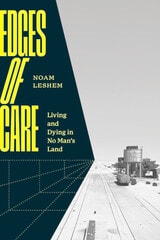
Edges of Care
Living and Dying in No Man’s LandNoam Leshem
University of Chicago Press, 2025
“No man’s land” invokes stretches of barren landscape, twisted barbed wire, desolation, and the devastation of war. But this is not always the reality. According to Noam Leshem in Edges of Care, the term also reveals radical abandonment by the state. From the Northern Sahara to the Amazon rainforests, people around the world find themselves in places that have been stripped of sovereign care. Leshem is committed to defining these spaces and providing a more intimate understanding of this urgent political reality.
Based on nearly a decade of research in some of the world’s most challenging conflict zones, Edges of Care offers a profound account of abandoned lives and lands, and how they endure and sometimes thrive once left to fend for themselves. Leshem interrogates no man’s land as a site of radical uncaring: abandoned by a sovereign power in a relinquishment of responsibility for the space or anyone inside it. To understand the ramifications of such uncaring, Leshem takes readers through a diverse series of abandoned places, including areas in Palestine, Syria, Colombia, Sudan, and Cyprus. He shows that no man’s land is not empty of life, but almost always inhabited and, in fact, often generative of new modes of being. Beautifully written and evocative, Edges of Care reveals the unexamined complexities and political dynamics hidden within and around places governed by callous indifference.
Enduring Legacy
Rhetoric and Ritual of the Lost CauseW. Stuart. Towns
University of Alabama Press, 2013
Explores the crucial role of rhetoric and oratory in creating and propagating a “Lost Cause” public memory of the American South
Enduring Legacy explores the vital place of ceremonial oratory in the oral tradition in the South and analyses how rituals such as Confederate Memorial Day, Confederate veteran reunions, and dedication of Confederate monuments have contributed to creating and sustaining a Lost Cause paradigm for Southern identity. Towns studies in detail secessionist and Civil War speeches and how they laid the groundwork for future generations, including Southern responses to the civil rights movement, and beyond.
The Lost Cause orators that came after the Civil War, Towns argues, helped to shape a lasting mythology of the brave Confederate martyr, and the Southern positions for why the Confederacy lost and who was to blame. Innumerable words were spent—in commemorative speeches, newspaper editorials, and statehouse oratory—condemning the evils of Reconstruction, redemption, reconciliation, and the new and future South. Towns concludes with an analysis of how Lost Cause myths still influence Southern and national perceptions of the region today, as evidenced in debates over the continued deployment of the Confederate flag and the popularity of Civil War reenactments.
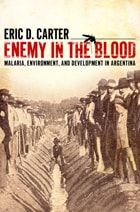
Enemy in the Blood
Malaria, Environment, and Development in ArgentinaEric D. Carter
University of Alabama Press, 2012
Tracing the Fight Against Malaria and the Making of Modern Argentina.
Enemy in the Blood: Malaria, Environment, and Development in Argentina examines the dramatic yet mostly forgotten history of malaria control in northwest Argentina. Carter traces the evolution of malaria science and policy in Argentina from the disease’s emergence as a social problem in the 1890s to its effective eradication by 1950. Malaria-control proponents saw the campaign as part of a larger project of constructing a modern identity for Argentina. Insofar as development meant building a more productive, rational, and hygienic society, the perceptions of a culturally backwards and disease-ridden interior prevented Argentina from joining the ranks of “modern” nations. The path to eradication, however, was not easy due to complicated public health politics, inappropriate application of foreign malaria control strategies, and a habitual misreading of the distinctive ecology of malaria in the northwest, especially the unique characteristics of the local mosquito vector. Homegrown scientific expertise, a populist public health agenda, and an infusion of new technologies eventually brought a rapid end to malaria’s scourge, if not the cure for regional underdevelopment.
Enemy in the Blood sheds light on the often neglected history of northwest Argentina’s interior, adds to critical perspectives on the history of development and public health in modern Latin America, and demonstrates the merits of integrative social-environmental research.
English Lit
PoemsBernard Clay
Ohio University Press, 2021
Autobiographical poetry from one of Kentucky’s rising Affrilachian literary stars.
Bernard Clay’s autobiographical poetry debut, English Lit, juxtaposes the roots of Black male identity against an urban and rural Kentucky landscape. Hailed as one of the most authentic voices of his generation, Clay artfully renders coming-of-age in the predominately Black West End of Louisville, Kentucky. Balancing the spirited grit of a farmer and the careful lyricism of a poet, English Lit is a triumph of new Affrilachian—African American and Appalachian—literature.
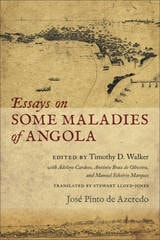
Essays on Some Maladies of Angola (1799)
José Pinto De Azeredo
Tagus Press, 2016
This first English-language edition of Essays on Some Maladies of Angola was translated by Stewart Lloyd-Jones (University of Stirling) and includes scholarly essays by Timothy Walker (University of Massachusetts Dartmouth), Adelino Cardoso (Universidade Nova de Lisboa), António Braz de Oliveira (Biblioteca Nacional de Portugal) and Manuel Silvério Marques (Universidade de Lisboa).
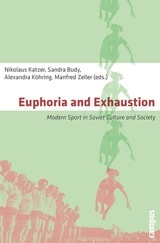
Euphoria and Exhaustion
Modern Sport in Soviet Culture and SocietyEdited by Nikolaus Katzer, Sandra Budy, Alexandra Köhring, and Manfred Zeller
Campus Verlag, 2010
The architects of the Soviet Union intended not merely to remake their society—they also had an ambitious plan to remake the citizenry physically, with the goal of perfecting the socialist ideal of man. As Euphoria and Exhaustionshows, the Soviet leadership used sport as one of the primary arenas in which to deploy and test their efforts to mechanize and perfect the human body, drawing on knowledge from physiology, biology, medicine, and hygiene. At the same time, however, such efforts, like any form of social control, could easily lead to discontent—and thus, the editors show, a study of changes in public attitude towards sport can offer insight into overall levels of integration, dissatisfaction, and social exhaustion in the Soviet Union.
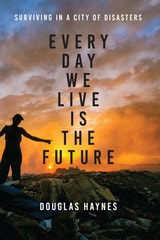
Every Day We Live Is the Future
Surviving in a City of DisastersBy Douglas Haynes
University of Texas Press, 2017
When she was only nine, Dayani Baldelomar left her Nicaraguan village with nothing more than a change of clothes. She was among tens of thousands of rural migrants to Managua in the 1980s and 1990s. After years of homelessness, Dayani landed in a shantytown called The Widows, squeezed between a drainage ditch and putrid Lake Managua. Her neighbor, Yadira Castellón, also migrated from the mountains. Driven by hope for a better future for their children, Dayani, Yadira, and their husbands invent jobs in Managua’s spreading markets and dumps, joining the planet’s burgeoning informal economy. But a swelling tide of family crises and environmental calamities threaten to break their toehold in the city.
Dayani’s and Yadira’s struggles reveal one of the world’s biggest challenges: by 2050, almost one-third of all people will likely live in slums without basic services, vulnerable to disasters caused by the convergence of climate change and breakneck urbanization. To tell their stories, Douglas Haynes followed Dayani’s and Yadira’s families for five years, learning firsthand how their lives in the city are a tightrope walk between new opportunities and chronic insecurity. Every Day We Live Is the Future is a gripping, unforgettable account of two women’s herculean efforts to persevere and educate their children. It sounds a powerful call for understanding the growing risks to new urbanites, how to help them prosper, and why their lives matter for us all.
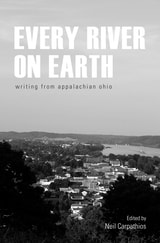
Every River on Earth
Writing from Appalachian OhioNeil Carpathios
Ohio University Press, 2015
Every River on Earth: Writing from Appalachian Ohio includes some of the best regional poetry, fiction, and creative nonfiction from forty contemporary writers, both established and up-and-coming. The wide range of material from authors such as David Baker, Don Bogen, Michelle Burke, Richard Hague, Donald Ray Pollock, and others, offers the reader a window into daily life in the region. The people, the landscape, the struggles, and the deepest undercurrents of what it means to be from and of a place are revealed in these original, deeply moving, and sometimes shocking pieces.
The book is divided into four sections: Family & Folks, The Land, The Grind, and Home & Away, each of which explores a different aspect of the place that these authors call home. The sections work together beautifully to capture what it means to live, to love, and to die in this particular slice of Appalachia. The writing is accessible and often emotionally raw; Every River on Earth invites all types of readers and conveys a profound appreciation of the region’s character.
The authors also offer personal statements about their writing, allowing the reader an intimate insight into their processes, aesthetics, and inspirations. What is it to be an Appalachian? What is it to be an Appalachian in Ohio? This book vividly paints that picture.
Every River on Earth
David Lee Garrison
I look out the window and see
through the neighbor’s window
to an Amish buggy
where three children are peeping back,
and in their eyes I see the darkness
of plowed earth hiding seed.
Wind pokes the land in winter,
trying to waken it,
and in the melting snow
I see rainbows and in them
every river on earth. I see all the way
to the ocean, where sand and stones
embrace each falling wave
and reach back to gather it in.
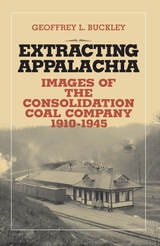
Extracting Appalachia
Images of the Consolidation Coal Company, 1910–1945Geoffrey L. Buckley
Ohio University Press, 2004
As a function of its corporate duties, the Consolidation Coal Company, one of the largest coal-mining operations in the United States during the first half of the twentieth century, had photographers take hundreds of pictures of nearly every facet of its operations. Whether for publicity images, safety procedures, or archival information, these photographs create a record that goes far beyond the purpose the company intended.
In Extracting Appalachia, geographer Geoffrey L. Buckley examines the company’s photograph collection housed at the Smithsonian Institution’s National Museum of American History. Included in the collection are images of mine openings, mining equipment, and mine accidents, as well as scenes of the company towns, including schools, churches, recreational facilities, holiday celebrations, and company stores.
Although the photographs in the collection provide us with valuable insights, they tell only part of the story. Using company records, state and federal government documents, contemporary newspaper accounts, and other archival materials, Professor Buckley shows that these photographs reveal much more than meets the eye.
Extracting Appalachia places these historic mining images in their social, cultural, and historical context, uncovering the true value and meaning of this rare documentary record.
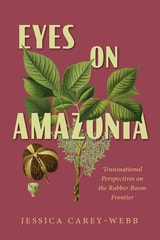
Eyes on Amazonia
Transnational Perspectives on the Rubber Boom FrontierJessica Carey-Webb
Vanderbilt University Press, 2024
Eyes on Amazonia operates in cultural geography, ecocriticism, and visual cultural analysis. The diverse and intriguing documents and images examined in this book capture the modernizing project of this region at a crucial juncture in its long history: the early twentieth-century rubber boom.