Results by title
64 books match the query 'Ritual' and 3 start with e
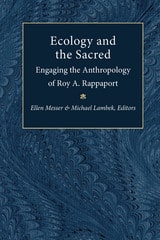
Ecology and the Sacred
Engaging the Anthropology of Roy A. RappaportEllen Messer and Michael Lambek, Editors
University of Michigan Press, 2001
At a time when anthropology is fractured by debates over whether it is a science or a humanistic tradition, theoretical or applied, this festschrift testifies that a unified anthropology is both possible and necessary for the understanding of humanity and global transformations. The volume will be of interest not only to anthropologists, but to geographers, sociologists, scholars in science-studies, historians, and experts and practitioners in religious studies, as well.
Ellen Messer is Visiting Associate Professor, Tufts University. Michael Lambek is Professor of Anthropology, University of Toronto.
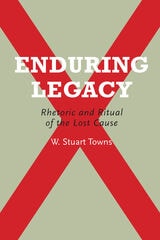
Enduring Legacy
Rhetoric and Ritual of the Lost CauseW. Stuart. Towns
University of Alabama Press, 2013
Explores the crucial role of rhetoric and oratory in creating and propagating a “Lost Cause” public memory of the American South
Enduring Legacy explores the vital place of ceremonial oratory in the oral tradition in the South and analyses how rituals such as Confederate Memorial Day, Confederate veteran reunions, and dedication of Confederate monuments have contributed to creating and sustaining a Lost Cause paradigm for Southern identity. Towns studies in detail secessionist and Civil War speeches and how they laid the groundwork for future generations, including Southern responses to the civil rights movement, and beyond.
The Lost Cause orators that came after the Civil War, Towns argues, helped to shape a lasting mythology of the brave Confederate martyr, and the Southern positions for why the Confederacy lost and who was to blame. Innumerable words were spent—in commemorative speeches, newspaper editorials, and statehouse oratory—condemning the evils of Reconstruction, redemption, reconciliation, and the new and future South. Towns concludes with an analysis of how Lost Cause myths still influence Southern and national perceptions of the region today, as evidenced in debates over the continued deployment of the Confederate flag and the popularity of Civil War reenactments.
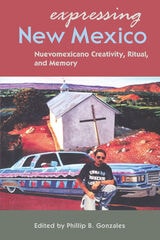
Expressing New Mexico
Nuevomexicano Creativity, Ritual, and MemoryEdited by Phillip B. Gonzales
University of Arizona Press, 2007
Intertwined with the concept of expressive culture is that of “place” in relation to New Mexico itself. Place is addressed directly by four of the authors in this anthology and is present in some way and in varying degrees among the rest. Place figures prominently in Nuevomexicano “character,” contributors argue. They assert that Nuevomexicanos and Nuevomexicanas construct and develop a sense of self that is shaped by the geography and culture of the state as well as by their heritage.
Many of the articles deal with recent events or with recent reverberations of important historical events, which imbues the collection with a sense of immediacy. Rituals, traditions, community commemorations, self-concepts, and historical revisionism all play key roles. Contributors include both prominent and emerging scholars united by their interest in, and fascination with, the distinctiveness of Nuevomexicano culture.