Results by title
149 books match the query 'Russia (Federation)' and 10 start with e
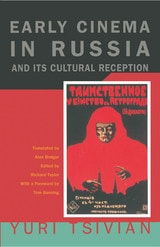
Early Cinema in Russia and Its Cultural Reception
Yuri Tsivian
University of Chicago Press, 1998
"Tsivian casts a probing beam of illumination into some of the most obscure areas of film history. And the terrain he lights up with his careful assembly and insightful reading of the records of early film viewing in Russia not only changes our sense of the history of this period but also . . . causes us to re-evaluate some of our most basic theoretical and historical assumptions about what a film is and how it affects its audiences."—Tom Gunning, from the Foreword
"Early Cinema in Russia . . . reveals Tsivian's strengths very well and demonstrates why he is . . . the finest film historian of his generation in the former Soviet Union."—Denise Y. Youngblood, Historical Journal of Film, Radio, and Television
"A work of fundamental importance."—Julian Graffy, Recent Studies of Russian and Soviet Cinema
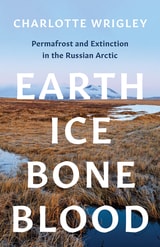
Earth, Ice, Bone, Blood
Permafrost and Extinction in the Russian ArcticCharlotte Wrigley
University of Minnesota Press, 2023
Exploring one of the greatest potential contributors to climate change—thawing permafrost—and the anxiety of extinction on an increasingly hostile planet
Climate scientists point to permafrost as a “ticking time bomb” for the planet, and from the Arctic, apocalyptic narratives proliferate on the devastating effects permafrost thaw poses to human survival. In Earth, Ice, Bone, Blood, Charlotte Wrigley considers how permafrost—and its disappearance—redefines extinction to be a lack of continuity, both material and social, and something that affects not only life on earth but nonlife, too.
Earth, Ice, Bone, Blood approaches the topic of thawing permafrost and the wild new economies and mitigation strategies forming in the far north through a study of the Sakha Republic, Russia’s largest region, and its capital city Yakutsk, which is the coldest city in the world and built on permafrost. Wrigley examines people who are creating commerce out of thawing permafrost, including scientists wishing to recreate the prehistoric “Mammoth steppe” ecosystem by eventually rewilding resurrected woolly mammoths, Indigenous people who forage the tundra for exposed mammoth bodies to sell their tusks, and government officials hoping to keep their city standing as the ground collapses under it. Warming begets thawing begets economic activity— and as a result, permafrost becomes discontinuous, both as land and as a social category, in ways that have implications for the entire planet. Discontinuity, Wrigley shows, eventually evolves into extinction.
Offering a new way of defining extinction through the concept of “discontinuity,” Earth, Ice, Bone, Blood presents a meditative and story-focused engagement with permafrost as more than just frozen ground.
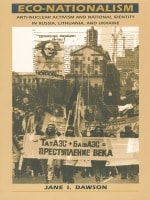
Eco-Nationalism
Anti-Nuclear Activism and National Identity in Russia, Lithuania, and UkraineJane I. Dawson
Duke University Press, 1996
Dawson combines a theoretical framework based on models of social movements with extensive field research to compare the ways in which nationalism, regionalism, and other political demands were incorporated into anti-nuclear movements in Russia, Lithuania, Ukraine, Armenia, Tatarstan, and Crimea. These comparative case studies form the core of the book and trace differences among the various regional movements to the distinctive national identities of groups involved. Reflecting the new opportunities for research that have become available since the late 1980s, these studies draw upon Dawson’s extended on-site observation of local movements through 1995 and her unique access to movement activists and their personal archives.
Analyzing and documenting a development with sobering and potentially devastating implications for nuclear power safety in the former USSR and beyond, Eco-nationalism’s examination of social activism in late and postcommunist societies will interest readers concerned with the politics of global environmentalism and the process of democratization in the post-Soviet world.
Elections and Political Order in Russia
Peter Lentini
Central European University Press, 1995
Emerging Writing Research from the Russian Federation
edited by L. Ashley Squires
University Press of Colorado, 2022
This book is also available as an open access ebook through the WAC Clearinghouse.

Empire of the Periphery
Russia and the World SystemBoris Kagarlitsky
Pluto Press, 2007
Leading writer Boris Kagarlitsky offers an ambitious account of 1000 years of Russian history. Encompassing all key periods in Russia's dramatic development, the book covers everything from early settlers, through medieval decline, Ivan the Terrible - the 'English Tsar', Peter the Great, the Crimean War and the rise of capitalism, the revolution, the Soviet period, finally ending with the return of capitalism after 1991.
Setting Russia within the context of the 'World System', as outlined by Wallerstein, this is a major work of historical Marxist theory that is set to become a future classic.
Endquote
Sots-Art Literature and Soviet Grand StyleMarina Balina, Nancy Condee, and Evgeny Dobrenko
Northwestern University Press, 1999
Eurasian Integration and the Russian World
Regionalism as an Identitiary EnterpriseAliaksei Kazharski
Central European University Press, 2019
This volume examines Russian discourses of regionalism as a source of identity construction practices for the country's political and intellectual establishment. The overall purpose of the monograph is to demonstrate that, contrary to some assumptions, the transition trajectory of post-Soviet Russia has not been towards a liberal democratic nation state that is set to emulate Western political and normative standards. Instead, its foreign policy discourses have been constructing Russia as a supranational community which transcends Russia's current legally established borders.
The study undertakes a systematic and comprehensive survey of Russian official (authorities) and semi-official (establishment affiliated think tanks) discourse for a period of seven years between 2007 and 2013. This exercise demonstrates how Russia is being constructed as a supranational entity through its discourses of cultural and economic regionalism. These discourses associate closely with the political project of Eurasian economic integration and the "Russian world" and "Russian civilization" doctrines. Both ideologies, the geoeconomic and culturalist, have gained prominence in the post-Crimean environment. The analysis tracks down how these identitary concepts crystallized in Russia's foreign policies discourses beginning from Vladimir Putin's second term in power.
European-Russian Power Relations in Turbulent Times
Mai’a K. Davis Cross and Ireneusz Pawel Karolewski, Editors
University of Michigan Press, 2021
The volume editors’ primary goal is to illuminate the nature of the deteriorating security relationship between Europe and Russia, and the key implications for its future. While the book is timely, the editors and contributors also draw out long-term lessons from this era of diplomatic degeneration to show how increasing cooperation between two regions can devolve into rapidly escalating conflict. While it is possible that the relationship between Russia and Europe can ultimately be restored, it is also necessary to understand why it was undermined in the first place. The fact that these transformations occur under the backdrop of an uncertain transatlantic relationship makes this investigation all the more pressing.
Each chapter in this volume addresses three dimensions of the problem: first, how and why the power status quo that had existed since the end of the Cold War has changed in recent years, as evidenced by Russia’s newly aggressive posturing; second, the extent to which the EU’s power has been enabled or constrained in light of Russia’s actions; and third, the risks entailed in Europe’s reactive power—that is, the tendency to act after-the-fact instead of proactively toward Russia—in light of the transatlantic divide under Trump.
Extending the Borders of Russian History
Essays in Honor of Alfred J. RieberMarsha Siefert
Central European University Press, 2003
The borders of Russian history, whether chronological, geographical, political or intellectual, have always been patrolled, have sometimes been evaded, but have never been invisible. This volume attempts to extend those borders in several ways. The articles stress continuity rather than ruptures and their organization emphasizes persistent factors over time, particularly across the 1917 divide. Geographical dimensions are explored not through conquest but through regional responses to the center: local variants of eighteenth- and nineteenth-century colonial policies in the Caucasus and Turkestan are complemented by Central Asian petitions for citizenship in the 1930s and Siberian healing in the 1990s. Ukrainian aspirations take a special focus, from Kyivan Rus’ to Ruthenian dreams.
Politically, of course, Marxist–Leninist ideology attempted to extend its own frontiers of Russian history. Several studies here attempt to assess the meaning of the Soviet period in terms of ideology, practices, processes and memory. It is fitting too that the now accepted boundaries of the Soviet era—the revolutionary decade and the first decade of transition—are subject to detailed attention and analysis. The intellectual borders of Russian and Soviet history, long policed from within and without, have been breached by the creative and wide-ranging use of newly accessible archival sources that form the basis for these articles. The sense of community exhibited by this collection, however, is not artificial nor is it wholly imagined. It derives from the honoree, whose scholarly life has exhibited the blurring of traditional boundaries, whether disciplinary, generational, or national, that is represented by the contributors to this volume.