Results by title
3064 books match the query 'Social conditions' and 72 start with e
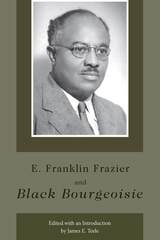
E. Franklin Frazier and Black Bourgeoisie
E. Franklin Frazier
University of Missouri Press, 2002
When E. Franklin Frazier was elected the first black president of the American Sociological Association in 1948, he was established as the leading American scholar on the black family and was also recognized as a leading theorist on the dynamics of social change and race relations. By 1948 his lengthy list of publications included over fifty articles and four major books, including the acclaimed Negro Family in the United States. Frazier was known for his thorough scholarship and his mastery of skills in both history and sociology.
With the publication of Bourgeoisie Noire in 1955 (translated in 1957 as Black Bourgeoisie), Frazier apparently set out on a different track, one in which he employed his skills in a critical analysis of the black middle class. The book met with mixed reviews and harsh criticism from the black middle and professional class. Yet Frazier stood solidly by his argument that the black middle class was marked by conspicuous consumption, wish fulfillment, and a world of make-believe. While Frazier published four additional books after 1948, Black Bourgeoisie remained by far his most controversial.
Given his status in American sociology, there has been surprisingly little study of Frazier's work. In E. Franklin Frazier and Black Bourgeoisie, a group of distinguished scholars remedies that lack, focusing on his often-scorned Black Bourgeoisie.
This in-depth look at Frazier's controversial publication is relevant to the growing concerns about racism, problems in our cities, the limitations of affirmative action, and the promise of self-help.

Early Royko
Up Against It in ChicagoMike Royko
University of Chicago Press, 2010
Combining the incisive pen of a newspaperman and the compassionate soul of a poet, Mike Royko became a Chicago institution—in Jimmy Breslin’s words, "the best journalist of his time." Early Royko: Up Against It in Chicago will restore to print the legendary columnist’s earliest writings, which chronicle 1960s Chicago with the moral vision, ironic sense, and razor-sharp voice that would remain Royko’s trademark.
This collection of early columns from the Chicago Daily News ranges from witty social commentary to politically astute satire. Some of the pieces are falling-down funny and others are tenderly nostalgic, but all display Royko’s unrivaled skill at using humor to tell truth to power. From machine politicians and gangsters to professional athletes, from well-heeled Chicagoans to down-and-out hoodlums, no one escapes Royko’s penetrating gaze—and resounding judgment. Early Royko features a memorable collection of characters, including such well-known figures as Hugh Hefner, Mayor Richard J. Daley, and Dr. Martin Luther King. But these boldfaced names are juxtaposed with Royko’s beloved lesser knowns from the streets of Chicago: Mrs. Peak, Sylvester "Two-Gun Pete" Washington, and Fats Boylermaker, who gained fame for leaning against a corner light pole from 2 a.m. Saturday until noon Sunday, when his neighborhood tavern reopened for business.
Accompanied by a foreword from Rick Kogan, this new edition will delight Royko’s most ardent fans and capture the hearts of a new generation of readers. As Kogan writes, Early Royko "will remind us how a remarkable relationship began—Chicago and Royko, Royko and Chicago—and how it endures."
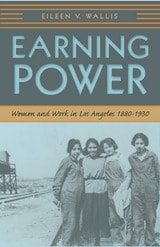
Earning Power
Women and Work in Los Angeles, 1880-1930Eileen Wallis
University of Nevada Press, 2010
The half-century between 1880 and 1930 saw rampant growth in many American cities and an equally rapid movement of women into the work force. In Los Angeles, the city not only grew from a dusty cow town to a major American metropolis but also offered its residents myriad new opportunities and challenges.Earning Power examines the role that women played in this growth as they attempted to make their financial way in a rapidly changing world. Los Angeles during these years was one of the most ethnically diverse and gender-balanced American cities. Moreover, its accelerated urban growth generated a great deal of economic, social, and political instability. In Earning Power, author Eileen V. Wallis examines how women negotiated issues of gender, race, ethnicity, and class to gain access to professions and skilled work in Los Angeles. She also discusses the contributions they made to the region’s history as political and social players, employers and employees, and as members of families. Wallis reveals how the lives of women in the urban West differed in many ways from those of their sisters in more established eastern cities. She finds that the experiences of women workers force us to reconsider many assumptions about the nature of Los Angeles’s economy, as well as about the ways women participated in it. The book also considers how Angelenos responded to the larger national social debate about women’s work and the ways that American society would have to change in order to accommodate working women. Earning Power is a major contribution to our understanding of labor in the urban West during this transformative period and of the crucial role that women played in shaping western cities, economies, society, and politics.
East African Hip Hop
Youth Culture and GlobalizationMwenda Ntarangwi
University of Illinois Press, 2008
In this book, Mwenda Ntarangwi analyzes how young hip hop artists in the East African nations of Kenya, Uganda, and Tanzania showcase the opportunities and challenges brought by the globalization of music. Combining local popular music traditions with American and Jamaican styles of rap, East African hip hop culture reflects the difficulty of creating commercially accessible music while honoring tradition and East African culture. Ntarangwi pays special attention to growing cross-border exchanges within East African hip hop, collaborations in recording music and performances, and themes and messages that transcend local geographic boundaries.
In using hip hop as a medium for discussing changes in East African political, economic, and social conditions, artists vocalize their concerns about economic policies, African identity, and political establishments, as well as important issues of health (such as HIV/AIDS), education, and poverty. Through three years of fieldwork, rich interviews with artists, and analysis of live performances and more than 140 songs, Ntarangwi finds that hip hop provides youth an important platform for social commentary and cultural critique and calls attention to the liberating youth music culture in East Africa.
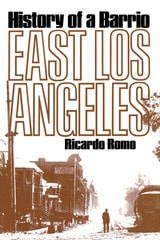
East Los Angeles
History of a BarrioBy Ricardo Romo
University of Texas Press, 1983
This is the story of the largest Mexican-American community in the United States, the city within a city known as "East Los Angeles." How did this barrio of over one million men and women—occupying an area greater than Manhattan or Washington D.C.—come to be?
Although promoted early in this century as a workers' paradise, Los Angeles fared poorly in attracting European immigrants and American blue-collar workers. Wages were low, and these workers were understandably reluctant to come to a city which was also troubled by labor strife. Mexicans made up the difference, arriving in the city in massive numbers.
Who these Mexicans were and the conditions that caused them to leave their own country are revealed in East Los Angeles. The author examines how they adjusted to life in one of the fastest-growing cities in the United States, how they fared in this country's labor market, and the problems of segregation and prejudice they confronted.
Echoes of Chongqing
Women in Wartime ChinaDanke Li
University of Illinois Press, 2010
This collection of annotated oral histories records the personal stories of twenty Chinese women who lived in the wartime capital of Chongqing during China's War of Resistance against Japan during World War II. By presenting women's remembrances of the war, this study examines the interplay between oral history and traditional historical narrative, public discourse, and private memories. The women interviewed came from differing social, economic, and educational backgrounds and experienced the war in a variety of ways, some of them active in the communist resistance and others trying to support families or pursue educations in the face of wartime upheaval. Their stories demonstrate that the War of Resistance had two faces: one presented by official propaganda and characterized by an upbeat unified front against Japan, the other a record of invisible private stories and a sobering national experience of death and suffering. The accounts of how women coped, worked, and lived during the war years in the Chongqing region recast historical understanding of the roles played by ordinary people in wartime and give women a public voice and face that, until now, have been missing from scholarship on the war.

Economic & Social Origins of Mau Mau, 1945–1953
Eastern African StudiesDavid Throup
Ohio University Press, 1990
This story of Kenya in the decade before the outbreak of the Mau Mau emergency presents an integrated view of imperial government as well as examining the social and economic causes of the Kikuyu revolt. Dr. Throup combines traditional Imperial History with its emphasis on the high politics of “The Official Mind” in the Colonial Office or in Government House with the new African historiography that concentrates on the people themselves.
Sir Philip Mitchell was the proconsul chosen to reassert metropolitan authority. Under Kenyatta’s leadership the Kenya African Union mobilized a popular constituency among the peasantry. In Nairobi the Kikuyu street gangs linked up with the militant Kikuyu trade unions, led by Fred Kubai and Bildad Kaggia, to challenge Kenyatta’s leadership.
The Mau Mau movement, as it was called by the government, was an alliance between three groups of discontented Kikuyu: the urban unemployed and destitute, the dispossessed squatters from the White Highlands and the tenants and members of the junior clans in the Kikuyu reserves.
The revolt was a dominating factor in convincing the conservative imperial government that the cost of repression in the African colonies was not worth the troops and resources.

Education in Tokugawa Japan
R. P. Dore
University of Michigan Press, 1992
Eight Months in Illinois
With Information to ImmigrantsWilliam Oliver. Foreword by James E. Davis
Southern Illinois University Press, 2002
The Illinois frontier offered abundant opportunity, noted English traveler William Oliver after his journey to America in 1841–42, but life there was hard. Accordingly, Oliver advised the wealthy and comfortable to remain in England and counseled the unprosperous to seek their fortunes in America. Written for the poor who would migrate and published in 1843, his Eight Months in Illinois: With Information to Immigrants sought only to provide pertinent, valid, and practical information about what people might encounter in the frontier state. What Oliver actually accomplished, however, was much more: he imparted invaluable insights into and analyses of American life during an era of sweeping social, economic, and political change.
In his new foreword to this edition, James E. Davis stresses Oliver’s sincere desire to help British immigrants succeed in America. Oliver, Davis notes, “devoted dozens of pages of advice on numerous matters: various routes to Illinois and their advantages and disadvantages, processes of settling, qualities of western houses, costs of obtaining a new farm.” Oliver discussed other practical matters, such as the importance of having sons. He also assured his intended readership that “in the West, distinction of classes is little known and seldom recognized.”
As a document covering the middle west in the 1840s, Eight Months in Illinois: With Information to Immigrants has few equals. Its portrayal of farming and trade in relatively primitive times is historically accurate. It paints a plain picture, laying out the essential facts and presenting the typical incidents that enable us to trace the course of a settler’s simple, diligent, laborious day-to-day life. According to Davis, Oliver depicted “accurate and balanced slices of life in Illinois and America, including nasty insects, crude conditions, and the necessity of work.” And he did so without a trace of anti-American bias.
Eight Months in Illinois with Information to Immigrants was reprinted with emendations in 1924 by Walter Hill.
El Alto, Rebel City
Self and Citizenship in Andean BoliviaSian Lazar
Duke University Press, 2007
Drawing on ethnographic fieldwork conducted between 1997 and 2004, Lazar contends that in El Alto, citizenship is a set of practices defined by one’s participation in a range of associations, many of them collectivist in nature. Her argument challenges Western liberal notions of the citizen by suggesting that citizenship is not only individual and national but in many ways communitarian and distinctly local, constituted through different kinds of affiliations. Since in El Alto these affiliations most often emerge through people’s place of residence and their occupational ties, Lazar offers in-depth analyses of neighborhood associations and trade unions. In so doing, she describes how the city’s various collectivities mediate between the state and the individual. Collective organization in El Alto and the concept of citizenship underlying it are worthy of attention; they are the basis of the city’s formidable power to mobilize popular protest.
Eleanor Baldwin and the Woman's Point of View
New Thought Radicalism in Portland’s Progressive EraLawrence M. Lipin
Oregon State University Press, 2017
A century before the Occupy movement and the Women’s March, Baldwin spoke truth to power. Imbued with a New Thought spirituality that presumed progressive thought could directly affect material reality, she wrote to move history forward. And yet, the trajectory of history proved as hard to forecast then as now. While her personal story seems to embody a modern progressivism, blending abolition with labor reform and anti-banker activism—positions from which she never wavered—her path grew more complicated as times changed in the aftermath of World War I, when she would advocate on behalf of both the Bolsheviks and the Ku Klux Klan.
In this deeply researched and nuanced account of Eleanor Baldwin’s intellectual journey, historian Larry Lipin reveals how even the most dedicated radical can be overcome by unforeseen events. Eleanor Baldwin and the Woman’s Point of View restores a missing chapter in Portland’s Progressive Era history and rescues this passionate, intriguing, and quixotic character from undeserved obscurity.
Electrifying Mexico
Technology and the Transformation of a Modern CityBy Diana J. Montaño
University of Texas Press, 2021
2022 Alfred B. Thomas Book Award, Southeastern Council of Latin American Studies (SECOLAS)
2022 Bolton-Johnson Prize, Conference on Latin American History (CLAH)
2022 Best Book in Non-North American Urban History, Urban History Association (Co-winner)
2023 Honorable Mention, Best Book in the Humanities, Latin American Studies Association Mexico Section
2023 Turriano Book Prize, International Committee for the History of Technology
2023 Michael C. Meyer Award for Best Book on Mexican History in a Five-Year Period, Rocky Mountain Council for Latin American Studies
Many visitors to Mexico City’s 1886 Electricity Exposition were amazed by their experience of the event, which included magnetic devices, electronic printers, and a banquet of light. It was both technological spectacle and political messaging, for speeches at the event lauded President Porfirio Díaz and bound such progress to his vision of a modern order.
Diana J. Montaño explores the role of electricity in Mexico’s economic and political evolution, as the coal-deficient country pioneered large-scale hydroelectricity and sought to face the world as a scientifically enlightened “empire of peace.” She is especially concerned with electrification at the social level. Ordinary electricity users were also agents and sites of change. Montaño documents inventions and adaptations that served local needs while fostering new ideas of time and space, body and self, the national and the foreign. Electricity also colored issues of gender, race, and class in ways specific to Mexico. Complicating historical discourses in which Latin Americans merely use technologies developed elsewhere, Electrifying Mexico emphasizes a particular national culture of scientific progress and its contributions to a uniquely Mexican modernist political subjectivity.
Elites, Masses, and Modernization in Latin America, 1850–1930
By E. Bradford Burns and Thomas E. Skidmore
University of Texas Press, 1979
The interactions between the elites and the lower classes of Latin America are explored from the divergent perspectives of three eminent historians in this volume. The result is a counterbalance of viewpoints on the urban and the rural, the rich and the poor, and the Europeanized and the traditional of Latin America during the late nineteenth and early twentieth centuries.
E. Bradford Burns advances the view that two cultures were in conflict in nineteenth-century Latin America: that of the modernizing, European-oriented elite, and that of the “common folk” of mixed racial background who lived close to the earth. Thomas E. Skidmore discusses the emerging field of labor history in twentieth-century Latin America, suggesting that the historical roots of today’s exacerbated tensions lie in the secular struggle of army against workers that he describes. In the introduction, Richard Graham takes issue with both authors on certain basic premises and points out implications of their essays for the understanding of North American as well as Latin American history.

Elsie Clews Parsons
Inventing Modern LifeDesley Deacon
University of Chicago Press, 1997
Elusive Histories
Mozambican Migrant Laborers in Rhodesia, ca. 1900-1980Allen F. Isaacman, Joy M. Chadya, and Barbara S. Isaacman
Ohio University Press, 2025
At the heart of Elusive Histories is a long-neglected story of the clandestine journeys of Mozambican migrant laborers and their families to Rhodesia. Drawing from oral histories, court records, archives, newspapers, and popular magazines, the authors chronicle Mozambican migration, work experiences, and settlement in Rhodesia. Thousands of men, women, and children traveled long distances, often on foot, to reach Rhodesia. Starting with a trickle of workers seeking to avoid chibharo, a Mozambican agricultural forced-labor system, the number of migrants peaked in the 1950s.
In 1958, the Rhodesian government passed legislation to bar new Mozambican migrants from entering large cities, redirecting them toward agriculture and mining. When Black Rhodesian laborers began to complain about losing jobs to Mozambicans, the restrictions became an outright ban to prevent further migrants from entering the country.
Contrary to previous assumptions, Mozambican labor in Rhodesia was not contract labor derived from bilateral negotiations between the Mozambican colonial and Rhodesian governments. In fact, many Mozambicans who came to work and live in Rhodesia arrived as illegal migrants. The book also demystifies the widely held notion that all foreign migrant workers in Rhodesia who spoke Nyanja were Nyasalanders. Because Nyanja is widely spoken at the confluence of Malawi, Zambia, and Mozambique, many Mozambicans who came to work in Rhodesia were fluent. Despite the national, racial, and cultural differences and the discrimination in job placement, promotion, and housing, Mozambican migrant laborers creatively adapted and made Rhodesia home for the duration of their lives.
Elusive Jannah
The Somali Diaspora and a Borderless Muslim IdentityCawo M. Abdi
University of Minnesota Press, 2015
As a Somali working since high school in the United Arab Emirates, Osman considers himself “blessed” to be in a Muslim country, though citizenship, with the security it offers, remains elusive. For Ardo, smuggled out of Somalia to join her husband in South Africa, insecurities are of a more immediate, physical kind, and her economic prospects and legal status are more uncertain. Adam, in the United States—a destination often imagined as an earthly Eden, or jannah, by so many of his compatriots—now sees heaven in a return to Somalia.
The stories of these three people are among the many that emerge from mass migration triggered by the political turmoil and civil war plaguing Somalia since 1988. And they are among the diverse collection presented in eloquent detail in Elusive Jannah, a remarkable portrait of the very different experiences of Somali migrants in the UAE, South Africa, and the United States. Somalis in the UAE, a relatively closed Muslim nation, are a minority within a large South Asian population of labor migrants. In South Africa, they are part of a highly racialized and segregated postapartheid society. In the United States they find themselves in a welfare state with its own racial, socioeconomic, and political tensions. A comparison of Somali settlements in these three locations clearly reveals the importance of immigration policies in the migrant experience.
Cawo M. Abdi’s nuanced analysis demonstrates that a full understanding of successful migration and integration must go beyond legal, economic, and physical security to encompass a sense of religious, cultural, and social belonging. Her timely book underscores the sociopolitical forces shaping the Somali diaspora, as well as the roles of the nation-state, the war on terror, and globalization in both constraining and enabling their search for citizenship and security.
Elusive Justice
Women, Land Rights, and Colombia's Transition to PeaceDonny Meertens
University of Wisconsin Press, 2019
Drawing on decades of research, Elusive Justice demonstrates how these women continue to face numerous adverse circumstances, including geographical isolation, encroaching capitalist enterprises, and a dearth of social and institutional support. Donny Meertens contends that women's advocacy organizations must have a prominent role in overseeing these transitional policies in order to create a more just society. By bringing together the underresearched topic of property repayment and the pursuit of gender justice in peacebuilding, these findings have broad significance elsewhere in the world.
Emancipating the Female Sex
The Struggle for Women's Rights in Brazil, 1850–1940June E. Hahner
Duke University Press, 1990
Hahner traces the history of Brazilian women’s fight for emancipation from its earliest manifestations in the mid-nineteenth century to the successful conclusion of the suffrage campaign in the 1930s. Drawing on interviews with surviving Brazilian suffragists and contemporary feminists as well as manuscripts and printed documents, Hahner explores the strategies and ideological positions of Brazilian feminists. In focusing on urban upper- and middle-class women, from whose ranks the leadership for change arose, she examines the relationship between feminism and social change in Brazil’s complex and highly stratified society.
Embodied Archive
Disability in Post-Revolutionary Mexican Cultural ProductionSusan Antebi
University of Michigan Press, 2021
Embodied Archive focuses on perceptions of disability and racial difference in Mexico’s early post-revolutionary period, from the 1920s to the 1940s. In this period, Mexican state-sponsored institutions charged with the education and health of the population sought to strengthen and improve the future of the nation, and to forge a more racially homogeneous sense of collective identity and history. Influenced by regional and global movements in eugenics and hygiene, Mexican educators, writers, physicians, and statesmen argued for the widespread physical and cognitive testing and categorization of schoolchildren, so as to produce an accurate and complete picture of “the Mexican child,” and to carefully monitor and control forms of unwanted difference, including disability and racialized characteristics. Differences were not generally marked for eradication—as would be the case in eugenics movements in the US, Canada, and parts of Europe—but instead represented possible influences from a historically distant or immediate reproductive past, or served as warnings of potential danger haunting individual or collective futures.
Weaving between the historical context of Mexico’s post-revolutionary period and our present-day world, Embodied Archive approaches literary and archival documents that include anti-alcohol and hygiene campaigns; projects in school architecture and psychopedagogy; biotypological studies of urban schoolchildren and indigenous populations; and literary approaches to futuristic utopias or violent pasts. It focuses in particular on the way disability is represented indirectly through factors that may have caused it in the past or may cause it in the future, or through perceptions and measurements that cannot fully capture it. In engaging with these narratives, the book proposes an archival encounter, a witnessing of past injustices and their implications for the disability of our present and future.
Embodied Encuentros
Oral History Archives of Latina/o/e ExperiencesElena Foulis
The Ohio State University Press, 2026
In Embodied Encuentros, Elena Foulis offers a practical guide for completing ethical fieldwork in Latina/o/e communities, emphasizing equitable and culturally sustaining practices for gathering oral histories. In her critical decolonial model, Foulis centers the agency of the people within these communities while considering the diversity and complexity of their experiences. In doing so, she advocates for the importance of building oral history archives that challenge our understandings of Latina/o/e peoples.
Foulis provides a conceptual framework for building on community knowledge that considers language, cultural practices, gender, and race. She suggests ways to involve students in ethical research; collect evolving oral histories; employ a language justice approach that acknowledges linguistic oppression, translanguaging, and bilingualism as essential aspects of this community; and consider the importance of digital archives for the creation of multimedia projects that foster community pláticas. Grounded in both theoretical approaches and a feminist ethics praxis, Embodied Encuentros ultimately outlines an important model for doing collaborative, ethical research—not only within Latina/o/e communities but within other minoritized communities as well.
Embodied Rhetorics
Disability in Language and CultureEdited by James C. Wilson and Cynthia Lewiecki-Wilson
Southern Illinois University Press, 2001
Presenting thirteen essays, editors James C. Wilson and Cynthia Lewiecki-Wilson unite the fields of disability studies and rhetoric to examine connections between disability, education, language, and cultural practices. Bringing together theoretical and analytical perspectives from rhetorical studies and disability studies, these essays extend both the field of rhetoric and the newer field of disability studies.
The contributors span a range of academic fields including English, education, history, and sociology. Several contributors are themselves disabled or have disabled family members. While some essays included in this volume analyze the ways that representations of disability construct identity and attitudes toward the disabled, other essays use disability as a critical modality to rethink economic theory, educational practices, and everyday interactions. Among the disabilities discussed within these contexts are various physical disabilities, mental illness, learning disabilities, deafness, blindness, and diseases such as multiple sclerosis and AIDS.
Embodying American Slavery in Contemporary Culture
Lisa Woolfork
University of Illinois Press, 2008
Embodying Honor
Fertility, Foreignness, and Regeneration in Eastern SudanAmal Hassan Fadlalla
University of Wisconsin Press, 2007
In Embodying Honor Amal Hassan Fadlalla finds that the female body is the locus of anxieties about foreign dangers and diseases, threats perceived to be disruptive to morality, feminine identities, and social well-being. As a “northern Sudanese” viewed as an outsider in this region of her native country, Fadlalla presents an intimate portrait and thorough analysis that offers an intriguing commentary on the very notion of what constitutes the “foreign.” Fadlalla shows how Muslim Hadendowa women manage health and reproductive suffering in their quest to become “responsible” mothers and valued members of their communities. Her historically grounded ethnography delves into women’s reproductive histories, personal narratives, and ritual logics to reveal the ways in which women challenge cultural understandings of gender, honor, and reproduction.

Emergent Quilombos
Black Life and Hip-Hop in BrazilBryce Henson
University of Texas Press, 2023
2024 Best Book Award, National Communication Association, Ethnography Division
2024 Roberto Reis Book Prize, First Book category, Brazilian Studies Association
2024 Outstanding Book Award, National Communication Association, Critical and Cultural Studies Division
2024 International and Intercultural Best Book Award, National Communication Association, International and Intercultural Division
How disenfranchised Black Brazilians use hip-hop to reinvigorate the Black radical tradition.
Known as Black Rome, Salvador da Bahia, Brazil, is a predominantly Black city. The local art, food, and dance are closely linked to the population’s African roots. Yet many Black Brazilian residents are politically and economically disenfranchised. Bryce Henson details a culture of resistance and activism that has emerged in response, expressed through hip-hop and the social relations surrounding it.
Based on years of ethnographic research, Emergent Quilombos illuminates how Black hip-hop artists and their circles contest structures of anti-Black racism by creating safe havens and alternative social, cultural, and political systems that serve Black people. These artists valorize and empower marginalized Black peoples through song, aesthetics, media, visual art, and community action that emphasize diasporic connections, ancestrality, and Black identifications in opposition to the anti-Black Brazilian nation. In the process, Henson argues, the Salvador hip-hop scene has reinvigorated and reterritorialized a critical legacy of Black politicocultural resistance: the quilombo, maroon communities of Black fugitives who refused slavery as a way of life, gathered away from the spaces of their oppression, protected their communities, and nurtured Black life in all its possibilities.
Emerging Intersections
Race, Class, and Gender in Theory, Policy, and PracticeDill, Bonnie Thornton
Rutgers University Press, 2009
Emerging Intersections, an anthology of ten previously unpublished essays, looks at the problems of inequality and oppression from new angles and promotes intersectionality as an interpretive tool that can be utilized to better understand the ways in which race, class, gender, ethnicity, and other dimensions of difference shape our lives today. The book showcases innovative contributions that expand our understanding of how inequality affects people of color, demonstrates the ways public policies reinforce existing systems of inequality, and shows how research and teaching using an intersectional perspective compels scholars to become agents of change within institutions. By offering practical applications for using intersectional knowledge, Emerging Intersections will help bring us one step closer to achieving positive institutional change and social justice.
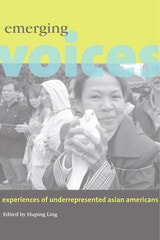
Emerging Voices
Experiences of Underrepresented Asian AmericansLing, Huping
Rutgers University Press, 2008
While a growing number of popular and scholarly works focus on Asian Americans, most are devoted to the experiences of larger groups such as Chinese, Japanese, Korean, Filipino, and Indian Americans. As the field grows, there is a pressing need to understand the smaller and more recent immigrant communities. Emerging Voices fills this gap with its unique and compelling discussion of underrepresented groups, including Burmese, Indonesian, Mong, Hmong, Nepalese, Romani, Tibetan, and Thai Americans.
Unlike the earlier and larger groups of Asian immigrants to America, many of whom made the choice to emigrate to seek better economic opportunities, many of the groups discussed in this volume fled war or political persecution in their homeland. Forced to make drastic transitions in America with little physical or psychological preparation, questions of “why am I here,” “who am I,” and “why am I discriminated against,” remain at the heart of their post-emigration experiences.
Bringing together eminent scholars from a variety of disciplines, this collection considers a wide range of themes, including assimilation and adaptation, immigration patterns, community, education, ethnicity, economics, family, gender, marriage, religion, sexuality, and work.
Empire's Edge
American Society in Nome, Alaska, 1898-1934Preston Jones
University of Alaska Press, 2006
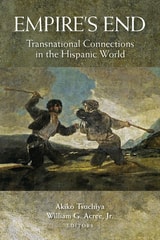
Empire's End
Transnational Connections in the Hispanic WorldAkiko Tsuchiya
Vanderbilt University Press, 2015
Empire's End showcases the work of scholars of literature, cultural studies, and history, centering on four interrelated issues crucial to understanding the end of the Spanish empire: the mappings of the Hispanic Atlantic, race, human rights, and the legacies of empire.
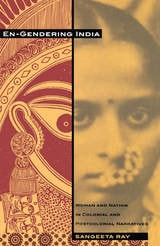
En-Gendering India
Woman and Nation in Colonial and Postcolonial NarrativesSangeeta Ray
Duke University Press, 2000
Through her readings of works by writers including Bankimchandra Chatterjee, Rabindranath Tagore, Harriet Martineau, Flora Annie Steel, Anita Desai, and Bapsi Sidhaa, Ray demonstrates that Indian women were presented as upper class and Hindu, an idealization that paradoxically served the needs of both colonial and nationalist discourses. The Indian nation’s goal of self-rule was expected to enable women’s full participation in private and public life. On the other hand, British colonial officials rendered themselves the protectors of passive Indian women against their “savage” male countrymen. Ray shows how the native woman thus became a symbol for both an incipient Indian nation and a fading British Empire. In addition, she reveals how the figure of the upper-class Hindu woman created divisions with the nationalist movement itself by underscoring caste, communal, and religious differences within the newly emerging state. As such, Ray’s study has important implications for discussions about nationalism, particularly those that address the concepts of identity and nationalism.
Building on recent scholarship in feminism and postcolonial studies, En-Gendering India will be of interest to scholars in those fields as well as to specialists in nationalism and nation-building and in Victorian, colonial, and postcolonial literature and culture.
Encompassing Others
The Magic of Modernity in MelanesiaEdward LiPuma
University of Michigan Press, 2001
Focusing on the Maring people of Highland New Guinea and on the Westerners who interacted with them, Edward LiPuma presents issues from the perspectives of both sides. We hear the voice of the Anglican priest from San Francisco as well as the most powerful Maring shamans. Further, the book seeks to develop a theory of generations that helps explain how change accelerates and societies take on new directions across generations.
Theoretical, descriptive, but almost entirely free of jargon, this book is intended for all those who are interested in how the West's encompassment of other peoples influences how these others conceive of their past, imagine their future, and experience the present. It will have wide appeal for anthropologists and others concerned with colonialism, globalization, and the formation of the nation-state.
Edward LiPuma is Professor and Chair, Department of Anthropology, University of Miami.
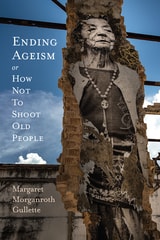
Ending Ageism, or How Not to Shoot Old People
Gullette, Margaret Morganroth
Rutgers University Press, 2017
When the term “ageism” was coined in 1969, many problems of exclusion seemed resolved by government programs like Social Security and Medicare. As people live longer lives, today’s great demotions of older people cut deeper into their self-worth and human relations, beyond the reach of law or public policy. In Ending Ageism, or How Not to Shoot Old People, award-winning writer and cultural critic Margaret Morganroth Gullette confronts the offenders: the ways people aging past midlife are portrayed in the media, by adult offspring; the esthetics and politics of representation in photography, film, and theater; and the incitement to commit suicide for those with early signs of “dementia.”
In this original and important book, Gullette presents evidence of pervasive age-related assaults in contemporary societies and their chronic affects. The sudden onset of age-related shaming can occur anywhere—the shove in the street, the cold shoulder at the party, the deaf ear at the meeting, the shut-out by the personnel office or the obtuseness of a government. Turning intimate suffering into public grievances, Ending Ageism, Or How Not to Shoot Old People effectively and beautifully argues that overcoming ageism is the next imperative social movement of our time.
About the cover image:
This elegant, dignified figure--Leda Machado, a Cuban old enough to have seen the Revolution--once the center of a vast photo mural, is now a fragment on a ruined wall. Ageism tears down the structures that all humans need to age well; to end it, a symbol of resilience offers us all brisk blue-sky energy.
“Leda Antonia Machado” from “Wrinkles of the City, 2012.”
Piotr Trybalski / Trybalski.com. Courtesy of the artist.
A Declaration of Grievances
"A Declaration of Grievances" was written by Margaret Morganroth Gullette and is excerpted from her book Ending Ageism, or How Not to Shoot Old People (2017, Rutgers University Press). The poster was designed by Carolyn Kerchof.
- A Declaration of Grievances (in English): https://d3tto5i5w9ogdd.cloudfront.net/wp-content/uploads/2023/01/15175130/A-Declaration-of-Grievances_Eng.pdf
- A Declaration of Grievances (in Spanish): https://d3tto5i5w9ogdd.cloudfront.net/wp-content/uploads/2023/01/15175131/A-Declaration-of-Grievances_Spanish.pdf
- A Declaration of Grievances (in French): https://d3tto5i5w9ogdd.cloudfront.net/wp-content/uploads/2023/01/15175130/A-Declaration-of-Grievances_French.pdf
- A Declaration of Grievances (in German): https://d3tto5i5w9ogdd.cloudfront.net/wp-content/uploads/2023/01/15175131/A-Declaration-of-Grievances_German.pdf
Print the PDF (make sure to click "fit to page") and hang the Declaration up in your home or place of work. Please share this link with other people you know who care about the rights of older persons. Share on social media with the hashtags #ADeclarationOfGrievances and #EndingAgeismGullette.
For more information, an excerpt, links to reviews, and special offers on this book, go to: https://www.rutgersuniversitypress.org/ending-ageism
Related website: (https://www.brandeis.edu/wsrc/scholars/profiles/gullette.html)
Ending Gender-Based Violence
Justice and Community in South AfricaHannah E. Britton
University of Illinois Press, 2020
Hannah E. Britton examines the reasons gendered violence persists in relationship to social inequalities even after women assume political power. Venturing into South African communities, Britton invites service providers, religious and traditional leaders, police officers, and medical professionals to address gender-based violence in their own words. Britton finds the recent turn toward carceral solutions—with a focus on arrests and prosecutions—fails to address the complexities of the problem and looks at how changing specific community dynamics can defuse interpersonal violence. She also examines how place and space affect the implementation of policy and suggests practical ways policymakers can support street level workers.
Clear-eyed and revealing, Ending Gender-Based Violence offers needed tools for breaking cycles of brutality and inequality around the world.
Enduring Cancer
Life, Death, and Diagnosis in DelhiDwaipayan Banerjee
Duke University Press, 2020
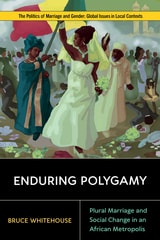
Enduring Polygamy
Plural Marriage and Social Change in an African MetropolisBruce Whitehouse
Rutgers University Press, 2023
Why hasn’t polygamous marriage died out in African cities, as experts once expected it would? Enduring Polygamy considers this question in one of Africa’s fastest-growing cities: Bamako, the capital of Mali, where one in four wives is in a polygamous marriage. Using polygamy as a lens through which to survey sweeping changes in urban life, it offers ethnographic and demographic insights into the customs, gender norms and hierarchies, kinship structures, and laws affecting marriage, and situates polygamy within structures of inequality that shape marital options, especially for young Malian women. Through an approach of cultural relativism, the book offers an open-minded but unflinching perspective on a contested form of marriage. Without shying away from questions of patriarchy and women’s oppression, it presents polygamy from the everyday vantage points of Bamako residents themselves, allowing readers to make informed judgments about it and to appreciate the full spectrum of human cultural diversity.
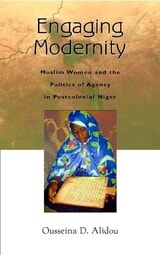
Engaging Modernity
Muslim Women and the Politics of Agency in Postcolonial NigerOusseina Alidou
University of Wisconsin Press, 2005
Engaging Modernity is Ousseina Alidou’s rich and compelling portrait of Muslim women in Niger as they confront the challenges and opportunities of the twentieth century. Contrary to Western stereotypes of passive subordination, these women are taking control of their own lives and resisting domination from indigenous traditions, westernization, and Islam alike.
Based on thorough scholarly research and extensive fieldwork—including a wealth of interviews—Alidou’s work offers insights into the meaning of modernity for Muslim women in Niger. Mixing biography with sociological data, social theory and linguistic analysis, this is a multilayered vision of political Islam, education, popular culture, and war and its aftermath. A gripping look at one of the Muslim world’s most powerful untold stories.
Runner-up for the Aidoo-Snyder Book Prize, Women’s Caucus of the African Studies Association
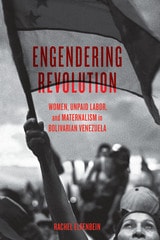
Engendering Revolution
Women, Unpaid Labor, and Maternalism in Bolivarian VenezuelaBy Rachel Elfenbein
University of Texas Press, 2019
In 1999, Venezuela became the first country in the world to constitutionally recognize the socioeconomic value of housework and enshrine homemakers’ social security. This landmark provision was part of a larger project to transform the state and expand social inclusion during Hugo Chávez’s presidency. The Bolivarian revolution opened new opportunities for poor and working-class—or popular—women’s organizing. The state recognized their unpaid labor and maternal gender role as central to the revolution. Yet even as state recognition enabled some popular women to receive public assistance, it also made their unpaid labor and organizing vulnerable to state appropriation.
Offering the first comprehensive analysis of this phenomenon, Engendering Revolution demonstrates that the Bolivarian revolution cannot be understood without comprehending the gendered nature of its state-society relations. Showcasing field research that comprises archival analysis, observation, and extensive interviews, these thought-provoking findings underscore the ways in which popular women sustained a movement purported to exalt them, even while many could not access social security and remained socially, economically, and politically vulnerable.
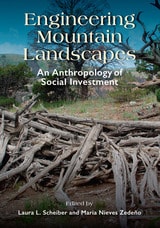
Engineering Mountain Landscapes
An Anthropology of Social InvestmentLaura L. Scheiber and María N. Zedeño
University of Utah Press, 2015
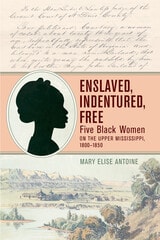
Enslaved, Indentured, Free
Five Black Women on the Upper Mississippi, 1800–1850Mary Elise Antoine
Wisconsin Historical Society Press, 2022
Focusing on these five women, Mary Elise Antoine explores the history of slavery in the Upper Mississippi River Valley, relying on legal documents, military records, court transcripts, and personal correspondence. Whether through perseverance, self-purchase, or freedom suits—including one suit that was used as precedent in Dred and Harriet Scott’s freedom suits years later—each of these women ultimately secured her freedom, thanks in part to the bonds they forged with one another.
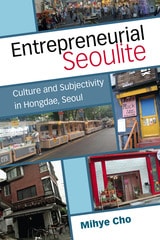
Entrepreneurial Seoulite
Culture and Subjectivity in Hongdae, SeoulMihye Cho
University of Michigan Press, 2019
Recent research on Korean culture approaches the K-wave phenomenon from the perspectives of cultural consumption, media analysis, and cultural management and policy. Meanwhile, studies on Seoul have centered on its transformation as a global, creative city. Rather than examining the K-wave or the city itself, this book explores the experience of living through the city-in-transition, focusing on the relationship between “the ideology that justified engagement in capitalism” and the “subjectification process.” The book aims to understand the project to institutionalize a cultural district in Hongdae as a demonstration of the coevolution of ideologies and citizenship in a society undergoing rapid liberalization—politically, culturally, and economically.
A cultural turn took place in Korea during the 1990s, amid the economic prosperity driven by state-led industrialization and the collapse of the military dictatorship due to democratization movements. Cultural critiques, emerging as an alternative to social movements, proliferated to assert the freedom and autonomy of individuals against regulatory systems and institutions. The nation was hit by the Asian financial crisis in 1997, and witnessed massive economic restructuring including layoffs, stakeouts, and a prevalence of contingent employment. As a result, the entire nation had to find new engines of economic growth while experiencing a creative destruction. At the center of this national transformation, Seoul has sought to recreate itself from a mega city to a global city, equipped with cutting-edge knowledge industries and infrastructures.
By juxtaposing the cultural turn and cultural/creative city-making, Entrepreneurial Seoulite interrogates the formation of new citizen subjectivity, namely the enterprising self, in post-Fordist Seoul. What kinds of logic guide individuals in the engagement of new urban realities in rapidly liberalized Seoul—culturally and economically? In order to explore this query, Mihye Cho draws on Weber’s concept of “the spirit of capitalism” on the formation of a new economic agency focusing on the re-configuration of meanings, and seeks to capture a transformative moment detailing when and how capitalism requests a different spirit and lifestyle of its participants. Likewise, this book approaches the enterprising self as the new spirit of post-Fordist Seoul and explores the ways in which people in Seoul internalize and negotiate this new enterprising self.
Environmentalism and Economic Justice
Two Chicano Struggles in the SouthwestLaura Pulido
University of Arizona Press, 1996
Equality in the Nordic World
Carsten Jensen
University of Wisconsin Press, 2021
The four types of equality have their origins in unique political compromises made in the twentieth century. The resulting social market economies of these countries affect their growth and levels of equality even today.
Erotic Cartographies
Decolonization and the Queer Caribbean ImaginationKrystal Nandini Ghisyawan
Rutgers University Press, 2022

Escape from New York
The New Negro Renaissance beyond HarlemDavarian L. Baldwin
University of Minnesota Press, 2013
In the midst of vast cultural and political shifts in the early twentieth century, politicians and cultural observers variously hailed and decried the rise of the “New Negro.” This phenomenon was most clearly manifest in the United States through the outpouring of Black arts and letters and social commentary known as the Harlem Renaissance. What is less known is how far afield of Harlem that renaissance flourished—how much the New Negro movement was actually just one part of a collective explosion of political protest, cultural expression, and intellectual debate all over the world.
In this volume, the Harlem Renaissance “escapes from New York” into its proper global context. These essays recover the broader New Negro experience as social movements, popular cultures, and public behavior spanned the globe from New York to New Orleans, from Paris to the Philippines and beyond. Escape from New York does not so much map the many sites of this early twentieth-century Black internationalism as it draws attention to how New Negroes and their global allies already lived. Resituating the Harlem Renaissance, the book stresses the need for scholarship to catch up with the historical reality of the New Negro experience. This more comprehensive vision serves as a lens through which to better understand capitalist developments, imperial expansions, and the formation of brave new worlds in the early twentieth century.
Contributors: Anastasia Curwood, Vanderbilt U; Frank A. Guridy, U of Texas at Austin; Claudrena Harold, U of Virginia; Jeannette Eileen Jones, U of Nebraska–Lincoln; Andrew W. Kahrl, Marquette U; Shannon King, College of Wooster; Charlie Lester; Thabiti Lewis, Washington State U, Vancouver; Treva Lindsey, U of Missouri–Columbia; David Luis-Brown, Claremont Graduate U; Emily Lutenski, Saint Louis U; Mark Anthony Neal, Duke U; Yuichiro Onishi, U of Minnesota, Twin Cities; Theresa Runstedtler, U at Buffalo (SUNY); T. Denean Sharpley-Whiting, Vanderbilt U; Michelle Stephens, Rutgers U, New Brunswick; Jennifer M. Wilks, U of Texas at Austin; Chad Williams, Brandeis U.
Ethics of Citizenship
Immigration and Group Rights in GermanyWilliam A. Barbieri Jr.
Duke University Press, 1998
Although some of Germany’s foreign workers have gradually attained a degree of social and economic legitimacy, Barbieri explains how they remain effectively excluded from true German citizenship. Describing how this exclusion has occurred and assessing current attitudes toward political membership in Germany, he argues for a just and democratic policy toward the tax-paying, migrant worker minority, one that would combine the extension of the individual rights of citizenship with the establishment of certain group rights. Through a dissection of ongoing public “membership debates” over issues such as suffrage, dual citizenship, and immigration and refugee policy, Barbieri identifies a range of competing responses to the question of who “belongs” in Germany. After critiquing these views, he proposes an alternative ethic of membership rooted in an account of domination and human rights that seeks to balance individual and group rights within the context of a commitment to democracy and equal citizenship.
Indispensable for scholars of German studies, Ethics of Citizenship also raises questions that will attract moral philosophers, constitutional scholars, and those interested in the continuing, global problems associated with migration.
Ethnic Identity in Nahua Mesoamerica
The View from Archaeology, Art History, Ethnohistory, and Contemporary EthnographyFrances F Berdan
University of Utah Press, 2008
This book is the first to analyze ethnicity in a single place over a span that covers prehistory, colonial history, and contemporary life. The authors bring to their various case studies data, methodologies, and concepts of their respective fields to show how Nahuan concepts of ethnic identity are not based on the notion of shared descent but rather on conceptions of shared place of origin and common history.
Ethnic Origins
The Adaptation of Cambodian and Hmong Refugees in Four American CitiesJeremy Hein
Russell Sage Foundation, 2006
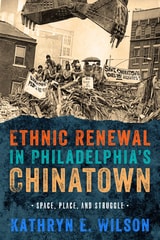
Ethnic Renewal in Philadelphia's Chinatown
Space, Place, and StruggleKathryn Wilson
Temple University Press, 2015
In Ethnic Renewal in Philadelphia’s Chinatown. Kathryn Wilson charts the unique history of this neighborhood. After 1945, a new generation of families began to shape Chinatown’s future. As plans for urban renewal—ranging from a cross-town expressway and commuter rail in the 1960s to a downtown baseball stadium in 2000—were proposed and developed, “Save Chinatown” activists rose up and fought for social justice.
Wilson chronicles the community’s efforts to save and renew itself through urban planning, territorial claims, and culturally specific rebuilding. She shows how these efforts led to Chinatown’s growth and its continued ability to serve as a living community for subsequent waves of new immigration.
Ethnic Routes to Becoming American
Indian Immigrants and the Cultures of CitizenshipRudrappa, Sharmila
Rutgers University Press, 2004
How does an immigrant become an ethnic American? And does American society fundamentally alter because of these newcomers?
In Ethnic Routes to Becoming American, Sharmila Rudrappa examines the paths South Asian immigrants in Chicago take toward assimilation in the late twentieth-century United States, where deliberations on citizenship rights are replete with the politics of recognition. She takes us inside two ethnic institutions, a battered women’s shelter, Apna Ghar, and a cultural organization, the Indo American Center, to show how immigrant activism, which brings cultural difference into public sphere debates, ironically abets these immigrants’ assimilation. She interlaces ethnographic details with political-philosophical debates on the politics of recognition and redistribution. In this study on the under-researched topic of the incorporation of South Asian immigrants into the American polity, Sharmila Rudrappa compels us to rethink ethnic activism, participatory democracy, and nation-building processes.
Ethnicity and Inequality in Hawai'i
Jonathan Y. Okamura
Temple University Press, 2008
Challenging the dominant view of Hawai’i as a “melting pot paradise”—a place of ethnic tolerance and equality—Jonathan Okamura examines how ethnic inequality is structured and maintained in island society. He finds that ethnicity, not race or class, signifies difference for Hawaii’s people and therefore structures their social relations. In Hawai’i, residents attribute greater social significance to the presumed cultural differences between ethnicities than to more obvious physical differences, such as skin color.
According to Okamura, ethnicity regulates disparities in access to resources, rewards, and privileges among ethnic groups, as he demonstrates in his analysis of socioeconomic and educational inequalities in the state. He shows that socially and economically dominant ethnic groups—Chinese Americans, Japanese Americans, and Whites—have stigmatized and subjugated the islands’ other ethnic groups—especially Native Hawaiians, Filipino Americans, and Samoans. He demonstrates how ethnic stereotypes have been deployed against ethnic minorities and how these groups have contested their subordinate political and economic status by articulating new identities for themselves.
Ethnicity in Michigan
Issues and PeopleJack Glazier
Michigan State University Press, 2001
As the introductory volume in the series Discovering the Peoples of Michigan, Ethnicity in Michigan outlines the processes of migration, as well as the rich relationship between ethnic groups and the trajectories of historical and social change in Michigan. On both state and local levels, issues of identity, race, politics, and shared history inform community development. Jack Glazier and Arthur Helweg provide a substantive general and theoretical overview of the various ethnic groups in Michigan, and of the ways in which immigrants both respond to and shape Michigan's particular regional character.