Results by title
418 books match the query 'Southern States' and 10 start with e
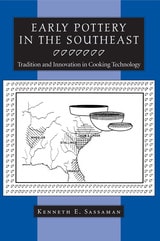
Early Pottery in the Southeast
Tradition and Innovation in Cooking TechnologyKenneth E. Sassaman
University of Alabama Press, 1993
A Dan Josselyn Memorial Publication
Among southeastern Indians pottery was an innovation that enhanced the economic value of native foods and the efficiency of food preparation. But even though pottery was available in the Southeast as early as 4,500 years ago, it took nearly two millenia before it was widely used. Why would an innovation of such economic value take so long to be adopted?
The answer lies in the social and political contexts of traditional cooking technology. Sassaman's book questions the value of using technological traits alone to mark temporal and spatial boundaries of prehistoric cultures and shows how social process shapes the prehistoric archaeological record.
Early Pottery
Technology, Function, Style, and Interaction in the Lower SoutheastEdited by Rebecca Saunders and Christopher T. Hays
University of Alabama Press, 2004
A synthesis of research on earthenware technologies of the Late Archaic Period in the southeastern U.S.
Information on social groups and boundaries, and on interaction between groups, burgeons when pottery appears on the social landscape of the Southeast in the Late Archaic period (ca. 5000-3000 years ago). This volume provides a broad, comparative review of current data from "first potteries" of the Atlantic and Gulf coastal plains and in the lower Mississippi River Valley, and it presents research that expands our understanding of how pottery functioned in its earliest manifestations in this region.
Included are discussions of Orange pottery in peninsular Florida, Stallings pottery in Georgia, Elliot's Point fiber-tempered pottery in the Florida panhandle, and the various pottery types found in excavations over the years at the Poverty Point site in northeastern Louisiana. The data and discussions demonstrate that there was much more interaction, and at an earlier date, than is often credited to Late Archaic societies. Indeed, extensive trade in pottery throughout the region occurs as early as 1500 B.C.
These and other findings make this book indispensable to those involved in research into the origin and development of pottery in general and its unique history in the Southeast in particular.
Editors Make War
Donald E. Reynolds
Southern Illinois University Press, 2006
Educating the New Southern Woman
Speech, Writing, and Race at the Public Women's Colleges, 1884-1945David Gold and Catherine L. Hobbs
Southern Illinois University Press, 2014
From the end of Reconstruction through World War II, a network of public colleges for white women flourished throughout the South. Founded primarily as vocational colleges to educate women of modest economic means for life in the emerging “new” South, these schools soon transformed themselves into comprehensive liberal arts–industrial institutions, proving so popular that they became among the largest women’s colleges in the nation. In this illuminating volume, David Gold and Catherine L. Hobbs examine rhetorical education at all eight of these colleges, providing a better understanding of not only how women learned to read, write, and speak in American colleges but also how they used their education in their lives beyond college.
With a collective enrollment and impact rivaling that of the Seven Sisters, the schools examined in this study—Mississippi State College for Women (1884), Georgia State College for Women (1889), North Carolina College for Women (1891), Winthrop College in South Carolina (1891), Alabama College for Women (1896), Texas State College for Women (1901), Florida State College for Women (1905), and Oklahoma College for Women (1908)—served as important centers of women’s education in their states, together educating over a hundred thousand students before World War II and contributing to an emerging professional class of women in the South. After tracing the establishment and evolution of these institutions, Gold and Hobbs explore education in speech arts and public speaking at the colleges and discuss writing instruction, setting faculty and departmental goals and methods against larger institutional, professional, and cultural contexts. In addition to covering the various ways the public women’s colleges prepared women to succeed in available occupations, the authors also consider how women’s education in rhetoric and writing affected their career choices, the role of race at these schools, and the legacy of public women’s colleges in relation to the history of women’s education and contemporary challenges in the teaching of rhetoric and writing.
The experiences of students and educators at these institutions speak to important conversations among scholars in rhetoric, education, women’s studies, and history. By examining these previously unexplored but important institutional sites, Educating the New Southern Woman provides a richer and more complex history of women’s rhetorical education and experiences.

Ellen Glasgow
Beyond ConventionBy Linda W. Wagner
University of Texas Press, 1982
For many years Pulitzer Prize winner Ellen Glasgow has been regarded as a classic American regional novelist. But Glasgow is far more than a Southern writer, as Linda Wagner demonstrates in this fascinating reassessment of her work.
A Virginia lady, Glasgow began to write at a time when the highest praise for a literary woman was to be mistaken for a male writer. In her early fiction, published at the turn of the century, all attention is focused on male protagonists; the strong female characters who do appear early in these novels gradually fade into the background.
But Ellen Glasgow grew to become a woman who, born to be protected from the very life she wanted to chronicle, moved “beyond convention” to live her life on her own terms. And as her own self-image changed, the perspective of her novels became more feminine, the female characters moved to center stage, and their philosophies became central to her themes. Glasgow’s best novels, then—Barren Ground, Vein of Iron, and the romantic trilogy that includes The Sheltered Life—came late in her life, when she was no longer content to imitate fashionable male novelists.
Glasgow’s increased self-assurance as writer and woman led to a far greater awareness of craft. Her style became more highly imaged, more suggestive, as though she wished to widen the range of resources available to move her readers. She became a writer both popular and respected. Her novels appeared as selections of the Literary Guild and the Book-of-the-Month Club, and one became a best seller. At the same time she was chosen as one of the few female members of the Academy of Arts and Letters, and in 1942 she was awarded the Pulitzer Prize for her novel In This Our Life.
Enduring Legacy
Rhetoric and Ritual of the Lost CauseW. Stuart. Towns
University of Alabama Press, 2013
Explores the crucial role of rhetoric and oratory in creating and propagating a “Lost Cause” public memory of the American South
Enduring Legacy explores the vital place of ceremonial oratory in the oral tradition in the South and analyses how rituals such as Confederate Memorial Day, Confederate veteran reunions, and dedication of Confederate monuments have contributed to creating and sustaining a Lost Cause paradigm for Southern identity. Towns studies in detail secessionist and Civil War speeches and how they laid the groundwork for future generations, including Southern responses to the civil rights movement, and beyond.
The Lost Cause orators that came after the Civil War, Towns argues, helped to shape a lasting mythology of the brave Confederate martyr, and the Southern positions for why the Confederacy lost and who was to blame. Innumerable words were spent—in commemorative speeches, newspaper editorials, and statehouse oratory—condemning the evils of Reconstruction, redemption, reconciliation, and the new and future South. Towns concludes with an analysis of how Lost Cause myths still influence Southern and national perceptions of the region today, as evidenced in debates over the continued deployment of the Confederate flag and the popularity of Civil War reenactments.
Entering the Fray
Gender, Politics, and Culture in the New SouthEdited by Jonathan Daniel Wells & Sheila R. Phipps
University of Missouri Press, 2009
Entitled to the Pedestal
Place, Race, and Progress in White Southern Women’s Writing, 1920–1945Nghana tamu Lewis
University of Iowa Press, 2007
In this searching study, Nghana Lewis offers a close reading of the works and private correspondences, essays, and lectures of five southern white women writers: Julia Peterkin, Gwen Bristow, Caroline Gordon, Willa Cather, and Lillian Smith. At the core of this work is a sophisticated reexamination of the myth of southern white womanhood.
Lewis overturns the conventional argument that white women were passive and pedestal-bound. Instead, she argues that these figures were complicit in the day-to-day dynamics of power and authorship and stood to gain much from these arrangements at the expense of others.
At the same time that her examination of southern mythology explodes received wisdom, it is also a journey of self-discovery. As Lewis writes in her preface, “As a proud daughter of the South, I have always been acutely aware of the region’s rich cultural heritage, folks, and foodstuffs. How could I not be? I was born and reared in Lafayette, Louisiana, where an infant’s first words are not ‘da-da’ and ‘ma-ma’ but ‘crawfish boil’ and ‘fais-do-do.’ . . . I have also always been keenly familiar with its volatile history.” Where these conflicting images—and specifically the role of white southern women as catalysts, vindicators, abettors, and antagonists—meet forms the crux of this study. As such, this study of the South by a daughter of the South offers a distinctive perspective that illuminates the texts in novel and provocative ways.
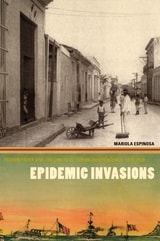
Epidemic Invasions
Yellow Fever and the Limits of Cuban Independence, 1878-1930Mariola Espinosa
University of Chicago Press, 2009
In the early fall of 1897, yellow fever shuttered businesses, paralyzed trade, and caused tens of thousand of people living in the southern United States to abandon their homes and flee for their lives. Originating in Cuba, the deadly plague inspired disease-control measures that not only protected U.S. trade interests but also justified the political and economic domination of the island nation from which the pestilence came. By focusing on yellow fever, Epidemic Invasions uncovers for the first time how the devastating power of this virus profoundly shaped the relationship between the two countries.
Yellow fever in Cuba, Mariola Espinosa demonstrates, motivated the United States to declare war against Spain in 1898, and, after the war was won and the disease eradicated, the United States demanded that Cuba pledge in its new constitution to maintain the sanitation standards established during the occupation. By situating the history of the fight against yellow fever within its political, military, and economic context, Espinosa reveals that the U.S. program of sanitation and disease control in Cuba was not a charitable endeavor. Instead, she shows that it was an exercise in colonial public health that served to eliminate threats to the continued expansion of U.S. influence in the world.
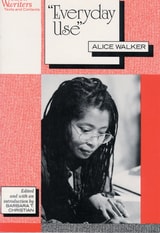
Everyday Use
Alice WalkerChristian, Barbara T
Rutgers University Press, 1994
This casebook includes an introduction by the editor, a chronology of Walker's life, an authoritative text of "Everyday Use" and of "In Search of Our Mothers' Gardens," an interview with Walker, six critical essays, and a bibliography. The contributors are Charlotte Pierce-Baker, Houston A. Baker, Jr., Thadious M. Davis, Margot Anne Kelley, John O'Brien, Elaine Showalter, and Mary Helen Washington.