Results by title
333 books match the query 'Television' and 10 start with e

Edited Clean Version
Technology and the Culture of ControlRaiford Guins
University of Minnesota Press, 2009
Where is censorship in the age of digital technology?
Not long ago it would have been an absurd idea to purchase a television, CD or MP3 or DVD player, computer software, or game console with the intention of limiting its capabilities. However, as Raiford Guins demonstrates in Edited Clean Version, today’s media technology is marketed and sold for what it does not contain and what it will not deliver.
TVs equipped with V-chips, Internet filters, editing DVD players, clean-version CDs and MP3s, and game consoles with parental control features can block out, monitor, disable, and filter information. As Guins argues in this provocative book, consumers now find themselves in new relationships with their everyday media in which they inscribe their viewing, listening, and playing experiences with self-prescribed and technologically enabled values and morals. Censorial practices are not so much enacted on media by regulatory bodies today as they are in our media technology.According to Guins, these new “control technologies” are designed to embody an ethos of neoliberal governance—through the very media that have been previously presumed to warrant management, legislation, and policing. Repositioned within a discourse of empowerment, security, and choice, the action of regulation, he reveals, has been relocated into the hands of users.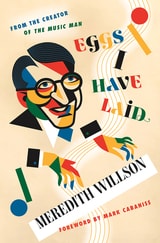
Eggs I Have Laid
Meredith Willson
University of Minnesota Press, 2025
Back in print: the playful and personal memoir of Meredith Willson’s creative tribulations and triumphs before The Music Man
Composer, musical director, writer, lecturer, and piccoloist Meredith Willson laid many eggs throughout his career—but not all those eggs would hatch quite so gloriously as his Broadway hit The Music Man. In Eggs I Have Laid, Willson genially chronicles the failures that he faced as he made his place in show business during the pivotal early 1950s, when radio was being overtaken by television.
From Hollywood to New York, London, and Paris, and back to his hometown of Mason City, Iowa, Willson sets each scene vividly, bringing to life his encounters with zeitgeist stars, from collaborators Tallulah Bankhead and Fred Allen to Orson Welles and Carmen Miranda. His signature wit excels as he relates his tales of eggs dropped, notable among them the lavishly produced variety program The Big Show, his ill-fated attempt to be a radio bulwark against the encroaching tide of television.
First published in 1955, Eggs I Have Laid features delightful curiosities, like an eight-page “platonic dialogue” about quitting smoking and the lyrics to a love song with the occupancy limits of the New York Fire Code as its central metaphor. It is at once a vivid chronicle and a trove of insight from the hilarious, perseverant mind of Meredith Willson.
Elena, Princesa of the Periphery
Disney’s Flexible Latina GirlDiana Leon-Boys
Rutgers University Press, 2023
2024 National Communication Association's Critical and Cultural Communication Studies Division (CCSD) Book of the year award
2023 National Communication Association's Feminist and Gender Studies Division Bonnie Ritter Outstanding Feminist Book Award
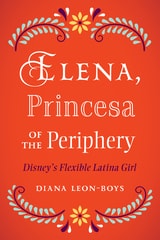
In the summer of 2016, Disney introduced its first Latina princess, Elena of Avalor. Princesa of the Periphery explores this Disney property using multiple case studies to understand its approach to girlhood and Latinidad. Following the circuit of culture model, author Diana Leon-Boys teases out moments of complex negotiations by Disney, producers, and audiences as they navigate Elena’s circulation. Case studies highlight how a flexible Latinidad is deployed through corporate materials, social media pages, theme park experiences, and the television series to create a princess who is both marginal to Disney’s normative vision of princesshood and central to Disney’s claims of diversification. This multi-layered analysis of Disney’s mediated Latina girlhood interrogates the complex relationship between the U.S.’s largest ethnic minority and a global conglomerate that stands in for the U.S. on the global stage.
Elvis, Marilyn, and the Space Aliens
Icons on Screen in NevadaRobin Holabird
University of Nevada Press, 2017
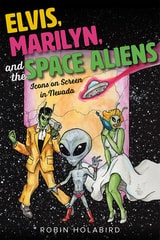
Elvis Presley, Marilyn Monroe, and space aliens like the Transformers share a surprising connection along with James Bond, Indiana Jones, and Rocky Balboa. These beloved icons played active roles in movie and television projects set in the state of Nevada. Long time state film commissioner and movie reviewer Holabird explores the blending of icons and Nevada, along with her personal experiences of watching movies, talking with famous people, and showing off a diverse range of stunning and iconic locations like Las Vegas, Reno, Lake Tahoe, and Area 51.
Holabird shows how Nevada’s flash, flair, and fostering of the forbidden provided magic for singers, sexpots, and strange creatures from other worlds. She also gives readers an insider’s look into moviemaking in Nevada by drawing on her extensive experience as a film commissioner. This is a unique take on film history and culture, and Holabird explores eighteen film genres populated by one-of-a-kind characters with ties to Nevada. Along with being a film history of the state of Nevada written by a consummate insider, the book is a fun mixture of research, personal experiences, and analysis about how Nevada became the location of choice for a broad spectrum of well-known films and characters.
Envisioning Socialism
Television and the Cold War in the German Democratic RepublicHeather L. Gumbert
University of Michigan Press, 2014
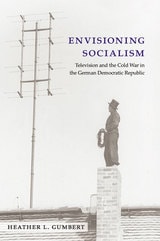
Envisioning Socialism examines television and the power it exercised to define the East Germans’ view of socialism during the first decades of the German Democratic Republic. In the first book in English to examine this topic, Heather L. Gumbert traces how television became a medium prized for its communicative and entertainment value. She explores the difficulties GDR authorities had defining and executing a clear vision of the society they hoped to establish, and she explains how television helped to stabilize GDR society in a way that ultimately worked against the utopian vision the authorities thought they were cultivating.
Gumbert challenges those who would dismiss East German television as a tool of repression that couldn’t compete with the West or capture the imagination of East Germans. Instead, she shows how, by the early 1960s, television was a model of the kind of socialist realist art that could appeal to authorities and audiences. Ultimately, this socialist vision was overcome by the challenges that the international market in media products and technologies posed to nation-building in the postwar period.
A history of ideas and perceptions examining both real and mediated historical conditions, Envisioning Socialism considers television as a technology, an institution, and a medium of social relations and cultural knowledge. The book will be welcomed in undergraduate and graduate courses in German and media history, the history of postwar Socialism, and the history of science and technologies.
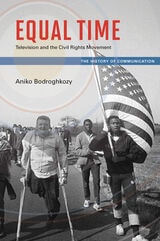
Equal Time
Television and the Civil Rights MovementAniko Bodroghkozy
University of Illinois Press, 2013
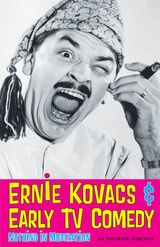
Ernie Kovacs & Early TV Comedy
Nothing in ModerationBy Andrew Horton
University of Texas Press, 2010
Among the pioneers of television, Ernie Kovacs was one of the most original and imaginative comedians. His zany, irreverent, and surprising humor not only entertained audiences throughout the 1950s and early 1960s, but also inspired a host of later comedies and comedians, including Monty Python, David Letterman, much of Saturday Night Live, Rowan and Martin's Laugh-In, Captain Kangaroo, and even Sesame Street. Kovacs created laughter through wildly creative comic jokes, playful characterizations, hilarious insights, and wacky experiments. "Nothing in moderation," his motto and epitaph, sums up well Kovacs's wholehearted approach to comedy and life.
In this book, Andrew Horton offers the first sustained look at Ernie Kovacs's wide-ranging and lasting contributions to the development of TV comedy. He discusses in detail Kovacs's work in New York, which included The Ernie Kovacs Show (CBS prime time 1952–1953), The Ernie Kovacs Show (NBC daytime variety 1956–1957), Tonight (NBC late-night comedy/variety 1956-1957), and a number of quiz shows. Horton also looks at Kovacs's work in Los Angeles and in feature film comedy. He vividly describes how Kovacs and his comic co-conspirators created offbeat characters and zany situations that subverted expectations and upended the status quo. Most of all, Horton demonstrates that Kovacs grasped the possibility for creating a fresh genre of comedy through the new medium of television and exploited it to the fullest.
Ethereal Queer
Television, Historicity, DesireAmy Villarejo
Duke University Press, 2013
Ethnic Humor in Multiethnic America
Gillota, David
Rutgers University Press, 2013
Gillota investigates the manner in which various humorists respond to multiculturalism and the increasing diversity of the American population. Rather than looking at one or two ethnic groups at a time—as is common scholarly practice—the book focuses on the interplay between humorists from different ethnic communities. While some comic texts project a fantasy world in which diverse ethnic characters coexist in a rarely disputed harmony, others genuinely engage with the complexities and contradictions of multiethnic America.
The first chapter focuses on African American comedy with a discussion of such humorists as Paul Mooney and Chris Rock, who tend to reinforce a black/white vision of American race relations. This approach is contrasted to the comedy of Dave Chappelle, who looks beyond black and white and uses his humor to place blackness within a much wider multiethnic context.
Chapter 2 concentrates primarily on the Jewish humorists Sarah Silverman, Larry David, and Sacha Baron Cohen—three artists who use their personas to explore the peculiar position of contemporary Jews who exist in a middle space between white and other.
In chapter 3, Gillota discusses different humorous constructions of whiteness, from a detailed analysis of South Park to “Blue Collar Comedy” and the blog Stuff White People Like.
Chapter 4 is focused on the manner in which animated children’s film and the network situation comedy often project simplified and harmonious visions of diversity. In contrast, chapter 5 considers how many recent works, such as Harold and Kumar Go to White Castle and the Showtime series Weeds, engage with diversity in more complex and productive ways.
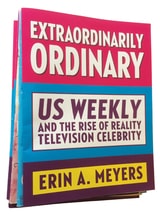
Extraordinarily Ordinary
Us Weekly and the Rise of Reality Television CelebrityErin A. Meyers
Rutgers University Press, 2020