Results by title
265 books match the query 'To 1500' and 9 start with e

Early Village Life at Beidha, Jordan
Neolithic spatial organization and vernacular architectureBrian Byrd
Council for British Research in the Levant, 2005
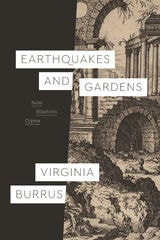
Earthquakes and Gardens
Saint Hilarion’s CyprusVirginia Burrus
University of Chicago Press, 2023
In Jerome’s Life of Saint Hilarion, a fourth-century saint briefly encounters the ruins of an earthquake-toppled city and a haunted garden in Cyprus. From these two fragmentary passages, Virginia Burrus delivers a series of sweeping meditations on our experience of place and the more-than-human worlds—the earth and its gods—that surround us. Moving between the personal and geological, Earthquakes and Gardens ruminates on destruction and resilience, ruination and resurgence, grief and consolation in times of disaster and loss. Ultimately, Burrus’s close readings reimagine religion as a practice that unsettles certainty and develops mutual flourishing.
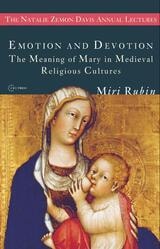
Emotion and Devotion
The Meaning of Mary in Medieval Religious CulturesMiri Rubin
Central European University Press, 2009
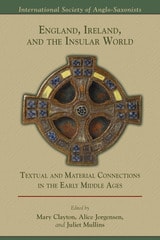
England, Ireland, and the Insular World
Textual and Material Connections in the Early Middle AgesMary Clayton
Arizona Center for Medieval and Renaissance Studies, 2017
ISAS Dublin 2013. England, Ireland and the Insular World: Textual and Material Connections in the Early Middle Ages is a collection of twelve essays related to the theme of the 2013 conference of the International Society of Anglo-Saxonists, ‘Insular Cultures’. Contributors cover a broad range of topics, from early medieval agriculture in Ireland and England, to sculpture, manuscript illumination and script, homilies, hagiography, aristocratic gift-giving, relics, calendars, Beowulf, and Anglo-Saxon perceptions of the Celtic peoples, considering connections, parallels and differences between Anglo-Saxon England and its insular neighbors. The volume will be of interest to all those working on Early Medieval history, literature, archaeology, liturgy, art, and manuscripts.
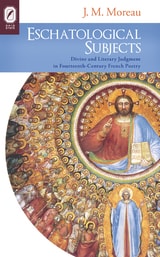
Eschatological Subjects
Divine and Literary Judgment in Fourteenth-Century French PoetryJ. M. Moreau
The Ohio State University Press, 2014
But Eschatological Subjects goes even further to demonstrate the largely unrecognized duality of this judge figure: not just God, the judge is also the imperious and imperfect human reader. The simultaneous divine and human judgments in (and of) French poetry reveal much about the ethical stakes of writing vernacular poetry in the later Middle Ages and, most importantly, about the relationships between authors and audiences.
Focusing on Guillaume de Deguileville, Guillaume de Machaut, and Jean Froissart (each of whom composed scenes in which they appear on trial before God), Moreau contributes important new insights on the complex “trial process” of later medieval literature, in which poetic authority and fame depended on the poet’s ability to defend himself before a fearful court of reader opinion.
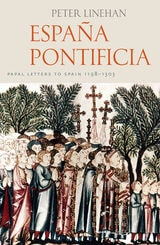
Espana Pontifica
Papal Letters to Spain 1198-1303Peter Linehan
Catholic University of America Press, 2022
Ethnic Relations in the Ancient Mediterranean
Social Life Under EmpirePhilip A. Harland
University of Chicago Press, 2026
With this book, Philip A. Harland presents a large-scale rereading of social and cultural life in the eastern part of the ancient Mediterranean in particular, examining social interactions among peoples, from culturally dominant groups to minority populations. Harland assesses literary and archaeological evidence to yield fresh insights into the dynamics of ethnic relations in the region and to explore how the population navigated questions of identification, differentiation, categorization, stratification, criminalization, and population production.
Harland considers encounters between peoples as well as their representations of one another, reframing the social landscape of the ancient world by focusing on the influence and ubiquity of the ethnographic imagination between the fifth century BCE and the third century CE. Drawing insights from anthropology, sociology, and postcolonial studies, Harland offers close readings of papyri, inscriptions, monuments, sculptures, and other materials that reflect interactions between different populations at all levels of society. He gives careful attention to the perspectives of enslaved, immigrant, and subject peoples, including Egyptians, Babylonians, Syrians, and Judeans under Persian, Hellenistic, or Roman rule.
Offering an innovative reading of social and cultural life from the ground up, this book reveals the extent to which ethnographic thinking structured the sociocultural landscape of the ancient world.
Etymologies and Genealogies
A Literary Anthropology of the French Middle AgesR. Howard Bloch
University of Chicago Press, 1983
"Bloch's Study is a genuinely interdisciplinary one, bringing together elements of history, ethnology, philology, philosophy, economics and literature, with the undoubted ambition of generating a new synthesis which will enable us to read the Middle Ages in a different light.
Stated simply, and in terms which do justice neither to the density nor the subtlety of his argument, Bloch's thesis is this: that medieval society perceived itself in terms of a vertical mode of descent from origins. This model is articulated etymologically in medieval theories of grammar and language, and is consequently reflected in historical and theological writings; it is also latent in the genealogical structure of the aristocratic family as it began to be organized in France in the twelfth century, and is made manifest in such systems of signs as heraldry and the adoption of patronymns. . . .
It is an ingenious and compelling synthesis which no medievalist, even on this side of the Atlantic, can afford to ignore." –Nicholas Mann, Times Literary Supplement
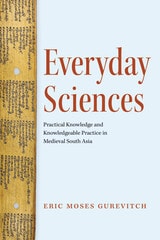
Everyday Sciences
Practical Knowledge and Knowledgeable Practice in Medieval South AsiaEric Moses Gurevitch
University of Chicago Press, 2027
How people across society in medieval South Asia—including coppersmiths, merchants, bureaucrats, philosophers, and physicians—pioneered new vernacular sciences.
Starting in the eleventh century, South Asian scholars and artisans began to investigate and shape the world in a novel manner. Intellectuals translated Sanskrit texts into regional languages such as Kannada, situating knowledge in particular places. At the same time, architects and artisans began to assert their intellectual and literary presence, often claiming the title of “scholar” as they negotiated a space between classical textual erudition, professional expertise, and personal experience. Working within the perilous world of court politics, a new class of scholar-administrators began collecting recipes and composing texts about weather prediction, horticulture, mathematics, astrology, sexual life, and medicine.
Everyday Sciences traces this emergence of vernacular sciences by engaging with untapped archives and an array of sources in multiple languages. By exploring how historical actors resolved disputes about the physiology of vision, the use of meat and alcohol in medicine, and the management of information in elephant stables, Eric Moses Gurevitch unveils the complex textual and social orders that structured medieval society in India. He argues that a focus on everyday sciences in the non-modern non-West allows historians to reassess how places outside—and even inside—Europe are brought into narratives of a global history of science. Gurevitch articulates a “big-enough” history of science in South Asia, one open to little voices and unexpected connections that might not make their way through the fray in other histories.
Everyday Sciences demonstrates how practical, everyday activities were engines of profound intellectual innovation—and it shows the promise of revisiting the past without colonial hang-ups, and with fresh eyes.