Results by title
141 books match the query 'World War I' and 2 start with e
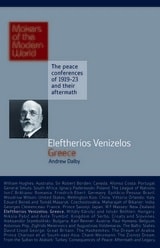
Eleftherios Venizelos
GreeceAndrew Dalby
Haus Publishing, 2010
The Greek Prime Minister Eleftherios Venizelos (1864–1936) was one of the stars of the Paris Peace Conference, impressing many of the Western delegates, already possessed of a romantic view of 'the grandeur that was Greece', with his charm and oratorical style. He won support for his country's territorial ambitions in Asia Minor, the 'Great Idea' of a revived Hellenic empire controlling the Aegean and stretching to the Black Sea. Venizelos had won this support by bringing Greece into the war on the Allied side, but in doing so he had split his country, and in order to secure his government's position he had to deliver territorial gains at the expense of the Ottoman Empire. It was the Greek occupation of Asia Minor, however, that spurred the Turks to support Mustafa Kemal and resulted not in the creation of a Greater Greece but the modern Republic of Turkey. The conflict between Greece and Turkey began the tension between the two states that has continued for the past 90 years and is most clearly seen in the dispute over the divided island of Cyprus. The Paris Peace Conferences were where the modern Near East, with all its problems of competing nationalisms and ethnic divisions, was created, and Venizelos's Greece was the key player in this process.
[more]
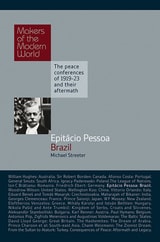
Epitacio Pessoa
BrazilMichael Streeter
Haus Publishing, 2010
Brazil was one of the emerging world powers to be invited to the Paris Peace Conference in 1919. Having jettisoned her empire just thirty years before, the Portuguese-speaking nation was showed signs of becoming one of the financial powerhouses not just of Latin America, but of the world. Helped by abundant natural resources, cheap labour and large-scale immigration, Brazil’s economy had grown massively – and now it wanted to take its proper place in the society of world nations. In Paris, the country’s delegation was led by Epitacio Pessoa, a brilliant lawyer who had made his mark in national politics and was also a committed Europhile. It was a shrewd choice; helped by the Americans, Pessoa negotiated a deal to rescue Brazilian coffee from the German ports where it had languished since the middle of the war. He also helped win a place at the top table for Brazil in the new League of Nations. Pessoa was then rewarded by being elected president of Brazil – even though he was in Paris at the time. Yet even as Brazil enjoyed its moment of triumph on the international stage, the country’s political system was starting to unravel. Pessoa’s presidency ended in failure in 1922, its modest achievements overshadowed by bitter army revolts. And as Pessoa embarked on a new career as an international judge, his country slipped further into political infighting between elite oligarchies until the ageing republic finally folded in 1930. This, then, is the story of Epitacio Pessoa, the Treaty of Versailles and the rise and fall of Brazil’s tumultuous First Republic.
[more]