Results by title
22279 books match the query 'Social Science' and 684 start with e

Everywoman Her Own Theology
On the Poetry of Alicia Suskin OstrikerMartha Nell Smith and Julie R. Enszer, Editors
University of Michigan Press, 2018
Everywoman Her Own Theology: On the Poetry of Alicia Suskin Ostriker engages Ostriker’s poetry from throughout her career, including her first volume Songs, her award-winning collection The Imaginary Lover, and her more recent work in the collections No Heaven, the volcano sequence, The Old Woman, the Tulip, and the Dog, and Waiting for the Light. Like her literary criticism and essays, Ostriker’s poetry explores themes of feminism, Jewish life, family, and social justice.
With insightful essays—some newly written for this collection—poets and literary critics including Toi Derricotte, Daisy Fried, Cynthia Hogue, Tony Hoagland, and Eleanor Wilner illuminate and open new pathways for critical engagement with Alicia Ostriker’s lifetime of poetic work.
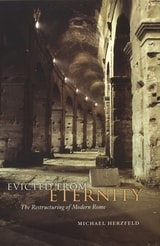
Evicted from Eternity
The Restructuring of Modern RomeMichael Herzfeld
University of Chicago Press, 2009
Modern Rome is a city rife with contradictions. Once the seat of ancient glory, it is now often the object of national contempt. It plays a significant part on the world stage, but the concerns of its residents are often deeply parochial. And while they live in the seat of a world religion, Romans can be vehemently anticlerical. These tensions between the past and the present, the global and the local, make Rome fertile ground to study urban social life, the construction of the past, the role of religion in daily life, and how a capital city relates to the rest of the nation.
Michael Herzfeld focuses on Rome’s historic Monti district and the wrenching dislocation caused by rapid economical, political, and social change. Evicted from Eternity tells the story of the gentrification of Monti—once the architecturally stunning home of a community of artisans and shopkeepers now displaced by an invasion of rapacious real estate speculators, corrupt officials, dithering politicians, deceptive clerics, and shady thugs. As Herzfeld picks apart the messy story of Monti’s transformation, he ranges widely over many aspects of life there and in the rest of the city, richly depicting the uniquely local landscape of globalization in Rome.
Evidence
Howard S. Becker
University of Chicago Press, 2017
Becker has for seventy years been mulling over the problem of evidence. He argues that social scientists don’t take questions about the usefulness of their data as evidence for their ideas seriously enough. For example, researchers have long used the occupation of a person’s father as evidence of the family’s social class, but studies have shown this to be a flawed measure—for one thing, a lot of people answer that question too vaguely to make the reasoning plausible. The book is filled with examples like this, and Becker uses them to expose a series of errors, suggesting ways to avoid them, or even to turn them into research topics in their own right. He argues strongly that because no data-gathering method produces totally reliable information, a big part of the research job consists of getting rid of error. Readers will find Becker’s newest guidebook a valuable tool, useful for social scientists of every variety.
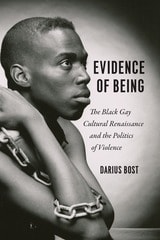
Evidence of Being
The Black Gay Cultural Renaissance and the Politics of ViolenceDarius Bost
University of Chicago Press, 2018

Evidence of Things Not Seen
Fantastical Blackness in Genre FictionsRhonda D. Frederick
Rutgers University Press, 2022

Evil Arabs in American Popular Film
Orientalist FearBy Tim Jon Semmerling
University of Texas Press, 2006
2006 — Runner-up, Arab American National Museum Book Awards
The "evil" Arab has become a stock character in American popular films, playing the villain opposite American "good guys" who fight for "the American way." It's not surprising that this stereotype has entered American popular culture, given the real-world conflicts between the United States and Middle Eastern countries, particularly since the oil embargo of the 1970s and continuing through the Iranian hostage crisis, the first and second Gulf Wars, and the ongoing struggle against al-Qaeda. But when one compares the "evil" Arab of popular culture to real Arab people, the stereotype falls apart. In this thought-provoking book, Tim Jon Semmerling further dismantles the "evil" Arab stereotype by showing how American cultural fears, which stem from challenges to our national ideologies and myths, have driven us to create the "evil" Arab Other.
Semmerling bases his argument on close readings of six films (The Exorcist, Rollover, Black Sunday, Three Kings, Rules of Engagement, and South Park: Bigger, Longer & Uncut), as well as CNN's 9/11 documentary America Remembers. Looking at their narrative structures and visual tropes, he analyzes how the films portray Arabs as threatening to subvert American "truths" and mythic tales—and how the insecurity this engenders causes Americans to project evil character and intentions on Arab peoples, landscapes, and cultures. Semmerling also demonstrates how the "evil" Arab narrative has even crept into the documentary coverage of 9/11. Overall, Semmerling's probing analysis of America's Orientalist fears exposes how the "evil" Arab of American popular film is actually an illusion that reveals more about Americans than Arabs.

Evoking Newark
Fifty YearsCamilo José Vergara
Rutgers University Press, 2027
Evoking Newark is a systematic photographic documentation of Newark, NJ, from 1977-2024. This project creates a flexible framework for tracing Newark’s evolution. In this ambitious volume, award-winning photographer Camilo José Vergara creates an indelible record of the city, beginning along its most important commercial thoroughfares, such as Broad, Market, Springfield Ave., Clinton Ave., Central Ave., and MLK Jr. Blvd. He also takes a closer look at landmarks as well as more modest buildings whose folksy character caught his eye. As an urban documentary photographer, Vergara frequently returned to re-photograph Newark in order to track changes over time. For almost fifty years, he identified multiple street intersections that were particularly revealing settings for charting developments in the city.
Vergara examines in particular the slow renewal of these main thoroughfares, the demolition of high-rise housing projects, the ruination and clearing of industrial sites, the building of multi-family houses in once-vacant lots, and the construction of skyscrapers and cultural institutions. To complete the project, he added photos of graffiti and murals that comment on local and national events celebrating African American and Hispanic heroes and heroines and memorials remembering the dead. With these efforts at careful documentation, Brick City demonstrates the usefulness of a time-based documentary approach to the study of post-industrial urban areas. The photographs are accompanied by detailed captions about the locations portrayed, and in many cases by Vergara's own observations and transcripts of his interviews with local people as well as overheard conversations. The photos and captions are one way of telling us that “this happened,” and a means of refreshing the memories of viewers who have experienced Newark generations ago--recollections that contribute to their sense of identity.
Evolution and Culture
Marshall D. Sahlins and Elman R. Service, Editors
University of Michigan Press, 1960
Evolution and the Capacity for Commitment
Randolph Nesse
Russell Sage Foundation, 2001
Evolution of Ceramic Production Organization in a Maya Community
Dean E. Arnold
University Press of Colorado, 2014
Although several kinds of production units developed, households were the most persistent units of production in spite of massive social change and the reorientation of pottery production to the tourist market. Entrepreneurial workshops, government-sponsored workshops, and workshops attached to tourist hotels developed more recently but were short-lived, whereas pottery-making households extended deep into the nineteenth century. Through this continuity and change, intermittent crafting, multi-crafting, and potters' increased management of economic risk also factored into the development of the production organization in Ticul.
Illustrated with more than 100 images of production units, The Evolution of Ceramic Production Organization in a Maya Community is an important contribution to the understanding of ceramic production. Scholars with interests in craft specialization, craft production, and demography, as well as specialists in Mesoamerican archaeology, anthropology, history, and economy, will find this volume especially useful.
Evolutionary Archaeology - Paper
Michael J O'Brien
University of Utah Press, 1996
The application of Darwinian theory to archaeological phenomena has always been a difficult concept. In its most modern form, this approach has only gained currency since the 1980s. Perhaps the greatest hurdle to incorporating scientific evolutionism into archaeology is the necessary development of more than a rudimentary understanding of Darwinian evolution itself. Failure to recognize the conflict of anthropological terms such as "adaptation" and "fitness" with standard biological usage is fatal to any attempt to apply scientific evolutionism to the material record. Even more problematic are the outdated notions that human culture has allowed us to escape the effects of selection, that culture evolves, and that it does so in a progressive manner.
This volume assembles what might be considered the benchmark articles in evolutionary archaeology — articles that show how to apply scientific evolutionism to the study of variation in the archaeological record. It delineates an approach to the past in which artifacts are viewed as parts of human phenotypes and thus are subject to selection in the same manner as any somatic feature.
Evolutionary Archaeology: Theory and Application is aimed at archaeologists who want to understand the basics of evolutionary archaeology and who wish to do so from the beginning.
Evolutionary Archaeology
Methodological IssuesPatrice A. Teltser
University of Arizona Press, 1994
Evolutionary archaeologists argue that Darwinian natural selection acts on human behavior, resulting in the persistence of alternative human behaviors and the material products of those behaviors. The contributors address the methodological requirements of evolutionary theory as it may apply to the nature of archaeological data. Several contributors evaluate the methodological implications of basic evolutionary principles, including the structure of explanations, the units of evolution and analysis, and the measurement of information transmission. Others explore the role of specific analytic approaches such as seriation, raw material sourcing, and comparative and engineering analyses. Still others confront the issue of reformulating archaeological problems from the point of view of evolutionary theory.
By focusing on the methodological requirements of evolutionary theory, these essays go far in meeting the challenge of building new archaeological method. The work contributes to a better understanding of cultural evolution and builds toward a new, logical framework to explain variation in the archaeological record.
Evolutionary Ecology and Archaeology
Applications to Problems in Human Evolution and PrehistoryJack M Broughton
University of Utah Press, 2009
Each of the twenty-four contributions represents a key benchmark in the field. Chapters are grouped by substantive topic and/or time period. Each of the following sections includes an introduction by the editors:
• Early Hominid Evolution and Behavior
• Pleistocene Foragers and Colonists
• Post-Glacial Adaptations
• Food Production Strategies
• Cooperation and Competition in Complex Societies
This volume’s broad range of research will foster sustained development of evolutionary ecology, and like Darwin’s work nearly 150 years ago will open wide fields of understanding of human prehistory.
Evolutionary Rhetoric
Sex, Science, and Free Love in Nineteenth-Century FeminismWendy Hayden
Southern Illinois University Press, 2013
In Evolutionary Rhetoric, scholar Wendy Hayden provides a comprehensive examination of the relationship between scientific and feminist rhetorics in free-love feminism, studying the movement from its inception in the 1850s to its dark turn toward eugenics in the early 1900s. Hayden organizes her provocative study by scientific discipline—evolution, physiology, bacteriology, embryology, and heredity. Each chapter explores how free-love feminists adopted the evidence of that discipline in their arguments for increased sex education, women’s sexual rights, reproductive freedom, and the abolition of a marriage system that repressed the rights and the sexuality of women.
Hayden takes our conventional understanding of the relationship between nineteenth-century feminism and science and expands it. The author provides examples of the powerful words of free-love feminists to show exactly how these exceptional women used science as a rhetorical platform to promote feminist, and often radical, social reforms.
Considering why the free-love movement has not yet been studied, Hayden also discusses how the recovery of this movement may impact larger goals in the recovery of women’s rhetoric. This important and timely study of a long-forgotten movement adds to our understanding of the complexities of the history of feminism.
Evolving Constitutional Rights
The Roberts Court and Criminal JusticeChristopher E. Smith, Michael A. McCall, and Madhavi M. McCall
Southern Illinois University Press, 2025
Illuminating continuity and change in Supreme Court decisions
Evolving Constitutional Rights: The Roberts Court and Criminal Justice offers a compelling and in-depth analysis of how the U.S. Supreme Court has reshaped constitutional protections under Chief Justice John Roberts. Authors Christopher E. Smith, Michael A. McCall, and Madhavi M. McCall examine the Court’s significant decisions from 2005 to Justice Breyer’s retirement in 2022, revealing a complex judicial landscape where traditional doctrines are revised and fundamental rights are redefined.
The Roberts Court played a decisive role in some of the most contentious issues in American law. Due to several justices’ application of originalist interpretations, its rulings have reconfigured key constitutional protections—often in ways that expand the authority of law enforcement while constraining legislative power over criminal statutes. The trajectory of the Court’s conservative supermajority raises pressing questions about the future of constitutional rights.
Taking a rigorous yet accessible approach, Evolving Constitutional Rights breaks down the Court’s influence across the full spectrum of criminal justice issues, from sentencing and trial rights to search-and-seizure protections, Miranda warnings, and corrections policies. Using both legal and empirical analysis, the authors track patterns in judicial ideology, uncovering how the Roberts Court has not only reinforced conservative principles but also unexpectedly broadened rights in areas such as digital privacy and defense counsel obligations.
This timely and insightful book goes beyond historical rulings to offer a forward-looking perspective on the Supreme Court’s role in shaping public safety, legal precedent, and the balance of power in American government. Essential reading for legal scholars, policymakers, and anyone concerned with the future of constitutional rights, this new volume provides a clear and authoritative examination of the Roberts Court’s lasting impact on American law.
Evolving God
A Provocative View on the Origins of Religion, Expanded EditionBarbara J. King
University of Chicago Press, 2017
Religion has been a central part of human experience since at least the dawn of recorded history. The gods change, as do the rituals, but the underlying desire remains—a desire to belong to something larger, greater, most lasting than our mortal, finite selves.
But where did that desire come from? Can we explain its emergence through evolution? Yes, says biological anthropologist Barbara J. King—and doing so not only helps us to understand the religious imagination, but also reveals fascinating links to the lives and minds of our primate cousins. Evolving God draws on King’s own fieldwork among primates in Africa and paleoanthropology of our extinct ancestors to offer a new way of thinking about the origins of religion, one that situates it in a deep need for emotional connection with others, a need we share with apes and monkeys. Though her thesis is provocative, and she’s not above thoughtful speculation, King’s argument is strongly rooted in close observation and analysis. She traces an evolutionary path that connects us to other primates, who, like us, display empathy, make meanings through interaction, create social rules, and display imagination—the basic building blocks of the religious imagination. With fresh insights, she responds to recent suggestions that chimpanzees are spiritual—or even religious—beings, and that our ancient humanlike cousins carefully disposed of their dead well before the time of Neandertals.
King writes with a scientist’s appreciation for evidence and argument, leavened with a deep empathy and admiration for the powerful desire to belong, a desire that not only brings us together with other humans, but with our closest animal relations as well.
Evolving Images
Jewish Latin American CinemaEdited by Nora Glickman and Ariana Huberman
University of Texas Press, 2017
Jews have always played an important role in the generation of culture in Latin America, despite their relatively small numbers in the overall population. In the early days of cinema, they served as directors, producers, screenwriters, composers, and broadcasters. As Latin American societies became more religiously open in the later twentieth century, Jewish characters and themes began appearing in Latin American films and eventually achieved full inclusion. Landmark films by Jewish directors in Argentina, Mexico, and Brazil, which are home to the largest and most influential Jewish communities in Latin America, have enjoyed critical and popular acclaim.
Evolving Images is the first volume devoted to Jewish Latin American cinema, with fifteen critical essays by leading scholars from Latin America, the United States, Europe, and Israel. The contributors address transnational and transcultural issues of Jewish life in Latin America, such as assimilation, integration, identity, and other aspects of life in the Diaspora. Their discussions of films with Jewish themes and characters show the rich diversity of Jewish cultures in Latin America, as well as how Jews, both real and fictional, interact among themselves and with other groups, raising the question of how much their ethnicity may be adulterated when adopting a combined identity as Jewish and Latin American. The book closes with a groundbreaking section on the affinities between Jewish themes in Hollywood and Latin American films, as well as a comprehensive filmography.

Ex Ante
Power and Prediction in the Real-Time FutureJohn Cheney-Lippold
University of Chicago Press, 2027
An incisive framework for understanding how predictive AI has reshaped our relationship with time.
Ex Ante argues that AI systems draw us into a new experience of time, a continuous stream of machine-generated futures that reshapes our relationship to ourselves, to capitalism, and to infrastructure. Unlike other predictive tools that help us prepare for what might come, these projections—produced by algorithms and sourced by massive flows of data—calibrate our actions moment by moment, second by second.
In this book, John Cheney-Lippold offers a framework he calls the ex ante, Latin for “before the event,” as a way to consider how the future has become capitalism’s latest resource for exploitation. Through case studies spanning TikTok beauty filters that have fueled a surge in plastic surgery consultations, chess engines that redefine how the game is played, online sports betting platforms that commodify probability itself, hospital sepsis algorithms that transform the labor of nursing, and coordinated vehicle networks that collectively anticipate their surroundings to function, Ex Ante offers an exploration and powerful critique of our algorithmic present and the powers behind it.
Excavating Asian History
Interdisciplinary Studies in Archaeology and HistoryNorman Yoffee
University of Arizona Press, 2006
Excavating Asian History contains case studies and theoretical articles that show how archaeologists have been investigating historical, social, and economic organizations and that explore the relationship between history and archaeology in the study of pre-modern Asia. These contributions consider biases in both historical and archaeological data that have occasioned rival claims to knowledge in the two disciplines. Ranging widely across the region from the Levant to China and from the third millennium BC to the second millennium AD, they demonstrate that archaeological and historical studies can complement each other and should be used in tandem.
The contributors are leading historians and archaeologists of Asia who present data, issues, and debates revolving around the most recent research on the ancient Near East, early Islam, India, China, and Southeast Asian states. Their chapters illustrate the benefits of interdisciplinary investigations and show in particular how archaeology is changing our understanding of history. Commentary chapters by Miriam Stark and Philip Kohl add new perspectives to the findings.
By showing the evolving relationship between those who study archaeological material and those who investigate textual data, Excavating Asian History offers practical demonstrations of how research has been and must continue to be structured.
Excavation Of The Donner Reed
Bruce Hawkins
University of Utah Press, 1990
Excavation at San José Mogote 1
The Household ArchaeologyKent V. Flannery and Joyce Marcus with a multidimensional scaling of houses by Robert G. Reynolds
University of Michigan Press, 2005
Excavations at Cerro Tilcajete
A Monte Albán II Administrative Center in the Valley of OaxacaChristina Elson
University of Michigan Press, 2007
Excavations at Nantack Village, Point of Pines, Arizona
David A. Breternitz
University of Arizona Press, 1959
Excavations at Punta de Agua in the Santa Cruz River Basin, Southeastern Arizona
J. Cameron Greenleaf
University of Arizona Press, 1975
Excavations at Quachilco
A Report on the 1977 Season of the Palo Blanco Project in the Tehuacan ValleyRobert D. Drennan
University of Michigan Press, 1978
Excavations at San José Mogote 2
The Cognitive ArchaeologyKent V. Flannery and Joyce Marcus with contributions by Chris L. Moser, Ronald Spores, Dudley M. Varner, Judith Francis Zeitlin, and Robert N. Zeitlin
University of Michigan Press, 2005
Excavations at Santo Domingo Tomaltepec
Evolution of a Formative Community in the Valley of Oaxaca, MexicoMichael E. Whalon
University of Michigan Press, 1981
Excavations at Snaketown
Material CultureHarold S. Gladwin, Emil W. Haury, E. B. Sayles, and Nora Gladwin
University of Arizona Press, 1965
"The reprint will come as a blessing to many archaeologists who have sought in vain to obtain a copy of the original volume. It now stands as a body of data easily accessible to all workers, and we look forward to a new phase of synthesis of Hohokam archaeology."—American Antiquity

Excavations at Tel Michal, Israel
Ze’ev Herzog, Ora Negbi, and George Rapp Jr., Editors
University of Minnesota Press, 1989
Excavations at Tel Michal, Israel was first published in 1989. Minnesota Archive Editions uses digital technology to make long-unavailable books once again accessible, and are published unaltered from the original University of Minnesota Press editions.
The archaeological site known today as Tel Michal lies north of Tel Aviv on Israel's coastal plain, high on a barren windswept cliff overlooking the Mediterranean. Lacking the arable soil that might have encouraged permanent settlement - most of the region is covered with sand dunes - Tel Michael was probably a maritime station for military or commercial use during its period of occupation, which extended intermittently from the Canaanite Period (Middle Bronze Age II, about 2000 B.C.) through the Early Arab Period (ninth century A.D.). The site's archaeological remains are not confined to a single ancient tel or mound but are dispersed over five hills, where, despite severe erosion, seventeen strata have been excavated, yielding particularly rich and extensive finds in the Persian period.
The excavations at Tel Michal were conducted over a period of four summers, from 1977 through 1980, by a consortium that included Tel Aviv University and the University of Minnesota. As the first phase in a much broader regional project, Tel Michal drew together a multinational group of scholars and students in a cooperative, interdisciplinary effort like that pioneered in Greek archaeology by the Minnesota Messenia Expedition. Experts in traditional archaeological fields—pottery, architecture, numismatics—were joined by geologists, metallurgists, botanists, zoologists, and materials scientists; 43 of these participants have contributed to this full report of the excavations.
The book first traces the historical geography and settlement patterns of Tel Michal and its environs, then covers the stratigraphy and architecture of its settlements during the Bronze and Iron ages and the Persian, Hellenistic, and Arab periods. Included in this historical section are chapters on pottery and on special finds like the Iran Age winepresses, the Persian cemetery, and the Roman fortress. Subsequent chapters deal with the region's geology and its botanical and skeletal remains; with computerized, petrographic, and chemical modes of analysis; and with metal and flint objects, numismatics, and small finds like seals, glass artifacts, beads and pendants. Illustrated throughout with line drawings and tables, by photographs of the excavation site and many of the artifacts found there.
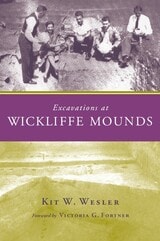
Excavations at Wickliffe Mounds
Kit W. Wesler, with a foreword by Victoria G. Fortner
University of Alabama Press, 2001
Wesler provides an impressive and definitive compilation of more than 70 years of archaeological excavations at one of the most important
archaeological sites in Kentucky.
The Wickliffe Mounds site is located on a bluff overlooking the Mississippi River in Ballard County, Kentucky, about three miles south of the mouth of the Ohio River. Around A.D. 1100, Mississippian people--farmers and traders with a culture closely related to the historic cultures of the Southeast (Chickasaw, Choctaw, Creek, and others)—created a settlement there on which they lived for approximately 250 years before moving on.
In 1930 road construction cut a channel through the site, revealing archaeological deposits and bringing the area to the attention of Fain King, a local lumberman and entrepreneur. King bought the site in hopes of turning it into an attraction for the education and entertainment of the public, and not incidentally for his own profit. For more than 50 years the area was subjected to excavations ranging from looting to professional research efforts. In 1983, the site was finally turned over to Murray State University to be developed into an academic facility dedicated to research, student training, public education, and preservation of the site and its collections. Fortunately, the Wickliffe collections include all the early excavation records as well as more than 85,000 artifacts, 90% of which had been catalogued. Between 1984 and 1996 excavations were conducted specifically to affirm questionable data and/or fill in gaps in the Wickliffe archaeological record.
In this volume, Wesler and his colleagues have compiled data from almost seven decades of excavations at Wickliffe Mounds, providing the first comprehensive study of this important site. The paperback version of the book is accompanied by a CD-ROM that contains contributions from a wide range of archaeological specialists and includes archaeological data, site maps, database files, plats of excavations, artifact descriptions, and photographs, compiling in one place the entire archaeological record for this very important eastern North American site.
Excavations in Southwest Utah
UUAP 76C. Melvin Aikens
University of Utah Press, 1965
Exceptional State
Contemporary U.S. Culture and the New ImperialismAshley Dawson and Malini Johar Schueller, eds.
Duke University Press, 2007
The contributors address a range of topics, paying particular attention to the dynamics of gender and race. Their essays include a surprising reading of the ostensibly liberal movies Wag the Dog and Three Kings, an exploration of the rhetoric surrounding the plan to remake the military into a high-tech force less dependent on human bodies, a look at the significance of the popular Left Behind series of novels, and an interpretation of the Abu Ghraib prison photos. They scrutinize the national narrative created to justify the US invasions of Afghanistan and Iraq, the ways that women in those countries have responded to the invasions, the contradictions underlying calls for US humanitarian interventions, and the role of Africa in the US imperial imagination. The volume concludes on a hopeful note, with a look at an emerging anti-imperialist public sphere.
Contributors. Omar Dahbour, Ashley Dawson, Cynthia Enloe, Melani McAlister, Christian Parenti, Donald E. Pease, John Carlos Rowe, Malini Johar Schueller, Harilaos Stecopoulos
Exceptional Violence
Embodied Citizenship in Transnational JamaicaDeborah A. Thomas
Duke University Press, 2011
Exceptionally Queer
Mormon Peculiarity and U.S. NationalismK. Mohrman
University of Minnesota Press, 2022
How perceptions of Mormonism from 1830 to the present reveal the exclusionary, racialized practices of the U.S. nation-state
Are Mormons really so weird? Are they potentially queer? These questions occupy the heart of this powerful rethinking of Mormonism and its place in U.S. history, culture, and politics. K. Mohrman argues that Mormon peculiarity is not inherent to the Latter-day Saint faith tradition, as is often assumed, but rather a potent expression of U.S. exceptionalism.
Exceptionally Queer scrutinizes the history of Mormonism starting with its inception in the early 1830s and continuing to the present. Drawing on a wide range of historical texts and moments—from nineteenth-century battles over Mormon plural marriage; to the LDS Church’s emphases on “individual responsibility” and “family values”; to mainstream media’s coverage of the LDS Church’s racist exclusion of Black priesthood holders, its Native assimilation programs, and vehement opposition to the Equal Rights Amendment; and to much more recent legal and cultural battles over same-sex marriage and on-screen Mormon polygamy—Exceptionally Queer evaluates how Mormonism has been used to motivate and rationalize the biased, exclusionary, and colonialist policies and practices of the U.S. nation-state.
Mohrman explains that debates over Mormonism both drew on and shaped racial discourses and, in so doing, delineated the boundaries of whiteness and national belonging, largely through the consolidation of (hetero)normative ideas of sex, marriage, family, and economy. Ultimately, the author shows how discussions of Mormonism in this country have been and continue to be central to ideas of what it means to be American.

Exchange Is Not Robbery
More Stories of an African Bar GirlJohn M. Chernoff
University of Chicago Press, 2004
In Exchange Is Not Robbery and its predecessor, Hustling Is Not Stealing, a chronicle of exploitation is transformed by verbal art into an ebullient comedy. In Hustling Is Not Stealing, Hawa is a playful warrior struggling against circumstances in Ghana and Togo. In Exchange Is Not Robbery, Hawa returns to her native Burkina Faso, where she achieves greater control over her life but faces new difficulties. As a woman making sacrifices to live independently, Hawa sees her own situation become more complex as she confronts an atmosphere in Burkina Faso that is in some ways more challenging than the one she left behind, and the moral ambiguities of her life begin to intensify.
Combining elements of folklore and memoir, Hawa's stories portray the diverse social landscape of West Africa. Individually the anecdotes can be funny, shocking, or poignant; assembled together they offer a sweeping critical and satirical vision.
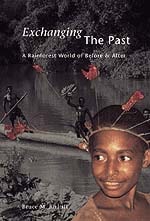
Exchanging the Past
A Rainforest World of Before and AfterBruce M. Knauft
University of Chicago Press, 2002
In this book, Knauft explores the Gebusi's encounter with modern institutions and highlights what their experience tells us more generally about the interaction between local peoples and global forces. As desire for material goods grew among Gebusi, Knauft shows that they became more accepting of and subordinated by Christian churches, community schools,and government officials in their attempt to benefit from them—a process Knauft terms "recessive agency." But the Gebusi also respond actively to modernity, creating new forms of feasting, performance, and music that meld traditional practices with Western ones, all of which Knauft documents in this fascinating study.
Excited Delirium
Race, Police Violence, and the Invention of a DiseaseAisha M. Beliso-De Jesús
Duke University Press, 2024
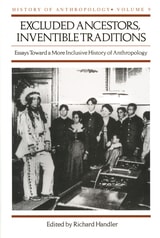
Excluded Ancestors, Inventible Traditions
Essays Toward a More Inclusive History of AnthropologyEdited by Richard Handler
University of Wisconsin Press, 2015
Excluded Ancestors, Inventible Traditions focuses on little-known scholars who contributed to the anthropological work of their time, such as John William Jackson, the members of the Hampton Folk-Lore Society, Charlotte Gower Chapman, and Lucie Varga. In addition, essays on Marius Barbeau and Sol Tax present figures who were centrally located in the anthropologies of their day. A final essay analyzes notions of "the canon" and considers the place of a classic ethnographic area, highland New Guinea, in anthropological canon-formation.
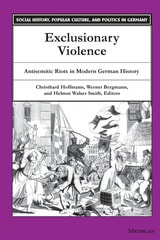
Exclusionary Violence
Antisemitic Riots in Modern German HistoryChristhard Hoffmann, Werner Bergmann, and Helmut Walser Smith, Editors
University of Michigan Press, 2002

Exclusive Revolutionaries
Liberal Politics, Social Experience, and National Identity in the Austrian Empire, 1848-1914Pieter M. Judson
University of Michigan Press, 1996
In the mid-1800s, Judson argues, German liberal activists built an effective political movement whose ideology was rooted in its members' social experience in voluntary associations. The liberals were committed to the creation of a market economy based on personal property rights, to a society based on the values of individual self-improvement and personal respectability, and to a fundamental distinction between active and passive citizenship. They were determined to achieve a harmonious community of free peoples, in which personal enlightenment would bring an end to the divisive influence of localism, ethnicity, religion, and feudal social hierarchy.
Yet after 1880, as newer, more radical mass political movements threatened their political fortunes, the liberals forged a German nationalist politics based increasingly on ethnic identity. Their emphasis on national identity became a way for former liberals to hold together an increasingly diverse coalition of German speakers who had little in common outside of their shared language. Only "Germanness" bridged the dangerous gulf between social classes. This nationalism helped the liberals to compete for power in the multinational, multicultural Austrian Empire down to 1914, but it left a legacy of nationalist extremism and tolerance of anti-Semitism that continues to influence political cultures in the former lands of the Habsburg Monarchy today.
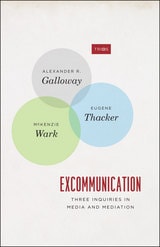
Excommunication
Three Inquiries in Media and MediationAlexander R. Galloway, Eugene Thacker, and McKenzie Wark
University of Chicago Press, 2013
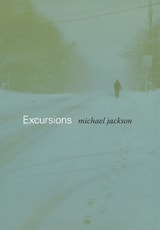
Excursions
Michael Jackson
Duke University Press, 2007
Focusing on the struggles and quandaries of everyday life, Jackson touches on matters at the core of anthropology—the state, violence, exile and belonging, labor, indigenous rights, narrative, power, home, and history. He is particularly interested in the gaps that characterize human existence, such as those between insularity and openness, between the things over which we have some control and the things over which we have none, and between ourselves and others as we talk past each other, missing each others’ meanings. Urging a recognition of the limits to which human existence can be explained in terms of cause and effect, he suggests that knowing why things happen may ultimately be less important than trying to understand how people endure in the face of hardship.
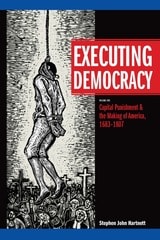
Executing Democracy
Volume One: Capital Punishment & the Making of America, 1683-1807Stephen J. Hartnett
Michigan State University Press, 2010
Executing Democracy: Capital Punishment & the Making of America, 1683-1807 is the first volume of a rhetorical history of public debates about crime, violence, and capital punishment in America. This examination begins in 1683, when William Penn first struggled to govern the rowdy indentured servants of Philadelphia, and continues up until 1807, when the Federalists sought to impose law-and-order upon the New Republic.
This volume offers a lively historical overview of how crime, violence, and capital punishment influenced the settling of the New World, the American Revolution, and the frantic post-war political scrambling to establish norms that would govern the new republic.
By presenting a macro-historical overview, and by filling the arguments with voices from different political camps and communicative genres, Hartnett provides readers with fresh perspectives for understanding the centrality of public debates about capital punishment to the history of American democracy.
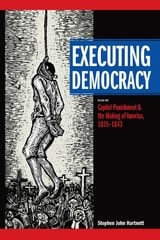
Executing Democracy
Volume Two: Capital Punishment and the Making of America, 1835-1843Stephen Hartnett
Michigan State University Press, 2024
This eye-opening and well-researched companion to the first volume of Executing Democracy enters the death-penalty discussion during the debates of 1835 and 1843, when pro-death penalty Calvinist minister George Barrell Cheever faced off against abolitionist magazine editor John O’Sullivan. In contrast to the macro-historical overview presented in volume 1, volume 2 provides micro-historical case studies, using these debates as springboards into the discussion of the death penalty in America at large. Incorporating a wide range of sources, including political poems, newspaper editorials, and warring manifestos, this second volume highlights a variety of perspectives, thus demonstrating the centrality of public debates about crime, violence, and punishment to the history of American democracy. Hartnett’s insightful assessment bears witness to a complex national discussion about the political, metaphysical, and cultural significance of the death penalty.

Exhibiting Atrocity
Memorial Museums and the Politics of Past ViolenceSodaro, Amy
Rutgers University Press, 2018
Today, nearly any group or nation with violence in its past has constructed or is planning a memorial museum as a mechanism for confronting past trauma, often together with truth commissions, trials, and/or other symbolic or material reparations. Exhibiting Atrocity documents the emergence of the memorial museum as a new cultural form of commemoration, and analyzes its use in efforts to come to terms with past political violence and to promote democracy and human rights.
Through a global comparative approach, Amy Sodaro uses in-depth case studies of five exemplary memorial museums that commemorate a range of violent pasts and allow for a chronological and global examination of the trend: the U.S. Holocaust Memorial Museum in Washington, DC; the House of Terror in Budapest, Hungary; the Kigali Genocide Memorial Centre in Rwanda; the Museum of Memory and Human Rights in Santiago, Chile; and the National September 11 Memorial Museum in New York. Together, these case studies illustrate the historical emergence and global spread of the memorial museum and show how this new cultural form of commemoration is intended to be used in contemporary societies around the world.
Download open access ebook.

Exhibiting Health
Public Health Displays in the Progressive EraJennifer Lisa Koslow
Rutgers University Press, 2020
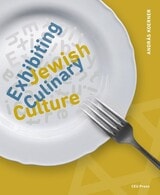
Exhibiting Jewish Culinary Culture
András Koerner
Central European University Press, 2024
András Koerner is the author of a number of critically acclaimed, award-winning CEU Press titles on the cultural history of Hungarian Jews and Jewish cuisine. This volume continues that tradition by discussing the phenomenon of exhibits on Jewish culinary culture in museums and galleries around the world.
The first part of the book provides an overview of the cultural history of "foodism" and the proliferation of Jewish museums. In addition, it examines the role of cuisine in Jewish identity. It offers an analysis of the history and recent examples of exhibitions on Jewish culinary culture, a subject that has not received scholarly attention until now.
The second part complements this by offering a detailed case study of the book’s subject. It showcases a 2022 exhibition in Budapest on the History of Hungarian Jewish Culinary Culture. András Koerner was the co-curator of the show, thus he is able to offer an insider’s account of its implementation – concept, scope, goals, audience, and design. He also openly discusses the compromises made and mistakes committed in the exhibition’s preparatory work.
This subjective account, quite different from the dry objectivity of catalogues, offers an unusual, behind-the-scenes look at how a complex exhibition like this is prepared. At the same time, the book’s appendix includes images of the display boards and some of the exhibited objects – thus it can also stand for a valuable ex-post catalogue.
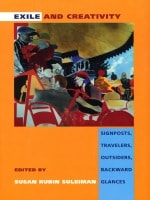
Exile and Creativity
Signposts, Travelers, Outsiders, Backward GlancesSusan Rubin Suleiman, ed.
Duke University Press, 1998
In essays that range chronologically from the Renaissance to the 1990s, geographically from the Danube to the Andes, and historically from the Inquisition to the Holocaust, the complexities and tensions of exile and the diversity of its experiences are examined. Recognizing exile as an interior experience as much as a physical displacement, this collection discusses such varied topics as intellectual exile and seventeenth-century French literature; different versions of home and of the novel in the writings of Bakhtin and Lukács; the displacement of James Joyce and Clarice Lispector; a young journalist’s meeting with James Baldwin in the south of France; Jean Renoir’s Hollywood years; and reflections by the descendents of European emigrés. Strikingly, many of the essays are themselves the work of exiles, bearing out once more the power of the personal voice in scholarship.
With the exception of the contribution by Henry Louis Gates Jr., these essays were originally published in a special double issue of Poetics Today in 1996. Exile and Creativity will engage a range of readers from those whose specific interests include the problems of displacement and diaspora and the European Holocaust to those whose broad interests include art, literary and cultural studies, history, film, and the nature of human creativity.
Contributors. Zygmunt Bauman, Janet Bergstrom, Christine Brooke-Rose, Hélène Cixous, Tibor Dessewffy, Marianne Hirsch, Denis Hollier, Henry Louis Gates Jr., Linda Nochlin, Leo Spitzer, Susan Rubin Suleiman, Thomas Pavel, Doris Sommer, Nancy Huston, John Neubauer, Ernst van Alphen, Alicia Borinsky, Svetlana Boym, Jacqueline Chénieux-Gendron
Exile and Pride
Disability, Queerness, and LiberationEli Clare
Duke University Press, 2015
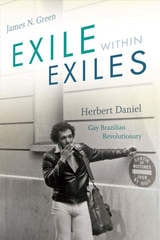
Exile within Exiles
Herbert Daniel, Gay Brazilian RevolutionaryJames N. Green
Duke University Press, 2018