Results by title
22279 books match the query 'Social Science' and 684 start with e
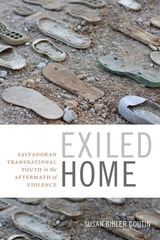
Exiled Home
Salvadoran Transnational Youth in the Aftermath of ViolenceSusan Bibler Coutin
Duke University Press, 2016
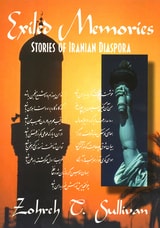
Exiled Memories
Stories of Iranian DiasporaZohreh T. Sullivan
Temple University Press, 2001
These are the words of one Iranian emigre, driven from Tehran by the revolution of 1979. They are echoed time and again in this powerful portrayal of loss and survival. Impelled by these word and her own concerns about nationality and identity, Zohreh Sullivan has gathered together here the voices of sixty exiles and emigres. The speakers come from various ethnic and religious backgrounds and range in age from thirteen to eighty-eight. Although most are from the middle class, they work in a variety of occupations in the United States. But whatever their differences, here they engage in remembering the past, producing a discourse about their lives, and negotiating the troubled transitions from one culture to another.
Unlike man other Iranian oral history projects, Exiled Memories looks at the reconstruction of memory and identity through diasporic narratives, through a focus on the Americas rather than on Iran. The narratives included here reveal the complex ways in which events and places transform identities, how overnight radical s become conservatives, friends become enemies, the strong become weak. Indeed, the narratives themselves serve this function -- serving to transfer or transform power and establish credibility. They reveal a diverse group of people in the process of knitting the story of themselves with the story of the collective after it has been torn apart.

Exit Zero
Family and Class in Postindustrial ChicagoChristine J. Walley
University of Chicago Press, 2012
In 1980, Christine J. Walley’s world was turned upside down when the steel mill in Southeast Chicago where her father worked abruptly closed. In the ensuing years, ninety thousand other area residents would also lose their jobs in the mills—just one example of the vast scale of deindustrialization occurring across the United States. The disruption of this event propelled Walley into a career as a cultural anthropologist, and now, in Exit Zero, she brings her anthropological perspective home, examining the fate of her family and that of blue-collar America at large.
This book is part of a project that also includes a documentary film.

Exit Zero
Family and Class in Postindustrial ChicagoChristine J. Walley
University of Chicago Press, 2012
Winner of CLR James Book Prize from the Working Class Studies Association and 2nd Place for the Victor Turner Prize in Ethnographic Writing.
In 1980, Christine J. Walley’s world was turned upside down when the steel mill in Southeast Chicago where her father worked abruptly closed. In the ensuing years, ninety thousand other area residents would also lose their jobs in the mills—just one example of the vast scale of deindustrialization occurring across the United States. The disruption of this event propelled Walley into a career as a cultural anthropologist, and now, in Exit Zero, she brings her anthropological perspective home, examining the fate of her family and that of blue-collar America at large.
This book is part of a project that also includes a documentary film.
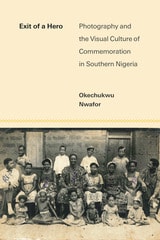
Exit of a Hero
Photography and the Visual Culture of Commemoration in Southern NigeriaOkechukwu Nwafor
University of Michigan Press, 2026
In Exit of a Hero, Okechukwu Nwafor explores the cultural, political, and socioeconomic implications of photography in commemorative practices in southern Nigeria from the nineteenth century to the present. Focusing on obituary and commemorative photographs of late nineteenth and early twentieth-century Lagos to contemporary funeral posters, booklets, and social media posts, Nwafor tracks the historical evolution of the iconic and heroic image. He argues that the quest to produce an ideal memorial body is not just a personal aesthetic choice but a deliberate photographic project that resonates with the Igbo aspirations for heroic achievement.
Exit of a Hero asserts that the visual canonization transforms the deceased from a fallible being to an unimpeachable character who transcends underachievement, imperfection, and failed social performance to emerge as a saintly icon of the Igbo public sphere. In seeking an alternative, hyper-visible public self, social media reclaims the lost hero image of the deceased, reconstituting the contested Igbo public space as a lived reality where heroes and icons are actively and eternally commemorated. Nwafor unveils the creative imaginations of colonial subjects and postcolonial citizens as memorialization has become entangled within the intersecting discursive spaces of print culture and the public sphere.

Exit, Miss Saigon
An American MemoirDavid Mura
University of Minnesota Press, 2026
A profound memoir of coming to terms with a lost racial identity
David Mura was well into his twenties when he began to explore his Asian American identity. His Japanese American parents had been incarcerated in internment camps during World War II, and in response to their traumatic experience, they abandoned their Japanese roots to try to assimilate into white, middle-class America. As a result, Mura was raised to consider himself as a white person, and his journey toward understanding and accepting his Asianness was a fraught road—one that left many fractured relationships in its wake. In Exit, Miss Saigon, Mura writes with frank openness about his personal experiences and the irrevocable ways they are rooted in the internalized, systemic racism that permeates American culture.
Starting out as a young poet in Minneapolis working toward a PhD, Mura avoided reading “minority literature,” yearning instead to be like famed poets in their ivory towers—Robert Lowell, Randall Jarrell, John Berryman, artists tortured by their families and personal demons rather than by politics or race. As Mura began to read more widely, his conceptions of race and its societal construction began to broaden. When the Ordway Theater in St. Paul, Minnesota, staged a presentation of Miss Saigon in 1992, Mura published “Secrets and Anger” in Mother Jones, a scathing critique of the play’s racist undertones and the arguments he’d been having with white artist friends about it. As a result, Mura was ostracized from the local, dominantly white writing community, yet in its place he found a deeper connection with other BIPOC writers and eventually started an Asian American arts organization in the Twin Cities.
Far more than a personal memoir, Exit, Miss Saigon is a clear-eyed examination of issues affecting Asian Americans: anti-Asian hate crimes during the pandemic, affirmative action, racial and sexual stereotypes in the media, interracial relationships and raising mixed-race children, the legacy of Japanese American internment, and the shortfalls of therapy in addressing race. Mura excavates the deep-seated racist stereotypes thrust on those perceived as “other” (read: nonwhite people) and works to uncover a more authentic, liberatory path to defining personal identity.
Retail e-book files for this title are screen-reader friendly.
Exiting the Fragility Trap
Rethinking Our Approach to the World’s Most Fragile StatesDavid Carment
Ohio University Press, 2019
State fragility is a much-debated yet underinvestigated concept in the development and international security worlds. Based on years of research as part of the Country Indicators for Foreign Policy project at Carleton University, Exiting the Fragility Trap marks a major step toward remedying the lack of research into the so-called fragility trap. In examining the nature and dynamics of state transitions in fragile contexts, with a special emphasis on states that are trapped in fragility, David Carment and Yiagadeesen Samy ask three questions: Why do some states remain stuck in a fragility trap? What lessons can we learn from those states that have successfully transitioned from fragility to stability and resilience? And how can third-party interventions support fragile state transitions toward resilience?
Carment and Samy consider fragility’s evolution in three state types: countries that are trapped, countries that move in and out of fragility, and countries that have exited fragility. Large-sample empirical analysis and six comparative case studies—Pakistan and Yemen (trapped countries), Mali and Laos (in-and-out countries), and Bangladesh and Mozambique (exited countries)—drive their investigation, which breaks ground toward a new understanding of why some countries fail to see sustained progress over time.
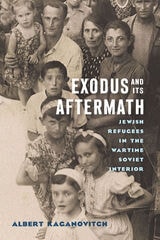
Exodus and Its Aftermath
Jewish Refugees in the Wartime Soviet InteriorAlbert Kaganovitch
University of Wisconsin Press, 2023
Albert Kaganovitch reconstructs the conditions that gave rise to this upsurge in antisemitic sentiment and provides new statistical data on the number of Jewish refugees who lived in the Urals, Siberia, and Middle Volga areas. The book’s insights into the regional distribution and concentration of these émigrés offer a behind-the-scenes look at the largest and most intensive Jewish migration in history.
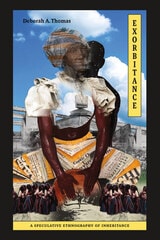
Exorbitance
A Speculative Ethnography of InheritanceDeborah A. Thomas
Duke University Press, 2025
Exotic No More, Second Edition
Anthropology for the Contemporary WorldEdited by Jeremy MacClancy
University of Chicago Press, 2019
Contributors:Ruben Andersson, Philippe Bourgois, Catherine Buerger, James G. Carrier, Marcus Colchester, James Fairhead, Kim Fortun, Mike Fortun, Katy Gardner, Faye Ginsburg, Roberto J. González, Tom Griffiths, Chris Hann, Susan Harding, Faye V. Harrison, Laurie Kain Hart, Richard Jenkins, George Karandinos, Christopher M. Kelty, Melissa Leach, Margaret Lock, Jeremy MacClancy, Sally Engle Merry, Fernando Montero, Matt Sakakeeny, Anthony Alan Shelton, Christopher B. Steiner, Richard Ashby Wilson
Exotic No More
Anthropology on the Front LinesEdited by Jeremy MacClancy
University of Chicago Press, 2002
In Exotic No More, an initiative of the Royal Anthropological Institute, some of today's most respected anthropologists demonstrate, in clear, unpretentious prose, the tremendous contributions that anthropology can make to contemporary society. They cover issues ranging from fundamentalism to forced migration, child labor to crack dealing, human rights to hunger, ethnicity to environmentalism, intellectual property rights to international capitalisms. But Exotic No More is more than a litany of gloom and doom; the essays also explore topics usually associated with leisure or "high" culture, including the media, visual arts, tourism, and music. Each author uses specific examples from their fieldwork to illustrate their discussions, and 62 photographs enliven the text.
Throughout the book, the contributors highlight anthropology's commitment to taking people seriously on their own terms, paying close attention to what they are saying and doing, and trying to understand how they see the world and why. Sometimes this bottom-up perspective makes the strange familiar, but it can also make the familiar strange, exposing the cultural basis of seemingly "natural" behaviors and challenging us to rethink some of our most cherished ideas—about gender, "free" markets, "race," and "refugees," among many others.
Contributors:
William O. Beeman
Philippe Bourgois
John Chernoff
E. Valentine Daniel
Alex de Waal
Judith Ennew
James Fairhead
Sarah Franklin
Michael Gilsenan
Faye Ginsburg
Alma Gottlieb
Christopher Hann
Faye V. Harrison
Richard Jenkins
Melissa Leach
Margaret Lock
Jeremy MacClancy
Jonathan Mazower
Ellen Messer
A. David Napier
Nancy Scheper-Hughes
Jane Schneider
Parker Shipton
Christopher B. Steiner

Exoticism and the Culture of Exploration, Volume 26
Robert P. Maccubbin and Christa Knellwolf, eds.
Duke University Press, 0
Contributors. Geraldine Barnes, Alexandra Cook, David Culpin, John Greene, Suzanne Kiernan, Christa Knellwolf, Adrian Mitchell, Lisa O’Connell, David Paxman, Ali Uzay Peker, Glynis Ridley, Nicholas Rogers, Walter Veit
Exotics at Home
Anthropologies, Others, and American ModernityMicaela di Leonardo
University of Chicago Press, 1998
"An impressive work of scholarship that is mordantly witty, passionately argued, and takes no prisoners."—Lesley Gill, News Politics
"[Micaela] di Leonardo eloquently argues for the importance of empirical, interdisciplinary social science in addressing the tragedy that is urban America at the end of the century."—Jonathan Spencer, Times Literary Supplement
"In her quirky new contribution to the American culture brawl, feminist anthropologist Micaela di Leonardo explains how anthropologists, 'technicians of the sacred,' have distorted American popular debate and social life."—Rachel Mattson, Voice Literary Supplement
"At the end of di Leonardo's analyses one is struck by her rare combination of rigor and passion. Simply, [she] is a marvelous iconoclast."—Matthew T. McGuire, Boston Book Review
Expanding American Anthropology, 1945-1980
A Generation ReflectsEdited by Alice Beck Kehoe and Paul L. Doughty
University of Alabama Press, 2012
Expanding Archaeology
Axel E. Nielsen
University of Utah Press, 1995
Expanding Archaeology is the first attempt to define behavioral archaeology comprehensively and to establish its place among competing theoretical frameworks. Among other objectives, this volume demonstrates that a behavioral approach—the study of material objects regardless of time or space to describe and explain human behavior—provides a means whereby religion, gender, and other seemingly unknowable elements of prehistory can be inferred through systematic, empirical analysis.
Expanding Archaeology begins with three retrospective analyses by J. Jefferson Reid, William Rathje, and Michael Schiffer, followed by seven case studies exploring various avenues offered by this approach. A third section contains five critiques that serve as a counterpoint to the behavioral approach. Although the editors do not suggest that behavioral archaeology should be the universal archaeology, they do suggest that this approach permits pre-historians to expand into new areas of investigation.
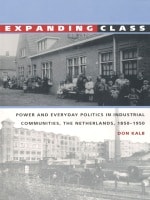
Expanding Class
Power and Everyday Politics in Industrial Communities, The Netherlands 1850–1950Don Kalb
Duke University Press, 1998
Expanding Class compares Brabant’s quaint central shoemaking district to its electrical boomtown Eindhoven, home of the enormous Philips Corporation. It introduces the concept of "flexible familism," a sociological phenomenon in which family daughters were employed to facilitate a cheap and ample labor force. Industrialists manipulated and fostered flexible familism to ensure the discipline and loyalty of the working-class community. By using the industrial Netherlands as a paradigm, Kalb reveals new and productive ways to examine class construction and the development of labor history in other countries over the past thirty years, steering a path between the two schools of thought—cultural and economic—that have dominated labor history discussions in recent years.
Expanding the American Mind
Books and the Popularization of KnowledgeBeth Luey
University of Massachusetts Press, 2010
Expanding the American Mind begins by comparing fiction and nonfiction—their relative respectability in the eyes of reading experts and in the opinions of readers themselves. It then traces the roots of popularization from the Middle Ages to the present, examining changes in literacy, education, and university politics. Focusing on the period since World War II, it examines the ways that curricular reform has increased interest in popularization as well as the impact of specialization and professionalization among the faculty. It looks at the motivations of academic authors and the risks and rewards that come from writing for a popular audience. It also explains how experts write for nonexperts—the rhetorical devices they use and the voices in which they communicate.
Beth Luey also looks at the readers of popularizations—their motivations for reading, the ways they evaluate nonfiction, and how they choose what to read. This is the first book to use surveys and online reader responses to study nonfiction reading. It also compares the experience of reading serious nonfiction with that of reading other genres.
Using publishers' archives and editor-author correspondence, Luey goes on to examine what editors, designers, and marketers in this very competitive business do to create and sell popularizations to the largest audience possible. In a brief afterword she discusses popularization and the Web. The result is a highly readable and engaging survey of this distinctive genre of writing.
Expanding the Strike Zone
Baseball in the Age of Free AgencyDaniel A. Gilbert
University of Massachusetts Press, 2013
Readers encounter both legendary and unheralded figures in this sweeping history, which situates Major League Baseball as part of a larger culture industry. The book examines a labor history defined at once by the growing power of big league stars—from Juan Marichal and Curt Flood to Fernando Valenzuela and Ichiro Suzuki—and the collective struggles of players working to make a living throughout the baseball world. It also explores the territorial politics that have defined baseball's development as a form of transnational popular culture, from the impact of Dominican baseball academies to the organized campaign against stadium development by members of Seattle's Asian American community.
Based on a rich body of research along with new readings of popular journalism, fiction, and film, Expanding the Strike Zone highlights the ways in which baseball's players, owners, writers, and fans have shaped and reshaped the sport as a central element of popular culture from the postwar boom to the Great Recession.
Expanding the View of Hohokam Platform Mounds
An Ethnographic PerspectiveMark D. Elson
University of Arizona Press, 1998
Using this information, he develops a number of important new generalizations about how people used mounds. Elson then applies these data to the study of a prehistoric settlement system in the eastern Tonto Basin of Arizona that contained five platform mounds. He argues that the mounds were used variously as residences and ceremonial facilities by competing descent groups and were an indication of hereditary leadership. They were important in group integration and resource management; after abandonment they served as ancestral shrines. Elson's study provides a fresh approach to an old puzzle and offers new suggestions regarding variability among Hohokam populations. Its innovative use of comparative data and analyses enriches our understanding of both Hohokam culture and other ancient societies.
Expected Miracles
Surgeons at WorkJoan Cassell
Temple University Press, 1991
Expected Miracles explores the world of surgeons from their own perspective—how they perceive themselves, their work, colleagues, and communities. Recognizing that surgery is an art, a craft, a science, and a business, Joan Cassell offers, through poignant, painful, and thrilling descriptions, a vivid portrayal of the culture of surgery.
Cassell has entered a realm where laypersons are usually horizontal, naked, and anesthetized. Using the central metaphor of the surgical "miracle," she illuminates the drama of the operating room, where surgeons and patients alike expect heroic performance. She takes us backstage to overhear conversations about patients, families, and colleagues, observe operations, eavesdrop on gossip about surgeons’ performances, and examine the values, behavior, and misbehavior of surgeons at work.
Said one Chief of Surgery, "You couldn’t have a good surgeon who didn’t believe in the concept of the Hero." Following this lead, Cassell explores the heroic temperament of those who perform surgical "miracles" and finds that the demands and pressures of surgical practice require traits that in other fields, or in personal interactions, are often regarded as undesirable. She observes, "surgeons must tread a fine line between courage and recklessness, confidence and hubris, a positive attitude and a magical one." This delicate balance and frequent imbalance is portrayed through several character sketches. She contrasts the caring attention and technical mastery of The Exemplary Surgeon with the theatrical posturing of The Prima Donna and the slick showiness and questionable morals of The Sleazy Surgeon.
She also identifies the attributes that surgeons admire in each other. They believe that only peers can really evaluate each other, and, while doctors might not speak negatively about colleagues in public, the community of surgeons exerts considerable pressure on its members to perform competently.
Unlike "doctor-bashing" chronicles, Expected Miracles seeks to understand the charismatic authority of surgeons, its instability, and its price-to surgeons and to patients.
Expecting Teryk
An Exceptional Path to ParenthoodDawn Prince-Hughes
Ohio University Press, 2005
“Expecting Teryk is a rich and sumptuous work that speaks to the deeper realities and represents a unique viewpoint of experiences shared by all individuals who choose the path to parenthood.”—Disability, Pregnancy, and Parenthood
The period just prior to the birth of a child is a time of profound personal transformation for expectant parents. Expecting Teryk: An Exceptional Path to Parenthood is an intimate exploration, written in the form of a letter from a parent to her future son, that reclaims a rite of passage that modern society would strip of its magic.
Dawn Prince-Hughes, renowned author of Songs of the Gorilla Nation: My Journey through Autism, considers the ways being autistic might inform her parenting. She also candidly narrates her experience of becoming a parent as part of a lesbian couple—from meeting her partner to the questions they ask about their readiness to become parents and the practical considerations of choosing a sperm donor.
Expecting Teryk is viewed through the lens of autism as Prince-Hughes shares the unique way she sees and experiences the world—as well as her aching will to be fully present for her son. Contemplating the evolutionary traditions of parenting from both animal and human perspectives and the reassurances that nature offers, Expecting Teryk is a work of sensuous wonder that speaks to the deeper realities and archetypal experiences shared by all who embark on the journey of parenthood.

Expedition of Hernando de Soto West of the Mississippi, 1541–1543
Proceedings of the de Soto Symposia, 1988 and 1990Gloria Young
University of Arkansas Press, 1999
Back by popular demand and new in paperback, this spirited collection of nearly twenty papers celebrates the 450th anniversary of Hernando de Soto’s epic expedition across the Southeast and West.
Originally presented at two symposia conducted by the University Museum at the University of Arkansas, the collection offers an array of viewpoints and diverse approaches to de Soto scholarship. Archaeologists, anthropologists, historians, museum curators, and folklorists all contribute to this lively debate on the Spanish explorer and his travels.
The book focuses on research that challenges traditional interpretation of de Soto’s entrada and travel route, particularly after the expedition crossed the Mississippi River. David H. Dye hypothesizes a route across the river and the alluvial plain by linking the narrative accounts with geography and archaeological knowledge. Phyllis A. Morse asserts that the Parkin site is the location of the capital of Casqui, one of the polities visited by de Soto. Charles M. Hudson repostulates his version of the expedition route, which in 1988 severely challenged the De Soto Commission theory of 1939. Ann M. Early redraws the trail in the uplands of the Ouachita Mountains And Frank E. Schambach tests the possibility that the expedition wandered through Caddoan territory in east Texas after de Soto’s death.
Several chapters examine the Native Americans whom de Soto and his expedition encountered in their journey; other contributions provide a fresh look at the chronicles of the expedition that have survived. What emerges is a redrawn map of de Soto’s exploration—and a deeper understanding of the impact of European contact on the New World.
Expelling Public Schools
How Antiracist Politics Enable School Privatization in NewarkJohn Arena
University of Minnesota Press, 2023
Exploring the role of identitarian politics in the privatization of Newark’s public school system
In Expelling Public Schools, John Arena explores the more than two-decade struggle to privatize public schools in Newark, New Jersey—a conflict that is raging in cities across the country—from the vantage point of elites advancing the pro-privatization agenda and their grassroots challengers.
Analyzing the unsuccessful effort of Cory Booker—Newark’s leading pro-privatization activist and mayor—to generate popular support for the agenda, and Booker’s rival and ultimate successor Ras Baraka’s eventual galvanization of the charter movement, Arena argues that Baraka’s black radical politics cloaked a revanchist agenda of privatization.
Expelling Public Schools reveals the political rise of Booker and Baraka, their one-time rivalry and subsequent alliance, and what this particular case study illuminates about contemporary post–civil rights Black politics. Ultimately, Expelling Public Schools is a critique of Black urban regime politics and the way in which antiracist messaging obscures real class divisions, interests, and ideological diversity.
Experienced Life and Narrated Life Story
Gestalt and Structure of Biographical Self-PresentationsGabriele Rosenthal
Campus Verlag, 2024
How do people narrate events in their life stories and the history of their family or families? How are narratives and experiences in the present related to experiences and narratives in the past? In this foundational work by sociologist Gabriele Rosenthal, he answers these questions with a theoretical and empirical study of the interconnections between remembering, experiencing, and presenting what was experienced at different points of the life course and of the associated collective histories. He also discusses rules for conducting interviews that support processes of remembering and for carrying out an analysis that does justice to this dialectic.
This edition contains a new introduction and a new chapter that explores the later expansion of Rosenthal’s approach to sociological biographical research, reflecting the inspiration she took from the figurational sociology of Norbert Elias. With its analysis of the complex relationships between experiencing, remembering, and presenting, Experienced Life and Narrated Life Story makes an important contribution to the theoretical foundations of biographical research.
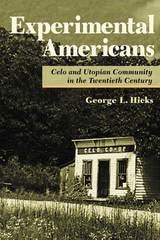
Experimental Americans
Celo and Utopian Community in the Twentieth CenturyGeorge L. Hicks
University of Illinois Press, 2001
From colonial times to the present, the United States has been home to a steady stream of utopian experimental communities. In Experimental Americans, George L. Hicks takes us inside one of the longer-lived of such communities, Celo Community in western North Carolina, to explore the dynamics of intentional communities in America.
Founded in 1937 by Arthur Morgan, first chairman of the Tennessee Valley Authority, Celo (pronounced see-lo) established its own rules of land tenure and taxation, conducted its internal business by consensus, and did not require its members to accept any particular ideology or religious creed. Drawing on extensive fieldwork in Celo and among its local neighbors, consultation of Celo's documentary records, and interviews with ex-members, Hicks traces the Community's ups and downs. Attacked for its opposition to World War II, Celo was revived by pacifists released from prisons and Civilian Public Service camps after the war; debilitated in the 1950s by bitter feuds with ex-members, it was buoyed up in the 1960s by the radical enthusiasm of new currents in the nation.
Hicks assesses the Community's success in creating alternatives to mainstream social relations and examines the interactions between Celo and its neighboring community. He considers variations in paths taken by utopian communities, with a look at a close cousin of Celo, the Macedonia Community in Georgia. He also discusses the Community's "post-utopian" phase, marked by a shift in the late 1970s from social goals to straightforward land management.
While utopian communities might hope to secede from American society in varying degrees and to institute new and improved cultural models, nonetheless they express in many ways the attempt--characteristic of the nation itself--to balance individualism and egalitarianism. By providing the context, utopian and conventional, within which Celo and other experimental communities emerge and change, Experimental Americans illuminates an ongoing encounter with persistent tensions and contradictions in America's cultural postulates.
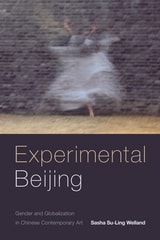
Experimental Beijing
Gender and Globalization in Chinese Contemporary ArtSasha Su-Ling Welland
Duke University Press, 2018
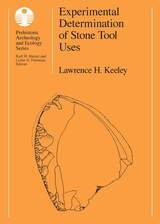
Experimental Determination of Stone Tool Uses
A Microwear AnalysisLawrence H. Keeley
University of Chicago Press, 1980
The most important discovery arising from Keeley's research was that, at magnifications of 100x to 400x, there was a high correlation between the detailed appearance of microwear polishes formed on tool edges and the general category of material worked by that edge. For example, different and distinctive types of microwear polish were formed during use on wood, bone, hide, meat, and soft plant material. These correlations between microwear polish and worked material were independent of the method of use (cutting, sawing, scraping, and so on). In combining evidence of polish type with other traces of use, Keeley was able to make precise reconstructions of tool functions. This book includes the results of a "blind test" of Keeley's functional interpretations which revealed remarkable agreement between the actual and inferred use of the tools tested.
Keeley applied his method of microwear analysis to artifacts from three excavation sites in Britain—Clacton-on-the-sea, Swanscombe, and Hoxne. His research suggests new hypotheses concerning such Paleolithic problems as inter-assemblage variability, the function of Acheulean hand axes, sidescrapers, and chopper-cores and points the way to future research in Stone Age studies.
Experimental Games
Critique, Play, and Design in the Age of GamificationPatrick Jagoda
University of Chicago Press, 2020
Drawing from his own experience as a game designer, Patrick Jagoda argues that games need not be synonymous with gamification. He studies experimental games that intervene in the neoliberal project from the inside out, examining a broad variety of mainstream and independent games, including StarCraft, Candy Crush Saga, Stardew Valley, Dys4ia, Braid, and Undertale. Beyond a diagnosis of gamification, Jagoda imagines ways that games can be experimental—not only in the sense of problem solving, but also the more nuanced notion of problem making that embraces the complexities of our digital present. The result is a game-changing book on the sociopolitical potential of this form of mass entertainment.
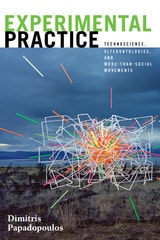
Experimental Practice
Technoscience, Alterontologies, and More-Than-Social MovementsDimitris Papadopoulos
Duke University Press, 2018
Experimentation with Human Beings
The Authority of the Investigator, Subject, Professions, and State in the Human Experimentation ProcessJay Katz
Russell Sage Foundation, 1972
Experimenting with Ethnography
A Companion to AnalysisAndrea Ballestero and Brit Ross Winthereik, editors
Duke University Press, 2021
Contributors. Patricia Alvarez Astacio, Andrea Ballestero, Ivan da Costa Marques, Steffen Dalsgaard, Endre Dányi, Marisol de la Cadena, Marianne de Laet, Carolina Domínguez Guzmán, Rachel Douglas-Jones, Clément Dréano, Joseph Dumit, Melanie Ford Lemus, Elaine Gan, Oliver Human, Alberto Corsín Jiménez, Graham M. Jones, Trine Mygind Korsby, Justine Laurent, James Maguire, George E. Marcus, Annemarie Mol, Sarah Pink, Els Roding, Markus Rudolfi, Ulrike Scholtes, Anthony Stavrianakis, Lucy Suchman, Katie Ulrich, Helen Verran, Else Vogel, Antonia Walford, Karen Waltorp, Laura Watts, Brit Ross Winthereik
Experimenting with Social Norms
Fairness and Punishment in Cross-Cultural PerspectiveJean Ensminger
Russell Sage Foundation, 2014

Experiments in Skin
Race and Beauty in the Shadows of VietnamThuy Linh Nguyen Tu
Duke University Press, 2021
Experiments with Empire
Anthropology and Fiction in the French AtlanticJustin Izzo
Duke University Press, 2019
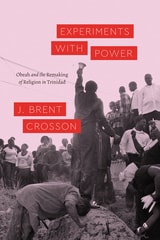
Experiments with Power
Obeah and the Remaking of Religion in TrinidadJ. Brent Crosson
University of Chicago Press, 2020
From eighteenth-century slave rebellions to contemporary responses to police brutality, Caribbean methods of problem-solving “spiritual work” have been criminalized under the label of “obeah.” Connected to a justice-making force, obeah remains a crime in many parts of the anglophone Caribbean. In Experiments with Power, J. Brent Crosson addresses the complex question of what obeah is. Redescribing obeah as “science” and “experiments,” Caribbean spiritual workers unsettle the moral and racial foundations of Western categories of religion. Based on more than a decade of conversations with spiritual workers during and after the state of emergency, this book shows how the reframing of religious practice as an experiment with power transforms conceptions of religion and law in modern nation-states.

Explaining Christian Origins and Early Judaism
Contributions from Cognitive and Social SciencePetri Luomanen
SBL Press, 2016
Now in paperback!
Cognitive science of religion is a radically new paradigm in the study of religion. Historians of religion have shown increasing interest in this approach. The book is in four parts: an introduction to cognitive and social-scientific approaches, applications of cognitive science, applications of conceptual blending theory, and applications of socio-cognitive analyses.
Features:
- Paperback format of an essential Brill resource
- Essays that combine cognitive analysis with historical and social-scientific approaches to biblical materials, Christian origins, and early Judaism
- Research for historians of religion, biblical scholars, and those working in the cognitive science of religion.
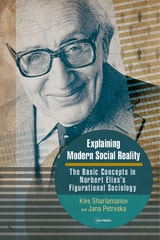
Explaining Modern Social Reality
The Basic Concepts in Norbert Elias’s Figurational SociologyKire Sharlamanov
Central European University Press, 2026
At the center of the discussion is Elias’s landmark work, The Civilizing Process, with particular attention to class structures, changing patterns of behavior, and the development of the modern state. The book also explores figurational sociology, one of Elias’s most influential contributions to social theory.
An innovative and original thinker, Elias challenged established concepts and introduced new analytical tools, including the influential notion of habitus. The chapters examine his theory of knowledge, his reflections on violence and de-civilization, his analyses of nations and nationalism, and his work on emotions and shame. The book further traces Elias’s dialogue with major thinkers such as Edmund Husserl, Karl Mannheim, Max Weber, Sigmund Freud, and Talcott Parsons, showing how he reinterpreted their ideas in distinctive ways. The book concludes with an overview of the most important critiques of Elias’s work and its continuing relevance today.
Explaining Social Institutions
Jack Knight and Itai Sened, Editors
University of Michigan Press, 1998
Much of the work being done under the rubric of "new institutionalism" focuses on how institutions shape social, economic, and political outcomes. This emphasis on influence has provided students of economics, political science, and political economy with surprisingly little theory to account for the origins of such institutions. Yet without understanding how institutions form and consequently develop influence, much of the other work lacks context. The contributors fill this void by utilizing a variety of perspectives and theoretical approaches. The twin focus of these articles on the origins of institutions and the development of institutional influence yield innovative and suggestive outcomes. Topics range from the framing of the United States Constitution to debate over the Senate at the Federal Convention; from equilibrium and social institutions to democratic stability.
Contributors include Randall Calvert, Jon Elster, Avner Greif, Jack Knight, Paul Milgrom, Douglass North, William Riker, Norman Schofield, Itai Sened, and Barry Weingast.
Jack Knight is Assistant Professor of Political Science, Washington University, St. Louis. Itai Sened is Assistant Professor of Political Science, Tel Aviv University.
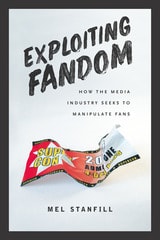
Exploiting Fandom
How the Media Industry Seeks to Manipulate FansMel Stanfill
University of Iowa Press, 2019
By bringing industry studies and fan studies into the conversation, Stanfill looks closely at just who exactly the industry considers “proper fans” in terms of race, gender, age, and sexuality, and interrogates how digital media have influenced consumption, ultimately finding that the invitation to participate is really an incitement to consume in circumscribed, industry-useful ways.
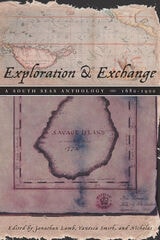
Exploration and Exchange
A South Seas Anthology, 1680-1900Edited by Jonathan Lamb, Vanessa Smith, and Nicholas Thomas
University of Chicago Press, 2001
As George Vason's anguished narrative shows, European encounters with Pacific peoples often proved as wrenching to the Europeans as to the natives. This anthology gathers some of the most vivid accounts of these cultural exchanges for the first time, placing the works of well-known figures such as Captain James Cook and Robert Louis Stevenson alongside the writings of lesser-known explorers, missionaries, beachcombers, and literary travelers who roamed the South Seas from the late seventeenth through the late nineteenth centuries.
Here we discover the stories of the British buccaneers and privateers who were lured to the Pacific by stories of fabulous wealth; of the scientists, cartographers, and natural historians who tried to fit the missing bits of terra incognita into a universal scheme of knowledge; and of the varied settlers who established a permanent European presence in Polynesia and Australia. Through their detailed commentary on each piece and their choice of selections, the editors—all respected scholars of the literature and cultures of the Pacific—emphasize the mutuality of impact of these colonial encounters and the continuity of Pacific cultures that still have the power to transform visitors today.
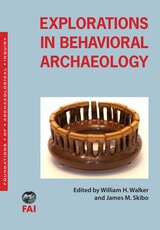
Explorations in Behavioral Archaeology
William H. Walker and James M. Skibo
University of Utah Press, 2015
Behavioral archaeology, defined as the study of people-object interactions in all times and places, emerged in the 1970s, in large part because of the innovative work of Michael Schiffer and colleagues. This volume provides an overview of how behavioral archaeology has evolved and how it has affected the field of archaeology at large.
The contributors to this volume are Schiffer’s former students, from his first doctoral student to his most recent. This generational span has allowed for chapters that reflect Schiffer’s research from the 1970s to 2012. They are iconoclastic and creative and approach behavioral archaeology from varied perspectives, including archaeological inference and chronology, site formation processes, prehistoric cultures and migration, modern material culture variability, the study of technology, object agency, and art and cultural resources. Broader questions addressed include models of inference and definitions of behavior, study of technology and the causal performances of artifacts, and the implications of artifact causality in human communication and the flow of behavioral history.
Explorations in Early Southeast Asian History
The Origins of Southeast Asian StatecraftKenneth R. Hall and John K. Whitmore, Editors
University of Michigan Press, 1976
Explorations in Economic Sociology
Richard Swedberg
Russell Sage Foundation, 1993
Explorations into Highland New Guinea, 1930-1935
Michael J. Leahy, edited by Douglas E. Jones, with a foreword by Jane C. Goodale
University of Alabama Press, 1991
In the 1920s and 1930s there were adventures to be lived and fortunes to be made by strong young men in the outback of Australia and the gold fields of New Guinea. This is the diary of five years spent in hot pursuit—not of honor and glory, but of excitement and riches—by one such adventurer, Michael "Mick" Leahy, his brothers Jim and Pat, and friends Mick Dwyer and Jim Taylor. Leahy and his associates explored the unknown interior of New Guinea, seeking gold and making contact for the first time with the aborigines of the interior mountains and valleys.
White man was unknown to these often cannibalistic, always dangerous, aborigines who thought the seekers of yellow in the streams slightly mad, and thus easy prey. The chronicles of their explorations and their hundreds of photographs brought news of these native peoples to the outside world. In doing so, they changed forever our understanding of the human landscape of New Guinea, and carved a place in history for these explorers who, braving the environment in search of gold, found people.
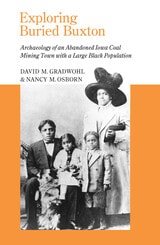
Exploring Buried Buxton
Archaeology of an Abandoned Iowa Coal Mining Town with a Large Black PopulationDavid M. Gradwohl
University of Iowa Press, 1984
Few sources before have dealt with the archaeology of African American settlements outside the Atlantic seaboard and the southern states. This book describes in detail the archaeological investigations conducted at the town site of Buxton, Iowa, a coal mining community inhabited by a significantly large population of blacks between 1900 and 1925.
David Gradwohl and Nancy Osborn present the archaeology of Buxton from “the group up” to articulate the material remains with the data acquired from archival studies and oral history interviews. They also examine the broader significance of the Buxton experience in terms of those who lived there and their children and grandchildren who have heard about Buxton all their lives.
Exploring Cause and Explanation
Historical Ecology, Demography, and Movement in the American SouthwestCynthia L. Herhahn
University Press of Colorado, 2016
Each thematic section is introduced by an established author who sets the framework for the chapters that follow. Some contributors adopt regional perspectives in which both classical regions (the central San Juan or lower Chama basins) and peripheral zones (the Alamosa basin or the upper San Juan) are represented. Chapters are also broad temporally, ranging from the Younger Dryas Climatic interval (the Clovis-Folsom transition) to the Protohistoric Pueblo world and the eighteenth-century ethnogenesis of a unique Hispanic identity in northern New Mexico. Others consider methodological issues, including the burden of chronic health afflictions at the level of the community and advances in estimating absolute population size. Whether emphasizing time, space, or methodology, the authors address the processes, steps, and interactions that affect current understanding of change or stability of cultural traditions.
Exploring Cause and Explanation considers themes of perennial interest but demonstrates that archaeological knowledge in the Southwest continues to expand in directions that could not have been predicted fifty years ago.
Contributors: Kirk C. Anderson, Jesse A. M. Ballenger, Jeffery Clark, J. Andrew Darling, B. Sunday Eiselt, Mark D. Elson, Mostafa Fayek, Jeffrey R. Ferguson, Severin Fowles, Cynthia Herhahn, Vance T. Holliday, Sharon Hull, Deborah L. Huntley, Emily Lena Jones, Kathryn Kamp, Jeremy Kulisheck, Karl W. Laumbach, Toni S. Laumbach, Stephen H. Lekson, Virginia T. McLemore, Frances Joan Mathien, Michael H. Ort, Scott G. Ortman, Mary Ownby, Mary M. Prasciunas, Ann F. Ramenofsky, Erik Simpson, Ann L. W. Stodder, Ronald H. Towner
Exploring Ethnic Diversity in Burma
Edited by Mikael Gravers
National University of Singapore Press, 2007
Exploring Materiality and Connectivity in Anthropology and Beyond
Edited by Philipp Schorch, Martin Saxer, and Marlen Elders
University College London, 2020
Exploring The Beloved Country
American Society And CultureWilbur Zelinsky
University of Iowa Press, 1994
For fifty years geographer Wilbur Zelinsky has charted the social, cultural, and historical map of the American experience. A self-confessed incurable landscape voyeur, he has produced order and pattern from massive amounts of data, zestfully finding societal meaning in the terra incognita of our postmodern existence. Now he has gathered his most original and exciting explorations into a volume that captures the nature and dynamics of this remarkable phenomenon we call the United States of America. Each the product of Zelinsky's joyous curiosity, these energetic essays trace the innermost contours of our bewildering American reality.
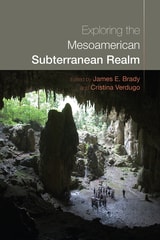
Exploring the Mesoamerican Subterranean Realm
James E. Brady
University Press of Colorado, 2025
The volume expands the study of caves to focus on the broader realm of subterranean space, introducing the concept of the constructed subterranean, a space in which the Maya deliberately created sacred landmarks through excavation. Chapters critically examine chultuns, previously thought to be subterranean storage chambers, and sascaberas, previously considered mines, demonstrating that the traditional archaeological models are deeply flawed. A wealth of data on both features is used to envision a new sacred landscape filled with thousands of subterranean sacred landmarks. Natural caves are also examined; a survey conducted around the ancient site of Yaxchilan considers the obvious importance of large stalagmites set up in the site core as monuments. Long-distance pilgrimages to these caves fundamentally reevaluates the nature of pilgrimage and reveals an economic and political importance that structured settlement and activities around the pilgrimage sites. Finally, evidence is analyzed to show that the human bones recovered from Midnight Terror Cave, Belize, were the result of human sacrifice.
Dealing equally with the archaeology of both natural and constructed subterranean spaces, Exploring the Mesoamerican Subterranean Realm challenges preconceived notions of these spaces and their meanings, dramatically shifting the field’s focus and extending the understanding of the critical importance of this “dark side” of archaeology.