Results by title
5159 books match the query 'Biography' and 142 start with e
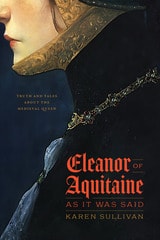
Eleanor of Aquitaine, as It Was Said
Truth and Tales about the Medieval QueenKaren Sullivan
University of Chicago Press, 2023
Much of what we know about Eleanor of Aquitaine, Queen of France and then Queen of England, we know from recorded rumor—gossip often qualified by the curious phrase “it was said,” or the love songs, ballads, and romances that gossip inspired. While we can mine these stories for evidence about the historical Eleanor, Karen Sullivan invites us to consider, instead, what even the most fantastical of these tales reveals about this queen and life as a twelfth-century noblewoman. She reads the Middle Ages, not to impose our current conceptual categories on its culture, but to expose the conceptual categories medieval women used to make sense of their lives. Along the way, Sullivan paints a fresh portrait of this singular medieval queen and the women who shared her world.
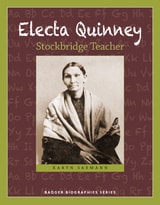
Electa Quinney
Stockbridge TeacherKaryn Saemann
Wisconsin Historical Society Press, 2014
Electa Quinney loved to learn. Growing up in the early 1800s in New York, she went to some of the best boarding schools. There she learned how to read, write, and solve tough math problems—she even learned how to do needlework. Electa decided early on that she wanted to become a teacher so she could pass her knowledge on to others.
But life wasn’t simple. Electa was a Stockbridge Indian, and her tribe was being pressured by the government and white settlers to move out of the state. So in 1828, Electa and others in her tribe moved to Wisconsin. Almost as soon as she arrived, Electa got to work again, teaching in a log building that also served as the local church. In that small school in the woods, Electa became Wisconsin’s very first public school teacher, educating the children of Stockbridge-Munsee Band of the Mohican Indians as well as the sons and daughters of nearby white settlers and missionaries.
Electa’s life provides a detailed window onto pioneer Wisconsin and discusses the challenges and issues faced by American Indians in the nineteenth century. Through it all, Electa’s love of learning stands out, and her legacy as Wisconsin’s first public school teacher makes her an inspiration to students of today.
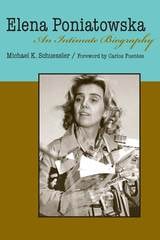
Elena Poniatowska
An Intimate BiographyMichael K. Schuessler; Foreword by Carlos Fuentes
University of Arizona Press, 2007
With his subject’s complete cooperation (she granted him access to fifty years of personal files), Michael Schuessler provides the first critical biography of Poniatowska’s life and work. She is perhaps best known outside of Mexico as the author of Massacre in Mexico (La noche de Tlatelolco) and Here’s to You, Jesusa! (Hasta no verte, Jesús mío). But her body of published books is vast, beginning with the 1954 publication of Lilus Kikus, a collection of short stories. And she is still writing today.
Schuessler, who befriended Poniatowska more than fifteen years ago, is a knowledgeable guide to her engrossing life and equally engaging work. As befits her, his portrait is itself a literary collage, a “living kaleidoscope” that is constantly shifting to include a multiplicity of voices—those of fellow writers, literary critics, her nanny, her mother, and the writer herself—easily accessible to general readers and essential to scholars.
Available in English for the first time, this insightful book includes 40 photographs and drawings and an annotated bibliography of Poniatowska’s works—those that have already been translated into English and those awaiting translation.
Eliza Fenwick
Early Modern FeministLissa Paul
University of Delaware Press, 2019
Lissa Paul brings to light Fenwick’s letters for the first time to reveal the relationships she developed with many key figures of her era, and to tell Fenwick’s story as depicted by the woman herself. Fenwick began as a writer in the radical London of the 1790s, a member of Mary Wollstonecraft’s circle, and when her marriage crumbled, she became a prolific author of children’s literature to support her family. Eventually Fenwick moved to Barbados, becoming the owner of a school while confronting the reality of slavery in the British colonies. She would go on to establish schools in numerous cities in the United States and Canada, all the while taking care of her daughter and grandchildren and maintaining her friendships through letters that, as presented here, tell the story of her life.
Published by the University of Delaware Press. Distributed worldwide by Rutgers University Press.
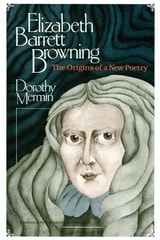
Elizabeth Barrett Browning
The Origins of a New PoetryDorothy Mermin
University of Chicago Press, 1989
Barrett Browning's place at the wellhead of a new female tradition remains the single most important fact about her in terms of literary history, and it was central to her self-consciousness as a poet. Mermin's study shows that Barrett Browning's anomalous situation was constantly present to her imagination and that questions of gender shaped almost everything she wrote. Mermin argues that Barrett Browning's poetry covertly inspects and dismantles the barriers set in her path by gender and that in her major works—Sonnets from the Portuguese, Aurora Leigh, her best political poems, "A Musical Instrument"—difficulty is turned into triumph, incorporating the author's femininity, her situation as a woman poet, and her increasingly substantial fame.
Mermin skillfully interweaves biography and close readings of the poems to show precisely how Barrett Browning's life as a woman writer is a part of the essential meaning of her art. Both her personal and her literary achievements are exceptionally well documented, especially for her formative years. Mermin makes extensive use of the poet's early essays, a diary covering most of her twenty-sixth year, and the enormous number of letters that have survived. Ranging from her earliest ambitions through her long periods of discouragement and illness to her happy married life with Robert Browning, this comprehensive study of Elizabeth Barrett Browning is essential reading for students of the Victorian period, English literature, and women's studies.
Elizabeth Bishop and Her Art
Lloyd Schwartz and Sybil P. Estess, Editors
University of Michigan Press, 1983
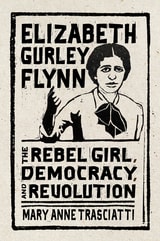
Elizabeth Gurley Flynn
The Rebel Girl, Democracy, and RevolutionMary Anne Trasciatti
Rutgers University Press, 2025
International Labor History Association Honorable Mention Book Award for 2025
Elizabeth Gurley Flynn was involved in almost every major campaign of the U.S. Left in the first two thirds of the twentieth century. An outstanding orator, writer, and tactician, Flynn is one of the most important figures in the history of the American labor movement. Inspired by the Irish freedom struggle and appalled by the exploitation and grinding poverty she saw around her, she devoted her life to the advancement of civil liberties. Here, Mary Anne Trasciatti traces Flynn’s personal and political life to explore the broader social issues of a fraught era.
Born in 1890, Flynn began her activist career by joining the Industrial Workers of the World (IWW) when she was just sixteen, and she ended it as the first female chair of the American Communist Party, a position she held from 1961 until her death in 1964. In the intervening years she organized workers into unions, led strikes, championed women’s rights, supported anti-imperialist movements around the globe, protested deportation, advocated for prison reform, and fought for Black liberation. Above all, she showed absolute devotion to workers and their struggles.
Slandered as an “un-American” in the anticommunist fervor of the 1940s and 1950s, Flynn was eventually ousted from the very organization she helped found, the American Civil Liberties Union, and imprisoned for two years. Though her own movement abandoned her, her commitment to the cause never wavered. This stirring biography illuminates Flynn’s inspiring life and worldview and returns her to her rightful place at the heart of labor and civil liberties history.
Elizabeth Packard
A Noble FightLinda V. Carlisle
University of Illinois Press, 2010
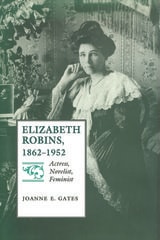
Elizabeth Robins, 1862–1952
Actress, Novelist, FeministJoanne E. Gates
University of Alabama Press, 1994
From Childhood, Elizabeth Robins dreamed of a successful career on the stage. Her first impulse to visit England, in 1888, stemmed from her desire to secure better opportunities as an actress, and she soon gained celebrity playing Ibsen’s heroines. While buoyed by this success, she began writing fiction that treated the feminist issues of her time: organized prostitution, women’s positions in war-torn England, and the dangers of rearmament. In her acting, writing, and political activism, she consistently challenged existing roles for women. Robins’s work is marked by a number of true-life components, and this first biography to use the vast collection of her private papers demonstrates how Robins transformed her own life into literary and dramatic capital.
Robins published several novels under the pseudonym C. E. Raimond, culminating in the sensational male-female bildungsroman, The Open Question: A Tale of Two Temperaments, which was set in her native Zanesville, Ohio, and publication of which finally disclosed her identity.
Her fiction is compared to that of Henry James, Edith Wharton, and Willa Cather. Many of her heroines share the characteristics of exhibiting force or willed silence, and Gates's analysis of this trait has implications for feminist theorists in a number of fields.
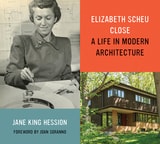
Elizabeth Scheu Close
A Life in Modern ArchitectureJane King Hession
University of Minnesota Press, 2020
An in-depth account of the life and career of Minnesota’s first modern architect
2024 Docomomo US Modernism in America Award of Excellence
2021 Finalist, Minnesota Book Award, Emilie Buchwald Award for Minnesota Nonfiction
Elizabeth “Lisl” Scheu Close (1912–2011) left an indelible mark on Minnesota’s built landscape during her six decades as an architect. In 1938, with her husband, Winston Close, she founded the state’s first architecture firm dedicated to modernism. In addition to designing the first International Style house in Minneapolis, the firm also created more than 250 handsome and efficiently planned modern residences. One of few women who were practicing architects in the mid-twentieth century, she blazed a trail for future generations of women in the profession.
As Jane King Hession shows, the trajectory of Lisl’s architectural career was shaped by the political, economic, and aesthetic upheavals of the twentieth century. Raised in a renowned modern house in Vienna, Austria, Lisl was exposed to revolutionary ideas in art and architecture at a young age. Forced to emigrate to the United States as the Nazis rose to power in Europe, she completed her architectural education at MIT. During the Depression, she struggled to find work and encountered challenges as a young woman in the field. In her pursuit of and devotion to a singular and successful career as a modern architect, she proved herself to be talented, determined, and adept at negotiating obstacles.
Through documentation of Lisl’s projects, this personal and professional biography also explores multiple aspects of modern architecture, including the innovative use of new materials and technologies, the design of prefabricated houses, and the relationship between residential design and changing American lifestyles.
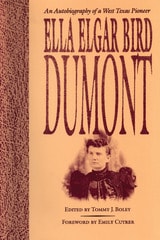
Ella Elgar Bird Dumont
An Autobiography of a West Texas PioneerEdited by Tommy J. Boley
University of Texas Press, 1988
A crack shot, expert skinner and tanner, seamstress, sculptor, and later writer—a list that only hints at her intelligence and abilities—Ella Elgar Bird Dumont was one of those remarkable women who helped tame the Texas frontier. First married at sixteen to a Texas Ranger, she followed her husband to Comanche Indian country in King County, where they lived in a tepee while participating in the final slaughter of the buffalo. Living off the land until the frontier was opened for ranching, Ella and Tom Bird typified the Old West ideals of self-sufficiency and generosity, with a hesitancy to complain about the hard life in the late 1800s.
Yet, in one important way, Ella Dumont was unsuited for life on the frontier. Endowed with an instinctive desire and ability to carve and sculpt, she was largely prevented from pursuing her talents by the responsibilities of marriage and frontier life and later, widowhood with two small children. Even though her second marriage, to Auguste Dumont, made life more comfortable, the realities of her existence still prevented the fulfillment of her artistic longings.
Ella Bird Dumont’s memoir is rich with details of the frontier era in Texas, when Indian depredations were still a danger for isolated settlers, where animals ranged close enough to provide dinner and a new pair of gloves, and where sheer existence depended on skill, luck, and the kindness of strangers. The vividness and poignancy of her life, coupled with the wealth of historical material in the editor’s exhaustive notes, make this Texas pioneer’s autobiography a very special book.
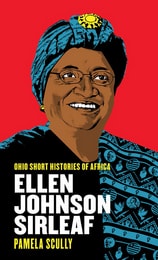
Ellen Johnson Sirleaf
Pamela Scully
Ohio University Press, 2016
In this timely addition to the Ohio Short Histories of Africa series, Pamela Scully takes us from the 1938 birth of Nobel Peace Prize winner and two-time Liberian president Ellen Johnson through the Ebola epidemic of 2014–15. Charting her childhood and adolescence, the book covers Sirleaf’s relationship with her indigenous grandmother and urban parents, her early marriage, her years studying in the United States, and her career in international development and finance, where she developed her skill as a technocrat. The later chapters cover her years in and out of formal Liberian politics, her support for women’s rights, and the Ebola outbreak.
Sirleaf’s story speaks to many of the key themes of the twenty-first century. Among these are the growing power of women in the arenas of international politics and human rights; the ravaging civil wars in which sexual violence is used as a weapon; and the challenges of transitional justice in building postconflict societies. Ellen Johnson Sirleaf is an astute examination of the life of a pioneering feminist politician.
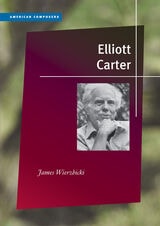
Elliott Carter
James Wierzbicki
University of Illinois Press, 2011
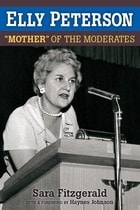
Elly Peterson
"Mother" of the ModeratesSara Fitzgerald
University of Michigan Press, 2012
"A magisterially written, well-researched, informative, and entertaining biography of a woman who helped throw open the doors to broader participation and power for women in the Republican Party and American politics."
---Dave Dempsey, author of William G. Milliken: Michigan's Passionate Moderate
"Elly Peterson will be a text to which historians and researchers turn for insight into the yin and yang of mainstream politics in the mid-century."
---Patricia Sullivan, past president, Journalism and Women Symposium
"This lively portrait of a leading woman in the Republican Party between 1952 and 1982 also charts the party's shift to the right after 1964, revealingly viewed through the eyes of liberal Republican women. Intensively researched with ethnographic attention to the subtleties of political culture, Fitzgerald's book is essential reading for anyone interested in how the Republican Party changed during the turbulent decades after 1960 and how women and women's issues shaped those changes."
---Kathryn Kish Sklar, Distinguished Professor of History, State University of New York, Binghamton
"Sara Fitzgerald tells Peterson's story in this superb and timely biography. It carries a message that deserves the widest audience as the nation struggles to find needed consensus on critical issues amid poisonous political partisanship that has made it increasingly difficult for public officials to bridge their differences. I hope that every American reads it."
---Pulitzer Prize winner Haynes Johnson, from the Foreword
"To understand the quest for equal rights in America you really need to meet those women who were active at the time of transition. In this gripping biography we meet one woman who entered a male dominated world and triumphed."
---Francis X. Blouin Jr., Director, Bentley Historical Library
"Sara Fitzgerald's writing is as intelligent as it is entertaining."
---Best-selling novelist Diane Chamberlain
Elly Peterson was one of the highest ranking women in the Republican Party. In 1964 she ran for a Michigan seat in the U.S. Senate and became the first woman to serve as chair of the Michigan Republican Party. During the 1960s she grew disenchanted with the increasing conservatism of her party, united with other feminists to push for the Equal Rights Amendment and reproductive choice, battled Phyllis Schlafly to prevent her from gaining control of the National Federation of Republican Women, and became an independent.
Elly Peterson's story is a missing chapter in the political history of Michigan, as well as the United States. This new biography, written by Sara Fitzgerald (a Michigan native and former Washington Post editor), finally gives full credit to one of the first female political leaders in this country.
When Peterson resigned in 1970 as assistant chairman of the Republican National Committee, David Broder of the Washington Post wrote that "her abilities would have earned her the national chairmanship, were it not for the unwritten sex barrier both parties have erected around that job."
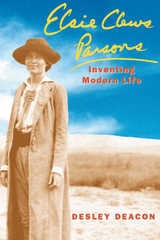
Elsie Clews Parsons
Inventing Modern LifeDesley Deacon
University of Chicago Press, 1997
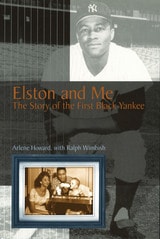
Elston and Me
The Story of the First Black YankeeArlene Howard & Ralph Wimbish & Foreword by Yogi Berra & Don Newcombe
University of Missouri Press, 2001
In Elston and Me, Howard's widow, Arlene, and coauthor Ralph Wimbish recall the life of the first black to play baseball for the New York Yankees. Howard, who played fourteen major-league seasons, was signed by the Yankees in 1950, but the reluctance of the Yankee organization to break the color barrier held Howard back from the major leagues until 1955 when he was twenty-six years old.
By 1961, the year he batted .348 for the Yankees, Elston had become the everyday catcher. Voted the American League's Most Valuable Player in 1963, Howard was a three-time Gold Glove winner, and his fielding average of the same year remains one of the highest among catchers in major-league history.
In 1967, with the Yankee dynasty in decay, Elston was traded to the Boston Red Sox, although Yankee management had promised him that he would finish his career in pinstripes. After contemplating retirement, he moved to Boston late that season and helped the Red Sox win the "Impossible Dream" pennant. After one more season with the Red Sox, he returned to the Yankees as the first black coach in the American League. Howard died at the age of fifty-one without fulfilling his dream of becoming baseball's first black manager.
Beginning with Howard's early years as a St. Louis teenager, the book relates his encounters with racism and his love of baseball. He began his professional career for the legendary Negro League team the Kansas City Monarchs. His three decades with the New York Yankees include numerous anecdotes about fellow Yankee legends such as Mickey Mantle, Whitey Ford, and Yogi Berra. With countless personal moments and never-before- published photographs and clippings from family albums, Elston and Me is the touching story of one of baseball's great players.
Elton's Ecologists
A History of the Bureau of Animal PopulationPeter Crowcroft
University of Chicago Press, 1991
"[This] is a very good account of the work and personal interactions of a group that played an important part in the development of animal ecology in the period 1930-60."—John Krebs, TREE

Elusion Aforethought
The Life and Writing of Anthony Berkeley CoxMalcolm J. Turnbull
University of Wisconsin Press, 1996
Embalming Mom
Essays in LifeJanet Burroway
University of Iowa Press, 2004
Janet Burroway followed in the footsteps of Sylvia Plath. Like Plath, she was an earlyMademoiselle guest editor in New York, an Ivy League and Cambridge student, an aspiring poet-playwright-novelist in the period before feminism existed, a woman who struggled with her generation's conflicting demands of work and love. Unlike Plath, Janet Burroway survived.
In sixteen essays of wit, rage, and reconciliation, Embalming Mom chronicles loss and renaissance in a life that reaches from Florida to Arizona across to England and home again. Burroway brilliantly weaves her way through the dangers of daily life—divorcing her first husband, raising two boys, establishing a new life, scattering her mother's ashes and sorting the meager possessions of her father. Each new danger and challenge highlight the tenacious will of the body and spirit to heal.
“Ordinary life is more dangerous than war because nobody survives,” Burroway contemplates in the essay “Danger and Domesticity,” yet each of her meditations reminds us that it's our daily rituals and trials that truly keep us alive.
Emergency Deep
Cold War Missions of a Submarine CommanderAlfred Scott McLaren
University of Alabama Press, 2021
A compelling naval memoir of Arctic submarine duty—operations, engineering realities, and split‑second leadership choices in Emergency Deep.
Captain Alfred Scott McLaren served as commander of the USS Queenfish (SSN 651) from September 1969 to May 1973, the very height of the Cold War. As commander, McLaren led at least six major clandestine operations, including the first-ever exploration of the entire Siberian Continental Shelf: a perilous voyage detailed in his previous book Unknown Waters.
Emergency Deep: Cold War Missions of a Submarine Commander conveys the entire spectrum of Captain McLaren’s experiences commanding the USS Queenfish, mainly in the waters of the Russian Far East and also off Vietnam. McLaren offers a riveting and deeply human story that illuminates the intensity and pressures of commanding a nuclear attack submarine in some of the most difficult circumstances imaginable.
Relying on his own notes and records, as well as discussions with former officers and shipmates, McLaren focuses on operational matters both great and small. He recounts his unique perspectives on attack-submarine tactics and exploratory techniques in high-risk or uncharted areas, matters of leadership and team-building and the morale of his crews, and the innumerable and often unforeseen ways his philosophy of command played out on a day-to-day basis, with consequences that ran the gamut from the mundane to the dire and life-threatening.
Readers are also treated to significant new information and insight on submarine strategy, maneuvers, and culture. Such details illuminate and bring to life, with both great humor and gravitas, the intensity and pressures on those engaged in covert missions on nuclear attack submarines.
Emerson in His Own Time
A Biographical Chronicle of His Life, Drawn from Recollections, Interviews, and Memoirs by Family, FRonald A. & Joel Bosco & Myerson
University of Iowa Press, 2003
Remembrances from Elizabeth Peabody, Sophia Hawthorne, Oliver Wendell Holmes, Ralph Waldo Emerson, Bronson Alcott, Rebecca Harding Davis, and twenty others printed in Hawthorne in His Own Time follow him from his childhood in Salem, through his years of initial literary obscurity, his days in the Boston and Salem Custom Houses, his service as U.S. Consul to Liverpool and Manchester and his life in the Anglo-American communities at Rome and Florence, to his late years as the “Great Romancer.”
In their enlightening introduction, editors Ronald Bosco and Jillmarie Murphy assess the postmortem building of Hawthorne’s reputation as well as his relationship to the prominent Transcendentalists, spiritualists, Swedenborgians, and other personalities of his time. By clarifying the sentimental associations between Hawthorne’s writings and his actual personality and moving away from the critical review to the personal narrative, these artful and perceptive reminiscences tell the private and public story of a remarkable life.
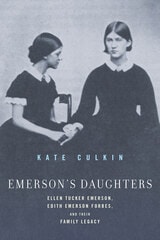
Emerson’s Daughters
Ellen Tucker Emerson, Edith Emerson Forbes, and Their Family LegacyKate Culkin
University of Massachusetts Press, 2025
Longlisted for the 2026 Plutarch Award
Ellen Tucker Emerson and Edith Emerson Forbes, the daughters of Lidian Jackson and Ralph Waldo Emerson, grew up in the heart of Concord, Massachusetts’s famed literary community. In a culture that celebrated self-reliance, Ellen and Edith formed a partnership that only strengthened as their paths diverged, with Ellen remaining in the family home and Edith marrying William Forbes, moving to Milton, Massachusetts, and having eight children. The partnership allowed them to tend to the demands and opportunities created by their father’s career, including serving as his secretaries and editors, and helped them shape his posthumous image. It also enabled them to adapt to historical developments stretching from the Civil War to American imperialism as well as personal ones, including Edith’s growing family and travel and study abroad, and inevitable ones brought on by the aging processes of their parents and themselves.
Emerson’s Daughters is a biography of a sisterhood, the first full-length study of Ellen’s and Edith’s lives. Building on archival research into the extensive correspondence between the sisters, it adds to the growing body of work on women’s contribution to Transcendentalism while opening a window onto the rich, and understudied, family life of the “Sage of Concord.”
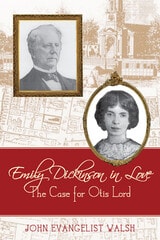
Emily Dickinson in Love
The Case for Otis LordWalsh, John Evangelist
Rutgers University Press, 2012
From the award-winning author of Poe the Detective: The Curious Circumstances Behind "The Mystery of Marie Roget" comes a compelling argument for the identity of Emily Dickinson’s true love
Proud of my broken heart
Since thou didst break it,
Proud of the pain I
Did not feel till thee . . .
Those words were written by Emily Dickinson to a married man. Who was he?
For a century or more the identity of Emily Dickinson’s mysterious “Master” has been eagerly sought, especially since three letters from her to him were found and published in 1955. In Emily Dickinson in Love, John Evangelist Walsh provides the first book-length treatment of this fascinating subject, offering a solution based wholly on documented facts and the poet’s own writings.
Crafting the affair as a love story of rare appeal, and writing with exquisite attention to detail, in Part I Walsh reveals and meticulously proves the Master to be Otis Lord, a friend of the poet’s father and a man of some reputation in law and politics. Part II portrays the full dimensions of their thirty-year romance, most of it clandestine, including a series of secret meetings in Boston.
After uncovering and confirming the Master’s identity, Walsh fits that information into known events of Emily’s life to make sense of facts long known but little understood—Emily’s decision to dress always in white, for instance, or her extreme withdrawal from a normal existence when she had previously been an active, outgoing friend to many men and women.
In a lengthy section of Notes and Sources, Walsh presents his proofs in abundant detail, demonstrating that the evidence favors one man so irresistibly that there is left no room for doubt. Each reader will decide if he has truly succeeded in making the case for Otis Lord.
Emily Greene Balch
The Long Road to InternationalismKristen E. Gwinn
University of Illinois Press, 2010
Eminent Maricones
Arenas, Lorca, Puig, and MeJaime Manrique
University of Wisconsin Press, 2001
Jaime Manrique weaves into his own memoir the lives of three important twentieth-century Hispanic writers: the Argentine Manuel Puig, author of Kiss of the Spider Woman; the Cuban Reinaldo Arenas, author of Before Night Falls; and Spanish poet and playwright Federico García Lorca. Manrique celebrates the lives of these heroic writers who were made outcasts for both their homosexuality and their politics.
"Manrique's double vision yields insights into Puig, Arenas, and Lorca unavailable to a writer less attuned to the complex interplay of culture and sexuality, as well as that of race and class in Latino and Anglo societies."—George DeStefano, The Nation
"A splendid memoir of Manuel Puig. It evokes him—how he really was—better than anything I've read."—Susan Sontag
"Where Manrique's tale differs from others is in its unabashed and sensitive treatment of sexuality. One reads his autobiographical account with pleasure and fascination."—Jose Quiroga, George Washington University
"Manrique's voice is wise, brave, and wholly original. This chronicle of self-discovery and literary encounters is heartening and deep."—Kennedy Fraser
"In this charmingly indiscreet memoir, Jaime Manrique writes with his customary humor and warm sympathy, engaging our delighted interest on every page. He has the rare gift of invoking and inviting intimacy, in this case a triangulated intimacy between himself, his readers, and his memories. These are rich double portraits."—Phillip Lopate
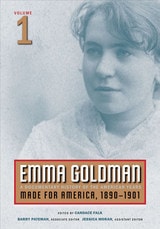
Emma Goldman
A Documentary History of the American Years, Volume 1: Made for America, 1890-1901Emma Goldman. Edited by Candace Falk; Barry Pateman, Assoc Ed; Jessica Moran, A
University of Illinois Press, 2007
Emma Goldman: A Documentary History of the American Years reconstructs the life of Emma Goldman through significant texts and documents. These volumes collect personal letters, lecture notes, newspaper articles, court transcripts, government surveillance reports, and numerous other documents, many of which appear here in English for the first time. Supplemented with thorough annotations, multiple appendixes, and detailed chronologies, the texts bring to life the memory of this singular, pivotal figure in American and European radical history.
Volume 1: Made for America, 1890-1901 introduces readers to the young Emma Goldman as she begins her association with the international anarchist movement and especially with the German, Jewish, and Italian immigrant radicals in New York City. From early on, Goldman's movement through political and intellectual circles is marked by violence, from the attempted murder of industrialist Henry Clay Frick by Goldman's lover, Alexander Berkman, to the assassination of President William McKinley, in which Goldman was falsely implicated. The documents surrounding these events illuminate Goldman's struggle to balance anarchism's positive gains and its destructive costs. This volume introduces many of the themes that would pervade much of Goldman's later writings and speeches: the untold possibilities of anarchism; the transformative power of literature; the interplay of human relationships; and the importance of free speech, education, labor, women's freedom, and radical social reform.
Emma Lee
Juanita Brooks
Utah State University Press, 1975
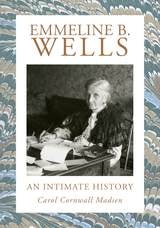
Emmeline B. Wells
An Intimate HistoryCarol Cornwall Madsen
University of Utah Press, 2016
Emmeline B. Wells was the most noted Utah Mormon woman of her time. Lauded nationally for her energetic support of the women’s rights movement of the nineteenth century, she was a self-made woman who channeled her lifelong sense of destiny into ambitious altruism. Her public acclaim and activism belied the introspective, self-appraising, and emotional persona she expressed in the pages of her forty-seven extant diaries. Yet she wrote, “I have risen triumphant,” after reconciling herself to the heartaches of plural marriage, and she pursued a self-directed life in earnest.
This new biography tells the story of the private Emmeline. The unusual circumstances of her marriages, the complicated lives of her five daughters, losses and disappointments interspersed with bright moments and achievements, all engendered the idea that her life was a romance, with all the mysterious, tragic, and sentimental elements of that genre. Her responses to that perception made it so. This volume, drawing heavily on Emmeline Wells’s own words, tells the complicated story of a woman of ambition, strength, tenderness, and faith.
Winner of the Mormon History Association's Best Biography Award.
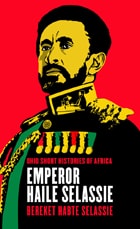
Emperor Haile Selassie
Bereket Habte Selassie
Ohio University Press, 2014
Emperor Haile Selassie was an iconic figure of the twentieth century, a progressive monarch who ruled Ethiopia from 1916 to 1974. This book, written by a former state official who served in a number of important positions in Selassie’s government, tells both the story of the emperor’s life and the story of modern Ethiopia.
After a struggle for the throne in 1916, the young Selassie emerged first as regent and then as supreme leader of Ethiopia. Over the course of his nearly six-decade rule, the emperor abolished slavery, introduced constitutional reform, and expanded educational opportunity. The Italian invasion of Ethiopia in the 1930s led to a five-year exile in England, from which he returned in time to lead his country through World War II. Selassie was also instrumental in the founding of the Organization of African Unity in 1963, but he fell short of the ultimate goal of a promised democracy in Ethiopia. The corruption that grew under his absolute rule, as well as his seeming indifference to the famine that gripped Ethiopia in the 1970s, led finally to his overthrow by the armed forces that he had created.
Haile Selassie was an enlightened monarch in many ways, but also a man with flaws like any other. This short biography is a sensitive portrayal of Selassie as both emperor and man, by one who knew him well.
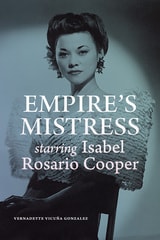
Empire's Mistress, Starring Isabel Rosario Cooper
Vernadette Vicuna Gonzalez
Duke University Press, 2021
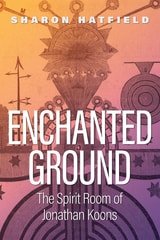
Enchanted Ground
The Spirit Room of Jonathan KoonsSharon Hatfield
Ohio University Press, 2018
In Enchanted Ground, Sharon Hatfield brings to life the true story of a nineteenth-century farmer-turned-medium, Jonathan Koons, one of thousands of mediums throughout the antebellum United States. In the hills outside Athens, Ohio, Koons built a house where it was said the dead spoke to the living, and where ancient spirits communicated the wisdom of the ages. Curious believers, in homespun and in city attire, traveled from as far as New Orleans to a remote Appalachian cabin whose marvels would rival any of P. T. Barnum’s attractions.
Yet Koons’s story is much more than showmanship and sleight of hand. His enterprise, not written about in full until now, embodied the excitement and optimism of citizens breaking free from societal norms. Reform-minded dreamers were drawn to Koons’s seances as his progressive brand of religion displaced the gloomy Calvinism of previous generations. As heirs to the Second Great Awakening, which stretched from New York State to the far reaches of the Northwest Territory, the curious, the faithful, and Koons himself were part of a larger, uniquely American moment that still marks the cultural landscape today.

Encounters and Dialogues with Martin Heidegger, 1929-1976
Heinrich Wiegand Petzet
University of Chicago Press, 1993
A well-known art historian and an intimate friend of Heidegger's, Heinrich Wiegand Petzet provides a rich portrait of Heidegger that is part memoir, part biography, and part cultural history. By recounting chronologically a series of encounters between the two friends from their meeting in 1929 until the philosopher's death in 1976, as well as between Heidegger and other contemporaries, Petzet reveals not only new aspects of Heidegger's thought and attitudes toward the historical and intellectual events of his time but also the greater cultural and social context in which he articulated his thought.
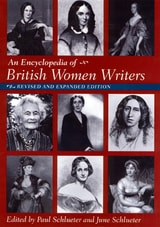
Encyclopedia of British Women Writers
Schlueter, Paul
Rutgers University Press, 1999
Paul Schlueter and June Schlueter have individually and jointly written and edited a number of critical and reference works, including The English Novel: Twentieth Century Criticism (Vol. 2: Twentieth Century Novelists) and Modern American Literature (Supplement 2). Paul Schlueter's books include The Novels of Doris Lessing and Shirley Ann Grau. June Schlueter, Provost, and Dana Professor of English at Lafayette College, has edited Feminist Readings of Modern American Drama and Modern American Drama: The Female Canon.
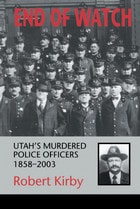
End Of Watch
Robert Kirby
University of Utah Press, 2004
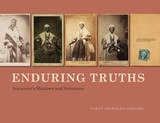
Enduring Truths
Sojourner's Shadows and SubstanceDarcy Grimaldo Grigsby
University of Chicago Press, 2015
Featuring the largest collection of Truth’s photographs ever published, Enduring Truths is the first book to explore how she used her image, the press, the postal service, and copyright laws to support her activism and herself. Darcy Grimaldo Grigsby establishes a range of important contexts for Truth’s portraits, including the strategic role of photography and copyright for an illiterate former slave; the shared politics of Truth’s cartes de visite and federal banknotes, which were both created to fund the Union cause; and the ways that photochemical limitations complicated the portrayal of different skin tones. Insightful and powerful, Enduring Truths shows how Truth made her photographic portrait worth money in order to end slavery—and also became the strategic author of her public self.
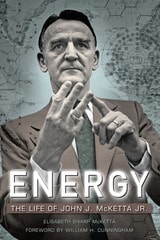
Energy
The Life of John J. McKetta Jr.By Elisabeth Sharp McKetta, Foreword by William H. Cunningham
University of Texas Press, 2017
Energy recounts the life of Dr. John J. McKetta Jr., a first-generation Ukrainian American coal miner who worked his way up from the mines to become the world’s foremost energy expert, a university dean, an encyclopedia editor, and one of the most widely known and respected professors in his field. To honor his one hundredth birthday in 2015, thousands of his former students raised more than $25 million to celebrate his contributions to their lives and to chemical engineering at the University of Texas at Austin, which rechristened his home department the John J. McKetta Jr. Department of Chemical Engineering.
In this biography, granddaughter Elisabeth Sharp McKetta retraces Dr. McKetta’s path to becoming the godfather of modern chemical engineering. She describes how he dedicated his life to supporting students throughout their careers, becoming legendary for phoning scores of them on their birthdays every year, while also showing Americans how to produce and use energy efficiently. John J. McKetta Jr.’s fascinating story has been the subject of hundreds of articles and interviews, and now Energy is the first full-length book about his remarkable life.
Engine Running
EssaysCade Mason
The Ohio State University Press, 2022
Engine Running explores debut author Cade Mason’s gradual distancing from home and old selves alongside an increasingly fractured family doing the same. Starting at the beginning of his parents’ love and working past its end, he combs through memory to piece together a portrait of a family then and now: of a father, reeling after a blindsiding divorce; of a mother, anxious to move on; of a sister, caught in the crossfire; and of a son, learning to embrace his sexuality even as he fears that his own loves may have deepened the rift between his parents.
Lush and innovative, these essays contemplate childhood memories and family secrets, religion and queerness in the rural South, and the ways rituals and contours of manhood are passed through generations. Most of all, we feel with Mason what it is to grapple with and love a place even as you yearn to leave.
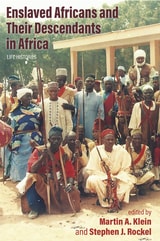
Enslaved Africans and Their Descendants in Africa
Life HistoriesMartin A. Klein and Stephen J. Rockel
Ohio University Press, 2025
An exploration of the resilient lives and legacies of enslaved Africans in Africa
Unlike narratives focused on enslaved people in the Americas, Europe, or the Middle East, this edited collection highlights the lives of African slaves and their descendants who remained in Africa. The contributors chronicle lives spanning the continent, from Sierra Leone, Burkina Faso, Nigeria, Chad, and Cameroon to Egypt, Ethiopia, Tanzania, and South Africa.
The collection explores various forms of slavery and diverse personal trajectories, with many stories beginning in childhood enslavement and evolving into adulthood with limited chances for education or personal advancement. Notably, the accounts include figures who managed to achieve prominent roles, such as a slave who became a general and administrator, a female slave who rose to be a village chief, and a woman who became a successful obstetrician in Muslim Africa.
The narratives underscore the resilience and agency of the enslaved individuals, many of whom created meaningful lives despite the constraints and stigma of both slavery and post-slavery. Some, like a medical missionary in Tanganyika and a slave convert who helped grow the Catholic Church in Burkina Faso, contributed significantly to their communities and religious institutions.
Accessing these stories required rigorous research due to limited documentation, social silence surrounding slavery, and stigma associated with slave ancestry. The contributors’ extensive research brings together fragmented knowledge and oral histories to provide an invaluable perspective and insight into the complex identities, struggles, and achievements of African slaves and their descendants.
Contributors:
Richard Anderson
Dadda Astabarka
Abdourahman Halirou
Martin A. Klein
George Michael La Rue
Adam Mahamat
Ricardo Marquez Garcia
Stephen J. Rockel
Ute Röschenthaler
Mohammed Bashir Salau
Moris Samen
Sandra Rowoldt Shell
Joseph Jules Sinang
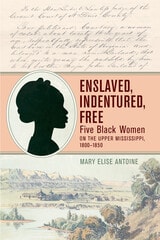
Enslaved, Indentured, Free
Five Black Women on the Upper Mississippi, 1800–1850Mary Elise Antoine
Wisconsin Historical Society Press, 2022
Focusing on these five women, Mary Elise Antoine explores the history of slavery in the Upper Mississippi River Valley, relying on legal documents, military records, court transcripts, and personal correspondence. Whether through perseverance, self-purchase, or freedom suits—including one suit that was used as precedent in Dred and Harriet Scott’s freedom suits years later—each of these women ultimately secured her freedom, thanks in part to the bonds they forged with one another.
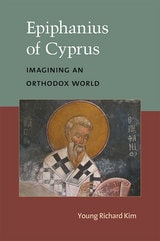
Epiphanius of Cyprus
Imagining an Orthodox WorldYoung Richard Kim
University of Michigan Press, 2015
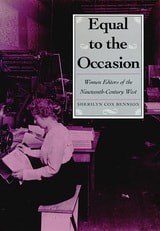
Equal To The Occasion
Women Editors On The Nineteenth-Century WestSherilyn Cox Bennion
University of Nevada Press, 1990
Bennion provides in-depth portraits of nineteenth-century women editors of the West and their diverse publications. The book's title takes its name from an 1898 editorial in the Wasatch Wave which described Piute Pioneer editor Candace Alice De Witt as a "maiden fair, fully equal to the occasion."Equal to the Occasion delves into the lives, publications, and historical contexts in which approximately thirty-five female editors of newspapers and other periodicals worked in the nineteenth-century West. The book covers the period from 1854, when the West's first woman editor began her work, through the turn of the century; it includes research gathered from thirteen western states. With its in-depth portraits of pioneering women editors and its appendix listing more than two hundred women and the major repositories where their extant publications are kept, Equal to the Occasion rescues from obscurity a whole panoply of nineteenth-century western women.
Erik Satie
Mary E. Davis
Reaktion Books, 2007
A composer who dabbled in the Dada movement, a Bohemian “gymnopédiste” of fin-de-siècle Montmartre, and a legendary dresser known as “The Velvet Gentleman,” Erik Satie cut a unique figure among early twentieth-century European composers. Yet his legacy has largely languished in the shadows of Stravinsky, Debussy, and Ravel. Mary E. Davis now brings Satie to life in this fascinating new biography.
Satie redefined the composer’s art, devising new methods of artistic expression that melded ordinary and rarified elements of words, visual art, and music. Davis argues that Satie’s modernist aesthetic was grounded in the contradictions of his life—such as enrolling in the conservative Schola Cantorum after working as a cabaret performer—and is reflected in his irreverent essays, drawn art, and music. Erik Satie explores how the composer was embraced by avant-garde artists and fashionable Parisian elite, and how his experiences inspired him to create the musical style of Neoclassicism. Satie also employed the power of the image through his infamous fashion statements, Davis contends, and became part of a nascent celebrity culture.
A cogent and informative portrait, Erik Satie upends the accepted history of modernist music and restores the composer to his rightful pioneering status.
Ernest Hemingway
The Oak Park LegacyJames Nagel
University of Alabama Press, 1996
Ernest Hemingway: The Oak Park Legacy is the first extensive examination of the relationship of Hemingway to his hometown, Oak Park, Illinois, and the influence its people, places, and underlying values had on his early work. In this volume, 11 leading Hemingway scholars explore various aspects of these issues, from the migration of the Hemingway family from Connecticut to Illinois in the 1850s, to Hemingway's high-school stories and the dramatic breakthrough of In Our Time and The Sun Also Rises. With these books, Hemingway suddenly became one of the most influential writers of the 20th century. The essays in this collection explore the social and family background that provided the material and sensibility for these literary masterpieces.
In these essays, James Nagel provides the first account ever published of the move of the Hemingway family from Connecticut to Illinois. Writing his account after the discovery of a lost diary by one of Hemingway's ancestors, Nagel explores dates and places, the motivation for the move to the Midwest, and the tragedies that awaited the family there, including the death of two young men in the Civil War. Michael Reynolds, the premiere biographer of Ernest Hemingway, describes the culture of the village of Oak Park at the turn of the century, and Larry E. Grimes presents an important new assessment of the religious training the Hemingway children received. David Marut discusses the short stories Hemingway published while still a highschool student, and Carlos Azevedo, Mary Anne O'Neal, Abby H. P. Werlock, and George Monteiro examine the early stories about Nick Adams. In an insightful afterword, Morris Buske, the Historian of the Ernest Hemingway Foundation of Oak Park, reflects on the differing values of Ernest Hemingway's parents, the artistic, cultured Hall family as opposed to the scientific, more practical Hemingways, charting the influence the two traditions had on the young Ernest.
Ernest Tubb
The Texas TroubadourRonnie Pugh
Duke University Press, 1996
Tubb began his career as an imitator of Jimmie Rodgers, but stormed the country music scene in the 1940s with a new honky tonk sound and a string of hits that included “Walking the Floor Over You.” His innovations marked an important transition in country music to a style and lyric in tune with modern American working people, or at least that offered the real-life themes of hard drinking, divorce, tough times, and ruined lives—changes that helped define the music we recognize today as “country.” A member of the Grand Ole Opry until 1982, Tubb hosted a live radio broadcast from the Ernest Tubb Record Shop in Nashville for years and became one of the first country music stars to host his own television show in the mid-1960s. Always popular and on the road much of the time even after his prime hit-making years had ended, he was well-known for promoting the careers of many new performers on the rise.
Delving into fan club journals, songbooks, newspaper broadcast logs, record company files, and hundreds of interviews, Ronnie Pugh draws a picture of Tubb—exploring both his personal and professional life—that is unprecedented in its intimacy, detail, and vitality. We get a close-up view of Tubb riding the crest of his popularity, setting the pace for Nashville, facing the onslaught of Elvis Presley and rock ’n roll, and surviving as a country music legend. Richly illustrated with almost a hundred photographs, many of which are rare unpublished shots from private collections, Ernest Tubb also contains a detailed and complete sessionography, a resource that will be of continuing importance for serious record collectors.
A biography that has been long awaited from Ronnie Pugh, unquestionably the leading authority on Ernest Tubb, this book will delight readers from among the fans of country music, those interested in the history of country music or American popular music and culture generally, and, of course, Ernest Tubb fans.
Ernie Kovacs & Early TV Comedy
Nothing in ModerationBy Andrew Horton
University of Texas Press, 2010
Among the pioneers of television, Ernie Kovacs was one of the most original and imaginative comedians. His zany, irreverent, and surprising humor not only entertained audiences throughout the 1950s and early 1960s, but also inspired a host of later comedies and comedians, including Monty Python, David Letterman, much of Saturday Night Live, Rowan and Martin's Laugh-In, Captain Kangaroo, and even Sesame Street. Kovacs created laughter through wildly creative comic jokes, playful characterizations, hilarious insights, and wacky experiments. "Nothing in moderation," his motto and epitaph, sums up well Kovacs's wholehearted approach to comedy and life.
In this book, Andrew Horton offers the first sustained look at Ernie Kovacs's wide-ranging and lasting contributions to the development of TV comedy. He discusses in detail Kovacs's work in New York, which included The Ernie Kovacs Show (CBS prime time 1952–1953), The Ernie Kovacs Show (NBC daytime variety 1956–1957), Tonight (NBC late-night comedy/variety 1956-1957), and a number of quiz shows. Horton also looks at Kovacs's work in Los Angeles and in feature film comedy. He vividly describes how Kovacs and his comic co-conspirators created offbeat characters and zany situations that subverted expectations and upended the status quo. Most of all, Horton demonstrates that Kovacs grasped the possibility for creating a fresh genre of comedy through the new medium of television and exploited it to the fullest.
Ernst Jünger and Germany
Into the Abyss, 1914-1945Thomas R. Nevin
Duke University Press, 1996
Ernst Jünger is in many ways Germany’s conscience, and much of the controversy surrounding him is at its source measured by his relation to the Nazis and Nazi culture. But as Nevin suggests, Jünger can more specifically and properly be regarded as the still living conscience of a Germany that existed before Hitler. Although his memoir of service as a highly decorated lieutenant in World War I made him a hero to the Nazis, he refused to join the party. A severe critic of the Weimar Republic, he has often been denounced as a fascist who prepared the way for the Reich, but in 1939 he published a parable attacking despotism. Close to the men who plotted Hitler’s assassination in 1944, he narrowly escaped prosecution and death. Drawing largely on Jünger’s untranslated work, much of which has never been reprinted in Germany, Nevin reveals Jünger’s profound ambiguities and examines both his participation in and resistance to authoritarianism and the cult of technology in the contexts of his Wilhelmine upbringing, the chaos of Weimar, and the sinister culture of Nazism.
Winner of Germany’s highest literary awards, Ernst Jünger is regularly disparaged in the German press. His writings, as this book indicates, put him at an unimpeachable remove from the Nazis, but neo-Nazi rightists in Germany have rushed to embrace him. Neither apology, whitewash, nor vilification, Ernst Jünger and Germany is an assessment of the complex evolution of a man whose work and nature has been viewed as both inspiration and threat.
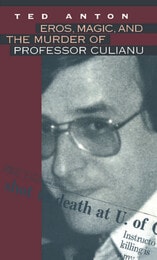
Eros, Magic, and the Murder of Professor Culianu
Ted Anton
Northwestern University Press, 1996
Winner of 1997 Carl Sandburg Award
On May 21, 1991, University of Chicago professor Ioan Culianu was murdered execution-style on campus. The crime stunned the school, terrified students, and mystified the FBI. The case remains unsolved. In Eros, Magic, and the Murder of Professor Culianu, award-winning investigative reporter Ted Anton shows that the murder is what Culianu's friends suspected all along: the first political assassination of a professor on American soil.
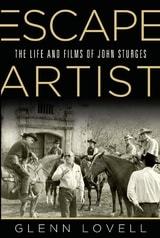
Escape Artist
The Life and Films of John SturgesGlenn Lovell
University of Wisconsin Press, 2008
Best Books for Special Interests, selected by the American Association of School Librarians, and Best Books for General Audiences, selected by the Public Library Association
"Pick up a copy of film critic and scholar Glenn Lovell's terrific new Sturges biography, Escape Artist. . . . I can't urge you enough to check out this interview-rich, aesthetically and culturally perceptive look at the filmmaker and his work."—Bob Strauss, Los Angeles Daily News
“Lovell’s list of interviewees reads like a who’s who of Hollywood and they obviously provided rich source material for this full-scale biography and career survey.”— Leonard Maltin
“This long overdue study of a major Hollywood director will find a welcome home in the libraries of film scholars, action movie buffs, and anyone interested in the popular culture of the twentieth century.”—Turner Classic Movies (TCM.com)
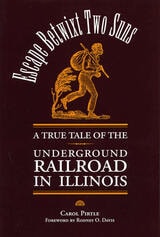
Escape Betwixt Two Suns
A True Tale of the Underground Railroad in IllinoisCarol Pirtle. Foreword by Rodney O. Davis
Southern Illinois University Press, 2000
Although the northern Illinois chapters of the story of Susan “Sukey” Richardson’s escape from slavery on the Underground Railroad are documented, the part played by southern Illinois in that historic episode has remained obscure. Carol Pirtle changes that with her investigation into the 1843 suit Andrew Borders lodged against William Hayes, charging his neighbor with helping slaves from the Borders estate escape to Galesburg. In conjunction with her probe into the past, Pirtle also discovered the Hayes correspondence.
Pirtle documents Hayes’s involvement in the Illinois Underground Railroad through approximately two hundred letters received by Hayes from the early 1820s until his death in 1849. Many of these letters specifically corroborate his participation in the escape of slaves from the Borders estate. One such letter came from T. A. Jones in 1843: “You Dear Sir are to me an unknown friend, yet I believe you are a friend to the poor down trodden Slave. This is as good an introduction as I want from any man. My brother, our cause is a holy one.” Letters written by Galesburg residents show that several prominent citizens of that community also assisted in the affair, proving that Knox College administrators and trustees were active in the Underground Railroad.
Pirtle also includes excerpts from the trial transcript from the 1844 civil case against Hayes, which was tried in Pinckneyville, Illinois. She researched newspaper accounts of the event, most notably those in the Western Citizen and the Sparta Herald. Records of the Covenanter Presbyterian church of which Hayes was a member provide partial explanations of Hayes’s motives.
Telling the story of Hayes and his involvement with Susan Richardson and the Underground Railroad, Pirtle provides insight into the work of abolitionists in Illinois. Escape Betwixt Two Suns, in fact, is one of the few books to substantiate the legends of the Underground Railroad. She tells the story of a quiet man who made a difference, of a man deserving the accolades of a hero.
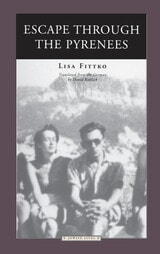
Escape Through the Pyrenees
Lisa Fittko
Northwestern University Press, 2000