Results by title
3071 books match the query 'Business & Economics' and 174 start with e

Economic Reform in China
Problems and ProspectsJames A. Dorn and Wang Xi
University of Chicago Press, 1990
These clearly written and insightful essays address the roots of China's crisis. The authors focus on institutional changes necessary for a spontaneous market order and point to the close relation between economic reform and political-constitutional reform. Topics include the speed and degree of the transition, whether ownership reform must precede price reform, how inflation can be avoided, steps to depoliticize economic life, how to create an environment conducive to foreign trade and investment, and how to institute basic constitutional change and open China to the outside world.
The revolutionary changes now shaking the foundations of socialism and central planning in the Soviet Union and Eastern and Central Europe are sure to have an impact on China's future. Despite their seriousness, the events of Tiananmen Square may constitute only a temporary detour on the road toward a private market order. The essays in this volume help lay a rational framework for understanding China's present problems and for discussing the prospects for future reform.
Economic Reforms in Chile
From Dictatorship to DemocracyRicardo Ffrench-Davis
University of Michigan Press, 2002
Written in accessible and readable prose, Economic Reforms in Chile begins with an overview of the Chilean economy during the last fifty years. This historical time frame is divided into three periods of economic reform. The first period covers the Pinochet regime, during which the more orthodox neoliberalism was implemented. The second period includes the Pinochet dictatorship, during which economic policy shifted toward pragmatism, particularly in the areas of trade and finance; it also includes the crisis of 1982 and its effects. The third period begins in 1990 with the return to democratic elections and the significant reforms to prior reforms. This section also examines the search for growth-with-equity, success in investment and growth performance, macroeconomic sustainability, and the reduction of poverty. Ffrench-Davis addresses several "paradoxes," or results that defy the expectations of policymakers, in order to analyze the significance of comprehensive macroeconomic equilibrium and its implications for sustainable stability, growth, and equity.
Economic Reforms in Chile will be of interest to economists, political scientists, and policymakers involved with the economies of emerging and developing countries.
Ricardo Ffrench-Davis is Principal Regional Advisor, ECLAC, Santiago, and Professor of Economics, University of Chile.
Economic Regulation and Its Reform
What Have We Learned?Edited by Nancy L. Rose
University of Chicago Press, 2014
Economic Regulation and Its Reform collects research by a group of distinguished scholars who explore these and other issues surrounding government economic intervention. Determining the consequences of such intervention requires a careful assessment of the costs and benefits of imperfect regulation. Moreover, government interventions may take a variety of forms, from relatively nonintrusive performance-based regulations to more aggressive antitrust and competition policies and barriers to entry. This volume introduces the key issues surrounding economic regulation, provides an assessment of the economic effects of regulatory reforms over the past three decades, and examines how these insights bear on some of today’s most significant concerns in regulatory policy.
Economic Transfers in the United States
Edited by Marilyn Moon
University of Chicago Press, 1984
Social security, private pension benefits, housing, and health care are traditional kinds of transfers. Accurate measurements of the degree and effect of these and of other, newly interpreted transfers are vital to economic policy making. Though this volume is not directly concerned with policy-making issues, it does impinge on many areas of current public concern; methods of transfer valuation, for example, may affect how we view the status of the aged.
Researchers, policy analysts, and those who compile statistics on which social programs are based on will value the diverse approaches of these ten papers and their accompanying comments. Taken together the essays give great insight into the complexities of defining transfers and provide a wealth of new analytic methods. They were developed from material presented at the Income and Wealth Conference on Social Accounting for Transfers held at Madison, Wisconsin, in 1982.
Economic Turbulence
Is a Volatile Economy Good for America?Clair Brown, John Haltiwanger, and Julia Lane
University of Chicago Press, 2006
Every day, in every sector of our economy, a business shuts down while another starts up, jobs are created while others are cut, and workers are hired while others are laid off. This constant flux, or turbulence, is a defining characteristic of our free market system, yet it mostly inspires angst about unemployment, loss of earnings, and the overall competitiveness of corporations. But is this endless cycle of fluctuation really so bad for America? Might something positive be going on in the economy as a result of it?
In this penetrating work, three esteemed economists seek to answer these questions by exploring the real impact of volatility on American workers and businesses alike. According to the authors, while any number of events--shifts in consumer demand, changes in technology, mergers and acquisitions, or increased competition--can contribute to economic turbulence, our economy as a whole is, by and large, stronger for it, because these processes of creation and destruction make it more flexible and adaptable. The authors also acknowledge and document the adverse consequences of this turbulence on different groups of workers and firms and discuss the resulting policy challenges. Basing their argument on an up-close look into the dealings and practices of five key industries—financial services, retail food services, trucking, semiconductors, and software—the authors demonstrate the positive effects of turbulence on career paths, employee earnings, and firm performance.
The first substantial attempt to disentangle and make clear the complexities of this phenomenon in the United States, Economic Turbulence will be viewed as a major achievement and the centerpiece of any discussion on the subject for years to come.
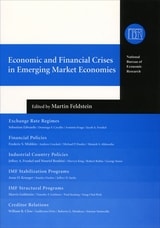
Economic and Financial Crises in Emerging Market Economies
Edited by Martin Feldstein
University of Chicago Press, 2003
This book rises to that challenge, presenting accessible papers and commentaries on the topic not only from leading academic economists, but also from high-ranking government officials (in both industrial and developing nations), senior policymakers at international institutions, and major financial investors. Six non-technical papers, each written by a specialist in the topic, provide essential economic background, introducing sections on exchange rate regimes, financial policies, industrial country policies, IMF stabilization policies, IMF structural programs, and creditor relations. Next, personal statements from the major players give firsthand accounts of what really went on behind the scenes during the crises, giving us a rare glimpse into how international economic policy decisions are actually made. Finally, wide-ranging discussions and debates sparked by these papers and statements are summarized at the end of each section.
The result is an indispensable overview of the key issues at work in these crises, written by the people who move markets and reshape economies, and accessible to not just economists and policymakers, but also to educated general readers.
Contributors:
Montek S. Ahluwalia, Domingo F. Cavallo, William R. Cline, Andrew Crockett, Michael P. Dooley, Sebastian Edwards, Stanley Fischer, Arminio Fraga, Jeffrey Frankel, Jacob Frenkel, Timothy F. Geithner, Morris Goldstein, Paul Keating, Mervyn King, Anne O. Krueger, Roberto Mendoza, Frederic S. Mishkin, Guillermo Ortiz, Yung Chul Park, Nouriel Roubini, Robert Rubin, Jeffrey Sachs, Ammar Siamwalla, George Soros

Economic and Monetary Sovereignty in 21st Century Africa
Maha Ben Gadha
Pluto Press, 2021
Over forty years after the formal end of colonialism, suffocating ties to Western financial systems continue to prevent African countries from achieving any meaningful monetary sovereignty.
Economic and Monetary Sovereignty in 21st Century Africa traces the recent history of African monetary and financial dependencies, looking at the ways African nations are resisting colonial legacies. Using a comparative, multi-disciplinary approach, this book uncovers what went wrong after the Pan-African approaches that defined the early stages of independence, and how most African economies fell into the firm grip of the IMF, World Bank, and the EU’s strict neoliberal policies.
This collection is the first to offer a wide-ranging, comparative and historical look at how African societies have attempted to increase their policy influence and move beyond neoliberal orthodoxy and US-dollar dependency. Economic and Monetary Sovereignty in 21st Century Africa is essential reading for anyone interested in the African quest for self-determination in a turbulent world of recurring economic and financial crises.

Economic and Societal Impacts of Tornadoes
Kevin M. Simmons and Daniel Sutter
American Meteorological Society, 2011
For almost a decade, economists Kevin M. Simmons and Daniel Sutter have been studying the economic impacts and social consequences of the approximately 1,200 tornadoes that touch down across the United States annually. During this time, Simmons and Sutter have been compiling information from sources such as the National Oceanic and Atmospheric Administration and the U.S. Census in order to examine the casualties caused by tornadoes and to evaluate the National Weather Service’s efforts to reduce these casualties. In Economic and Societal Impacts of Tornadoes, Simmons and Sutter present their findings. This analysis will be extremely useful to anyone studying meteorology and imperative for anyone working in emergency disaster management.
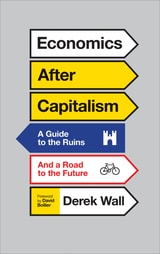
Economics After Capitalism
A Guide to the Ruins and a Road to the FutureDerek Wall
Pluto Press, 2015
Challenging the arguments for markets, mainstream economics and capitalism from Adam Smith onwards, Economics After Capitalism provides a step-by-step guide to various writers, movements and schools of thought, critical of neoliberal globalisation. These range from Keynesian-inspired reformists such as Geroge Soros and Joseph Stiglitz, critics of inequality like Thomas Piketty and Amaitya Sen, to more radical voices including Naomi Klein, Marxists such as David Harvey, anarchists, and autonomists including Toni Negri and Michael Hardt.
By providing a clear and accessible guide to the economics of anti-capitalism, Derek Wall successfully demonstrates that an open source eco-socialist alternative to rampant climate change, elite rule and financial chaos is not just necessary, but possible.
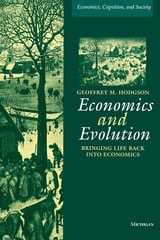
Economics and Evolution
Bringing Life Back into EconomicsGeoffrey M. Hodgson
University of Michigan Press, 1996
This book is about the application to economics of evolutionary ideas from biology. It is not about selfish genes or determination of our behavior by genetic code. The idea that evolution supports a laissez-faire policy is rebutted. The conception of evolution as progress toward greater perfection, along with the competitive individualism sometimes inferred from the notion of the "survival of the fittest," is found to be problematic. Hodgson explores the ambiguities inherent in biology and the problems involved in applying ideas of past economic thinkers--including Malthus, Smith, Marx, Marshall, Veblen, Schumpeter, and Hayek--and argues that the new evolutionary economics can learn much from the many differing conceptions of economic evolution.
"This is a work of enormous perceptivity and subtlety as well as judiciousness of interpretation and critique . . . [that] establish[es] Hodgson as the leading institutional theorist, and as one of the leading evolutionary theorists, of his generation." --Warren J. Samuels
"A daring and successful attempt to expunge the monopoly of reductionist and mechanistic thinking over evolutionary theory . . . a must for anyone who is interested not only in the foundations of economics, but also in the foundations of social theory." --Elias L. Khalil, Ohio State University
Geoffrey M. Hodgson is University Lecturer in Economics, Judge Institute for Management Studies, University of Cambridge.
Economics and Politics of World Sugar Policies
Stephen V. Marks and Keith E. Maskus, Editors
University of Michigan Press, 1993
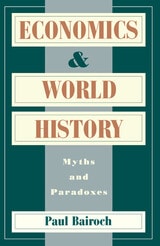
Economics and World History
Myths and ParadoxesPaul Bairoch
University of Chicago Press, 1993
In Economics and World History, Paul Bairoch clearly and succinctly debunks a number of commonly held beliefs about economic history and the causes and consequences of important events around the world. Taking on twenty commonly held misconceptions, including that free trade and population growth have historically led to periods of economic growth; that a move away from free trade caused the Great Depression; and that colonial powers in the nineteenth and early twentieth centuries became rich through the exploitation of the Third World, Bairoch shows in each case where the mistaken belief originated and why deeper knowledge of economics shows it to b wrong. The resulting book is a treasury for free thinkers, a book that will simultaneously clear up mistakes and help readers avoid making new ones.
Economics and the Antagonism of Time
Time, Uncertainty, and Choice in Economic TheoryDouglas Vickers
University of Michigan Press, 1994
Economics as a Social Science
An Approach to Nonautistic TheoryAndrew M. Kamarck
University of Michigan Press, 2002

Economics for Everyone, Second Edition
A Short Guide to the Economics of CapitalismJim Stanford
Pluto Press, 2015
Through clear bite-sized chapters interspersed with illuminating illustrations, this is an antidote to the abstract and ideological way that economics is normally taught and reported on in in media. Key concepts such as finance, competition and wages are explored, and their importance to everyday life is revealed. It answers questions such as 'Do workers need capitalists?', 'Why does capitalism harm the environment?', and 'What really happens on the stock market?'.
The book is supported with a comprehensive set of web-based course materials including videos for popular economics courses.
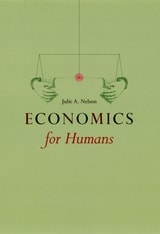
Economics for Humans
Julie A. Nelson
University of Chicago Press, 2006
At its core, an economy is about providing goods and services for human well-being. But many economists and critics preach that an economy is something far different: a cold and heartless system that operates outside of human control. In this impassioned and perceptive work, Julie A. Nelson asks a compelling question: If our economic world is something that we as humans create, aren’t ethics and human relationships—dimensions of a full and rich life—intrinsically part of the picture? Is it possible to take this thing we call economics and give it a body and a soul?
Economics for Humans argues against the well-ingrained notion that economics is immune to moral values and distant from human relationships. Here, Nelson locates the impediment to envisioning a more considerate economic world in an assumption that is shared by both neoliberals and the political left. Despite their seemingly insurmountable differences, Nelson notes that they both make use of the metaphor, first proposed by Adam Smith, that the economy is a machine. This pervasive idea, Nelson argues, has blinded us to the qualities that make us work and care for one another—qualities that also make businesses thrive and markets grow. We can wed our interest in money with our justifiable concerns about ethics and social well-being. And we can do so if we recognize that an economy is not a machine, but a living, beating heart that circulates blood to all parts of the body while also serving as an emblem of compassion and care.
Nothing less than a manifesto, Economics for Humans will both invigorate and inspire readers to reshape the way they view the economy, its possibilities, and their place within it.
Economics for Humans, Second Edition
Julie A. Nelson
University of Chicago Press, 2018
Economics for Humans argues against the well-ingrained notion that economics is immune to moral values and distant from human relationships. Here, Nelson locates the impediment to a more considerate economic world in an assumption that is shared by both neoliberals and the political left. Despite their seemingly insurmountable differences, both make use of the metaphor, first proposed by Adam Smith, that the economy is a machine. This pervasive idea, Nelson argues, has blinded us to the qualities that make us work and care for one another—qualities that also make businesses thrive and markets grow. We can wed our interest in money with our justifiable concerns about ethics and social well-being. And we can do so if we recognize that an economy is not a machine, but a living thing in need of attention and careful tending.
This second edition has been updated and refined throughout, with expanded discussions of many topics and a new chapter that investigates the apparent conflict between economic well-being and ecological sustainability. Further developing the main points of the first edition, Economics for Humans will continue to both invigorate and inspire readers to reshape the way they view the economy, its possibilities, and their place within it.
Economics for Humans, Second Edition
Julie A. Nelson
University of Chicago Press, 2018
At its core, an economy is about providing goods and services for human well-being. But many economists and critics preach that an economy is something far different: a cold and heartless system that operates outside of human control. In this impassioned and perceptive work, Julie A. Nelson asks a compelling question: given that our economic world is something that we as humans create, aren’t ethics and human relationships—dimensions of a full and rich life—intrinsically part of the picture?
Economics for Humans argues against the well-ingrained notion that economics is immune to moral values and distant from human relationships. Here, Nelson locates the impediment to a more considerate economic world in an assumption that is shared by both neoliberals and the political left. Despite their seemingly insurmountable differences, both make use of the metaphor, first proposed by Adam Smith, that the economy is a machine. This pervasive idea, Nelson argues, has blinded us to the qualities that make us work and care for one another—qualities that also make businesses thrive and markets grow. We can wed our interest in money with our justifiable concerns about ethics and social well-being. And we can do so if we recognize that an economy is not a machine, but a living thing in need of attention and careful tending.
This second edition has been updated and refined throughout, with expanded discussions of many topics and a new chapter that investigates the apparent conflict between economic well-being and ecological sustainability. Further developing the main points of the first edition, Economics for Humans will continue to both invigorate and inspire readers to reshape the way they view the economy, its possibilities, and their place within it.

Economics of Child Care
David M. Blau
Russell Sage Foundation, 1991
Economics of Forestry and Rural Development
An Empirical Introduction from AsiaWilliam F. Hyde and Gregory S. Amacher, and Colleagues
University of Michigan Press, 2000
Economics of Means-Tested Transfer Programs in the United States, Volume I
Edited by Robert A. Moffitt
University of Chicago Press, 2016
These two volumes update the earlier Means-Tested Transfer Programs in the United States with a discussion of the many changes in means-tested government programs and the results of new research over the past decade. While some programs that experienced falling outlays in the years prior to the previous volume have remained at low levels of expenditure, many others have grown, including Medicaid, the Earned Income Tax Credit, the Supplemental Nutrition Assistance Program, and subsidized housing programs. For each program, the contributors describe its origins and goals, summarize its history and current rules, and discuss recipients’ characteristics and the types of benefits they receive.
This is an invaluable reference for researchers and policy makers that features detailed analyses of many of the most important transfer programs in the United States.
Economics of Means-Tested Transfer Programs in the United States, Volume II
Edited by Robert A. Moffitt
University of Chicago Press, 2016
These two volumes update the earlier Means-Tested Transfer Programs in the United States with a discussion of the many changes in means-tested government programs and the results of new research over the past decade. While some programs that experienced falling outlays in the years prior to the previous volume have remained at low levels of expenditure, many others have grown, including Medicaid, the Earned Income Tax Credit, the Supplemental Nutrition Assistance Program, and subsidized housing programs. For each program, the contributors describe its origins and goals, summarize its history and current rules, and discuss recipients’ characteristics and the types of benefits they receive.
This is an invaluable reference for researchers and policy makers that features detailed analyses of many of the most important transfer programs in the United States.

Economics of Research and Innovation in Agriculture
Edited by Petra Moser
University of Chicago Press, 2021
Economics of the Family
Marriage, Children, and Human CapitalEdited by Theodore W. Schultz
University of Chicago Press, 1975
Economics--Mathematical Politics or Science of Diminishing Returns?
Alexander Rosenberg
University of Chicago Press, 1992
Economics
The Culture of a Controversial ScienceMelvin W. Reder
University of Chicago Press, 1998
Since the 1930s economists have increasingly emphasized the scientific, quantitative side of their field, which has directed research to topics that can be elaborated through mathematical models. Economist Melvin Reder argues that this ongoing historical shift has been the result of pressure from two directions: from society's demand that expert advice be based on "scientific findings," and from economists themselves, who have wanted to view their own profession as a science. This book describes the profession of economics as it has developed in response to these challenges.
The diversity of the responses points to persistent internal disagreements within the economics community about its proper scope and methods. These disagreements, in turn, have led to incompatible proposals for the direction of research and divergent recommendations for public policy. Although Reder does not pretend to resolve these difficulties, he appraises different arguments and demonstrates how they have influenced both economists' behavior and public esteem for the profession. While recognizing that serious questions remain about economics's scientific status and practical utility, this book shows where economics has obtained practically usable results and where its fruits have been limited to elaboration of analytical constructions of uncertain applicability.
"[A] fascinating account of the sociology and philosophy of a profession. . . . This is an important book about an important field."—John L. Casti, New Scientist

Economies of Desire
Sex and Tourism in Cuba and the Dominican RepublicAmalia L. Cabezas
Temple University Press, 2009
Is a native-born tour guide who has sex with tourists—in exchange for dinner or gifts or cash—merely a prostitute or gigolo? What if the tourist continues to send gifts or money to the tour guide after returning home? As this original and provocative book demonstrates, when it comes to sex—and the effects of capitalism and globalization —nothing is as simple as it might seem.
Based on ten years of research, Economies of Desire is the first ethnographic study to examine the erotic underpinnings of transnational tourism. It offers startling insights into the commingling of sex, intimacy, and market forces in Cuba and the Dominican republic, two nations where tourism has had widespread effects. In her multi-layered analyses, amalia cabezas reconceptualizes our understandings of informal economies (particularly "affective economies"), "sex workers," and “sexual tourism,” and she helps us appreciate how money, sex and love are intertwined within the structure of globalizing capitalism.
Economists Lives
Biography and Autobiography in the History of Economics, Volume 39E. Roy Weintraub and Evelyn L. Forget, eds.
Duke University Press, 0
Contributors to this collection question whether biography is essential to understanding the history of economic ideas and consider how autobiographical materials should be read and interpreted by historians. Articles consider the treatment of autobiographical materials such as conversations and testimonies, the construction of heroes and villains, the relationship between scientific biography and literary biography, and concerns related to living subjects. Several essays address the role of biography and autobiography in the study of economists such as F. A. Hayek, Harry Johnson, Alfred Marshall, John Maynard Keynes, Oskar Morgenstern, and François Quesnay, concluding with several accounts of the interconnection of the historians’ projects with their own autobiographies.
All 2007 subscribers to History of Political Economy will receive a copy of “Economists’ Lives: Biography and Autobiography in the History of Economics” as part of their subscription.
Contributors
Roger E. Backhouse
Bruce Caldwell
Loïc Charles
William Coleman
Robert W. Dimand
Paul John Eakin
Ross B. Emmett
Evelyn L. Forget
Craufurd D. Goodwin
Peter Groenewegen
Malachi Haim Hacohen
Jan-Otmar Hesse
Patricia Laurence
Frederic S. Lee
Robert Leonard
Tiago Mata
D. E. Moggridge
Jeremy D. Popkin
Mike Reay
Christine Théré
E. Roy Weintraub

Economists Papers, 1750-1950
A Guide to Archive and other Manuscript Sources for the History of British and Irish Economic ThoughtR. P. Sturges
Duke University Press, 1975
Economizing Mind, 1870–2015
When Economics and Psychology Met . . . or Didn’tMarina Bianchi and Neil De Marchi, special issue editors
Duke University Press, 2016
Economists and psychologists share an interest in explaining how people make the choices that they do. However, economists have tended to stress individual rationality, shaped by economic motives and expressed in formal logical or mathematical models, while psychologists have preferred to identify influences through experimentation. In recent decades, behavioral economics has bridged the two fields and challenged the traditional economic assumption that individuals choose rationally. The essays collected here provide a longer view and reflect on episodic contact between psychology and economics beginning in the late nineteenth century. They help explain why meaningful, sustained joint inquiry eluded both disciplines for so long and usefully complement the recent inclination of researchers in each field to find inadequacy in the other.
Contributors: Marina Bianchi, Simon J. Cook, Neil De Marchi, José Edwards, Tiziana Foresti, Craufurd D. Goodwin, Judy L. Klein, Harro Maas, Ivan Moscati, John Staddon, Andrej Svorenčík
Economy and Interest
A New Presentation of the Fundamental Problems Related to the Economic Role of the Rate of Interest and Their SolutionsMaurice Allais
University of Chicago Press, 2024
The essential work from the Nobel Prize-winning virtuoso of twentieth-century economics, translated to English for the first time.
Few scholars advanced the frontier of economic modeling more than French economist Maurice Allais. Allais’s contributions—beyond his famous Allais’s Paradox—earned him the Nobel Prize and drew comparisons to the works of Paul Samuelson and even some modern mathematical behavioral economists.
Allais’s accomplishments, however, went largely unread by non-Francophone readers due to the challenge of their translation for publishers. The effects of this gap are immeasurable. As Paul Samuelson wrote, “Had Allais's earliest writings been in English, a whole generation of economic theory would have taken a different course.”
Economy and Interest is the milestone translation of Allais's most influential work, one whose staggering findings predate their accepted formulations by other famed economists decades later. In its sweep and technical virtuosity, Economy and Interest is certain to delight and challenge new generations of English-language readers.
Economy and the Future
A Crisis of FaithJean-Pierre Dupuy
Michigan State University Press, 2014
Economy of Words
Communicative Imperatives in Central BanksDouglas R. Holmes
University of Chicago Press, 2013
Holmes examines the New York District Branch of the Federal Reserve, the European Central Bank, Deutsche Bundesbank, and the Bank of England, among others, and shows how officials there have created a new monetary regime that relies on collaboration with the public to achieve the ends of monetary policy. Central bankers, Holmes argues, have shifted the conceptual anchor of monetary affairs away from standards such as gold or fixed exchange rates and toward an evolving relationship with the public, one rooted in sentiments and expectations. Going behind closed doors to reveal the intellectual world of central banks,Economy of Words offers provocative new insights into the way our economic circumstances are conceptualized and ultimately managed.
Educating Economists
David Colander and Reuven Brenner, Editors
University of Michigan Press, 1992
Education Policy in Developing Countries
Edited by Paul Glewwe
University of Chicago Press, 2013
Surveying many aspects of education—from administrative structures to the availability of health care to parent and student incentives—the contributors synthesize an impressive diversity of data, paying special attention to the gross imbalances in educational achievement that still exist between developed and developing countries. They draw out clear implications for governmental policy at a variety of levels, conscious of economic realities such as budget constraints, and point to crucial areas where future research is needed. Offering a wealth of insights into one of the best investments a nation can make, Education Policy in Developing Countries is an essential contribution to this most urgent field.
Education, Skills, and Technical Change
Implications for Future US GDP GrowthEdited by Charles R. Hulten and Valerie A. Ramey
University of Chicago Press, 2018
Education, Skills, and Technical Change explores various facets of these questions and provides an overview of educational attainment in the United States and the channels through which labor force skills and education affect GDP growth. Contributors to this volume focus on a range of educational and training institutions and bring new data to bear on how we understand the role of college and vocational education and the size and nature of the skills gap. This work links a range of research areas—such as growth accounting, skill development, higher education, and immigration—and also examines how well students are being prepared for the current and future world of work.
Egalitarian Capitalism
Jobs, Incomes, and Growth in Affluent CountriesLane Kenworthy
Russell Sage Foundation, 2004

Egypt's Beer
Stella, Identity, and the Modern StateBy Omar D. Foda
University of Texas Press, 2019
Although alcohol is generally forbidden in Muslim countries, beer has been an important part of Egyptian identity for much of the last century. Egypt’s Stella beer (which only coincidentally shares a name with the Belgian beer Stella Artois) became a particularly meaningful symbol of the changes that occurred in Egypt after British Occupation.
Weaving cultural studies with business history, Egypt’s Beer traces Egyptian history from 1880 to 2003 through the study of social, economic, and technological changes that surrounded the production and consumption of Stella beer in Egypt, providing an unparalleled case study of economic success during an era of seismic transformation. Delving into archival troves—including the papers of his grandfather, who for twenty years was CEO of the company that produced Stella—Omar D. Foda explains how Stella Beer achieved a powerful presence in all popular forms of art and media, including Arabic novels, songs, films, and journalism. As the company’s success was built on a mix of innovation, efficient use of local resources, executive excellence, and shifting cultural dynamics, this is the story of the rise of a distinctly Egyptian “modernity” seen through the lens of a distinctly Egyptian brand.

El Dorado In West Africa
The Gold Mining Frontier, African Labor, and Colonial CapitalismRaymond E. Dumett
Ohio University Press, 1998
The second half of the nineteenth century witnessed some of the greatest gold mining migrations in history when dreams of bonanza lured thousands of prospectors and diggers to the far corners of the earth—including the Gold Coast of West Africa.
El Dorado in West Africa explores the first modern gold rush of Ghana in all of its dimensions—land, labor, capital, traditional African mining, technology, transport, management, the clash of cultures, and colonial rule. The rich tapestry of events is crisscrossed by unexpected ironies and paradoxes.
Professor Dumett tells the story of the expatriate-led gold boom of 1875-1900 against the background of colonial capitalism. Through the use of oral data, he also brings to light the expansion of a parallel “African gold mining frontier,” which outpaced the expatriate mining sector.
African women, kings and chiefs, and the ordinary Akan farmer/miners, as well as European engineers and speculators, are the focal points of this study. It probes in depth the productive and developmental features and the turbulent and shattering effects of mining capitalism on African societies.
Electoral Dynamics in the Philippines
Money Politics, Patronage and Clientelism at the GrassrootsEdited by Allen Hicken, Edward Aspinall, and Meredith Weiss
National University of Singapore Press, 2019

Electricity Deregulation
Choices and ChallengesEdited by James M. Griffin and Steven L. Puller
University of Chicago Press, 2005
This collection brings together leading experts from academia, government, and big business to discuss the lessons learned from experiences such as California's market meltdown as well as the ill-conceived policy choices that contributed to those failures. More importantly, the essays that comprise Electricity Deregulation offer a number of innovative prescriptions for the successful design of deregulated electricity markets. Written with economists and professionals associated with each of the network industries in mind, this comprehensive volume provides a timely and astute deliberation on the many risks and rewards of electricity deregulation.
Elements of Econometrics
Second EditionJan Kmenta
University of Michigan Press, 1997
Throughout the book the emphasis is on simplification whenever possible, assuming the readers know college algebra and basic calculus. Jan Kmenta explains all methods within the simplest framework, and generalizations are presented as logical extensions of simple cases. And while a relatively high degree of rigor is preserved, every conflict between rigor and clarity is resolved in favor of the latter. Apart from its clear exposition, the book's strength lies in emphasizing the basic ideas rather than just presenting formulas to learn and rules to apply.
The book consists of two parts, which could be considered jointly or separately. Part one covers the basic elements of the theory of statistics and provides readers with a good understanding of the process of scientific generalization from incomplete information. Part two contains a thorough exposition of all basic econometric methods and includes some of the more recent developments in several areas.
As a textbook, Elements of Econometrics is intended for upper-level undergraduate and master's degree courses and may usefully serve as a supplement for traditional Ph.D. courses in econometrics. Researchers in the social sciences will find it an invaluable reference tool.
A solutions manual is also available for teachers who adopt the text for coursework.
Jan Kmenta is Professor Emeritus of Economics and Statistics, University of Michigan.

Elements of Time Series Econometrics
An Applied Approach - Third EditionEvzen Kocenda and Alexandr Cerný
Karolinum Press, 2017
Elinor Ostrom's Rules for Radicals
Cooperative Alternatives Beyond Markets and StatesDerek Wall
Pluto Press, 2017
Elinor Ostrom's Rules for Radicals fixes that injustice, revealing the indispensability of her work on green politics, alternative economics, and radical democracy. Derek Wall’s analysis of her theses addresses some of the common misconceptions of her work and reveals her strong commitment to a radical ideological framework. This helpful guide will engage scholars and activists across a range of disciplines, including political economy, political science, and ecology, as well as those keen to implement her work in practice. As activists continue to reject traditional models of centralized power, Ostrom’s theories will become even more crucial in creating economies that exist beyond markets and states.

Embargoed Science
Vincent Kiernan
University of Illinois Press, 2006
The popular notion of a lone scientist privately toiling long hours in a laboratory, striking upon a great discovery, and announcing it to the world is a romanticized fiction. Vincent Kiernan's Embargoed Science reveals the true process behind science news: an elite few scholarly journals control press coverage through a mechanism known as an embargo. The journals distribute advance copies of their articles to hundreds and sometimes thousands of journalists around the world, on the condition that journalists agree not to report their stories until a common time, several days later. When the embargo lifts, airwaves and newspaper pages are flooded with stories based on the journal's latest issue.
In addition to divulging the realities behind this collusive practice, Kiernan offers an unprecedented exploration of the embargo's impact on public and academic knowledge of science and medical issues. He surveys twenty five daily U.S. newspapers and relates his in-depth interviews with reporters to examine the inner workings of the embargo and how it structures our understanding of news about science. Kiernan ultimately argues that this system fosters "pack journalism" and creates an unhealthy shield against journalistic competition. The result is the uncritical reporting of science and medical news according to the dictates of a few key sources.
Embedded Politics
Industrial Networks and Institutional Change in PostcommunismGerald A. McDermott
University of Michigan Press, 2003
Using comparative case analysis of several manufacturing sectors, Embedded Politics accounts for change and continuity in the formation of new economic governance institutions in the Czech Republic. It analytically links the macropolitics of state policy with the micropolitics of industrial restructuring. Thus the book advances an alternative approach for the comparative study of institutional change and industrial adjustment.
As a historical and contemporary analysis of Czech firms and public institutions, this book will command the attention of students of postcommunist reforms, privatization, and political-economic transitions in general. But also given its interdisciplinary approach and detailed empirical analysis of policy-making and firm behavior, Embedded Politics is a must read for scholars of politics, economics, sociology, political economy, business organization, and public policy.
Gerald A. McDermott is Assistant Professor of Management in The Wharton School of Management at The University of Pennsylvania. His research applies recent advances in comparative political economy and industrial organization, including theories of social networks, historical institutionalism, and incomplete markets to analyze issues of economic governance, firm creation, and industrial restructuring in advanced and newly industrialized countries. As evidenced by Embedded Politics, his current focus is on problems of institutional and organizational learning in the formation of meso-level governance institutions in emerging market and postsocialist economies.
McDermott also works as Senior Research Fellow at the IAE Escuela de Direccion y Negocios at Universidad Austral in Buenos Aires, and he has served as Project Coordinator at the Inter-American Development Bank. He has consulted for the Finance, Private Sector, and Infrastructure Division at the World Bank and advised the Deputy Foreign Minister of the Czech Republic. In addition he has published many papers and book chapters on entrepreneurship, privatization, institutions, and networks in Central Europe and Latin America.

Embodied Engineering
Gendered Labor, Food Security, and Taste in Twentieth-Century MaliLaura Ann Twagira
Ohio University Press, 2021
Emerging Labor Market Institutions for the Twenty-First Century
Edited by Richard B. Freeman, Joni Hersch, and Lawrence Mishel
University of Chicago Press, 2005
This important volume provides case studies of new labor market institutions and new directions for existing institutions. The contributors examine the behavior and impact of new organizations that have formed to solve workplace problems and to bolster the position of workers. They also document how unions employ new strategies to maintain their role in the economic system. While non-union institutions are unlikely to fill the gap left by the decline of unions, the findings suggest that emerging groups and unions might together improve some dimensions of worker well-being. Emerging Labor Market Institutions is the story of workers and institutions in flux, searching for ways to represent labor in the new century.
Emotional Decisions
Trade off Difficulty and Coping in Consumer ChoiceMary Frances Luce, James R. Bettman, and John W. Payne
University of Chicago Press, 2001
Empire State-Building
War and Welfare in Kenya, 1925–1952Joanna Lewis
Ohio University Press, 2001
This history of administrative thought and practice in colonial Kenya looks at the ways in which white people tried to engineer social change.
It asks four questions:
- Why was Kenya’s welfare operation so idiosyncratic and spartan compared with that of other British colonies?
- Why did a transformation from social welfare to community development produce further neglect of the very poor?
- Why was there no equivalent to the French tradition of community medicine?
- If there was a transformatory element of colonial rule that sought to address poverty, where and why did it fall down?
The answers offer revealing insight into the dynamics of rule in the late colonial period in Kenya.