Results by title
1882 books match the query 'Criticism and interpretation' and 67 start with e

Essays on Karolina Pavlova
Susanne Fusso and Alexander Lehrman
Northwestern University Press, 2001
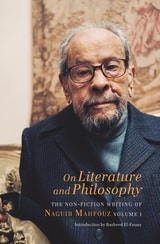
Essays on Literature and Philosophy
The Non-Fiction of Naguib Mahfouz: Volume INaguib Mahfouz
Gingko, 2025
The first Arabic language writer to win the Nobel Prize for Literature, Naguib Mahfouz, helped bring Arabic writing to an international readership. This collection of his early writing, from his time as a philosophy student, reveals the intellectual ferment of the young author, grappling with two millennia of philosophers and writers and establishing his own voice among them.
Available in English for the first time, these essays tackle a vast array of subjects, from Presocratic Philosophy to love and the sexual impulse. The intellectual development demonstrated here forms the foundation of Mahfouz’s literary work, granting insight into the mind behind such famed works as the Cairo Trilogy and Children of The Alley.

Estado Vegetal
Performance and Plant-ThinkingGiovanni Aloi
University of Minnesota Press, 2023
Interdisciplinary essays on Manuela Infante’s award-winning play explore the relationship between critical plant studies and performance art in the Anthropocene
Since its first staging in 2016, Estado Vegetal, Manuela Infante’s riveting piece of experimental performance art, has expanded philosophical thinking into a fully-fledged artistic inquiry of nonanthropocentric being. Through Infante’s polyvocal monologue, acted with impetus by Marcela Salinas, plants are charged with an agency capable of uprooting culturally grounded conceptions of the world in the face of incommensurable trauma and loss.
This first book dedicated to Infante’s plant-focused performance features eight essays by scholars, poets, and artists whose practices draw from research fields as disparate as new materialism, anthropogenic feminism, queer studies, and speculative realism. Including an interview with Infante, the full playscript, and stills from the performance, Estado Vegetal: Performance and Plant-Thinking reveals the roles that plants in art can play in productively reconfiguring human–nonhuman relations within current anthropogenic perspectives.
Infante’s performance is a perfect case study and reference point for anyone interested in exploring the complexities of plant-thinking through alternative and experimental avenues. Furthermore, this book is at once a critical plant studies primer and an artistic problematization of the philosophical questions that have been central to the latest multidisciplinary discussions on plant-being.
Contributors: Maaike Bleeker, Utrecht U; Lucy Cotter, Portland State U; Prudence Gibson, UNSW Sydney; Michael Marder, U of the Basque Country; Dawn Sanders, U of Gothenburg; Catriona Sandilands, York U; Sibila Sotomayor Van Rysseghem, colectivo LASTESIS; Mandy-Suzanne Wong.
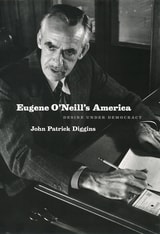
Eugene O'Neill's America
Desire Under DemocracyJohn Patrick Diggins
University of Chicago Press, 2007
In the face of seemingly relentless American optimism, Eugene O’Neill's plays reveal an America many would like to ignore, a place of seething resentments, aching desires, and family tragedy, where failure and disappointment are the norm and the American dream a chimera. Though derided by critics during his lifetime, his works resonated with audiences, won him the Nobel Prize and four Pulitzer, and continue to grip theatergoers today. Now noted historian John Patrick Diggins offers a masterly biography that both traces O’Neill’s tumultuous life and explains the forceful ideas that form the heart of his unflinching works.
Diggins paints a richly detailed portrait of the playwright’s life, from his Irish roots and his early years at sea to his relationships with his troubled mother and brother. Here we see O’Neill as a young Greenwich Village radical, a ravenous autodidact who attempted to understand the disjunction between the sunny public face of American life and the rage that he knew was simmering beneath. According to Diggins, O’Neill mined this disjunction like no other American writer. His characters burn with longing for an idealized future composed of equal parts material success and individual freedom, but repeatedly they fall back to earth, pulled by the tendrils of family and the insatiability of desire. Drawing on thinkers from Emerson to Nietzsche, O’Neill viewed this endlessly frustrated desire as the problematic core of American democracy, simultaneously driving and undermining American ideals of progress, success, and individual freedom.
Melding a penetrating assessment of O’Neill’s works and thought with a sensitive re-creation of his life, Eugene O’Neill’s America offers a striking new view of America’s greatest playwright—and a new picture of American democracy itself.
Euripides and the Instruction of the Athenians
Justina Gregory
University of Michigan Press, 1997
Euripides and the Poetics of Sorrow
Art, Gender, and Commemoration in Alcestis, Hippolytus, and HecubaCharles Segal
Duke University Press, 1993
Alcestis, Hippolytus, and Hecuba, the three early plays interpreted here, are linked by common themes of violence, death, lamentation and mourning, and by their implicit definitions of male and female roles. Segal shows how these plays draw on ancient traditions of poetic and ritual commemoration, particularly epic song, and at the same time refashion these traditions into new forms. In place of the epic muse of martial glory, Euripides, Segal argues, evokes a muse of sorrows who transforms the suffering of individuals into a "common grief for all the citizens," a community of shared feeling in the theater.
Like his predecessors in tragedy, Euripides believes death, more than any other event, exposes the deepest truth of human nature. Segal examines the revealing final moments in Alcestis, Hippolytus, and Hecuba, and discusses the playwright's use of these deaths--especially those of women--to question traditional values and the familiar definitions of male heroism. Focusing on gender, the affective dimension of tragedy, and ritual mourning and commemoration, Segal develops and extends his earlier work on Greek drama. The result deepens our understanding of Euripides' art and of tragedy itself.
Euripides and the Tragic Tradition
Ann Norris Michelini
University of Wisconsin Press, 2006
Every Intellectual's Big Brother
George Orwell's Literary SiblingsBy John Rodden
University of Texas Press, 2006
George Orwell has been embraced, adopted, and co-opted by everyone from the far left to the neoconservatives. Each succeeding generation of Anglo-American intellectuals has felt compelled to engage the life, work, and cultural afterlife of Orwell, who is considered by many to have been the foremost political writer of the twentieth century. Every Intellectual's Big Brother explores the ways in which numerous disparate groups, Orwell's intellectual "siblings," have adapted their views of Orwell to fit their own agendas and how in doing so they have changed our perceptions of Orwell himself. By examining the politics of literary reception as a dimension of cultural history, John Rodden gives us a better understanding of Orwell's unique and enduring role in Anglo-American intellectual life.
In Part One, Rodden opens the book with a section titled "Their Orwell, Left and Right," which focuses on Orwell's reception by several important literary circles of the latter half of the twentieth century. Beginning with Orwell's own contemporaries, Rodden addresses the ways various intellectual groups of the 1950s responded to Orwell. Rodden then moves on in Part Two to what he calls the "Orwell Confraternity Today," those contemporary intellectuals who have, in various ways, identified themselves with or reacted against Orwell. The author concludes by examining how Orwell's status as an object of admiration and detraction has complicated the way in which he has been perceived by readers since his death.
Everybody's Autonomy
Connective Reading and Collective IdentityJuliana Spahr
University of Alabama Press, 2001
Contemporary avant garde writing has often been overlooked by those who study literature and identity. Such writing has been perceived as unrelated, as disrespectful of subjectivity. But Everybody's Autonomy instead locates within avant garde literature models of identity that are communal, connective, and racially concerned. Everybody's Autonomy, as it tackles literary criticism's central question of what sort of selves do works create, looks at works that encourage connection, works that present and engage with large, public worlds that are in turn shared with readers. With this intent, it aligns the iconoclastic work of Gertrude Stein with foreign, immigrant Englishes and their accompanying subjectivities. It examines the critique of white individualism and privilege in the work of language writers Lyn Hejinian and Bruce Andrews. It looks at how Harryette Mullen mixes language writing's open text with the distinctivesness of African-American culture to propose a communal, yet still racially conscious identity. And it examines Theresa Hak Kyung Cha's use of broken English and French to unsettle readers' fluencies and assimilating comprehensions, to decolonize reading. Such works, the book argues, well represent and expand changing notions of the public, of everybody.
Everything Man
The Form and Function of Paul RobesonShana L. Redmond
Duke University Press, 2020
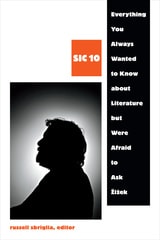
Everything You Always Wanted to Know about Literature but Were Afraid to Ask Žižek
SIC 10Russell Sbriglia, editor
Duke University Press, 2017
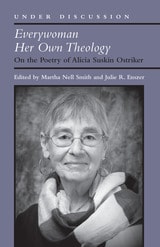
Everywoman Her Own Theology
On the Poetry of Alicia Suskin OstrikerMartha Nell Smith and Julie R. Enszer, Editors
University of Michigan Press, 2018
Everywoman Her Own Theology: On the Poetry of Alicia Suskin Ostriker engages Ostriker’s poetry from throughout her career, including her first volume Songs, her award-winning collection The Imaginary Lover, and her more recent work in the collections No Heaven, the volcano sequence, The Old Woman, the Tulip, and the Dog, and Waiting for the Light. Like her literary criticism and essays, Ostriker’s poetry explores themes of feminism, Jewish life, family, and social justice.
With insightful essays—some newly written for this collection—poets and literary critics including Toi Derricotte, Daisy Fried, Cynthia Hogue, Tony Hoagland, and Eleanor Wilner illuminate and open new pathways for critical engagement with Alicia Ostriker’s lifetime of poetic work.
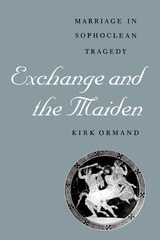
Exchange and the Maiden
Marriage in Sophoclean TragedyBy Kirk Ormand
University of Texas Press, 1999
Marriage is a central concern in five of the seven extant plays of the Greek tragedian Sophocles. In this pathfinding study, Kirk Ormand delves into the ways in which these plays represent and problematize marriage, thus offering insights into how Athenians thought about the institution of marriage.
Ormand takes a two-fold approach. He first explores the legal and economic underpinnings of Athenian marriage, an institution designed to guarantee the legitimate continuation of patrilineal households. He then shows how Sophocles' plays Trachiniae, Electra, Antigone, Ajax, and Oedipus Tyrannus both reinforce and critique this ideology by representing marriage as a homosocial exchange between men, in which women are objects who may attempt—but always fail—to become self-acting subjects.
These fresh readings provide the first systematic study of marriage in Sophocles. They draw important connections between drama and marriage as rituals concerned with controlling potentially disruptive female subjectivities.

Exiled in L.A.
The Untold Story of Leopold Fischer’s Domestic ArchitectureVolker M. Welter
J. Paul Getty Trust, The, 0
In 1936, Leopold Fischer (1901–1975), in exile from Nazi Germany, arrived in California, where he created a small but distinct oeuvre of mostly domestic architecture. In contrast to his famous peers Rudolph Schindler and Richard Neutra, immigrants whose Southern California buildings are frequently examined—and who, like Fischer, studied with the modernist architect Adolf Loos—Fischer and his California structures have, until now, escaped the attention of architectural history.
Exiled in L.A. examines Fischer’s important, yet overlooked, contributions to Southern California architecture. As the whereabouts of Fischer’s archives remain unknown, Volker M. Welter grounds the designer’s California works in comparison with his pre-exile projects and the compositions of fellow architects in California. In the 1920s, Fischer created experimental working-class housing estates in Germany that pioneered ecological construction and living practices. Comparable to their predecessors, Fischer's California buildings revolve around the “functioning, the organization of a home,” as he defined domestic architecture in 1926. Featuring new photography and detailed architectural plans, this book is an original contribution to the literature on Southern California’s built heritage.
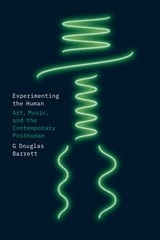
Experimenting the Human
Art, Music, and the Contemporary PosthumanG Douglas Barrett
University of Chicago Press, 2023
In Experimenting the Human, G Douglas Barrett argues that experimental music speaks to the contemporary posthuman, a condition in which science and technology decenter human agency amid the uneven temporality of postwar global capitalism. Time moves forward for some during this period, while it seems to stand still or even move backward for others. Some say we’re already posthuman, while others endure the extended consequences of never having been considered fully human in the first place. Experimental music reflects on this state, Barrett contends, through its interdisciplinary involvements in postwar science, technology, and art movements.
Rather than pursuing the human's beyond, experimental music addresses the social and technological conditions that support such a pursuit. Barrett locates this tendency of experimentalism throughout its historical entanglements with cybernetics, and in his intimate analysis of Alvin Lucier’s neurofeedback music, Pamela Z’s BodySynth performances, Nam June Paik’s musical robotics, Pauline Oliveros’s experiments with radio astronomy, and work by Laetitia Sonami, Yasunao Tone, and Jerry Hunt. Through a unique meeting of music studies, media theory, and art history, Experimenting the Human provides fresh insights into what it means to be human.
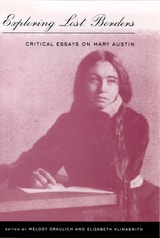
Exploring Lost Borders
Critical Essays On Mary AustinMelody Graulich
University of Nevada Press, 1999
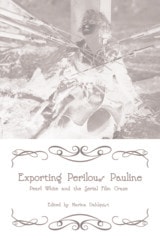
Exporting Perilous Pauline
Pearl White and Serial Film CrazeEdited by Marina Dahlquist
University of Illinois Press, 2013