Results by title
8812 books match the query 'Political Science' and 246 start with e
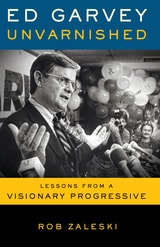
Ed Garvey Unvarnished
Lessons from a Visionary ProgressiveRob Zaleski
University of Wisconsin Press, 2019
Shortly before he died, Garvey expressed his views on everything in a series of detailed, no-holds-barred interviews with journalist Rob Zaleski. In his trademark witty, blunt, and often abrasive style, he offered his impressions of the political climate, worries about the environment, and Act 10 protests on Capitol Square. Garvey's candor during these conversations provides deeper insight into the personal highs and lows he experienced over his rich life. Diehard followers will fondly remember his energetic campaigns, but they may be surprised to learn of his long-simmering disappointment after those losses. Ever timely and meaningful, Garvey's words offer a path for how the Democratic Party, both within Wisconsin and nationally, can regain its soul.

Edges of the State
John Protevi
University of Minnesota Press, 2019
Using philosophical and scientific work to engage the perennial question of human nature
This book takes a look at the formation, and edges, of states: their breakdowns and attempts to repair them, and their encounters with non-state peoples. It draws upon anthropology, political philosophy, neuroscience, evolutionary biology, child developmental psychology, and other fields to look at states as projects of constructing “bodies politic,” where the civic and the somatic intersect. John Protevi asserts that humans are predisposed to “prosociality,” or being emotionally invested in social partners and patterns. With readings from Jean-Jacques Rousseau and James C. Scott; a critique of the assumption of widespread pre-state warfare as a selection pressure for the evolution of human prosociality and altruism; and an examination of the different “economies of violence” of state and non-state societies, Edges of the State sketches a notion of prosocial human nature and its attendant normative maxims.
Forerunners: Ideas First
Short books of thought-in-process scholarship, where intense analysis, questioning, and speculation take the lead

Edited Clean Version
Technology and the Culture of ControlRaiford Guins
University of Minnesota Press, 2009
Where is censorship in the age of digital technology?
Not long ago it would have been an absurd idea to purchase a television, CD or MP3 or DVD player, computer software, or game console with the intention of limiting its capabilities. However, as Raiford Guins demonstrates in Edited Clean Version, today’s media technology is marketed and sold for what it does not contain and what it will not deliver.
TVs equipped with V-chips, Internet filters, editing DVD players, clean-version CDs and MP3s, and game consoles with parental control features can block out, monitor, disable, and filter information. As Guins argues in this provocative book, consumers now find themselves in new relationships with their everyday media in which they inscribe their viewing, listening, and playing experiences with self-prescribed and technologically enabled values and morals. Censorial practices are not so much enacted on media by regulatory bodies today as they are in our media technology.According to Guins, these new “control technologies” are designed to embody an ethos of neoliberal governance—through the very media that have been previously presumed to warrant management, legislation, and policing. Repositioned within a discourse of empowerment, security, and choice, the action of regulation, he reveals, has been relocated into the hands of users.
Educated by Initiative
The Effects of Direct Democracy on Citizens and Political Organizations in the American StatesDaniel A. Smith and Caroline J. Tolbert
University of Michigan Press, 2004
--Kristina Wilfore, Executive Director, Ballot Initiative Strategy Center and Foundation
Educated by Initiative moves beyond previous evaluations of public policy to emphasize the educational importance of the initiative process itself. Since a majority of ballots ultimately fail or get overturned by the courts, Smith and Tolbert suggest that the educational consequences of initiative voting may be more important than the outcomes of the ballots themselves. The result is a fascinating and thoroughly-researched book about how direct democracy teaches citizens about politics, voting, civic engagement and the influence of special interests and political parties. Designed to be accessible to anyone interested in the future of American democracy, the book includes boxes (titled "What Matters") that succinctly summarize the authors' data into easily readable analyses.
Daniel A. Smith is Associate Professor of Political Science at the University of Florida.
Caroline J. Tolbert is Associate Professor of Political Science at Kent State University.
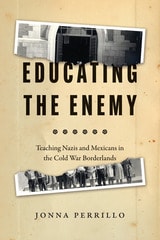
Educating the Enemy
Teaching Nazis and Mexicans in the Cold War BorderlandsJonna Perrillo
University of Chicago Press, 2022
Educating the Enemy begins with the 144 children of Nazi scientists who moved to El Paso, Texas, in 1946 as part of the military program called Operation Paperclip. These German children were bused daily from a military outpost to four El Paso public schools. Though born into a fascist enemy nation, the German children were quickly integrated into the schools and, by proxy, American society. Their rapid assimilation offered evidence that American public schools played a vital role in ensuring the victory of democracy over fascism.
Jonna Perrillo not only tells this fascinating story of Cold War educational policy, but she draws an important contrast with another, much more numerous population of children in the El Paso public schools: Mexican Americans. Like everywhere else in the Southwest, Mexican American children in El Paso were segregated into “Mexican” schools, where the children received a vastly different educational experience. Not only were they penalized for speaking Spanish—the only language all but a few spoke due to segregation—they were tracked for low-wage and low-prestige careers, with limited opportunities for economic success. Educating the Enemy charts what two groups of children—one that might have been considered the enemy, the other that was treated as such—reveal about the ways political assimilation has been treated by schools as an easier, more viable project than racial or ethnic assimilation.
Listen to an interview with the author here and read an interview in Time and a piece based on the book in the Boston Review.
Education and Democratic Citizenship in America
Norman H. Nie, Jane Junn, and Kenneth Stehlik-Barry
University of Chicago Press, 1996
Norman H. Nie, Jane Junn, and Kenneth Stehlik-Barry provide answers by uncovering the causal relationship between education and democratic citizenship. They argue that citizenship encompasses both political engagement in pursuit of interests and commitment to democratic values that temper what citizens can do to win in politics. Education affects the two dimensions in distinct ways. Especially significant is the influence of education on political engagement through occupational prominence and position in social networks. Formal education orders the distribution of social position and connections and creates an uneven political playing field.
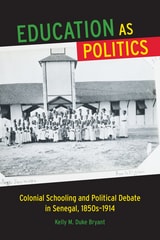
Education as Politics
Colonial Schooling and Political Debate in Senegal, 1850s–1914Kelly M. Duke Bryant
University of Wisconsin Press, 2015
Kelly M. Duke Bryant demonstrates the critical impact of colonial schooling on Senegalese politics by examining the response to it by Africans from a variety of backgrounds and statuses—including rural chiefs, Islamic teachers, and educated young urbanites. For those Africans who chose to engage with them, the French schools in Senegal provided a new source of patronage, a potentially beneficial connection to the bureaucratizing colonial state, a basis for claims to authority or power, or an arena in which to debate pressing issues like the future of Qur’anic schooling and the increasing racism of urban society under colonial rule.
Based on evidence from archives in Senegal and France, and on interviews Duke Bryant conducted in Senegal, she demonstrates that colonial schooling remade African politics during this period of transition to French rule, creating political spaces that were at once African and colonial, and ultimately allowing Diagne to claim election victory.
Education, Justice, and Democracy
Edited by Danielle Allen and Rob Reich
University of Chicago Press, 2013
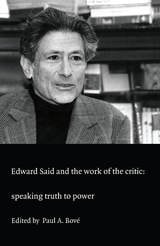
Edward Said and the Work of the Critic
Speaking Truth to PowerPaul A. Bové, ed.
Duke University Press, 2000
In two separate interviews, Said himself comments on a variety of topics, among them the response of the American Jewish community to his political efforts in the Middle East. Yet even as the Palestinian struggle finds a central place in his work, it is essential—as the contributors demonstrate—to see that this struggle rests on and gives power to his general "critique of colonizers" and is not simply the outgrowth of a local nationalism. Perhaps more than any other person in the United States, Said has changed how the U.S. media and American intellectuals must think about and represent Palestinians, Islam, and the Middle East. Most importantly, this change arises not as a result of political action but out of a potent humanism—a breadth of knowledge and insight that has nourished many fields of inquiry. Originally a special issue of boundary 2, the book includes new articles on minority culture and on orientalism in music, as well as an interview with Said by Jacqueline Rose.
Supporting the claim that the last third of the twentieth century can be called the "Age of Said," this collection will enlighten and engage students in virtually any field of humanistic study.
Contributors. Jonathan Arac, Paul A. Bové, Terry Cochran, Barbara Harlow, Kojin Karatani, Rashid I. Khalidi, Sabu Kohsu, Ralph Locke, Mustapha Marrouchi, Jim Merod, W. J. T. Mitchell, Aamir R. Mufti, Jacqueline Rose, Edward W. Said, Gayatri Chakravorty Spivak, Lindsay Waters
Effective Social Science
Eight Cases in Economics, Political Science, and SociologyBernard Barber
Russell Sage Foundation, 1987

Egypt Land
Race and Nineteenth-Century American EgyptomaniaScott Trafton
Duke University Press, 2004
Drawing on literary and cultural studies, art and architectural history, political history, religious history, and the histories of archaeology and ethnology, Trafton illuminates anxieties related to race in different manifestations of nineteenth-century American Egyptomania, including the development of American Egyptology, the rise of racialized science, the narrative and literary tradition of the imperialist adventure tale, the cultural politics of the architectural Egyptian Revival, and the dynamics of African American Ethiopianism. He demonstrates how debates over what the United States was and what it could become returned again and again to ancient Egypt. From visions of Cleopatra to the tales of Edgar Allan Poe, from the works of Pauline Hopkins to the construction of the Washington Monument, from the measuring of slaves’ skulls to the singing of slave spirituals—claims about and representations of ancient Egypt served as linchpins for discussions about nineteenth-century American racial and national identity.

El Dorado In West Africa
The Gold Mining Frontier, African Labor, and Colonial CapitalismRaymond E. Dumett
Ohio University Press, 1998
The second half of the nineteenth century witnessed some of the greatest gold mining migrations in history when dreams of bonanza lured thousands of prospectors and diggers to the far corners of the earth—including the Gold Coast of West Africa.
El Dorado in West Africa explores the first modern gold rush of Ghana in all of its dimensions—land, labor, capital, traditional African mining, technology, transport, management, the clash of cultures, and colonial rule. The rich tapestry of events is crisscrossed by unexpected ironies and paradoxes.
Professor Dumett tells the story of the expatriate-led gold boom of 1875-1900 against the background of colonial capitalism. Through the use of oral data, he also brings to light the expansion of a parallel “African gold mining frontier,” which outpaced the expatriate mining sector.
African women, kings and chiefs, and the ordinary Akan farmer/miners, as well as European engineers and speculators, are the focal points of this study. It probes in depth the productive and developmental features and the turbulent and shattering effects of mining capitalism on African societies.
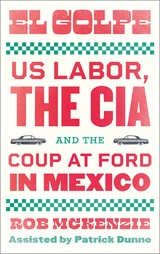
El Golpe
US Labor, the CIA, and the Coup at Ford in MexicoRob McKenzie
Pluto Press, 2022
'Early in my research, a friend with excellent knowledge of the United Auto Workers internal operations told me, "Don't give up. They are hiding something"…'
It's 1990, and US labor is being outsourced to Mexico. Rumors of a violent confrontation at the Mexican Ford Assembly plant on January 8 reach the United Auto Workers (UAW) union in the US: nine employees had been shot by a group of drunken thugs and gangsters, in an act of political repression which changed the course of Mexican and US workers' rights forever.
Rob McKenzie was working at the Ford Twin Cities Assembly plant in Minnesota when he heard of the attack. He didn't believe the official story, and began a years-long investigation to uncover the truth. His findings took him further than he expected - all the way to the doors of the CIA.
Virtually unknown outside of Mexico, the full story of 'El Golpe', or 'The Coup', is a dark tale of political intrigue that still resonates today.

El Paso
Local Frontiers At A Global CrossroadsVictor M. Ortiz-Gonzalez
University of Minnesota Press, 2004
A grounded and instructive analysis of the ways globalization affects a border city
Every marker of social difference can be easily interpreted in the fashionable language of “borderlands”—and if so, as Victor M. Ortiz-Gonzalez reveals, the practical reality of the border region is often grossly misrepresented and its people woefully served. He argues that amid the tantalizing abstractions generated by the sweeping reconfigurations of globalization, people in cities like El Paso and Ciudad Juárez, on the U.S.–Mexican border, are actually living the gritty realities of a new world order.
With descriptions of grassroots initiatives to confront the challenges and opportunities that NAFTA represents for the city, El Paso challenges us to acknowledge and address the conceptual and sociopolitical tasks of a world in which abstract representations and non-local interests override concrete situations. Ortiz-Gonzalez also provides an in-depth analysis of groups such as La Mujer Obrera, Unite El Paso, and the Hispanic Chamber of Commerce and their attempts to give local residents and workers more autonomy and power.Balancing ethnographic detail with precise theoretical insights, El Paso offers a compelling case study and a stirring call to understand both the conceptual challenge and the social urgency of the effects of globalization in local settings.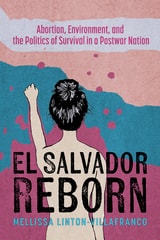
El Salvador Reborn
Abortion, Environment, and the Politics of Survival in a Postwar NationMellissa Linton-Villafranco
University of Arizona Press, 2026
El Salvador Reborn examines the nation’s efforts to reshape its identity after the Peace Accords amid declining Cold War tensions. The book explores the criminalization of abortion and environmental activism in postwar El Salvador by focusing on two key organizations, Agrupación Ciudadana por la Despenalización del Aborto and Foro del Agua, highlighting their political strategies during a critical moment in El Salvador’s formation.
Author Mellissa Linton-Villafranco critically analyzes the political shift under the right-wing party, which sought to redefine notions of life and sovereignty. Historically associated with death squads, the right repositioned itself as a pro-life force by criminalizing abortion, amending the constitution to declare life begins at conception, and imposing penalties of up to thirty years. These measures marginalized women’s autonomy, creating a repressive legal environment centered on fetal rights. In response, feminist groups mobilized through protests, online campaigns, transnational alliances, and public art, advocating for reproductive justice that encompasses gender-based violence, health, and environmental sustainability.
Linton-Villafranco makes the case for a holistic conception of life that integrates land, body, and community sovereignty, weaving reproductive justice with environmental activism to promote a broader, interconnected understanding of life and rights in El Salvador.
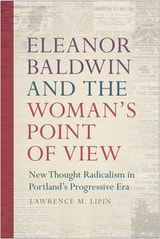
Eleanor Baldwin and the Woman's Point of View
New Thought Radicalism in Portland’s Progressive EraLawrence M. Lipin
Oregon State University Press, 2017
A century before the Occupy movement and the Women’s March, Baldwin spoke truth to power. Imbued with a New Thought spirituality that presumed progressive thought could directly affect material reality, she wrote to move history forward. And yet, the trajectory of history proved as hard to forecast then as now. While her personal story seems to embody a modern progressivism, blending abolition with labor reform and anti-banker activism—positions from which she never wavered—her path grew more complicated as times changed in the aftermath of World War I, when she would advocate on behalf of both the Bolsheviks and the Ku Klux Klan.
In this deeply researched and nuanced account of Eleanor Baldwin’s intellectual journey, historian Larry Lipin reveals how even the most dedicated radical can be overcome by unforeseen events. Eleanor Baldwin and the Woman’s Point of View restores a missing chapter in Portland’s Progressive Era history and rescues this passionate, intriguing, and quixotic character from undeserved obscurity.
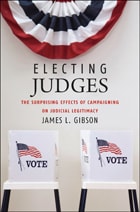
Electing Judges
The Surprising Effects of Campaigning on Judicial LegitimacyJames L. Gibson
University of Chicago Press, 2012
Electing a President
The Markle Commission Research on Campaign '88By Bruce Buchanan, Lloyd N. Morrisett, and Robert M. O'Neil
University of Texas Press, 1991
The image of a prison with a revolving door helped George Bush win the presidency in 1988, but did negative advertising damage the electoral process itself? Why did campaign ’88 represent an all-time low in the minds of many voters? These are some of the questions that impel this thought-provoking analysis of the 1988 presidential election, sponsored by the John and Mary R. Markle Foundation.
Using extensive empirical studies of the candidates, the media, and the voters, Bruce Buchanan, executive director of the Markle Commission on the Media and the Electorate, traces the roots of popular dissatisfaction with the 1988 election. Buchanan argues that the campaign drifted too far from popular ideals of how democratic processes ought to work—that the substitution of negative advertising and quickie “sound bites” for reasoned debate on national problems and issues alienated much of the electorate, causing the lowest voter turnout in sixty-four years.
Negative campaigning, however, cannot bear the full blame for the 1988 election. While the Markle Commission offers specific recommendations for improvements in candidate and media performance, the great need, says Buchanan, is for voters to reclaim the electoral process, to insist that candidates and the media give enough information about positions and programs for voters to make informed choices. Voters need to be educated out of the idea that democratic elections and representative government can somehow occur without the participation of ordinary citizens.
At a time when the American democratic process is being used as a model by newly independent nations around the world, it is particularly appropriate to ask how well it works at home. Electing a President does just that.
Elections and Political Order in Russia
Peter Lentini
Central European University Press, 1995
Elections in Australia, Ireland, and Malta under the Single Transferable Vote
Reflections on an Embedded InstitutionShaun Bowler and Bernard Grofman, Editors
University of Michigan Press, 2000
Elections in Japan, Korea, and Taiwan under the Single Non-Transferable Vote
The Comparative Study of an Embedded InstitutionBernard Grofman, Sung-Chull Lee, Edwin A. Winckler, and Brian Woodall, Editors
University of Michigan Press, 1999
Electoral Campaigns, Media, and the New World of Digital Politics
David Taras and Richard Davis, Editors
University of Michigan Press, 2022
Today, political leaders and candidates for office must campaign in a multimedia world through traditional forums—newspapers, radio, and television—as well as new digital media, particularly social media. Electoral Campaigns, Media, and the New World of Digital Politics chronicles how Twitter, Facebook, Reddit, email, and memes are used successfully and unsuccessfully to influence elections. Each of these platforms have different affordances and reach various audiences in different ways. Campaigns often have to wage different campaigns on each of these mediums. In some instances, they are crucial in altering coverage in the mainstream media. In others, digital media remains underutilized and undeveloped. As has always been the case in politics, outcomes that depend on economic and social conditions often dictate people’s readiness for certain messages. However, the method and content of those messages has changed with great consequences for the health and future of democracy.
This book answers several questions: How do candidates/parties reach audiences that are preoccupied, inattentive, amorphous, and bombarded with so many other messages? How do they cope with the speed of media reporting in a continuous news cycle that demands instantaneous responses? How has media fragmentation altered the campaign styles and content of campaign communication, and general campaign discourse? Finally and most critically, what does this mean for how democracies function?
Electoral Democracy
Michael B. MacKuen and George Rabinowitz, Editors
University of Michigan Press, 2003
Michael B. MacKuen is Burton Craige Professor of Political Science at the University of North Carolina. George Rabinowitz is Burton Craige Professor of Political Science at the University of North Carolina.
Electoral Dynamics in Indonesia
Money Politics, Patronage and Clientelism at the GrassrootsEdited by Edward Aspinall and Mada Sukmajati
National University of Singapore Press, 2016
Electoral Dynamics in the Philippines
Money Politics, Patronage and Clientelism at the GrassrootsEdited by Allen Hicken, Edward Aspinall, and Meredith Weiss
National University of Singapore Press, 2019
Electoral Incentives in Congress
Jamie L. Carson and Joel Sievert
University of Michigan Press, 2018
Electoral Reform and Democracy in Malaysia
Edited by Helen Ting M. H. and Donald L. Horowitz
National University of Singapore Press, 2023
Electoral Reform and the Fate of New Democracies
Lessons from the Indonesian CaseSarah Shair-Rosenfield
University of Michigan Press, 2019
When and why do democratic political actors change the electoral rules, particularly regarding who is included in a country’s political representation? The incidences of these major electoral reforms have been on the rise since 1980.
Electoral Reform and the Fate of New Democracies argues that elite inexperience may constrain self-interest and lead elites to undertake incremental approaches to reform, aiding the process of democratic consolidation. Using a multimethods approach, the book examines three consecutive periods of reform in Indonesia, the world’s largest Muslim majority country and third largest democracy, between 1999 and 2014. Each case study provides an in-depth process tracing of the negotiations leading to new reforms, including key actors in the legislature, domestic civil society, international experts, and government bureaucrats. A series of counterfactual analyses assess the impact the reforms had on actual election outcomes, versus the possible alternative outcomes of different reform options discussed during negotiations. With a comparative analysis of nine cases of iterated reform processes in other new democracies, the book confirms the lessons from the Indonesian case and highlights key lessons for scholars and electoral engineers.

Electric Mountains
Climate, Power, and Justice in an Energy TransitionShaun A. Golding
Rutgers University Press, 2021
Committed environmentalists in one of North America’s most progressive regions desperately wanted energy policies that address the climate crisis. For many of them, wind turbines on Northern New England’s iconic ridgelines symbolize the energy transition that they have long hoped to see. For others, however, ridgeline wind takes on a very different meaning. When weighing its costs and benefits locally and globally, some wind opponents now see the graceful structures as symbols of corrupted energy politics.
This book derives from several years of research to make sense of how wind turbines have so starkly split a community of environmentalists, as well as several communities. In doing so, it casts a critical light on the roadmap for energy transition that Northern New England’s ridgeline wind projects demarcate. It outlines how ridgeline wind conforms to antiquated social structures propping up corporate energy interests, to the detriment of the swift de-carbonizing and equitable transformation that climate predictions warrant. It suggests, therefore, that the energy transition of which most of us are a part, is probably not the transition we would have designed ourselves, if we had been asked.
Electrifying Indonesia
Technology and Social Justice in National DevelopmentAnto Mohsin
University of Wisconsin Press, 2023
Elementary Aspects of the Political
Histories from the Global SouthPrathama Banerjee
Duke University Press, 2020
Elements of Econometrics
Second EditionJan Kmenta
University of Michigan Press, 1997
Throughout the book the emphasis is on simplification whenever possible, assuming the readers know college algebra and basic calculus. Jan Kmenta explains all methods within the simplest framework, and generalizations are presented as logical extensions of simple cases. And while a relatively high degree of rigor is preserved, every conflict between rigor and clarity is resolved in favor of the latter. Apart from its clear exposition, the book's strength lies in emphasizing the basic ideas rather than just presenting formulas to learn and rules to apply.
The book consists of two parts, which could be considered jointly or separately. Part one covers the basic elements of the theory of statistics and provides readers with a good understanding of the process of scientific generalization from incomplete information. Part two contains a thorough exposition of all basic econometric methods and includes some of the more recent developments in several areas.
As a textbook, Elements of Econometrics is intended for upper-level undergraduate and master's degree courses and may usefully serve as a supplement for traditional Ph.D. courses in econometrics. Researchers in the social sciences will find it an invaluable reference tool.
A solutions manual is also available for teachers who adopt the text for coursework.
Jan Kmenta is Professor Emeritus of Economics and Statistics, University of Michigan.
Elite Images of Dutch Politics
Accommodation and ConflictSamuel J. Eldersveld, Jan Kooiman, and Theo van der Tak
University of Michigan Press, 1981
Elite-Led Mobilization and Gay Rights
Dispelling the Myth of Mass Opinion BacklashBenjamin George Bishin, Thomas J. Hayes, Matthew B. Incantalupo, and Charles Anthony Smith
University of Michigan Press, 2021
Media and scholastic accounts describe a strong public opinion backlash—a sharply negative and enduring opinion change—against attempts to advance gay rights. Academic research, however, increasingly questions backlash as an explanation for opposition to LGBT rights. Elite-Led Mobilization and Gay Rights argues that what appears to be public opinion backlash against gay rights is more consistent with elite-led mobilization—a strategy used by anti-gay elites, primarily white evangelicals, seeking to prevent the full incorporation of LGBT Americans in the polity in order to achieve political objectives and increase political power. This book defines and tests the theory of Mass Opinion Backlash and develops and tests the theory of Elite-Led Mobilization by employing a series of online and natural experiments, surrounding the U.S. Supreme Court rulings in Obergefell v. Hodges and United States v. Windsor, and President Obama’s position change on gay marriage. To evaluate these theories, the authors employ extensive survey, voting behavior, and campaign finance data, and examine the history of the LGBT movement and its opposition by religious conservatives, from the Lavender Scare to the campaign against Trans Rights in the defeat of Houston’s 2015 HERO ordinance. Their evidence shows that opposition to LGBT rights is a top-down process incited by anti-gay elites rather than a bottom-up reaction described by public opinion backlash.
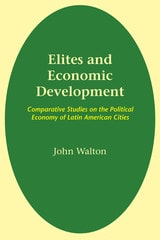
Elites and Economic Development
Comparative Studies on the Political Economy of Latin American CitiesBy John Walton
University of Texas Press, 1977
This book is a detailed comparative analysis of development politics in four urban regions of Latin America, two in Mexico and two in Colombia. John Walton has based his studies on the assumption that the problems of economic growth are essentially political, that is, are problems of choice, decision-making, and the exercise of power. His fundamental purpose has been to discover how elites of different kinds are more and less successful in the promotion of economic development, which he defines as a process in the organization of a society leading not only to higher levels of efficient output but also to a more equitable distribution of benefits.
At the time, the four cities compared were the second- and third-largest metropolitan areas in each country, Guadalajara and Monterrey in Mexico, Medellín and Cali in Colombia. This selection allows the author to pair, across countries, cases of early and large-scale industrialization (Monterrey and Medellín) with cases of more recent industrial growth in agricultural-commercial centers (Guadalajara and Cali). Walton presents historical introductions to each of the regions and integrates these with original fieldwork and interviews with more than three hundred members of the political and economic elites.
The findings are extensive, but in general they demonstrate that where political and economic power is more broadly distributed, where elites are more open and accessible, and where organizational life is more active and coordinated, regions tend to develop qualitatively as well as quantitatively, showing increases both in productivity and in such benefits as public services, housing, education, and a more balanced distribution of income. If these characteristics are absent, regions may be industrialized but do not provide a broad sharing of the benefits. Walton places a good deal of emphasis on the role of foreign investments, demonstrating that the more penetrated regions are also the less developed.
Finally, the results of these studies are used to evaluate and advance theories of underdevelopment and particularly of economic dependency.

Elizabeth Detention Center
A Social History of Immigration Detention in New Jersey and the United StatesUlla D. Berg
Rutgers University Press, 2026
The United States detains and deports several hundred thousand migrants every year. Many spend significant amounts of time in immigration detention as they await adjudication of their immigration cases. The Elizabeth Detention Center in New Jersey is located in a converted warehouse, managed by a private, for-profit prison company. Over three decades, migrants and asylum seekers have been brought to EDC directly from Newark Airport or have been transferred to the site from elsewhere in the United States, including from the US-Mexico border region.
Through a longitudinal, site-specific study unique in its kind, this volume unites the voices and perspectives of formerly detained migrants, scholars, journalists, lawyers, and social and faith movement leaders, who share their experiences of Elizabeth Detention Center and reconstruct its social history and its location in New Jersey's political economy and in the changing legal landscapes of immigration detention in the United States.
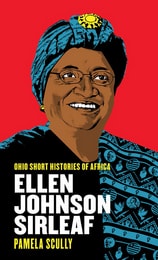
Ellen Johnson Sirleaf
Pamela Scully
Ohio University Press, 2016
In this timely addition to the Ohio Short Histories of Africa series, Pamela Scully takes us from the 1938 birth of Nobel Peace Prize winner and two-time Liberian president Ellen Johnson through the Ebola epidemic of 2014–15. Charting her childhood and adolescence, the book covers Sirleaf’s relationship with her indigenous grandmother and urban parents, her early marriage, her years studying in the United States, and her career in international development and finance, where she developed her skill as a technocrat. The later chapters cover her years in and out of formal Liberian politics, her support for women’s rights, and the Ebola outbreak.
Sirleaf’s story speaks to many of the key themes of the twenty-first century. Among these are the growing power of women in the arenas of international politics and human rights; the ravaging civil wars in which sexual violence is used as a weapon; and the challenges of transitional justice in building postconflict societies. Ellen Johnson Sirleaf is an astute examination of the life of a pioneering feminist politician.

Elly Peterson
"Mother" of the ModeratesSara Fitzgerald
University of Michigan Press, 2012
"A magisterially written, well-researched, informative, and entertaining biography of a woman who helped throw open the doors to broader participation and power for women in the Republican Party and American politics."
---Dave Dempsey, author of William G. Milliken: Michigan's Passionate Moderate
"Elly Peterson will be a text to which historians and researchers turn for insight into the yin and yang of mainstream politics in the mid-century."
---Patricia Sullivan, past president, Journalism and Women Symposium
"This lively portrait of a leading woman in the Republican Party between 1952 and 1982 also charts the party's shift to the right after 1964, revealingly viewed through the eyes of liberal Republican women. Intensively researched with ethnographic attention to the subtleties of political culture, Fitzgerald's book is essential reading for anyone interested in how the Republican Party changed during the turbulent decades after 1960 and how women and women's issues shaped those changes."
---Kathryn Kish Sklar, Distinguished Professor of History, State University of New York, Binghamton
"Sara Fitzgerald tells Peterson's story in this superb and timely biography. It carries a message that deserves the widest audience as the nation struggles to find needed consensus on critical issues amid poisonous political partisanship that has made it increasingly difficult for public officials to bridge their differences. I hope that every American reads it."
---Pulitzer Prize winner Haynes Johnson, from the Foreword
"To understand the quest for equal rights in America you really need to meet those women who were active at the time of transition. In this gripping biography we meet one woman who entered a male dominated world and triumphed."
---Francis X. Blouin Jr., Director, Bentley Historical Library
"Sara Fitzgerald's writing is as intelligent as it is entertaining."
---Best-selling novelist Diane Chamberlain
Elly Peterson was one of the highest ranking women in the Republican Party. In 1964 she ran for a Michigan seat in the U.S. Senate and became the first woman to serve as chair of the Michigan Republican Party. During the 1960s she grew disenchanted with the increasing conservatism of her party, united with other feminists to push for the Equal Rights Amendment and reproductive choice, battled Phyllis Schlafly to prevent her from gaining control of the National Federation of Republican Women, and became an independent.
Elly Peterson's story is a missing chapter in the political history of Michigan, as well as the United States. This new biography, written by Sara Fitzgerald (a Michigan native and former Washington Post editor), finally gives full credit to one of the first female political leaders in this country.
When Peterson resigned in 1970 as assistant chairman of the Republican National Committee, David Broder of the Washington Post wrote that "her abilities would have earned her the national chairmanship, were it not for the unwritten sex barrier both parties have erected around that job."

Elsewhere
How the US Food System Cultivates, Consumes, and Conceals Its ViolenceStian Rice
West Virginia University Press, 2026
Elsewhere argues that you can make all of the “smart” food choices you want and follow Michael Pollan to the letter, but that won’t end the violence in the food system. Eating is an act of violence. With every life-sustaining meal and food purchase, we shorten the lives of farmers, laborers, animals, the planet, and ourselves. This isn’t a symptom of a broken food system, but a feature of a working one: our capitalist food system doesn’t cause harm accidentally, it does so because it has to. To keep generating wealth, the system moves its violence around, away from privileged producers and consumers and into forgettable elsewheres: reservations, prisons, distant islands, killing floors, inner cities, rural hinterlands, and war-torn countries.
This shell-game is not new. Elsewhere examines the 250-year history of the US food system to uncover how the country used abundance to enrich some and exploit others; how it captured, colonized, and reorganized territory to conceal its harms; and why decades of technological innovation, environmental awareness, and consumer consciousness haven’t staunched these self-inflicted wounds. Elsewhere invites us to ask different questions about the food system: where does its violence come from, where does it go, and how can we nurture a food system that first does no harm.
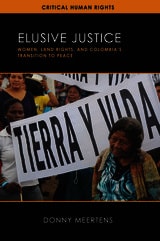
Elusive Justice
Women, Land Rights, and Colombia's Transition to PeaceDonny Meertens
University of Wisconsin Press, 2019
Drawing on decades of research, Elusive Justice demonstrates how these women continue to face numerous adverse circumstances, including geographical isolation, encroaching capitalist enterprises, and a dearth of social and institutional support. Donny Meertens contends that women's advocacy organizations must have a prominent role in overseeing these transitional policies in order to create a more just society. By bringing together the underresearched topic of property repayment and the pursuit of gender justice in peacebuilding, these findings have broad significance elsewhere in the world.
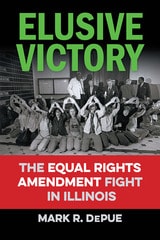
Elusive Victory
The Equal Rights Amendment Fight in IllinoisMark R. DePue
Southern Illinois University Press, 2026
Inside the Illinois showdown that derailed the Equal Rights Amendment
In this gripping account of one of the most consequential political battles of the twentieth century, Mark R. DePue takes readers inside the fight that halted the Equal Rights Amendment. Drawing upon hundreds of hours of original oral history interviews, DePue reconstructs the drama, strategy, and emotion of the ERA showdown in Illinois, the state that became the amendment’s most critical battleground.
First introduced in Congress in 1923, the Equal Rights Amendment has endured for more than a century as one of the most debated yet still unratified proposals in American constitutional history. Its ratification seemed closer than ever when Congress passed the ERA in 1972 and sent it to the states with a seven-year deadline, but in Illinois, a constitutional quirk stalled its momentum. Optimism faltered, and what followed was a political war like no other the state had ever seen. Illinois’ state legislature in Springfield became the epicenter of a national struggle over gender, power, and the future of the Constitution.
At the center of the storm stood Phyllis Schlafly, the formidable conservative activist from Alton, Illinois, whose STOP ERA movement transformed a faltering amendment into a rallying cry for the New Right. Opposing her and her allies was an array of feminist organizers, legislators, celebrities, clergy, union members, and grassroots activists—often divided among themselves—who believed that equality under the law was within reach. Bringing creativity, passion, and persistence to the cause, they staged inventive demonstrations, lobbied relentlessly, and fought for every vote.
What sets this book apart are its extraordinary cast of characters and the chance DePue gives them to speak for themselves. Through vivid first-person testimony gathered at the Abraham Lincoln Presidential Library and the University of Illinois Springfield, supporters and opponents alike reflect on their motivations, fears, strategies, and regrets. Their voices bring to life the packed committee hearings, late-night strategy sessions, and personal sacrifices behind the headlines.
By 1982, the amendment fell three states short of ratification nationwide. Illinois never delivered the votes that might have changed history.
More than a political chronicle, this is a story of conviction and conflict, ambition and compromise. It is the story of how a century-old amendment came tantalizingly close to becoming law—and how, in one state capitol, the battle over women’s equality reshaped a movement and left a constitutional promise still unfinished.
Emancipation without Abolition in German East Africa, c. 1884–1914
Jan-Georg Deutsch
Ohio University Press, 2006
This study examines the complex history of slavery in East Africa, focusing on the area that came under German colonial rule. In contrast to the policy pursued at the time by other colonial powers in Africa, the German authorities did not legally abolish slavery in their colonial territories. However, despite government efforts to keep the institution of slavery alive, it significantly declined in Tanganyika in the period concerned. The book highlights the crucial role played by the slaves in the process of emancipation.
Author Jan-Georg Deutsch explores the rise of slavery in Tanganyika in the second half of the nineteenth century, when the region became more fully integrated into the world economy.
An analysis of German colonial policy reveals that the authorities believed that abolition should be avoided at all costs since it would undermine the power and prosperity of the local slave-owning elites whose effective collaboration was thought to be indispensable to the functioning of colonial rule.
The author demonstrates how slaves by their own initiative brought the ”evil institution“ to an end, making the best of limited choices and opportunities available to them.
The study, of interest to historians of East Africa, makes a contribution to the more general debate about the demise of slavery on the continent.
Embedded Politics
Industrial Networks and Institutional Change in PostcommunismGerald A. McDermott
University of Michigan Press, 2003
Using comparative case analysis of several manufacturing sectors, Embedded Politics accounts for change and continuity in the formation of new economic governance institutions in the Czech Republic. It analytically links the macropolitics of state policy with the micropolitics of industrial restructuring. Thus the book advances an alternative approach for the comparative study of institutional change and industrial adjustment.
As a historical and contemporary analysis of Czech firms and public institutions, this book will command the attention of students of postcommunist reforms, privatization, and political-economic transitions in general. But also given its interdisciplinary approach and detailed empirical analysis of policy-making and firm behavior, Embedded Politics is a must read for scholars of politics, economics, sociology, political economy, business organization, and public policy.
Gerald A. McDermott is Assistant Professor of Management in The Wharton School of Management at The University of Pennsylvania. His research applies recent advances in comparative political economy and industrial organization, including theories of social networks, historical institutionalism, and incomplete markets to analyze issues of economic governance, firm creation, and industrial restructuring in advanced and newly industrialized countries. As evidenced by Embedded Politics, his current focus is on problems of institutional and organizational learning in the formation of meso-level governance institutions in emerging market and postsocialist economies.
McDermott also works as Senior Research Fellow at the IAE Escuela de Direccion y Negocios at Universidad Austral in Buenos Aires, and he has served as Project Coordinator at the Inter-American Development Bank. He has consulted for the Finance, Private Sector, and Infrastructure Division at the World Bank and advised the Deputy Foreign Minister of the Czech Republic. In addition he has published many papers and book chapters on entrepreneurship, privatization, institutions, and networks in Central Europe and Latin America.
Embodiments
From the Body to the Body PoliticJames R. Mensch
Northwestern University Press, 2009
Mensch begins his inquiry by developing a philosophical anthropology based on this concept. He then applies the results of his investigation to the relations of power, authority, freedom, and sovereignty in public life. This involves confronting a line of interpretation, stretching from Hobbes to Agamben, which sees violence as both initiating and preserving the social contract. To contest this interpretation, Mensch argues against its presupposition, which is to equate freedom with sovereignty over others. He does so by understanding political freedom in terms of embodiment—in particular, in terms of the finitude and interdependence that our embodiment entails. Freedom, conceived in these terms, is understood as the gift of others. As a function of our dependence on others, it cannot exist apart from them. To show how public space and civil society presuppose this interdependence is the singular accomplishment of Embodiments. It accomplishes a phenomenological grounding for a new type of political philosophy.
Embodying the Revolution
The Hebrew Experience and the Globalization of Modern Sports in Interwar PalestineOfer Idels
Rutgers University Press, 2026
Embracing Watershed Politics
Edella Schlager
University Press of Colorado, 2008
Enriched by case studies of the organizations and decision making processes in several major U.S. watersheds (the Delaware River Basin, San Gabriel River, Platte River, and the Columbia River Basin), Embracing Watershed Politics presents a reasoned explanation of why there are so few watershed-scale integrated management agencies and how the more diverse multi-organizational arrangements found in the vast majorities of watersheds work. Although the presence of multiple organizations representing a multitude of communities of interest complicates watershed management, these institutional arrangements can-under certain conditions-suit the complexity and uncertainty associated with watershed management in the twenty-first century.
Emergency Presidential Power
From the Drafting of the Constitution to the War on TerrorChris Edelson; Foreword by Louis Fisher
University of Wisconsin Press, 2013
Winner, Crader Family Book Prize in American Values, Department of History and Crader Family Endowment for American Values, Southeast Missouri State University
Emergent Genders
Living Otherwise in Tokyo's Pink EconomiesMichelle H. S. Ho
Duke University Press, 2025
Emerging Threats to Human Rights
Resources, Violence, and Deprivation of CitizenshipHeather Smith-Cannoy
Temple University Press, 2019
As widespread environmental degradation threatens the basic human rights of a large proportion of the world’s population, we are also confronting the worst migration crisis in the modern era. Emerging Threats to Human Rights searches among the interrelated causes of these overlapping crises. The editor and contributors to this timely anthology assess how environmental resources, state violence, and the deprivation of nationality/citizenship are linked to gain a better understanding of how human rights abuses intersect with patterns of migration.
As some refugees flee violence at home, they arrive in an asylum country only to experience violence at the hands of the native population. Likewise, those denied citizenship rights in their country become vulnerable to human traffickers and other rights violations when they flee.
Bringing together scholars of resource dilemmas, violence, and citizenship as well as lawyers and human rights practitioners, Emerging Threats to Human Rights begins by identifying the core causes of human rights violations confronting our world today. Chapters also consider whether and to what extent these emerging threats to human rights serve as drivers of displacement.

Emperors in the Jungle
The Hidden History of the U.S. in PanamaJohn Lindsay-Poland
Duke University Press, 2003
Analyzing new evidence gathered through interviews, archival research, and Freedom of Information Act requests, Lindsay-Poland discloses the hidden history of U.S.–Panama relations, including the human and environmental toll of the massive canal building project from 1904 to 1914. In stunning detail he describes secret chemical weapons tests—of toxins including nerve agent and Agent Orange—as well as plans developed in the 1960s to use nuclear blasts to create a second canal in Panama.
He chronicles sustained efforts by Panamanians and international environmental groups to hold the United States responsible for the disposal of the tens of thousands of explosives it left undetonated on the land it turned over to Panama in 1999. In the context of a relationship increasingly driven by the U.S. antidrug campaigns, Lindsay-Poland reports on the myriad issues that surrounded Panama’s takeover of the canal in accordance with the 1977 Panama Canal Treaty, and he assesses the future prospects for the Panamanian people, land, and canal area. Bringing to light historical legacies unknown to most U.S. citizens or even to many Panamanians, Emperors in the Jungle is a major contribution toward a new, more open relationship between Panama and the United States.