Results by title
4155 books match the query 'State & Local' and 75 start with e
Ethnicity in Michigan
Issues and PeopleJack Glazier
Michigan State University Press, 2001
As the introductory volume in the series Discovering the Peoples of Michigan, Ethnicity in Michigan outlines the processes of migration, as well as the rich relationship between ethnic groups and the trajectories of historical and social change in Michigan. On both state and local levels, issues of identity, race, politics, and shared history inform community development. Jack Glazier and Arthur Helweg provide a substantive general and theoretical overview of the various ethnic groups in Michigan, and of the ways in which immigrants both respond to and shape Michigan's particular regional character.
Etowah
The Political History of a Chiefdom CapitalAdam King
University of Alabama Press, 2002
A Dan Josselyn Memorial Publication
Detailed reconstruction of the waxing and waning of political fortunes among the chiefly elites at an important center of the prehistoric world
At the time the first Europeans arrived in the New World, thousands of earthen platform mounds dotted the landscape of eastern North America. Only a few of the mound sites have survived the ravages of time and the devastation of pilferers; one of these valuable monuments is Etowah, located near Cartersville in northern Georgia. Over a period of more than 100 years, excavations of the site’s six mounds, and in particular Mound C, have yielded a wealth of artifacts, including marble statues, copper embossed plates, ceremonial items, and personal adornments. These objects indicate an extensive trading network between Mississippian centers and confirm contact with Spanish conquistadores near Etowah in the mid-1500s.
Adam King has analyzed the architecture and artifacts of Etowah and deduced its vital role in the prehistory of the area. He advances a plausible historical sequence and a model for the ancient town's complex political structure. The chiefdom society relied upon institutional social ranking, permanent political offices, religious ideology, a redistribution of goods and services, and the willing support of the constituent population. King reveals strategies used by the paramount chiefs to maintain their sources of power and to control changes in the social organization. Elite alliances did not necessarily involve the extreme asymmetry of political domination and tribute extraction. King's use of ceramic assemblages recovered from Etowah to determine the occupation history and the construction sequence of public facilities (mounds and plazas) at the center is significant.
This fresh interpretation of the Etowah site places it in a contemporary social and political context with other Mississippian cultures. It is a one-volume sourcebook for the Etowah polity and its neighbors and will, therefore, command an eager audience of scholars and generalists.

Evangelical Gotham
Religion and the Making of New York City, 1783–1860Kyle B. Roberts
University of Chicago Press, 2016
Every Farm Tells a Story
A Tale of Family ValuesJerry Apps
Wisconsin Historical Society Press, 2018
“Do your chores without complaining. Show up on time. Do every job well. Always try to do better. Never stop learning. Next year will be better. Care for others, especially those who have less than you. Accept those who are different from you. Love the land.”
In this paperback edition of a beloved Jerry Apps classic, the rural historian captures the heart and soul of life in rural America. Inspired by his mother’s farm account books—in which she meticulously recorded every farm purchase—Jerry chronicles life on a small farm during and after World War II. Featuring a new introduction exclusive to this 2nd edition, Every Farm Tells a Story reminds us that, while our family farms are shrinking in number, the values learned there remain deeply woven in our cultural heritage.
Every Goddamn Day
A Highly Selective, Definitely Opinionated, and Alternatingly Humorous and Heartbreaking Historical Tour of ChicagoNeil Steinberg
University of Chicago Press, 2022
Every day in Chicago is a day to remember. In a city so rich with history, every day is the anniversary of some storied historical or cultural moment, whether it’s the dedication of the Pablo Picasso sculpture downtown on August 15, or the arrest of Rod Blagojevich at his Ravenswood home on December 9, or a fire that possibly involved a cow on October 8.
In Every Goddamn Day, acerbic Chicago Sun-Times columnist Neil Steinberg takes the story of the city, pares away the dull, eat-your-peas parts, and provides 366 captivating daily readings in what makes Chicago Chicago and America America. It calls upon a wide cast of characters, from Oscar Wilde to Muhammad Ali, from Emma Goldman to Teddy Roosevelt, and from Richard M. Daley to Fred Hampton, to create a compelling narrative that can be read at a sitting or in a yearlong series of daily doses.
From New Year’s Day to New Years’ Eve, Steinberg takes us on a vivid and entertaining tour, illuminating the famous, obscure, tragic, and hilarious elements that make each day in Chicago memorable.
Every Root an Anchor
Wisconsin's Famous and Historic TreesR. Bruce Allison
Wisconsin Historical Society Press, 2005
In Every Root an Anchor, writer and arborist R. Bruce Allison celebrates Wisconsin's most significant, unusual, and historic trees. More than one hundred tales introduce us to trees across the state, some remarkable for their size or age, others for their intriguing histories. From magnificent elms to beloved pines to Frank Lloyd Wright's oaks, these trees are woven into our history, contributing to our sense of place. They are anchors for time-honored customs, manifestations of our ideals, and reminders of our lives' most significant events.
For this updated edition, Allison revisits the trees' histories and tells us which of these unique landmarks are still standing. He sets forth an environmental message as well, reminding us to recognize our connectedness to trees and to manage our tree resources wisely. As early Wisconsin conservationist Increase Lapham said, "Tree histories increase our love of home and improve our hearts. They deserve to be told and remembered."
Every Sun That Rises
Wyatt Moore of Caddo LakeEdited by Thad Sitton and James H. Conrad
University of Texas Press, 1985
“What I done and what I been accused of covers everything, you put ’em both together.” Wyatt Moore of Caddo Lake exaggerates, but perhaps not very much. During his long life at Caddo Lake, Moore was at various times a boat operator, commercial fisherman, boat builder, farmer, fishing and hunting camp operator, guide, commercial hunter, trapper, raftsman, moonshiner, oil field worker, water well driller, and mechanical jack-of-all-trades. Still, he always found time for his lifelong study of the natural and human history of Caddo Lake. Here, in words as fresh and forceful as the day they were uttered, is his tale.
Moore, who was given the gift of a unique story to tell and great power to tell it, was the historical interpreter of his strange homeland of Caddo Lake. Twenty-three miles long, some forty thousand acres at high water, stretching across two Texas counties and one Louisiana parish, Caddo Lake’s fresh waters merge into a labyrinthine swamp punctuated by inlets, holes, and geological oddities like Goat Island, Whistleberry Slough, Whangdoodle Pass, and the Devil’s Elbow. Here among these lost reminders of steamboats and old bateau men is Moore’s world.
Born in 1901 at Karnack, Texas, Moore grew up in a time when kids wore button shoes and in a place where pigs and chickens roamed the backyard. He drank his first whiskey at age eight, gigged fish, trapped, and hunted for pearls as a boy, and grew up to an easy assurance on the lake that comes only to those long accustomed to its ways. A walking library of the history of Caddo Lake, Moore delved into almost every nook and corner of it, and wherever he went, whatever he did, he sought to learn more about his subect. Sought out by writers and journalists—among them James Michener and Bill Moyers—because of his laconic wit and remarkable command of the region’s story, Moore became known as a resource as precious as the lake itself. Moore’s story is eloquently introduced by Thad Sitton in an opening essay that chronicles the history of Caddo Lake. Striking photographs of Moore at home and at work on the lake beautifully amplify his life story, and an exuberant word-and-picture essay of Moore expertly building the traditional boat of the region, a bateau, reinforces the vivid image we have of this remarkable man.
Everybody's History
Indiana's Lincoln Inquiry and the Quest to Reclaim a President's PastKeith A. Erekson
University of Massachusetts Press, 2012
Revered by the public, respected by scholars, and imitated by politicians, Abraham Lincoln remains influential more than two hundred years after his birth. His memory has inspired books, monuments, and museums and also sparked controversies, rivalries, and forgeries. That so many people have been interested in Lincoln for so long makes him an ideal subject for exploring why history matters to ordinary Americans as well as to academic specialists.
In Everybody's History, Keith A. Erekson focuses on the Southwestern Indiana Historical Society—an organization composed of lawyers, historians, collectors, genealogists, teachers, college presidents, and newspaper editors—who joined together during the 1920s and 1930s to recover a part of Lincoln's life his biographers had long ignored: the years from age seven to twenty-one when he lived on the Indiana frontier. Participants in the “Lincoln Inquiry,” as it was commonly known, researched old records, interviewed aging witnesses, hosted pageants, built a historical village, and presented their findings in public and in print. Along the way they defended their methods and findings against competitors in the fields of public history and civic commemoration, and rescued some of Indiana's own history by correcting a forgotten chapter of Lincoln's.
Everybody's History traces the development of popular interest in Lincoln to uncover the story of an extensive network of nonprofessional historians who contested old authorities and advanced new interpretations. In so doing, the book invites all who are interested in the past to see history as both vital to public life and meaningful to everybody.

Everyday Justice
A Legal Aid StoryAshley Wiltshire
Vanderbilt University Press, 2022
Those surviving on low incomes often see the legal system as an oppressive force stacked against them. Everyday Justice is about lawyers trying to make the law work for these people. This book traces the development and evolution of legal aid in Middle Tennessee from the late 1960s to the turn of the millennium, as told by Ashley Wiltshire, who worked for the Legal Aid Society of Middle Tennessee and the Cumberlands in all its incarnations for four decades, beginning a year after its inception.
Set in the context of the legal aid movement in the United States—beginning as a part of the social awakening in the post–Civil War era, continuing with volunteer efforts in the first part of the twentieth century, and coming to fruition beginning with the OEO Office of Legal Services grants of the 1960s as part of the War on Poverty—Everyday Justice is a story of Nashville, which levied an extended period of opposition because of prevailing cultural and religious views on race and poverty.

Everyday Justice
A Legal Aid StoryAshley Wiltshire
Vanderbilt University Press, 2022
Those surviving on low incomes often see the legal system as an oppressive force stacked against them. Everyday Justice is about lawyers trying to make the law work for these people. This book traces the development and evolution of legal aid in Middle Tennessee from the late 1960s to the turn of the millennium, as told by Ashley Wiltshire, who worked for the Legal Aid Society of Middle Tennessee and the Cumberlands in all its incarnations for four decades, beginning a year after its inception.
Set in the context of the legal aid movement in the United States—beginning as a part of the social awakening in the post–Civil War era, continuing with volunteer efforts in the first part of the twentieth century, and coming to fruition beginning with the OEO Office of Legal Services grants of the 1960s as part of the War on Poverty—Everyday Justice is a story of Nashville, which levied an extended period of opposition because of prevailing cultural and religious views on race and poverty.
Everyday Klansfolk
White Protestant Life and the KKK in 1920s MichiganCraig Fox
Michigan State University Press, 2011
In 1920s Middle America, the Ku Klux Klan gained popularity not by appealing to the fanatical fringes of society, but by attracting the interest of “average” citizens. During this period, the Klan recruited members through the same unexceptional channels as any other organization or club, becoming for many a respectable public presence, a vehicle for civic activism, or the source of varied social interaction. Its diverse membership included men and women of all ages, occupations, and socio-economic standings. Although surviving membership records of this clandestine organization have proved incredibly rare, Everyday Klansfolk uses newly available documents to reconstruct the life and social context of a single grassroots unit in Newaygo County, Michigan. A fascinating glimpse behind the mask of America’s most notorious secret order, this absorbing study sheds light on KKK activity and membership in Newaygo County, and in Michigan at large, during the brief and remarkable peak years of its mass popular appeal.
Everyday Nature
Knowledge of the Natural World in Colonial New YorkGronim, Sara S
Rutgers University Press, 2007
In the modern world, the public looks to scientists and scholars for their expertise on issues ranging from the effectiveness of vaccines to the causes of natural disasters. But for early Americans, whose relationship to nature was more intimate and perilous than our own, personal experience, political allegiances, and faith in God took precedence over the experiments of the learned.
In Everyday Nature, Sara Gronim shows how scientific advances were received in the early modern world, from the time Europeans settled in America until just before the American Revolution. Settlers approached a wide range of innovations, such as smallpox inoculation, maps and surveys, Copernican cosmology, and Ben Franklin’s experiments with electricity, with great skepticism. New Yorkers in particular were distrustful because of the chronic political and religious factionalism in the colony. Those discoveries that could be easily reconciled with existing beliefs about healing the sick, agricultural practices, and the revolution of the planets were more readily embraced.
A fascinating portrait of colonial life, this book traces a series of innovations that were disseminated throughout the Atlantic world during the Enlightenment, and shows how colonial New Yorkers integrated new knowledge into their lives.
Everyone against Us
Public Defenders and the Making of American JusticeAllen Goodman
University of Chicago Press, 2023
As a public defender, Allen Goodman faced cross-examination from family and friends every day: How could he work to help criminals? How could he live with himself? Presumed guilty by association, Goodman quickly learned that people didn’t really want an answer; they wanted a justification, perhaps even an apology. Ever the idealist, Goodman answered anyway: Everyone deserves justice.
Everyone against Us is Goodman’s testimony of his life as a public defender. In it, he documents his efforts to defend clients, both guilty and innocent, against routine police abuse, prosecutorial misconduct, and unjust sentencing. To work in criminal justice, Goodman shows, is to confront and combat vivid human suffering, of both victims and perpetrators. From sex trafficking, murder, and abuse to false conviction, torture, and systemic racism, Goodman describes the daily experiences that both rattled his worldview and motivated him to work ever harder. Part memoir, part exposé, Everyone against Us is the moving story of an embattled civil servant who staves off the worst abuses of the criminal justice system, at great personal cost.
Evolution of a Missouri Asylum
Fulton State Hospital, 1851-2006Richard L. Lael, Barbara Brazos, and Margot Ford McMillen
University of Missouri Press, 2007
This institutional history of the hospital traces the debates surrounding its creation (as the State Lunatic Asylum) in a time when mental illness was barely understood. Although the Fulton hospital was initially conceived as a treatment facility, it quickly transformed into a primarily custodial institution. It existed as a self-sufficient establishment until the mid-twentieth century, dependent on patient labor and even producing its own food. But for the most socially disadvantaged and for the severely delusional, life at Fulton was anything but therapeutic.
The book describes not only the lofty goals of professionals dedicated to treating the mentally ill but also an institution once clouded by overcrowding, financial mismanagement, political cronyism, and wrongful confinement. It considers segregation within the hospital, where the first black doctor was hired in 1960 and where racism nevertheless continued to flourish, and it describes how, even after the 1921 Eleemosynary Act, the patronage system continued to plague Fulton for two more decades.
The authors reveal changing attitudes toward new treatments in the mid-twentieth century as psychotherapy and drugs became common, and decisions at Fulton regarding patient care are described within the context of progress in Europe and the eastern United States. The book addresses the complexities facing the physician-superintendents who supervised both medical therapies and administrative matters, depicting ongoing tension between hospital finances and state support and showing the difficulties state institutions faced in a “low tax/low public service” environment.
As Fulton State Hospital enters the twenty-first century, clients have become active in the development of institutional policies—a far cry from the warehousing of patients a hundred years ago. In tracing these seismic shifts in mental health care, this book offers an eye-opening exploration of how one state has sought to care for its citizens.
Excavations at Wickliffe Mounds
Kit W. Wesler, with a foreword by Victoria G. Fortner
University of Alabama Press, 2001
Wesler provides an impressive and definitive compilation of more than 70 years of archaeological excavations at one of the most important
archaeological sites in Kentucky.
The Wickliffe Mounds site is located on a bluff overlooking the Mississippi River in Ballard County, Kentucky, about three miles south of the mouth of the Ohio River. Around A.D. 1100, Mississippian people--farmers and traders with a culture closely related to the historic cultures of the Southeast (Chickasaw, Choctaw, Creek, and others)—created a settlement there on which they lived for approximately 250 years before moving on.
In 1930 road construction cut a channel through the site, revealing archaeological deposits and bringing the area to the attention of Fain King, a local lumberman and entrepreneur. King bought the site in hopes of turning it into an attraction for the education and entertainment of the public, and not incidentally for his own profit. For more than 50 years the area was subjected to excavations ranging from looting to professional research efforts. In 1983, the site was finally turned over to Murray State University to be developed into an academic facility dedicated to research, student training, public education, and preservation of the site and its collections. Fortunately, the Wickliffe collections include all the early excavation records as well as more than 85,000 artifacts, 90% of which had been catalogued. Between 1984 and 1996 excavations were conducted specifically to affirm questionable data and/or fill in gaps in the Wickliffe archaeological record.
In this volume, Wesler and his colleagues have compiled data from almost seven decades of excavations at Wickliffe Mounds, providing the first comprehensive study of this important site. The paperback version of the book is accompanied by a CD-ROM that contains contributions from a wide range of archaeological specialists and includes archaeological data, site maps, database files, plats of excavations, artifact descriptions, and photographs, compiling in one place the entire archaeological record for this very important eastern North American site.

Expelled
James Lawson Jr. and Vanderbilt UniversityBenjamin Houston
Vanderbilt University Press, 2026
In February 1960, as lunch counter sit-ins began in Southern cities, national attention focused on Nashville, where demonstrations were carried out by an unusually organized and disciplined group of students tutored extensively in nonviolent direct action. Their mentor was Reverend James Lawson Jr., a graduate student at Vanderbilt University Divinity School with longstanding nonviolent credentials. His workshops with Nashville students, exploring Gandhian style philosophies and tactics, had predated the famed Greensboro sit-ins.
As demonstrations continued in Nashville and successive sit-ins saw violence erupt downtown, local Black ministers demanded an audience with Mayor Ben West. At this meeting, an exchange occurred that was misconstrued by subsequent newspaper reportage. Shortly thereafter, Lawson was summarily expelled from Vanderbilt, one semester shy of graduating.
Lawson’s ouster triggered a wave of repercussions and headlines. After extended negotiations with their superiors were rebuffed, a large contingent of Divinity School faculty resigned en masse. Simmering dissension between the university’s professors, Board of Trust, and administrators kept the crisis ongoing. Sustained criticism of Vanderbilt both within the city and nationally made for a turbulent situation as Lawson’s expulsion came to symbolize profound tensions about civil rights and racial justice.
Explorers and Settlers of Spanish Texas
By Donald E. Chipman and Harriett Denise Joseph
University of Texas Press, 2001
In Notable Men and Women of Spanish Texas, Donald Chipman and Harriett Joseph combined dramatic, real-life incidents, biographical sketches, and historical background to reveal the real human beings behind the legendary figures who discovered, explored, and settled Spanish Texas from 1528 to 1821. Drawing from their earlier book and adapting the language and subject matter to the reading level and interests of middle and high school students, the authors here present the men and women of Spanish Texas for young adult readers and their teachers.
These biographies demonstrate how much we have in common with our early forebears. Profiled in this book are:
- Alvar Núñez Cabeza de Vaca: Ragged Castaway
- Francisco Vázquez de Coronado: Golden Conquistador
- María de Agreda: Lady in Blue
- Alonso de León: Texas Pathfinder
- Domingo Terán de los Ríos / Francisco Hidalgo: Angry Governor and Man with a Mission
- Louis St. Denis / Manuela Sánchez: Cavalier and His Bride
- Antonio Margil de Jesús: God's Donkey
- Marqués de San Miguel de Aguayo: Chicken War Redeemer
- Felipe de Rábago y Terán: Sinful Captain
- José de Escandón y Elguera: Father of South Texas
- Athanase de Mézières: Troubled Indian Agent
- Domingo Cabello: Comanche Peacemaker
- Marqués de Rubí / Antonio Gil Ibarvo: Harsh Inspector and Father of East Texas
- Bernardo Gutiérrez de Lara / Joaquín de Arredondo: Rebel Captain and Vengeful Royalist
- Women in Colonial Texas: Pioneer Settlers
- Women and the Law: Rights and Responsibilities
Exploring Buried Buxton
Archaeology of an Abandoned Iowa Coal Mining Town with a Large Black PopulationDavid M. Gradwohl
University of Iowa Press, 1984
Few sources before have dealt with the archaeology of African American settlements outside the Atlantic seaboard and the southern states. This book describes in detail the archaeological investigations conducted at the town site of Buxton, Iowa, a coal mining community inhabited by a significantly large population of blacks between 1900 and 1925.
David Gradwohl and Nancy Osborn present the archaeology of Buxton from “the group up” to articulate the material remains with the data acquired from archival studies and oral history interviews. They also examine the broader significance of the Buxton experience in terms of those who lived there and their children and grandchildren who have heard about Buxton all their lives.
Exploring Civil War Wisconsin
A Survival Guide for ResearchersBrett Barker
Wisconsin Historical Society Press, 2003
The innovative format of Exploring Civil War Wisconsin makes it easy for Civil War buffs, genealogists, and students to find and effectively use the vast array of historical materials about the Civil War found in archives, military and census records, published firsthand accounts, newspapers, and even on the Internet. This lively, illustrated guide focuses on Wisconsin in the Civil War, but is broadly applicable to Civil War research anywhere. Images of original documents and historic photographs illustrate every chapter, acquainting readers with both the Civil War and its sources. The easy-to-use and informative text is unlike anything else currently on the market.
Throughout the book, boxed features and sidebars provide background information and tips on how to do research. Author Brett Barker explains how to uncover the history of an individual soldier, his regiment, and his role in the Union Army using rosters, military records, pension files, and memoirs. And, he shows how to explore the home front during the war using the census, newspapers, city directories, and government records.
Exploring Mid-Michigan
A Guide to Flint, the Saginaw Valley, and the ThumbMary Jo Kietzman
Michigan State University Press, 2026
Inspired by the iconic American Guide Series published by the Federal Writers Project in the 1930s, this new guide to Flint, the Saginaw Valley, and the Thumb showcases the industrial-agricultural heart of Michigan, which has been beating irregularly for the last three decades, but whose importance to its people has lasted millennia. The ten counties featured in the book have lost population, industries, small farms, natural resources, and clean water. Instead of focusing on loss, the authors uncover the region’s unique history and culture, characterized by the productive tension between factories and farms, urban and rural spaces, labor and management, migrants and the mainstream, conservatives and progressives. The book documents the genesis of an ecological awareness that grew out of deforestation, habitat and species loss, and a succession of water crises. Encyclopedic in scope like their WPA forebears, the book is a functional guide that offers suggestions and strategies for enriching travel while celebrating the tenacity of those who came, worked, and stayed: lumberjacks, farmers, foundry workers, labor activists, judges, Indigenous peoples, African Americans, artists, poets, and environmental warriors.
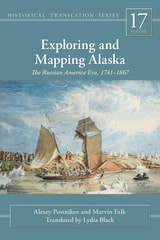
Exploring and Mapping Alaska
The Russian America Era, 1741-1867Alexey Postnikov and Marvin Falk
University of Alaska Press, 2015
Exploring and Mapping Alaska focuses on this foundational period in Arctic cartography. Russia spurred a golden era of cartographic exploration, while shrouding their efforts in a veil of secrecy. They drew both on old systems developed by early fur traders and new methodologies created in Europe. With Great Britain, France, and Spain following close behind, their expeditions led to an astounding increase in the world’s knowledge of North America.
Through engrossing descriptions of the explorations and expert navigators, aided by informative illustrations, readers can clearly trace the evolution of the maps of the era, watching as a once-mysterious region came into sharper focus. The result of years of cross-continental research, Exploring and Mapping Alaska is a fascinating study of the trials and triumphs of one of the last great eras of historic mapmaking.
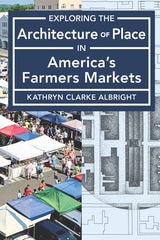
Exploring the Architecture of Place in America’s Farmers Markets
Kathryn Clarke Albright
University of Minnesota Press, 2020
Architect, teacher, and founder of the Friends of the Farmers Market, Katheryn Clarke Albright combines historically informed architectural observation with interview material and images drawn from conversations with farmers, vendors, market managers and shoppers.
Using eight scales of interaction and interface, Albright presents in-depth case studies to demonstrate how architectural elements and spatial conditions foster social and economic exchange between vendors, shoppers, and the community at large. Albright looks ahead to an emerging typology—the mobile market—bringing local farmers and healthy foods to underserved neighborhoods.
The impact farmers markets make on their local communities inspires place-making, improves the local economy, and preserves rural livelihoods. Developed organically and distinctively out of the space they occupy, these markets create and revitalize communities as rich as the produce they sell.
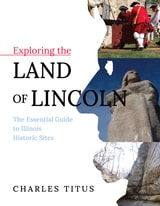
Exploring the Land of Lincoln
The Essential Guide to Illinois Historic SitesCharles Titus
University of Illinois Press, 2021
Discovering Illinois through twenty of the state's most important places
A one-of-a-kind travel guide, Exploring the Land of Lincoln invites road-trippers and history buffs to explore the Prairie State's most extraordinary historic sites. Charles Titus blends storytelling with in-depth research to highlight twenty must-see destinations selected for human drama, historical and cultural relevance, and their far-reaching impact on the state and nation. Maps, illustrations, and mileage tables encourage readers to create personal journeys of exploration to, and beyond, places like Cahokia, the Lincoln sites, Nauvoo, and Chicago's South Side Community Art Center.
Detailed and user-friendly, Exploring the Land of Lincoln is the only handbook you need for the sights and stories behind the names on the map of Illinois.
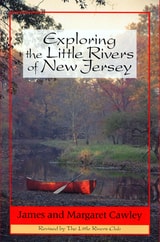
Exploring the Little Rivers of New Jersey
James and Margaret Cawley
Rutgers University Press, 1993
In this fourth edition, the Little Rivers Club has brought the Cawleys' work up to date. This group of experienced canoeists dedicated themselves to re-exploring familiar waterways and adding new ones. Faithful to the Cawley spirit, this edition includes new maps, many new photographs, a directory of canoe liveries, tips of planning a trip, a loving portrait of the Cawleys, and, best of all, twenty-four beautiful waterways to discover.
Featuring 166 photos, 22 maps, and these rivers:
- Batsto
- Cedar Creek
- Delaware and Raritan Canal
- Great Egg Harbor River
- Hackensack
- Manasquan River and Inlet
- Maurice
- Millstone
- Mullica
- Musconetcong
- Oswego River and Lake
- Passaic
- Paulins Kill
- Pequest
- Ramapo-Pompton
- Rancocas
- South and North Branches of the Raritan
- Toms
- Wading
- Black-Lamington
- Cohansey River, Raceway, and Sunset Lake
- Crosswicks Creek
- Metedeconk
- Stony Brook

Extra! Extra! Eat All About It!
Recipes and Culinary Curiosities from Historic Wisconsin NewspapersRandi Julia Ramsden
Wisconsin Historical Society Press, 2024
A blend of cookbook and bite-size history, Extra! Extra! Eat All About It! offers a unique glimpse into the culinary landscape of the late nineteenth and early twentieth centuries. Fifty recipes selected from Wisconsin newspapers are served alongside brief essays that dig into the stories behind the food trends of the time.
In lively prose, Jane Conway and Randi Julia Ramsden reveal how coconuts and oysters made their way to 1800s Wisconsin, how bakers gauged the temperatures of their wood-burning stoves, and how our predecessors really did slip on banana peels, among other flavorful facts. In addition to capturing quirky food fashions, like breakfast parties and paper-bag cooking, the recipes provide insights into regional cooking traditions.
Each original recipe appears alongside the authors’ easy-to-follow updated version. Mouthwatering modern photographs showcase the revived dishes for the first time in their long history, and newspaper clippings, ads, and illustrations give the book a charming vintage feel. Featuring a variety of recipes, ranging from trendy (Barbecued Ham with Bananas) and tempting (Pickled Walnuts) to traditional (Pumpernickel) and tantalizing (Apple de Luxe), Extra! Extra! Eat All About It! will satisfy the appetites of history lovers and home chefs alike.
“Such a fun and fascinating book! Extra! Extra! Eat All About It! deftly delves into Wisconsin’s long-ago food fads, evolutions, and absurdities. Don’t be surprised if this book inspires new trends that are riffs on some of these century-old ideas. Pickled walnuts, anyone? Or mock pumpkin pie, with prunes?” — Mary Bergin, author of Wisconsin Supper Club Cookbook
“Both cookbook and chronicle, Extra! Extra! Eat All About It! is an ingenious, illuminating tasting menu of our culinary past. Sourced from nineteenth and early twentieth century Wisconsin newspapers, its fifty vignettes serve up historical insights, forgotten fads and bygone recipes. From paper bag cookery and ‘oyster saloons’ to fire-baked eggs and maple taffy, I ate this book right up.” — Terese Allen, coauthor of The Flavor of Wisconsin
“This beautiful, fun, and informative book is a masterclass in how historical cooking opens a window onto wider historical themes, including mechanization, the impacts of war, immigration, globalization, and changing nutritional advice.” — Eleanor Barrett, author of Leftovers: A History of Food Waste and Preservation
“Conway and Ramsden do a great job of using historical documents to demonstrate what people were eating and how they entertained. They describe recipes as interaction and community, as well as how food trends change over time. The writing is smart and clever. A wonderful read.” — Kimberly Wilmot Voss, author of The Food Section: Newspaper Women and the Culinary Community