1927 books match the query 'Technology & Engineering' and 121 start with e
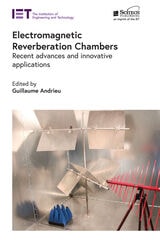
cover of Electromagnetic Reverberation Chambers: Recent advances and innovative applications

Electromagnetic Reverberation Chambers

Recent advances and innovative applications

Guillaume Andrieu

The Institution of Engineering and Technology, 2021

This book offers state of the art information about a novel range of applications for electromagnetic reverberation chambers. It is written by international experts in electromagnetic theory, electromagnetic compatibility (EMC), and antenna design and measurement.
[more]
cover of Electromagnetic Transients in Large HV Cable Networks: Modeling and calculations

Electromagnetic Transients in Large HV Cable Networks

Modeling and calculations

Akihiro Ametani

The Institution of Engineering and Technology, 2022

Transient events are short-lived bursts of energy in a system resulting from a sudden change of the state. They can be caused by faults, switching events or sudden changes in generation and load. Given the need to expand HV cable grids and to interconnect national grids to increase grid flexibility, the effects of such transients need to be understood in order to maintain the security of power supply and power quality.
[more]
cover of Electromagnetic Waveguides: Theory and applications

Electromagnetic Waveguides

Theory and applications

S.F. Mahmoud

The Institution of Engineering and Technology, 1991

There are several ways to classify electromagnetic waveguides. Depending on their boundaries, they can be classified into waveguides with perfectly reflecting walls or finite impedance walls, as well as open waveguides. In terms of their applications, there are the low attenuation and low delay distortion waveguides for telecommunication, the low crosspolar field waveguides used as feeds for reflector antennas in frequency reuse schemes, as well as the leaky feeders in continuous access communication systems. There are also the natural waveguides such as tunnels and the earth-ionosphere waveguide.
[more]
cover of Electromagnetic Waves and Antennas for Biomedical Applications

Electromagnetic Waves and Antennas for Biomedical Applications

Lulu Wang

The Institution of Engineering and Technology, 2022
Electromagnetic waves have long been used in medical settings for diagnostic purposes, such as for the detection of cancerous tissues, stroke events or cardiovascular risk, as the behaviour of the waves upon meeting their target gives pertinent information for diagnostic and imaging purposes.
[more]
cover of Electromagnetics and Experimental Measurements of the Skin Effect

Electromagnetics and Experimental Measurements of the Skin Effect

Malcom Stuart Raven

The Institution of Engineering and Technology, 2025

The skin effect is the tendency of alternating current (AC) to flow primarily near the surface of a conductor, rather than being evenly distributed, and this effect becomes more pronounced as the frequency of the AC increases. This is important because it increases the effective resistance of the conductor, leading to higher power losses and potential overheating. It can impact the design and performance of circuits, transmission lines (or waveguides), and antennas and is thus an important effect to be able to measure and control.
[more]
[more]
cover of Electromyography for Experimentalists

Electromyography for Experimentalists

Gerald E. Loeb and Carl Gans

University of Chicago Press, 1986

The technique of electromyography, used to study the electrical currents generated by muscle action, has become invaluable to researchers in the biological, medical, and behavioral sciences. With it, the scientist can study the role of muscles in producing and controlling limb movement, eating, breathing, posture, vocalizations, and the manipulation of objects. However, many electromyographic techniques were developed in the clinical study of humans and are inappropriate for use in research on other organisms—tadpoles, for example. This book, a complete and very practical hands-on guide to the theoretical and experimental requirements of electromyography, takes into account the needs of researchers across the sciences.
[more]
cover of Electron-Gated Ion Channels: With Amplification by NH3 Inversion Resonance

Electron-Gated Ion Channels

With Amplification by NH3 Inversion Resonance

Wilson P. Ralston

The Institution of Engineering and Technology, 2005

Understanding ion channel gating has been a goal of researchers since Hodgkin and Huxley's classic publication in 1952, but the gating mechanism has remained elusive. In this book it is shown how electrons can control gating. Introducing the electron as a gating agent requires amplification, but until now there has been no appropriate mechanism for amplification.
[more]
cover of Electronic Applications of the Smith Chart: In waveguide, circuit, and componenet analysis

Electronic Applications of the Smith Chart

In waveguide, circuit, and componenet analysis

Phillip H. Smith

The Institution of Engineering and Technology, 1995

This is the second edition of Electronic Applications of the Smith Chart, written by Phillip H. Smith, the originator of the Smith Chart. It covers the history, development and applications of the Smith Chart. This classic reference book describes how the chart is used for designing lumped element and transmission line circuits. The text provides tutorial material on transmission line theory and behavior, circuit representation on the chart, matching networks, network transformations and broadband matching. This edition includes a new chapter with example designs and description of the winSMITH software accessory.
[more]
cover of Electronic Media and Technoculture

Electronic Media and Technoculture

Caldwell, John T

Rutgers University Press, 2000

Never before has the future been so systematically envisioned, aggressively analyzed, and grandly theorized as in the present rush to cyberspace and digitalization. In the mid-twentieth century, questions about media technologies and society first emerged as scholarly hand-wringing about the deleterious sweep of electronic media and information technologies in mass culture. Now, questions about new technologies and their social and cultural impact are no longer limited to intellectual soothsayers in the academy but are pervasive parts of day-to-day discourses in newspapers, magazines, television, and film.

Electronic Media and Technoculture anchors contemporary discussion of the digital future within a critical tradition about the media arts, society, and culture. The collection examines a range of phenomena, from boutique cyber-practices to the growing ubiquity of e-commerce and the internet. The essays chart a critical field in media studies, providing a historical perspective on theories of new media. The contributors place discussions of producing technologies in dialogue with consuming technologies, new media in relation to old media, and argue that digital media should not be restricted to the constraining public discourses of either the computer, broadcast, motion-picture, or internet industries. The collection charts a range of theoretical positions to assist readers interested in new media and to enable them to weather the cycles of hardware obsolescence and theoretical volatility that characterize the present rush toward digital technologies.

Contributors include Ien Ang, John Caldwell, Cynthia Cockburn, Helen Cunningham, Hans Magnus Enzensberger, Guillermo Gómez-Peña, Arthur Kroker, Bill Nichols, Andrew Ross, Ellen Seiter, Vivian Sobchack, Allucquère Rosanne Stone, Ravi Sundaram, Michael A. Weinstein, Raymond Williams, and Brian Winston.

John Thornton Caldwell is chair of the film and television department at the University of California at Los Angeles. He is a filmmaker and media artist and author of Televisuality: Style, Crisis, and Authority in American Television (also from Rutgers University Press).
[more]
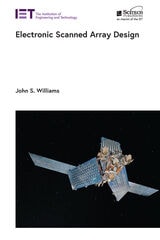
cover of Electronic Scanned Array Design

Electronic Scanned Array Design

John S. Williams

The Institution of Engineering and Technology, 2020

Electronic Scanned Array Design covers the fundamental principles of ESA antennas including basic design approaches and inherent design limitations. These insights enable better appreciation of existing and planned ESA systems including their application to earth observation. The material describes general design principles of aperture antennas applied to the specific case of ESA design.
[more]
cover of Electronic Warfare Pocket Guide

Electronic Warfare Pocket Guide

David L. Adamy

The Institution of Engineering and Technology, 2011
The Electronic Warfare Pocket Guide is the perfect companion for any user that needs to access key definitions, concepts, and equations for their work in the field, lab, or even in military theater of operations. While this concise guide fits in almost any pocket, it packs a real punch by providing users the answers to real world electronic warfare problems that come up every day in concept development, technique development, system design, system testing, operational testing, mission planning and operations. It is especially useful (if combined with training) for members of the military who are in combat and need to use EW techniques to counter missile-strikes, improvised explosive devices, and other threats. This booklet could usefully go into the pocket of every pilot, sailor, soldier and marine.
[more]
cover of Embedded Generation

Embedded Generation

Nick Jenkins

The Institution of Engineering and Technology, 2000

The use of combined heat and power (CHP) plants and renewable energy sources reduces the amount of greenhouse gases released into the atmosphere and helps to alleviate the consequent climate change. The policies of many governments suggest that the proportion of electrical energy produced by these sources will increase dramatically over the next two decades. Unlike traditional generating units, these new types of power plant are usually 'embedded' in the distribution system or 'dispersed' around the network. As a result, conventional design and operating practices are no longer applicable; for example, power protection principles have to be revised and complex economic questions need to be resolved.
[more]
cover of Embedded Mechatronics System Design for Uncertain Environments: Linux®-based, Rasbpian®, ARDUINO® and MATLAB® xPC Target Approaches

Embedded Mechatronics System Design for Uncertain Environments

Linux®-based, Rasbpian®, ARDUINO® and MATLAB® xPC Target Approaches

Cheng Siong Chin

The Institution of Engineering and Technology, 2019

Industrial machines, automobiles, airplanes, robots, and machines are among the myriad possible hosts of embedded systems. The author researches robotic vehicles and remote operated vehicles (ROVs), especially Underwater Robotic Vehicles (URVs), used for a wide range of applications such as exploring oceans, monitoring environments, and supporting operations in extreme environments.
[more]
cover of Embodied Engineering: Gendered Labor, Food Security, and Taste in Twentieth-Century Mali

Embodied Engineering

Gendered Labor, Food Security, and Taste in Twentieth-Century Mali

Laura Ann Twagira

Ohio University Press, 2021

Foregrounding African women’s ingenuity and labor, this pioneering case study shows how women in rural Mali have used technology to ensure food security through the colonial period, environmental crises, and postcolonial rule. By advocating for an understanding of rural Malian women as engineers, Laura Ann Twagira rejects the persistent image of African women as subjects without technological knowledge or access and instead reveals a hidden history about gender, development, and improvisation. In so doing, she also significantly expands the scope of African science and technology studies. Using the Office du Niger agricultural project as a case study, Twagira argues that women used modest technologies (such as a mortar and pestle or metal pots) and organized female labor to create, maintain, and reengineer a complex and highly adaptive food production system. While women often incorporated labor-saving technologies into their work routines, they did not view their own physical labor as the problem it is so often framed to be in development narratives. Rather, women’s embodied techniques and knowledge were central to their ability to transform a development project centered on export production into an environmental resource that addressed local taste and consumption needs.
[more]
cover of Emerging CMOS Capacitive Sensors for Biomedical Applications: A multidisciplinary approach

Emerging CMOS Capacitive Sensors for Biomedical Applications

A multidisciplinary approach

Ebrahim Ghafar-Zadeh

The Institution of Engineering and Technology, 2021

CMOS-based sensors offer significant advantages to life science applications, such as non-invasive long-term recordings, fast responses and label-free processes. They have been widely applied in many biological and medical fields for the study of living cell samples such as neural cell recording and stimulation, monitoring metabolic activity, cell manipulation, and extracellular pH monitoring. Compared to other sensing techniques, capacitive sensors are low-complexity, high-precision, label-free sensing methods for monitoring cellular activities such as cell viability, proliferation and morphology.
[more]
cover of Emerging Evolutionary Algorithms for Antennas and Wireless Communications

Emerging Evolutionary Algorithms for Antennas and Wireless Communications

Sotirios K. Goudos

The Institution of Engineering and Technology, 2021
Several evolutionary algorithms (EAs) have emerged in recent decades that mimic the behaviour and evolution of biological entities. EAs are widely used to solve single and multi-objective optimization engineering problems. EAs have also been applied to a variety of microwave components, antenna design, radar design, and wireless communications problems. These techniques, among others, include genetic algorithms (GAs), evolution strategies (ES), particle swarm optimization (PSO), differential evolution (DE), and ant colony optimization (ACO). In addition, new innovative algorithms that are not only biology-based but also physics-based or music-based are also emerging, as are hybrid combinations of EAs.
[more]
cover of Enabling Technologies for Social Distancing: Fundamentals, concepts and solutions

Enabling Technologies for Social Distancing

Fundamentals, concepts and solutions

Diep N. Nguyen

The Institution of Engineering and Technology, 2022

The latest advances in several emerging technologies such as AI, blockchain, privacy-preserving algorithms used in localization and positioning systems, cloud computing and computer vision all have great potential in facilitating social distancing. Benefits range from supporting people to work from home to monitoring micro- and macro- movements such as contact tracing apps using Bluetooth, tracking the movement and transportation level of a city and wireless positioning systems to help people keep a safe distance by alerting them when they are too close to each other or to avoid congestion. However, implementing such technologies in practical scenarios still faces various challenges.
[more]
cover of Encounters in the New World: Jesuit Cartography of the Americas

Encounters in the New World

Jesuit Cartography of the Americas

Mirela Altic

University of Chicago Press, 2022

Analyzing more than 150 historical maps, this book traces the Jesuits’ significant contributions to mapping and mapmaking from their arrival in the New World.

In 1540, in the wake of the tumult brought on by the Protestant Reformation, Saint Ignatius of Loyola founded the Society of Jesus, also known as the Jesuits. The Society’s goal was to revitalize the faith of Catholics and to evangelize to non-Catholics through charity, education, and missionary work. By the end of the century, Jesuit missionaries were sent all over the world, including to South America. In addition to performing missionary and humanitarian work, Jesuits also served as cartographers and explorers under the auspices of the Spanish, Portuguese, and French crowns as they ventured into remote areas to find and evangelize to native populations.

In Encounters in the New World, Mirela Altic analyzes more than 150 of their maps, most of which have never previously been published. She traces the Jesuit contribution to mapping and mapmaking from their arrival in the New World into the post-suppression period, placing it in the context of their worldwide undertakings in the fields of science and art. Altic’s analysis also shows the incorporation of indigenous knowledge into the Jesuit maps, effectively making them an expression of cross-cultural communication—even as they were tools of colonial expansion. This ambiguity, she reveals, reflects the complex relationship between missions, knowledge, and empire. Far more than just a physical survey of unknown space, Jesuit mapping of the New World was in fact the most important link to enable an exchange of ideas and cultural concepts between the Old World and the New.

[more]
cover of Endurance Media

Endurance Media

Neta Alexander

University of Minnesota Press, 2027

How digital platforms profit from our inability to log off

Endurance Media explores how contemporary digital technologies extract value from our bodies by demanding sustained engagement that pushes us beyond, and even reconfigures, our limits. It introduces the concept of “endurance media”—systems, platforms, and practices that require users to align their bodily rhythms with relentless media temporalities, transforming exhaustion itself into a profitable resource and a cultural fantasy.

In Endurance Media leading media scholars explore the dark intersection of metabolic capitalism and algorithmic control. From exercise bikes that monetize heart rates and caloric expenditure, to gaming suits that deliver electric shocks for “haptic realism,” to energy drinks marketed as performance enhancers for marathon gaming sessions, Endurance Media reveals how digital platforms colonize rest time under the guise of pleasure, interactivity, and autonomy. This analysis extends from individual bodies to planetary infrastructure, connecting personal media habits to the environmental costs of server farms and AI resource extraction.

At stake is the possibility of recuperating endurance as a space for alternative modes of duration, relationality, and collective survival. To that end, this book offers a critical alternative through “anti-endurance media”—a disability-informed framework that values rest, refusal, and collective care over relentless individual optimization.

Retail e-book files for this title are screen-reader friendly with images accompanied by short alt text and/or extended descriptions.
[more]
cover of Enduring Digital Damage: Rhetorical Reckonings for Planetary Survival

Enduring Digital Damage

Rhetorical Reckonings for Planetary Survival

Dustin Edwards

University of Alabama Press, 2025

Networks the intricate relationship between rapidly advancing digital technologies and environmental degradation and reveals the costs of our globally connected world.

Taking a step back from the screens of electronic devices and exploring the profound impacts of digital technologies on our environment, Enduring Digital Damage lifts the veil on the “hidden costs” in our modern technological world.

Dustin Edwards traces key moments in the lifecycle of technology—such as the extraction of raw materials to the disposal of electronic waste—to uncover the often overlooked consequence of our digital age. He illuminates how data centers, mining operations, and other digital infrastructures contribute to environmental harm and how the rapidly increasing demand for land use and water access is essential to sustain our growing digital needs. Weaving together narratives of technological advancement and ecological destruction, Edwards presents a comprehensive analysis of the true cost of our digital lives. By drawing on case studies, cultural critique, and a critical examination of labor and sustainability, Enduring Digital Damage reveals the deeper histories and ongoing struggles that make our digital lives possible, urging readers to imagine the possibility of a less harmful and extractive world.

[more]
cover of Enduring Seeds: Native American Agriculture and Wild Plant Conservation

Enduring Seeds

Native American Agriculture and Wild Plant Conservation

Gary Paul Nabhan; Forewords by Wendell Berry and Miguel Altieri

University of Arizona Press, 2002

As biological diversity continues to shrink at an alarming rate, the loss of plant species poses a threat seemingly less visible than the loss of animals but in many ways more critical. In this book, one of America's leading ethnobotanists warns about our loss of natural vegetation and plant diversity while providing insights into traditional Native agricultural practices in the Americas.

Gary Paul Nabhan here reveals the rich diversity of plants found in tropical forests and their contribution to modern crops, then tells how this diversity is being lost to agriculture and lumbering. He then relates "local parables" of Native American agriculture—from wild rice in the Great Lakes region to wild gourds in Florida—that convey the urgency of this situation and demonstrate the need for saving the seeds of endangered plants. Nabhan stresses the need for maintaining a wide gene pool, not only for the survival of these species but also for the preservation of genetic strains that can help scientists breed more resilient varieties of other plants.

Enduring Seeds is a book that no one concerned with our environment can afford to ignore. It clearly shows us that, as agribusiness increasingly limits the food on our table, a richer harvest can be had by preserving ancient ways.

This edition features a new foreword by Miguel Altieri, one of today's leading spokesmen for sustainable agriculture and the preservation of indigenous farming methods.

[more]
cover of Energy Culture: Art and Theory on Oil and Beyond

Energy Culture

Art and Theory on Oil and Beyond

Imre Szeman

West Virginia University Press, 2019

Energy Culture is a provocative book about oil’s firm grip on our politics and everyday lives. It brings together essays and artwork produced in a collaborative environment to stimulate new ways of thinking and to achieve a more just and sustainable world.

The original work collected in Energy Culture creatively engages energy as a social form through lively arguments and artistic research organized around three vectors of inquiry. The first maps how fossil fuels became, and continue to be, embedded in North American society, from the ideology of tar sands reclamation projects to dreams of fiber optic cables running through the Northwest Passage. The second comprises creative and artistic responses to the dominance of fossil fuels in everyday life and to the challenge of realizing new energy cultures. The final section addresses the conceptual and political challenges posed by energy transition and calls into question established views on energy. Its contributions caution against solar capitalism, explore the politics of sabotage, and imagine an energy efficient transportation system called “the switch.” Imbued with a sense of urgency and hope, Energy Culture exposes the deep imbrications of energy and culture while pointing provocatively to ways of thinking and living otherwise.
[more]
cover of Energy Generation and Efficiency Technologies for Green Residential Buildings

Energy Generation and Efficiency Technologies for Green Residential Buildings

David S-K. Ting

The Institution of Engineering and Technology, 2019

Residential buildings consume about a quarter of all energy (including electrical and thermal) in industrialized countries and emit around 20% of the carbon emissions there. Older and outdated heating and cooling technology causes high energy demand and, depending on building type, secondary causes can include ventilation and lighting. Technology is available to mitigate high energy consumption, and to enable the use of renewable or environmentally friendly energy, partly generated locally.
[more]
cover of Energy Harvesting Solutions for Implantable Medical Devices: Design, integration, and application of self-powered biomedical implants

Energy Harvesting Solutions for Implantable Medical Devices

Design, integration, and application of self-powered biomedical implants

Jinwei Zhao

The Institution of Engineering and Technology, 2025

Implantable devices are becoming more prevalent in the monitoring and treatment of patients with chronic diseases such as heart failure, diabetes and cancer. Conventional implantable devices are battery-powered, but these batteries can suffer from a short lifespan, bulky size, or leakage hazards. Energy harvesting technologies are therefore emerging as an alternative to battery-powered devices.
[more]
cover of Energy Harvesting for Wireless Sensing and Flexible Electronics through Hybrid Technologies

Energy Harvesting for Wireless Sensing and Flexible Electronics through Hybrid Technologies

Muhammad Iqbal

The Institution of Engineering and Technology, 2023
As wearable microelectronics are becoming ubiquitous, there is a growing interest in replacing batteries with a means of harnessing power from the user's environment via embedded systems. Efforts have been made to prolong the harvester's operational lifetime, overcoming energy dissipation, lowering resonant frequency, attaining multi-resonant states, and widening the operating frequency bandwidth of the biomechanical energy harvesters. Such technological advances mean harvesting energy is a viable solution for sustainably powering wearable electronics for health and wellbeing applications, such as continuous medical health monitoring, remote sensing, and motion tracking.
[more]
cover of Energy Harvesting in Wireless Sensor Networks and Internet of Things

Energy Harvesting in Wireless Sensor Networks and Internet of Things

Faisal Karim Shaikh

The Institution of Engineering and Technology, 2022
The energy efficiency paradigm associated with Wireless Sensor Networks (WSNs) and the Internet of Things (IoT) is a major bottleneck for the development of related technologies. To overcome this limitation, the design and development of efficient and high-performance energy harvesting systems for WSN and IoT environments are being explored.
[more]
cover of Energy Management Systems for Microgrids with Wind, PV and Battery Storage

Energy Management Systems for Microgrids with Wind, PV and Battery Storage

Badre Bossoufi

The Institution of Engineering and Technology, 2025

Growing shares of intermittent clean generation as well as variable loads lead to challenges for distribution systems at all levels. Energy management systems (EMS) are systems of computer-aided tools used by operators of electric utility grids to monitor, control, and optimize the performance of the generation, distribution or transmission system. EMS help to ensure grid stability and power quality, and can also be used in smaller scale systems such as microgrids.
[more]
cover of Energy Solutions for Aquaponics: Using the agricultural energy internet

Energy Solutions for Aquaponics

Using the agricultural energy internet

Xueqian Fu

The Institution of Engineering and Technology, 2026
In line with the increasing electrification of agricultural production, aquaculture systems are becoming an important type of agricultural energy load. This book discusses key energy issues in aquaculture systems, and explains how agricultural energy internet technologies can support the development of modern aquaculture.
[more]
cover of Energy Storage at Different Voltage Levels: Technology, integration, and market aspects

Energy Storage at Different Voltage Levels

Technology, integration, and market aspects

Ahmed F. Zobaa

The Institution of Engineering and Technology, 2018

In an era of increasing contributions from intermittent renewable resources, energy storage is becoming more important to ensure a resilient and reliable electricity supply. Energy Storage at Different Voltage Levels presents the technology, integration and market aspects of energy storage in the various generation, transmission, distribution, and customer levels of the grid.
[more]
cover of Energy Storage for Power Systems

Energy Storage for Power Systems

A.G. Ter-Gazarian

The Institution of Engineering and Technology, 2011

The supply of energy from primary sources is not constant and rarely matches the pattern of demand from consumers. Electricity is also difficult to store in significant quantities. Therefore, secondary storage of energy is essential to increase generation capacity efficiency and to allow more substantial use of renewable energy sources that only provide energy intermittently. Lack of effective storage has often been cited as a major hurdle to substantial introduction of renewable energy sources into the electricity supply network. The author presents here a comprehensive guide to the different types of storage available. He not only shows how the use of the various types of storage can benefit the management of a power supply system, but also considers more substantial possibilities that arise from integrating a combination of different storage devices into a system. This book will be important to those seeking to develop environmentally sound energy resources.
[more]
cover of Energy Storage for Power Systems

Energy Storage for Power Systems

Andrei G. Ter-Gazarian

The Institution of Engineering and Technology, 1994
Energy flow from many primary sources is not constant but depends on the season, time of day and weather conditions. Energy demand also varies with the same circumstances, but generally in reverse. Obviously there needs to be some way for energy suppliers to separate the processes of energy generation and consumption, by storing energy until it is needed.
[more]
cover of Energy Storage for Power Systems

Energy Storage for Power Systems

Andrei G. Ter-Gazarian

The Institution of Engineering and Technology, 2020
Unregulated distributed energy sources such as solar roofs and windmills and electric vehicle requirements for intermittent battery charging are variable sources either of electricity generation or demand. These sources impose additional intermittent load on conventional electric power systems. As a result thermal power plants whose generation is absolutely essential for any power system are increasingly being used for cycling operations thus increasing greenhouse gas emissions and electricity cost. The use of secondary energy storage might be a solution. Various technologies for storing electric energy are available; besides electrochemical ones such as batteries, there are mechanical, chemical and thermal means, all with their own advantages and disadvantages regarding scale, efficiency, cost, and other parameters.
[more]
cover of Energy Systems for Electric and Hybrid Vehicles

Energy Systems for Electric and Hybrid Vehicles

K.T. Chau

The Institution of Engineering and Technology, 2016
Electric and hybrid vehicles have been globally identified to be the most environmental friendly road transportation. Energy Systems for Electric and Hybrid Vehicles provides comprehensive coverage of the three main energy system technologies of these vehicles - energy sources, battery charging and vehicle-to-grid systems.
[more]
cover of Energy: Resources, technologies and the environment

Energy

Resources, technologies and the environment

Christian Ngô

The Institution of Engineering and Technology, 2010

This book is aimed at students and professionals as well as anyone interested in having a global vision and perspective on energy.
[more]
cover of Engineered to Sell: European Émigrés and the Making of Consumer Capitalism

Engineered to Sell

European Émigrés and the Making of Consumer Capitalism

Jan L. Logemann

University of Chicago Press, 2019
The mid-twentieth-century marketing world influenced nearly every aspect of American culture—music, literature, politics, economics, consumerism, race relations, gender, and more. In Engineered to Sell, Jan L. Logemann traces the transnational careers of consumer engineers in advertising, market research, and commercial design who transformed capitalism from the 1930s through the 1960s. He argues that the history of marketing consumer goods is not a story of American exceptionalism. Instead, the careers of immigrants point to the limits of the “Americanization” paradigm. Logemann explains the rise of a dynamic world of goods and examines how and why consumer engineering was shaped by transatlantic exchanges. From Austrian psychologists and little-known social scientists to the illustrious Bauhaus artists, the emigrés at the center of this story illustrate the vibrant cultural and commercial connections between metropolitan centers: Vienna and New York; Paris and Chicago; Berlin and San Francisco. By focusing on the transnational lives of emigré consumer researchers, marketers, and designers, Engineered to Sell details the processes of cultural translation and adaptation that mark both the midcentury transformation of American marketing and the subsequent European shift to “American” consumer capitalism.
[more]
cover of Engineering High Quality Medical Software: Regulations, standards, methodologies and tools for certification

Engineering High Quality Medical Software

Regulations, standards, methodologies and tools for certification

Antonio Coronato

The Institution of Engineering and Technology, 2018
No longer confined to medical devices, medical software has become a pervasive technology giving healthcare operators access to clinical information stored in electronic health records and clinical decision support systems, supporting robot-assisted telesurgery, and providing the technology behind ambient assisted living. These systems and software must be designed, built and maintained according to strict regulations and standards to ensure that they are safe, reliable and secure.
[more]
cover of Engineering Secure Internet of Things Systems

Engineering Secure Internet of Things Systems

Benjamin Aziz

The Institution of Engineering and Technology, 2016

The Internet of Things (IoT) - the emerging global interconnection of billions of 'smart' devices - will be collecting increasing amounts of private and sensitive data about our lives, and will require increasing degrees of reliability and trustworthiness in terms of the levels of assurance provided with respect to confidentiality, integrity and availability. This book examines these important security considerations for the IoT.
[more]
cover of Engineering Security: The Corps of Engineers and Third System Defense Policy, 1815–1861

Engineering Security

The Corps of Engineers and Third System Defense Policy, 1815–1861

Mark A. Smith

University of Alabama Press, 2009

Thorough examination of the antebellum fortifications that formed the backbone of U.S. military defense during the National Period

The system of coastal defenses built by the federal government after the War of 1812 was more than a series of forts standing guard over a watery frontier. It was an integrated and comprehensive plan of national defense developed by the US Army Corps of Engineers, and it represented the nation’s first peacetime defense policy.

Known as the Third System since it replaced two earlier attempts, it included coastal fortifications but also denoted the values of the society that created it. The governing defense policy was one that combined permanent fortifications to defend seaports, a national militia system, and a small regular army. The Third System remained the defense paradigm in the United States from 1816 to 1861, when the onset of the Civil War changed the standard. In addition to providing the country with military security, the system also provided the context for the ongoing discussion in Congress over national defense through annual congressional debates on military funding.
 

[more]
cover of Engineering the Eternal City: Infrastructure, Topography, and the Culture of Knowledge in Late Sixteenth-Century Rome

Engineering the Eternal City

Infrastructure, Topography, and the Culture of Knowledge in Late Sixteenth-Century Rome

Pamela O. Long

University of Chicago Press, 2018

Between the catastrophic flood of the Tiber River in 1557 and the death of the “engineering pope” Sixtus V in 1590, the city of Rome was transformed by intense activity involving building construction and engineering projects of all kinds. Using hundreds of archival documents and primary sources, Engineering the Eternal City explores the processes and people involved in these infrastructure projects—sewers, bridge repair, flood prevention, aqueduct construction, the building of new, straight streets, and even the relocation of immensely heavy ancient Egyptian obelisks that Roman emperors had carried to the city centuries before.
 
This portrait of an early modern Rome examines the many conflicts, failures, and successes that shaped the city, as decision-makers tried to control not only Rome’s structures and infrastructures but also the people who lived there. Taking up visual images of the city created during the same period—most importantly in maps and urban representations, this book shows how in a time before the development of modern professionalism and modern bureaucracies, there was far more wide-ranging conversation among people of various backgrounds on issues of engineering and infrastructure than there is in our own times. Physicians, civic leaders, jurists, cardinals, popes, and clerics engaged with painters, sculptors, architects, printers, and other practitioners as they discussed, argued, and completed the projects that remade Rome.
[more]
cover of Engineering the Revolution: Arms and Enlightenment in France, 1763-1815

Engineering the Revolution

Arms and Enlightenment in France, 1763-1815

Ken Alder

University of Chicago Press, 2010

Engineering the Revolution documents the forging of a new relationship between technology and politics in Revolutionary France, and the inauguration of a distinctively modern form of the “technological life.”  Here, Ken Alder rewrites the history of the eighteenth century as the total history of one particular artifact—the gun—by offering a novel and historical account of how material artifacts emerge as the outcome of political struggle. By expanding the “political” to include conflict over material objects, this volume rethinks the nature of engineering rationality, the origins of mass production, the rise of meritocracy, and our interpretation of the Enlightenment and the French Revolution.

[more]
cover of Engineers' Handbook of Industrial Microwave Heating

Engineers' Handbook of Industrial Microwave Heating

Roger Meredith

The Institution of Engineering and Technology, 1998
Heating materials using microwave energy offers many advantages in industrial processes, including improved quality, efficiency and control. There is a growing interest in microwave heating throughout industry and there are now many research establishments, both academic and industrial, working in this field. Microwave technology is a well developed science in the areas of radar and communications, supported by a large bibliography, but this is not the case for its applications to industry. The aim of this book is first to present the fundamentals of microwave technology that are relevant to industrial practice in a manner accessible to engineers, scientists and technicians who may have little or no prior knowledge of the subject. Second, it presents a perspective on the range and scope of the techniques and hardware used, giving detailed descriptions, making critical comparisons and commenting frequently on practical issues of design.
[more]
cover of Engines of Rebellion: Confederate Ironclads and Steam Engineering in the American Civil War

Engines of Rebellion

Confederate Ironclads and Steam Engineering in the American Civil War

Saxon T. Bisbee

University of Alabama Press, 2018

A challenge to the prevailing idea that Confederate ironclads were inherently defective
 
The development of steam propulsion machinery in warships during the nineteenth century, in conjunction with iron armor and shell guns, resulted in a technological revolution in the world’s navies. Warships utilizing all of these technologies were built in France and Great Britain in the 1850s, but it was during the American Civil War that large numbers of ironclads powered solely by steam proved themselves to be quite capable warships.  
 
Historians have given little attention to the engineering of Confederate ironclads, although the Confederacy was often quite creative in building and obtaining marine power plants. Engines of Rebellion: Confederate Ironclads and Steam Engineering in the American Civil War focuses exclusively on ships with American built machinery, offering a detailed look at marine steam-engineering practices in both northern and southern industry prior to and during the Civil War.
 
Beginning with a contextual naval history of the Civil War, the creation of the ironclad program, and the advent of various technologies, Saxon T. Bisbee analyzes the armored warships built by the Confederate States of America that represented a style adapted to scarce industrial resources and facilities. This unique historical and archaeological investigation consolidates and expands on the scattered existing information about Confederate ironclad steam engines, boilers, and propulsion systems.
 
Through analysis of steam machinery development during the Civil War, Bisbee assesses steam plants of twenty-seven ironclads by source, type, and performance, among other factors. The wartime role of each vessel is discussed, as well as the stories of the people and establishments that contributed to its completion and operation. Rare engineering diagrams never before published or gathered in one place are included here as a complement to the text.

[more]
cover of English Electric Canberra

English Electric Canberra

Mick Gladwin

Amsterdam University Press, 2023

From 1949 to 2006 the English Electric Canberra has served in the frontline of the Royal Air Force around the world. The Canberra became the UK's first jet bomber, although that was not its only role, undertaking other tasks such as, pilot/navigator training, photographic reconnaissance, target-tag and electronic countermeasures duties to name a few.

The story of the Canberra came to a close for the RAF on the 22nd June 2006 when the last remaining Canberra PR.9s retiring from service life after returning from operational duties. The author had the honour to serve with them in their twilight days of their careers.
[more]
cover of Enhanced Living Environments: From models to technologies

Enhanced Living Environments

From models to technologies

Rossitza Ivanova Goleva

The Institution of Engineering and Technology, 2018

Enhanced living environments employ information and communications technologies to support true ambient assisted living for adults and people with disabilities. This book provides an overview of today's architectures, techniques, protocols, components, and cloud-based solutions related to ambient assisted living and enhanced living environments. Topics covered include: an introduction to enhanced living environments; pervasive sensing for social connectedness; ethics in information and communication technologies; service scenarios in smart personal environments; technological support to stress level monitoring; big data systems to improve healthcare information searching over the Internet; sensors for wireless body area networks; linear wireless sensor networks and protocols in next generation networks; model-compilation challenges for cyber-physical systems; health monitoring using wireless body area networks; wearable health care; and intelligent systems for after-stroke home rehabilitation.
[more]
cover of Environmental Preservation and the Grey Cliffs Conflict: Negotiating Common Narratives, Values, and Ethos

Environmental Preservation and the Grey Cliffs Conflict

Negotiating Common Narratives, Values, and Ethos

Kristin D. Pickering

Utah State University Press, 2024

Based on a qualitative, ethnographic, observational case study approach, Environmental Preservation and the Grey Cliffs Conflictpresents an analysis of the conflict negotiation between the U.S. Army Corps of Engineers and a local community that struggled to address a deteriorating Corps-managed recreational lake area in Tennessee known as “Grey Cliffs.” Viewing the dispute from the perspective of a new member of the community and a specialist in technical communication and professional writing, Kristin Pickering provides a unique perspective on this communication process.
 
Though environmental degradation and unauthorized use threatened the Grey Cliffs recreational lake area to the point that the Corps considered closure, community members valued it highly and wanted to keep it open. The community near this damaged and crime-ridden area needed help rejuvenating its landscape and image, but the Corps and community were sharply divided on how to maintain this beloved geographic space because of the stakeholders’ different cultural backgrounds and values, as well as the narratives used to discuss them. By co-constructing and aligning narratives, values, and ethos over time—a difficult and lengthy process—the Corps and community succeeded, and Grey Cliffs remains open to all. Focusing on field notes, participant interviews, and analysis of various texts created throughout the conflict, Pickering applies rhetorical analysis and a grounded theory approach to regulation, identity, sustainability, and community values to analyze this communication process.
 
Illustrating the positive change that can occur when governmental organizations and rural communities work together to construct shared values and engage in a rhetoric of relationship that preserves the environment, Environmental Preservation and the Grey Cliffs Conflict provides key recommendations for resolving environmental conflicts within local communities, especially for those working in technical and professional communication, organizational communication, environmental science, and public policy.
 
[more]
cover of Environmental Program Evaluation: A Primer

Environmental Program Evaluation

A Primer

Edited by Gerrit Knaap and Tschango John Kim: Foreword by Ravinder K. Jain

University of Illinois Press, 1998

This pioneer work in a complex, interdisciplinary, and still-developing field explores the prospects for a more comprehensive approach to evaluating environmental programs. Experts in the fields of biology, chemistry, ecology, economics, management, planning, sociology, political science, and public administration provide coherent, integrated perspectives on the task of environmental program evaluation. The essays are organized thematically, covering institutional, scientific, economic, and administrative topics. The volume will be a valuable text for practitioners, regulators, policymakers, and scholars in the fields of program evaluation, environmental policy, and environmental science.
[more]
cover of Environmental Safety of Genetically Engineered Crops

Environmental Safety of Genetically Engineered Crops

Rebecca Grumet

Michigan State University Press, 2010
Since the mid-1990s, when the technology was first introduced, the cultivation of genetically engineered (GE) crops has grown exponentially. In the U.S. alone, adoption rates for transgenic cotton, corn, and soybeans are between 70–90%. Across the globe, 14 million farmers grow GE crops in more than twenty countries. Yet many countries are discussing and debating the use and adoption of GE technology because of concerns about their impact on the environment and human health. Now, in this comprehensive handbook, a team of international experts present the scientific basis for GE crops, placing them in the context of current agricultural systems, and examining the potential environmental risks posed by their deployment. An integrated approach to an increasingly hot and globally debated topic, the book considers the past, present, and future of GE crops, and offers an invaluable perspective for regulation and policy development.
[more]
cover of Envisioning the City: Six Studies in Urban Cartography

Envisioning the City

Six Studies in Urban Cartography

Edited by David Buisseret

University of Chicago Press, 1998

Churchman or merchant, soldier or sanitary engineer, everyone who lives in a city sees it differently. Envisioning the City explores how these points of urban view have been expressed in city plans. Ranging from vertical plans to bird's-eye views, profiles, and three-dimensional models, these diverse maps all show cities "the way people want to see them."

Whether a Chinese vertical city plan from the first millennium B.C. or a bird's-eye view appended to a fifteenth-century edition of Ptolemy's Geography, the type of plan chosen and its focus reflected the aspects of a city that the map's creators wished to highlight. For instance, maps of seventeenth-century cities emphasized impregnable fortifications as a deterrent to potential attackers. And Daniel Burnham's famous 1909 Plan of Chicago used a distinct representational style to "sell" his version of the new Chicago.

Although city plans are among the oldest maps known, few books have been devoted to them. Historians of cartography and geography, architects, and urban planners will all enjoy this profusely illustrated volume.
[more]
cover of Equipping Technical Communicators for Social Justice Work: Theories, Methodologies, and Pedagogies

Equipping Technical Communicators for Social Justice Work

Theories, Methodologies, and Pedagogies

Rebecca Walton

Utah State University Press, 2021

Equipping Technical Communicators for Social Justice Work provides action-focused resources and tools—heuristics, methodologies, and theories—for scholars to enact social justice. These resources support the work of scholars and practitioners in conducting research and teaching classes in socially just ways. Each chapter identifies a tool, highlights its relevance to technical communication, and explains how and why it can prepare technical communication scholars for socially just work.
 
For the field of technical and professional communication to maintain its commitment to this work, how social justice intersects with inclusivity through UX, technological, civic, and legal literacies, as well as through community engagement, must be acknowledged. Equipping Technical Communicators for Social Justice Work will be of significance to established scholar-teachers and graduate students, as well as to newcomers to the field.
 
Contributors: Kehinde Alonge, Alison Cardinal, Erin Brock Carlson, Oriana Gilson, Laura Gonzales, Keith Grant-Davie, Angela Haas, Mark Hannah, Kimberly Harper, Sarah Beth Hopton, Natasha Jones, Isidore Kafui Dorpenyo, Liz Lane, Emily Legg, Nicole Lowman, Kristen Moore, Emma Rose, Fernando Sanchez, Jennifer Sano-Franchini, Adam Strantz, Cana Uluak Itchuaqiyaq, Josephine Walwema, Miriam Williams, Han Yu


[more]