Results by title
4127 books match the query 'Science' and 187 start with e
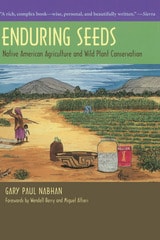
Enduring Seeds
Native American Agriculture and Wild Plant ConservationGary Paul Nabhan; Forewords by Wendell Berry and Miguel Altieri
University of Arizona Press, 2002
Gary Paul Nabhan here reveals the rich diversity of plants found in tropical forests and their contribution to modern crops, then tells how this diversity is being lost to agriculture and lumbering. He then relates "local parables" of Native American agriculture—from wild rice in the Great Lakes region to wild gourds in Florida—that convey the urgency of this situation and demonstrate the need for saving the seeds of endangered plants. Nabhan stresses the need for maintaining a wide gene pool, not only for the survival of these species but also for the preservation of genetic strains that can help scientists breed more resilient varieties of other plants.
Enduring Seeds is a book that no one concerned with our environment can afford to ignore. It clearly shows us that, as agribusiness increasingly limits the food on our table, a richer harvest can be had by preserving ancient ways.
This edition features a new foreword by Miguel Altieri, one of today's leading spokesmen for sustainable agriculture and the preservation of indigenous farming methods.
Energopolitics
Wind and Power in the AnthropoceneDominic Boyer
Duke University Press, 2019
In his volume, Energopolitics, Boyer examines the politics of wind power and how it is shaped by myriad factors, from the legacies of settler colonialism and indigenous resistance to state bureaucracy and corporate investment. Drawing on interviews with activists, campesinos, engineers, bureaucrats, politicians, and bankers, Boyer outlines the fundamental impact of energy and fuel on political power. Boyer also demonstrates how large conceptual frameworks cannot adequately explain the fraught and uniquely complicated conditions on the isthmus, illustrating the need to resist narratives of anthropocenic universalism and to attend to local particularities.
Energy Culture
Art and Theory on Oil and BeyondImre Szeman
West Virginia University Press, 2019
Energy Culture is a provocative book about oil’s firm grip on our politics and everyday lives. It brings together essays and artwork produced in a collaborative environment to stimulate new ways of thinking and to achieve a more just and sustainable world.
The original work collected in Energy Culture creatively engages energy as a social form through lively arguments and artistic research organized around three vectors of inquiry. The first maps how fossil fuels became, and continue to be, embedded in North American society, from the ideology of tar sands reclamation projects to dreams of fiber optic cables running through the Northwest Passage. The second comprises creative and artistic responses to the dominance of fossil fuels in everyday life and to the challenge of realizing new energy cultures. The final section addresses the conceptual and political challenges posed by energy transition and calls into question established views on energy. Its contributions caution against solar capitalism, explore the politics of sabotage, and imagine an energy efficient transportation system called “the switch.” Imbued with a sense of urgency and hope, Energy Culture exposes the deep imbrications of energy and culture while pointing provocatively to ways of thinking and living otherwise.

Energy Forms
Allegory and Science in the Era of Classical ThermodynamicsBruce Clarke
University of Michigan Press, 2001
The book begins with an overview of the interconnections between allegory in literature and allegory in science, then analyzes the interaction between energy and entropy and their personification in the literature of the times. Energy Forms draws on the writing of well-known literary and scientific authors including H. G. Wells, Camille Flammarion, Charles Howard Hinton and D. H. Lawrence, among others. The focus then shifts to the broad cultural tension between thermodynamic malaise and electromagnetic aspiration. Energy Forms uncovers the works of important but overlooked authors in the fields of science and literature and will appeal especially to those who are intrigued by interdisciplinary studies.
Bruce Clarke is Professor of English,Texas Tech University. He is the author of Dora Marsden and Early Modernism: Gender, Individualism, Science; Allegories of Writing: The Subject of Metamorphosis; and editor of The Body and the Text: Comparative Essays in Literature and Medicine.
Energy Impacts
A Multidisciplinary Exploration of North American Energy DevelopmentJeffrey B. Jacquet
University Press of Colorado, 2020
Twelve chapters from respected scholars in a variety of disciplines present new ways to consider and analyze energy impact research. Focused on varied energy topics, geographies, and disciplines, each chapter includes a policy brief that summarizes the work and provides “key takeaways” to apply the findings to policy and public discourse.
Meaningful public engagement is critical in limiting the negative implications of energy development, and understanding the social influences on and of energy systems is a cornerstone of addressing the climate crisis. As such, Energy Impacts is a significant work for students, scholars, and professionals working in sociology, education, geography, environmental studies, and public health.
This material is based upon work supported by the National Science Foundation under Grant No. 1528422. Publication is also supported, in part, by Montana State University.
Contributors:
Ali Adil, Lisa Bailey-Davis, Nancy Bowen-Elizey, Morey Burnham, Weston Eaton, Heather Feldhaus, Felix Fernando, Emily Grubert, C. Clare Hinrichs, John Hintz, Richard Hirsh, Season Hoard, Tamara Laninga, Eric Larson, Achla Marathe, Natalie Martinkus, Seven Mattes, Ronald Meyers, Patrick Miller, Ethan Minier, Myra Moss, Jacob Mowery, Thomas Murphy, Sevda Ozturk Sari, John Parkins, Christopher Podeschi, Nathan Ratledge, Sanne Rijkhoff, Kelli Roemer, Todd Schenk, Anju Seth, Kate Sherren, Jisoo Sim, Marc Stern, Jessica Ulrich-Schad, Cameron Whitley, Laura Zachary
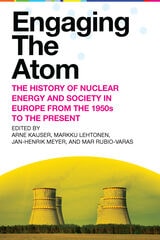
Engaging the Atom
The History of Nuclear Energy and Society in Europe from the 1950s to the PresentArne Kaijser
West Virginia University Press, 2021
With the aim of overcoming the disciplinary and national fragmentation that characterizes much research on nuclear energy, Engaging the Atom brings together specialists from a variety of fields to analyze comparative case studies across Europe and the United States. It explores evolving relationships between society and the nuclear sector from the origins of civilian nuclear power until the present, asking why nuclear energy has been more contentious in some countries than in others and why some countries have never gone nuclear, or have decided to phase out nuclear, while their neighbors have committed to the so-called nuclear renaissance. Contributors examine the challenges facing the nuclear sector in the context of aging reactor fleets, pressing climate urgency, and increasing competition from renewable energy sources.
Written by leading academics in their respective disciplines, the nine chapters of Engaging the Atom place the evolution of nuclear energy within a broader set of national and international configurations, including its role within policies and markets.
Engineering High Quality Medical Software
Regulations, standards, methodologies and tools for certificationAntonio Coronato
The Institution of Engineering and Technology, 2018

Enrico Fermi, Physicist
Emilio Segrè
University of Chicago Press, 1972
Emilio Segre was awarded the Nobel Prize for Physics in 1959.
Enumerations
Data and Literary StudyAndrew Piper
University of Chicago Press, 2018
In Enumerations, Andrew Piper answers that question across a variety of domains fundamental to the study of literature. He focuses on the elementary particles of literature, from the role of punctuation in poetry, the matter of plot in novels, the study of topoi, and the behavior of characters, to the nature of fictional language and the shape of a poet’s career. How does quantity affect our understanding of these categories? What happens when we look at 3,388,230 punctuation marks, 1.4 billion words, or 650,000 fictional characters? Does this change how we think about poetry, the novel, fictionality, character, the commonplace, or the writer’s career? In the course of answering such questions, Piper introduces readers to the analytical building blocks of computational text analysis and brings them to bear on fundamental concerns of literary scholarship. This book will be essential reading for anyone interested in Digital Humanities and the future of literary study.
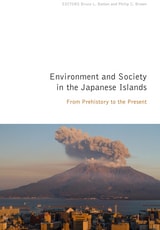
Environment and Society in the Japanese Islands
From Prehistory to the PresentBruce L. Batten
Oregon State University Press, 2015
Environment and Society in the Japanese Islands attempts to answer these questions through a series of case studies by leading Japanese and Western historians, geographers, archaeologists, and climatologists. These essays, on diverse topics from all periods of Japanese history and prehistory, are unified by their focus on the key concepts of “resilience” and “risk mitigation.” Taken as a whole, they place Japan’s experience in global context and call into question the commonly presumed division between pre-modern and modern environmental history.
Primarily intended for scholars and students in fields related to Japan or environmental history, these accessibly-written essays will be valuable to anyone wishing to learn about the historical roots of today’s environmental issues or the complex relationship between human society and the natural environment.

Environment in the Global Arena
Actors, Values, Policies, and FuturesKenneth A. Dahlberg, Marvin S. Soroos, Anne Thompson Feraru, James E. Harf, and B. Thomas Trout
Duke University Press, 1985
The issues in the series are each considered within a systematic framework common to all. Each volume begins with a historical background and then the issues are placed in their contemporary context. Four distinct perspectives are presented: (1) Who are the "global actors" involved in the issue, and what are the linkages among them? (2) What prevailing values are operating, and how have the relevant actors responded to those values? (3) What policies are applied by these actors at the global level, and how are these policies determined? (4) What are the possible results of the values and policies of these global actors?
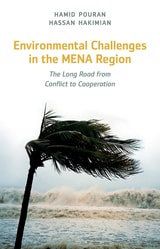
Environmental Challenges in the MENA Region
The Long Road from Conflict to CooperationHamid Pouran and Hassan Hakimian
Gingko, 2019
Although the region’s fragile environmental state has increasingly preoccupied policymakers in individual countries, there is currently insufficient attention paid to coordinating collaborative action to recognise and address problems relating to its environmental sustainability and climatic change. In the absence of a positive agenda for tackling these issues, recurrent environmental setbacks and rapid depletion of the region’s natural resources continue to pose a major threat to the long-term economic, political, and social stability of the region.
Despite the urgency of these challenges, there is little research dedicated to studying MENA’s environmental sustainability. Environmental Challenges in the MENA Region: The Long Road from Conflict to Cooperation draws from the proceedings of a seminal international conference on the subject at SOAS in October 2016, which was held as a celebration of the SOAS Centenary. This led to a collective contribution by experts and policy-makers concerned with the state of the MENA region’s environmental predicament with the aim of addressing these problems in a constructive and forward-looking approach.
The chapters in this book are predicated upon two critical premises. First, expertise and awareness from a wide range of disciplines is required to understand and address environmental challenges. And, second, to have a real chance of success, MENA countries need to confront these problems as their common threats and to see them as an opportunity for regional cooperation and policy coordination. This book provides the results of an interdisciplinary effort to address the various dimensions of the region’s environmental challenges from across the region and disciplines.
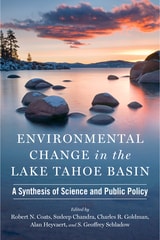
Environmental Change in the Lake Tahoe Basin
A Synthesis of Science and Public PolicyRobert N. Coats
University of Nevada Press, 2025
For over a century, scientific research and management efforts have aimed to mitigate the impacts of logging, mining, pollution, and invasive species while balancing urban development, tourism, and ecological preservation on the Lake. The book explores these challenges through a multidisciplinary lens, integrating environmental science, policy analysis, and case studies of both successful and failed management strategies. Written by experts who have played direct roles in key scientific discoveries and policy decisions, the book also examines the influence of environmental organizations and litigation in shaping conservation efforts.
At its core, the authors argue that the Tahoe Basin serves as a model for science-driven land and water stewardship. The book evaluates long-term monitoring programs, offering actionable recommendations for improving environmental oversight and resource management. Combining scientific analysis with accessible language, Environmental Change in the Lake Tahoe Basin serves as an up-to-date review of the region’s environmental challenges, providing an essential guide for scientists, resource managers, and policymakers.
The authors will donate all royalties from the sale of this volume to the Union of Concerned Scientist, www.ucs.org.
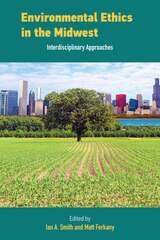
Environmental Ethics in the Midwest
Interdisciplinary ApproachesIan Smith
Michigan State University Press, 2022
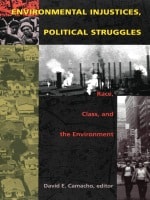
Environmental Injustices, Political Struggles
Race, Class and the EnvironmentDavid E. Camacho, ed.
Duke University Press, 1998
David E. Camacho’s collection of essays examines the value-laden choices behind the public policy that determines placement of commercial environmental hazards, points to the underrepresentation of people of color in the policymaking process, and discusses the lack of public advocates representing low-income neighborhoods and communities. This book combines empirical evidence and case studies—from the failure to provide basic services to the “colonias” in El Paso County, Texas, to the race for water in Nevada—and covers in great detail the environmental dangers posed to minority communities, including the largely unexamined communities of Native Americans. The contributors call for cooperation between national environmental interest groups and local grassroots activism, more effective incentives and disincentives for polluters, and the adoption by policymakers of an alternative, rather than privileged, perspective that is more sensitive to the causes and consequences of environmental inequities.
Environmental Injustices, Political Struggles is a unique collection for those interested in the environment, public policy, and civil rights as well as for students and scholars of political science, race and ethnicity, and urban and regional planning.
Contributors. C. Richard Bath, Kate A. Berry, John G. Bretting, David E. Camacho, Jeanne Nienaber Clarke, Andrea K. Gerlak, Peter I. Longo, Diane-Michele Prindeville, Linda Robyn, Stephen Sandweiss, Janet M. Tanski, Mary M. Timney, Roberto E. Villarreal, Harvey L. White
Environmental Justice in South Africa
David A. McDonald
Ohio University Press, 2002
Beginning with a history of the environmental justice movement in the country, the book explores a range of conceptual and practical questions: How does environmental justice relate to issues of marginalization and poverty in South Africa? What are the links between environmental justice and other schools of environmental thought? Is the legal system an appropriate tool for addressing environmental equity? How do race, class, and gender intersect in the South African environmental context?
The second half of the book is a more concrete exploration of environmental (in)justice in the country. These chapters are interspersed with real-life stories of struggles by workers and communities for environmental change. The book is an invaluable resource for South African and international audiences interested in the growing, and increasingly global, environmental justice movement.
Environmental Law for Biologists
Tristan Kimbrell
University of Chicago Press, 2016
With Environmental Law for Biologists, ecologist and lawyer Tristan Kimbrell bridges this gap in legal knowledge. Complete with a concise introduction to environmental law and an appendix describing the most important federal and international statutes and treaties discussed, the book is divided into four broad parts: laws that focus on individual species, like invasive species policies, the Endangered Species Act, and international treaties such as CITES; laws that focus on land, from federal public lands to agricultural regulations and urban planning; laws that focus on water, such as the Clean Water Act; and laws that focus on air, such as the Clean Air Act and international measures meant to mitigate global climate change. Written for working biologists and students alike, this book will be a catalyst for both more effective policy and enhanced research, offering hope for the manifold frictions between science and the law.
Environmental Politics and Policy
Theories and EvidenceJames P. Lester, ed.
Duke University Press, 1995
From reviews of the First Edition:
"All the authors in this collection of essays are well known in the field of environmental policy. Their breadth of knowledge, and diversity of perspectives, permit a rich and comprehensive coverage of the scholarly work in this field."—Daniel McCool, Journal of Politics
"An excellent collection of readings with a strong emphasis on institutional analysis as an approach to environmental policy in the United States."—Robert Paehlke, Natural Resources and Environmental Administration
"No better review of the political science of environmental policy-making has yet been published."—Christopher J. Bailey, Environmental Politics
Contributors. David Colnic, Douglas Costain, John S. Dryzek, Riley E. Dunlap, Helen M. Ingram, Sheldon Kamieniecki, Michael E. Kraft, James P. Lester, Dean E. Mann, Evan J. Ringquist, Walter A. Rosenbaum, Mark E. Rushefsky, Gerald B. Thomas, Lettie M. Wenner

Environmental Program Evaluation
A PrimerEdited by Gerrit Knaap and Tschango John Kim: Foreword by Ravinder K. Jain
University of Illinois Press, 1998
Environmental Safety of Genetically Engineered Crops
Rebecca Grumet
Michigan State University Press, 2010
Environmental Security
Simon Dalby
University of Minnesota Press, 2002
A critical look at the relationship between environmental degradation and international relations.
Since the end of the Cold War, environmental matters-especially the international implications of environmental degradation-have figured prominently in debates about rethinking security. But do the assumptions underlying such discussions hold up under close scrutiny? In this first treatment of environmental security from a truly critical perspective, Simon Dalby shows how attempts to explain contemporary insecurity falter over unexamined notions of both environment and security.
Adding environmental history, aboriginal perspectives, and geopolitics to the analysis explicitly suggests that the growing disruptions caused by a carbon-fueled and expanding modernity are at the root of contemporary difficulties. Environmental Security argues that rethinking security means revisiting questions of how we conceive identities as endangered and how we perceive threats to these identities. The book clearly demonstrates that the conceptual basis for critical security studies requires an extended engagement with political theory and with the assumptions of the modern subject as progressive political agent. Viewed thus on a global scale, the environmental security discourse raises profoundly troubling political questions as to who we are and what kind of world we are collectively making in our efforts to be secure.
Environmental Studies of a Marine Ecosystem
South Texas Outer Continental ShelfEdited by R. Warren Flint and Nancy N. Rabalais
University of Texas Press, 1981
Environmental Studies of a Marine Ecosystem reports the temporal and spatial variation of both the living and nonliving resources of the south Texas outer continental shelf. As the last major study to have been conducted before the Ixtoc oil spill in 1979, it is of great importance as a record of the baseline conditions and ecosystem characteristics for both biologists and chemists studying the effects of the Campeche disaster on the marine environment. The book is the culmination of three years of field studies conducted for the Bureau of Land Management and contains information on the climatology, hydrology, and sedimentology of the region as well as data on the pelagic and benthic biota, environmental hydrocarbons and trace metals, and the microbiology of the area. In addition to the ecosystem description, the data are integrated to expose ecological relationships that exist and to identify those specific variables which are most important for the assessment and management of environmentally damaging impacts to the area.
Environmental and Energy Policy and the Economy
Volume 7Edited by Matthew J. Kotchen, Tatyana Deryugina, and Catherine D. Wolfram
University of Chicago Press Journals, 2026
Rigorous, careful, and nonpartisan research with a high policy impact on environmental and energy economics.
Environmental and Energy Policy and the Economy focuses on the effective and efficient management of environmental and energy challenges. Research papers offer new evidence on the intended and unintended consequences, the market and nonmarket effects, and the incentive and distributional impacts of policy initiatives and market developments.
This volume presents six new papers on environmental and energy economics and policy. Judson Boomhower and Meredith Fowlie illustrate the distributional consequences of improving risk pricing efficiency in wildfire insurance markets. Claire Brunel and Arik Levinson develop a conceptual framework for understanding the economic and environmental consequences of taxes on imports of goods based on their carbon content. Karen Clay, Danae Hernandez-Cortes, Akshaya Jha, Joshua Lewis, Noah Miller, and Edson Severnini study the long-run distributional implications of US power plant sitings over more than a century. Todd Gerarden, Mar Reguant, and Daniel Xu provide a comprehensive overview of industrial policy in the renewable energy sector, with comparisons across the US, EU, and China. Jamie Hansen-Lewis and Michelle Marcus show how failure to account for behavioral responses can affect policy predictions regarding maritime emissions. Finally, Richard Sweeney and Joseph Wilske estimate the externalities associated with correlated intermittency in electricity generation from US wind power investments.
Envisioning Nature, Science, and Religion
Jim Proctor
Templeton Press, 2009
Contemporary scholarship has given rise to several modes of understanding biophysical and human nature, each entangled with related notions of science and religion. Envisioning Nature, Science, and Religion represents the culmination of three years of collaboration by an international group of fourteen natural scientists, social scientists, humanists, and theologians. The result is an intellectually stimulating volume that explores how the ideas of nature pertain to science and religion.
Envisioning Nature, Science, and Religion offers a blend of scholarly rigor and readable prose that will be appreciated by anyone engaged in the fields of religion, philosophy, and the natural sciences.
Envisioning the City
Six Studies in Urban CartographyEdited by David Buisseret
University of Chicago Press, 1998
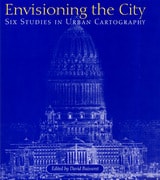
Whether a Chinese vertical city plan from the first millennium B.C. or a bird's-eye view appended to a fifteenth-century edition of Ptolemy's Geography, the type of plan chosen and its focus reflected the aspects of a city that the map's creators wished to highlight. For instance, maps of seventeenth-century cities emphasized impregnable fortifications as a deterrent to potential attackers. And Daniel Burnham's famous 1909 Plan of Chicago used a distinct representational style to "sell" his version of the new Chicago.
Although city plans are among the oldest maps known, few books have been devoted to them. Historians of cartography and geography, architects, and urban planners will all enjoy this profusely illustrated volume.
Epigenetic Landscapes
Drawings as MetaphorSusan Merrill Squier
Duke University Press, 2017
Erosion
American Environments and the Anxiety of DisappearanceGina Caison
Duke University Press, 2024
Error and the Growth of Experimental Knowledge
Deborah G. Mayo
University of Chicago Press, 1996
Mayo has long argued for an account of learning from error that goes far beyond detecting logical inconsistencies. In this book, she presents her complete program for how we learn about the world by being "shrewd inquisitors of error, white gloves off." Her tough, practical approach will be important to philosophers, historians, and sociologists of science, and will be welcomed by researchers in the physical, biological, and social sciences whose work depends upon statistical analysis.
Escaping Nature
How to Survive Global Climate ChangeOrrin H. Pilkey, Charles O. Pilkey, Linda P. Pilkey-Jarvis, Norma J. Longo, Keith C. Pilkey, Fred B. Dodson, and Hannah L. Hayes
Duke University Press, 2024
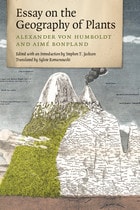
Essay on the Geography of Plants
Alexander von Humboldt and Aimé Bonpland
University of Chicago Press, 2010
The chronicles of the expedition were published in Paris after Humboldt’s return, and first among them was the 1807 “Essay on the Geography of Plants.” Among the most cited writings in natural history, after the works of Darwin and Wallace, this work appears here for the first time in a complete English-language translation. Covering far more than its title implies, it represents the first articulation of an integrative “science of the earth, ” encompassing most of today’s environmental sciences. Ecologist Stephen T. Jackson introduces the treatise and explains its enduring significance two centuries after its publication.
Essentials of STEM Librarianship
Alexander J. Carroll and Joshua Borycz; Foreword by Carol Tenopir
American Library Association, 2025
Amid overall falling enrollment figures for higher education, the growing success of STEM programs bucks the trend. Ensuring that these programs flourish has become a priority for administrators at the provost level and above. But this emphasis on STEM poses challenges for academic libraries, many of which have instead historically focused on the humanities and social sciences. This primer helps to fill that knowledge gap, demystifying the scientific teaching and research processes for LIS students and current academic librarians alike. Regardless of their background or level of experience, readers of this guide will
- gain an overview of the contemporary STEM teaching and research enterprise by learning about the roles and needs of STEM community members such as program administrators, tenure track principal investigators (PIs), non-tenure track teaching faculty, research staff, graduate students, and undergraduate students;
- become familiarized with the “research group,” the organizational structure through which these different personas come together to advance the university research enterprise;
- get pointers on building teaching and learning programs that enhance student success and designing research support services that integrate into STEM researchers' actual workflows;
- receive proven outreach strategies for engaging STEM communities;
- learn approaches for incorporating AI (artificial intelligence) and LLMs (large language models) into information literacy programs for scientists and engineers; and
- discover how library leaders can support both nascent and established STEM librarians to advance STEM education and research at their local institutions.
Ethics and Practice in Science Communication
Edited by Susanna Priest, Jean Goodwin, and Michael F. Dahlstrom
University of Chicago Press, 2018
In three sections—how ethics matters, professional practice, and case studies—contributors to this volume explore the many complex questions surrounding the communication of scientific results to nonscientists. Has the science been shared clearly and accurately? Have questions of risk, uncertainty, and appropriate representation been adequately addressed? And, most fundamentally, what is the purpose of communicating science to the public: Is it to inform and empower? Or to persuade—to influence behavior and policy? By inspiring scientists and science communicators alike to think more deeply about their work, this book reaffirms that the integrity of the communication of science is vital to a healthy relationship between science and society today.
Ethnic Diversity and the Control of Natural Resources in Southeast Asia
A. Terry Rambo, Kathleen Gillogly, and Karl L. Hutterrer, Editors
University of Michigan Press, 1988
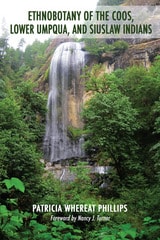
Ethnobotany of the Coos, Lower Umpqua, and Siuslaw Indians
Patricia Whereat-Phillips
Oregon State University Press, 2016
Very little has been published until now on the ethnobotany of western Oregon indigenous peoples. Ethnobotany of the Coos, Lower Umpqua, and Siuslaw Indians documents the use of plants by these closely-related coastal tribes, covering a geographical area that extends roughly from Cape Perpetua on the central coast, south to the Coquille River, and from the Coast Range west to the Pacific shore. With a focus on native plants and their traditional uses, it also includes mention of farming crops, as well as the highly invasive Himalayan blackberry, which some Oregon coast Indians called the "white man's berry."
The cultures of the Coos Bay, Lower Umpqua and Siuslaw are distinct from the Athabaskan speaking people to the south, and the Alsea to the north. Today, many tribal members are reviving ancient arts of basket weaving and woodworking, and many now participate in annual intertribal canoe events. Ethnobotany of the Coos, Lower Umpqua, and Siuslaw Indians contributes to this cultural renaissance by filling an important gap in the historical record. It is an invaluable resource for anyone who wishes to learn about the indigenous cultures of the central and southern Oregon coast, as well as those who are interested in Pacific Northwest plants and their cultural uses.
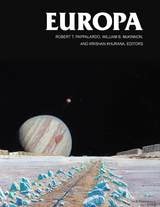
Europa
Edited by Robert T. Pappalardo, William B. McKinnon, and Krishan Khurana
University of Arizona Press, 2009
Evacuation
The Politics and Aesthetics of Movement in EmergencyPeter Adey
Duke University Press, 2024

Evaluating Alternative Cancer Therapies
A Guide to the Science and Politics of an Emerging Medical FieldDavid J. Hess, Ph.D.
Rutgers University Press, 1998
Evaluating Science and Scientists
Mark S. Frankel
Central European University Press, 1997
Every Person's Guide to Antioxidants
Smythies, John
Rutgers University Press, 1998
Oxidants are naturally occuring chemicals in our bodies that derive from oxygen to facilitate essential biochemical processes. However, most oxidants are potentially toxic molecules and the body contains a number of antioxidants for protection against these toxic effects. Overproduction of oxidants, or underproduction of antioxidants, leads to oxidative stress, which has been linked to a wide range of chronic diseases, including heart disease, cancer, diabetes, and Alzheimer's. Smythies thoroughly evaluates current scientific work on this subject and suggests that a high proportion of many of these diseases can be prevented, or their onset delayed, by proper intake of antioxidants. He examines the pros and cons of the debate over how this necessary intake should be achieved, by eating more fruits and vegetables or by taking supplements in pill form. Smythies surveys the toxicity of antioxidants and recommends under what circumstances they should be given with caution or not at all. He also discusses whether taking supplements requires medical supervision and lists good sources of antioxidants in fruits and vegetables

Every Person's Guide to Antioxidants
John Smythies, M.D. F.R.C.P.
Rutgers University Press, 1998
Oxidants are naturally occuring chemicals in our bodies that derive from oxygen to facilitate essential biochemical processes. However, most oxidants are potentially toxic molecules and the body contains a number of antioxidants for protection against these toxic effects. Overproduction of oxidants, or underproduction of antioxidants, leads to oxidative stress, which has been linked to a wide range of chronic diseases, including heart disease, cancer, diabetes, and Alzheimer's. Smythies thoroughly evaluates current scientific work on this subject and suggests that a high proportion of many of these diseases can be prevented, or their onset delayed, by proper intake of antioxidants. He examines the pros and cons of the debate over how this necessary intake should be achieved, by eating more fruits and vegetables or by taking supplements in pill form. Smythies surveys the toxicity of antioxidants and recommends under what circumstances they should be given with caution or not at all. He also discusses whether taking supplements requires medical supervision and lists good sources of antioxidants in fruits and vegetables
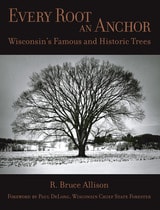
Every Root an Anchor
Wisconsin's Famous and Historic TreesR. Bruce Allison
Wisconsin Historical Society Press, 2005
In Every Root an Anchor, writer and arborist R. Bruce Allison celebrates Wisconsin's most significant, unusual, and historic trees. More than one hundred tales introduce us to trees across the state, some remarkable for their size or age, others for their intriguing histories. From magnificent elms to beloved pines to Frank Lloyd Wright's oaks, these trees are woven into our history, contributing to our sense of place. They are anchors for time-honored customs, manifestations of our ideals, and reminders of our lives' most significant events.
For this updated edition, Allison revisits the trees' histories and tells us which of these unique landmarks are still standing. He sets forth an environmental message as well, reminding us to recognize our connectedness to trees and to manage our tree resources wisely. As early Wisconsin conservationist Increase Lapham said, "Tree histories increase our love of home and improve our hearts. They deserve to be told and remembered."
Everyday Environmentalism
Creating an Urban Political EcologyAlex Loftus
University of Minnesota Press, 2012
Everyday Environmentalism develops a conversation between marxist theories of everyday life and recent work in urban political ecology, arguing for a philosophy of praxis in relation to the politics of urban environments. Grounding its theoretical debate in empirical studies of struggles to obtain water in the informal settlements of Durban, South Africa, as well as in the creative acts of insurgent art activists in London, Alex Loftus builds on the work of key marxist thinkers to redefine “environmental politics.”
A marxist philosophy of praxis—that world-changing ideas emerge from the acts of everyday people—undergirds the book. Our daily reality, writes Loftus, is woven out of the entanglements of social and natural relations, and as such a kind of environmental politics is automatically incorporated into our lives. Nevertheless, one effect of the public recognition of global environmental change, asserts Loftus, has been a resurgence of dualistic understandings of the world: for example, that nature is inflicting revenge on arrogant human societies.
This ambitious work reformulates—with the assistance of such philosophers as Lukács, Gramsci, Lefebvre, and others—a politics of the environment in which everyday subjectivity is at the heart of a revolutionary politics.
Everyday Las Vegas
Local Life in a Tourist TownRex J. Rowley
University of Nevada Press, 2014
Rowley considers such topics as why people move to Las Vegas, the nature of their work and personal lives, the impact of growth and rapid change, and interaction with the overwhelmingly touristic side of the city. He also considers the benefits and perils of living in a nonstop twenty-four-hour city rich in entertainment options and easy access to gambling, drugs, and other addictions. His examination includes the previously unstudied role of neighborhood casinos patronized by locals rather than tourists and the impact that a very mobile population has on schools, churches, and community life.
Rowley considers the very different ways people perceive a place as insiders or outsiders, a dichotomy that arises when tourism is a mainstay of the local economy. His work offers insights into what Las Vegas can teach us about other cities and American culture in general. It also contributes to our understanding of how people relate to places and how the personality of a place influences the lives of people who live there.
Everyday Nature
Knowledge of the Natural World in Colonial New YorkGronim, Sara S
Rutgers University Press, 2007
In the modern world, the public looks to scientists and scholars for their expertise on issues ranging from the effectiveness of vaccines to the causes of natural disasters. But for early Americans, whose relationship to nature was more intimate and perilous than our own, personal experience, political allegiances, and faith in God took precedence over the experiments of the learned.
In Everyday Nature, Sara Gronim shows how scientific advances were received in the early modern world, from the time Europeans settled in America until just before the American Revolution. Settlers approached a wide range of innovations, such as smallpox inoculation, maps and surveys, Copernican cosmology, and Ben Franklin’s experiments with electricity, with great skepticism. New Yorkers in particular were distrustful because of the chronic political and religious factionalism in the colony. Those discoveries that could be easily reconciled with existing beliefs about healing the sick, agricultural practices, and the revolution of the planets were more readily embraced.
A fascinating portrait of colonial life, this book traces a series of innovations that were disseminated throughout the Atlantic world during the Enlightenment, and shows how colonial New Yorkers integrated new knowledge into their lives.
Everyday Sciences
Practical Knowledge and Knowledgeable Practice in Medieval South AsiaEric Moses Gurevitch
University of Chicago Press, 2027
How people across society in medieval South Asia—including coppersmiths, merchants, bureaucrats, philosophers, and physicians—pioneered new vernacular sciences.
Starting in the eleventh century, South Asian scholars and artisans began to investigate and shape the world in a novel manner. Intellectuals translated Sanskrit texts into regional languages such as Kannada, situating knowledge in particular places. At the same time, architects and artisans began to assert their intellectual and literary presence, often claiming the title of “scholar” as they negotiated a space between classical textual erudition, professional expertise, and personal experience. Working within the perilous world of court politics, a new class of scholar-administrators began collecting recipes and composing texts about weather prediction, horticulture, mathematics, astrology, sexual life, and medicine.
Everyday Sciences traces this emergence of vernacular sciences by engaging with untapped archives and an array of sources in multiple languages. By exploring how historical actors resolved disputes about the physiology of vision, the use of meat and alcohol in medicine, and the management of information in elephant stables, Eric Moses Gurevitch unveils the complex textual and social orders that structured medieval society in India. He argues that a focus on everyday sciences in the non-modern non-West allows historians to reassess how places outside—and even inside—Europe are brought into narratives of a global history of science. Gurevitch articulates a “big-enough” history of science in South Asia, one open to little voices and unexpected connections that might not make their way through the fray in other histories.
Everyday Sciences demonstrates how practical, everyday activities were engines of profound intellectual innovation—and it shows the promise of revisiting the past without colonial hang-ups, and with fresh eyes.
Everyday Technology
Machines and the Making of India's ModernityDavid Arnold
University of Chicago Press, 2013

Evolution As Entropy
Toward a Unified Theory of BiologyDaniel R. Brooks and E. O. Wiley
University of Chicago Press, 1988
"This book is unquestionably mandatory reading not only for every living biologist but for generations of biologists to come."—Jack P. Hailman, Animal Behaviour, review of the first edition
"An important contribution to modern evolutionary thinking. It fortifies the place of Evolutionary Theory among the other well-established natural laws."—R.Gessink,TAXON
Evolution Made to Order
Plant Breeding and Technological Innovation in Twentieth-Century AmericaHelen Anne Curry
University of Chicago Press, 2016
In Evolution Made to Order, Helen Anne Curry traces the history of America’s pursuit of tools that could intervene in evolution. An immersive journey through the scientific and social worlds of midcentury genetics and plant breeding and a compelling exploration of American cultures of innovation, Evolution Made to Order provides vital historical context for current worldwide ethical and policy debates over genetic engineering.
Evolution and Environment in Tropical America
Edited by Jeremy B. C. Jackson, Ann F. Budd, and Anthony G. Coates
University of Chicago Press, 1996
Recent discoveries show that dramatic changes in climate and ocean circulation can occur very quickly, and that ecological communities respond just as rapidly. Abrupt changes in the composition of fossil assemblages, formerly dismissed as artifacts of a poor fossil record, now are seen as accurate records of swift changes in the composition of ocean communities.
The twenty-four contributors use current work in paleontology, geology, oceanography, anthropology, ecology, and evolution to paint this challenging portrait of rapid environmental and evolutionary change. Their conclusions argue for a revision of existing interpretations of the fossil record and the processes—including invading Eurasian peoples—that have produced it.
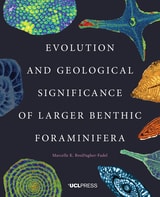
Evolution and Geological Significance of Larger Benthic Foraminifera
Marcelle K. BouDagher-Fadel
University College London, 2018
Marcelle K. BouDagher-Fadel collects and significantly adds to the information already published on the larger benthic foraminifera. New research in the Far East, the Middle East, South Africa, Tibet, and the Americas has provided fresh insights into the evolution and palaeographic significance of these vital reef-forming forms. With the aid of new and precise biostratigraphic dating, she presents revised phylogenies and ranges of the larger foraminifera. The book is illustrated throughout, with examples of different families and groups at the generic levels. Key species are discussed and their biostratigraphic ranges are depicted in comparative charts.