Results by title
3027 books match the query 'Sociology' and 115 start with e
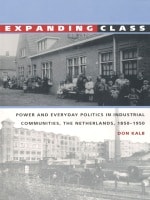
Expanding Class
Power and Everyday Politics in Industrial Communities, The Netherlands 1850–1950Don Kalb
Duke University Press, 1998
Expanding Class compares Brabant’s quaint central shoemaking district to its electrical boomtown Eindhoven, home of the enormous Philips Corporation. It introduces the concept of "flexible familism," a sociological phenomenon in which family daughters were employed to facilitate a cheap and ample labor force. Industrialists manipulated and fostered flexible familism to ensure the discipline and loyalty of the working-class community. By using the industrial Netherlands as a paradigm, Kalb reveals new and productive ways to examine class construction and the development of labor history in other countries over the past thirty years, steering a path between the two schools of thought—cultural and economic—that have dominated labor history discussions in recent years.
Expelling Public Schools
How Antiracist Politics Enable School Privatization in NewarkJohn Arena
University of Minnesota Press, 2023
Exploring the role of identitarian politics in the privatization of Newark’s public school system
In Expelling Public Schools, John Arena explores the more than two-decade struggle to privatize public schools in Newark, New Jersey—a conflict that is raging in cities across the country—from the vantage point of elites advancing the pro-privatization agenda and their grassroots challengers.
Analyzing the unsuccessful effort of Cory Booker—Newark’s leading pro-privatization activist and mayor—to generate popular support for the agenda, and Booker’s rival and ultimate successor Ras Baraka’s eventual galvanization of the charter movement, Arena argues that Baraka’s black radical politics cloaked a revanchist agenda of privatization.
Expelling Public Schools reveals the political rise of Booker and Baraka, their one-time rivalry and subsequent alliance, and what this particular case study illuminates about contemporary post–civil rights Black politics. Ultimately, Expelling Public Schools is a critique of Black urban regime politics and the way in which antiracist messaging obscures real class divisions, interests, and ideological diversity.
Experienced Life and Narrated Life Story
Gestalt and Structure of Biographical Self-PresentationsGabriele Rosenthal
Campus Verlag, 2024
How do people narrate events in their life stories and the history of their family or families? How are narratives and experiences in the present related to experiences and narratives in the past? In this foundational work by sociologist Gabriele Rosenthal, he answers these questions with a theoretical and empirical study of the interconnections between remembering, experiencing, and presenting what was experienced at different points of the life course and of the associated collective histories. He also discusses rules for conducting interviews that support processes of remembering and for carrying out an analysis that does justice to this dialectic.
This edition contains a new introduction and a new chapter that explores the later expansion of Rosenthal’s approach to sociological biographical research, reflecting the inspiration she took from the figurational sociology of Norbert Elias. With its analysis of the complex relationships between experiencing, remembering, and presenting, Experienced Life and Narrated Life Story makes an important contribution to the theoretical foundations of biographical research.
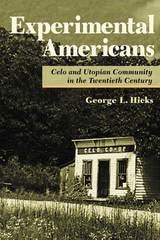
Experimental Americans
Celo and Utopian Community in the Twentieth CenturyGeorge L. Hicks
University of Illinois Press, 2001
From colonial times to the present, the United States has been home to a steady stream of utopian experimental communities. In Experimental Americans, George L. Hicks takes us inside one of the longer-lived of such communities, Celo Community in western North Carolina, to explore the dynamics of intentional communities in America.
Founded in 1937 by Arthur Morgan, first chairman of the Tennessee Valley Authority, Celo (pronounced see-lo) established its own rules of land tenure and taxation, conducted its internal business by consensus, and did not require its members to accept any particular ideology or religious creed. Drawing on extensive fieldwork in Celo and among its local neighbors, consultation of Celo's documentary records, and interviews with ex-members, Hicks traces the Community's ups and downs. Attacked for its opposition to World War II, Celo was revived by pacifists released from prisons and Civilian Public Service camps after the war; debilitated in the 1950s by bitter feuds with ex-members, it was buoyed up in the 1960s by the radical enthusiasm of new currents in the nation.
Hicks assesses the Community's success in creating alternatives to mainstream social relations and examines the interactions between Celo and its neighboring community. He considers variations in paths taken by utopian communities, with a look at a close cousin of Celo, the Macedonia Community in Georgia. He also discusses the Community's "post-utopian" phase, marked by a shift in the late 1970s from social goals to straightforward land management.
While utopian communities might hope to secede from American society in varying degrees and to institute new and improved cultural models, nonetheless they express in many ways the attempt--characteristic of the nation itself--to balance individualism and egalitarianism. By providing the context, utopian and conventional, within which Celo and other experimental communities emerge and change, Experimental Americans illuminates an ongoing encounter with persistent tensions and contradictions in America's cultural postulates.
Experimental Practice
Technoscience, Alterontologies, and More-Than-Social MovementsDimitris Papadopoulos
Duke University Press, 2018
Experimenting with Ethnography
A Companion to AnalysisAndrea Ballestero and Brit Ross Winthereik, editors
Duke University Press, 2021
Contributors. Patricia Alvarez Astacio, Andrea Ballestero, Ivan da Costa Marques, Steffen Dalsgaard, Endre Dányi, Marisol de la Cadena, Marianne de Laet, Carolina Domínguez Guzmán, Rachel Douglas-Jones, Clément Dréano, Joseph Dumit, Melanie Ford Lemus, Elaine Gan, Oliver Human, Alberto Corsín Jiménez, Graham M. Jones, Trine Mygind Korsby, Justine Laurent, James Maguire, George E. Marcus, Annemarie Mol, Sarah Pink, Els Roding, Markus Rudolfi, Ulrike Scholtes, Anthony Stavrianakis, Lucy Suchman, Katie Ulrich, Helen Verran, Else Vogel, Antonia Walford, Karen Waltorp, Laura Watts, Brit Ross Winthereik
Experimenting with Social Norms
Fairness and Punishment in Cross-Cultural PerspectiveJean Ensminger
Russell Sage Foundation, 2014
Explaining Modern Social Reality
The Basic Concepts in Norbert Elias’s Figurational SociologyKire Sharlamanov
Central European University Press, 2026
At the center of the discussion is Elias’s landmark work, The Civilizing Process, with particular attention to class structures, changing patterns of behavior, and the development of the modern state. The book also explores figurational sociology, one of Elias’s most influential contributions to social theory.
An innovative and original thinker, Elias challenged established concepts and introduced new analytical tools, including the influential notion of habitus. The chapters examine his theory of knowledge, his reflections on violence and de-civilization, his analyses of nations and nationalism, and his work on emotions and shame. The book further traces Elias’s dialogue with major thinkers such as Edmund Husserl, Karl Mannheim, Max Weber, Sigmund Freud, and Talcott Parsons, showing how he reinterpreted their ideas in distinctive ways. The book concludes with an overview of the most important critiques of Elias’s work and its continuing relevance today.
Explaining Social Institutions
Jack Knight and Itai Sened, Editors
University of Michigan Press, 1998
Much of the work being done under the rubric of "new institutionalism" focuses on how institutions shape social, economic, and political outcomes. This emphasis on influence has provided students of economics, political science, and political economy with surprisingly little theory to account for the origins of such institutions. Yet without understanding how institutions form and consequently develop influence, much of the other work lacks context. The contributors fill this void by utilizing a variety of perspectives and theoretical approaches. The twin focus of these articles on the origins of institutions and the development of institutional influence yield innovative and suggestive outcomes. Topics range from the framing of the United States Constitution to debate over the Senate at the Federal Convention; from equilibrium and social institutions to democratic stability.
Contributors include Randall Calvert, Jon Elster, Avner Greif, Jack Knight, Paul Milgrom, Douglass North, William Riker, Norman Schofield, Itai Sened, and Barry Weingast.
Jack Knight is Assistant Professor of Political Science, Washington University, St. Louis. Itai Sened is Assistant Professor of Political Science, Tel Aviv University.
Explorations in Economic Sociology
Richard Swedberg
Russell Sage Foundation, 1993
Exploring The Beloved Country
American Society And CultureWilbur Zelinsky
University of Iowa Press, 1994
For fifty years geographer Wilbur Zelinsky has charted the social, cultural, and historical map of the American experience. A self-confessed incurable landscape voyeur, he has produced order and pattern from massive amounts of data, zestfully finding societal meaning in the terra incognita of our postmodern existence. Now he has gathered his most original and exciting explorations into a volume that captures the nature and dynamics of this remarkable phenomenon we call the United States of America. Each the product of Zelinsky's joyous curiosity, these energetic essays trace the innermost contours of our bewildering American reality.

Explosivity
Following What RemainsJavier Arbona-Homar
University of Minnesota Press, 2025
How explosions across history reveal the violence embedded in San Francisco’s landscape
Offering a novel approach to contemporary landscape studies, Explosivity unearths the hidden legacies of violence that have shaped the physical and cultural environment of the San Francisco Bay area. As he sifts through the historical debris of previous centuries, Javier Arbona-Homar analyzes a series of explosions that took place between 1866 and 2011 to call attention to the scattered remnants of militarism and racialized capitalism embedded in the region’s geography.
From incidents involving nineteenth-century explosives manufacturing and World War II munitions loading to radical activism and contemporary television productions, Arbona-Homar locates a pattern of historical violence that refocuses the broader racial and colonial context. Citing the material, social, and political conditions that gave rise to these disparate episodes, he reviews the historic erasure of those driving forces and puts forth alternative possibilities for how such disasters might be memorialized.
Synthesizing a diverse set of field research methods, including oral histories and site visits, and supplemented by specially commissioned landscape photographs by Andrea Gaffney, Explosivity presents a radical exercise in the exposition of public memory.
Retail e-book files for this title are screen-reader friendly with images accompanied by short alt text and/or extended descriptions.
Exposed Memories
Family Pictures in Private and Collective MemoryHedvig Turai
Central European University Press, 2010
Extra/ordinary Johannesburg
Centrality, Periphery and the Spaces BetweenLindsay Blair Howe
University College London, 2025
In Extra/ordinary Johannesburg, urbanist Lindsay Blair Howe argues that Johannesburg, part of the highly urbanized Gauteng City-Region and often labeled as an “apartheid city,” is an “ordinary” space where spatial changes both marginalize and create opportunities for people in their everyday lives. Structured around the concepts of urbanization and peripheralization and drawing on Henri Lefebvre’s theory of spatial dialectics, the book uses empirical research methods like smartphone applications and volunteered geographic information to draw theoretical conclusions, providing exciting new insights into urban denizens’ daily lives and how urbanization in the Gauteng region relates to the decolonial project. One central premise is that understanding how people navigate the urban fabric of centralities, peripheries, and the spaces in between is crucial for reimagining effective ways to address poverty and inequality in urban Africa.
eTrust
Forming Relationships in the Online WorldKaren S. Cook
Russell Sage Foundation, 2009